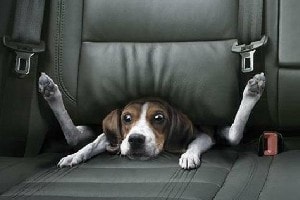
In fact, the survey shows that 31 percent of respondents admit to being distracted by their dog while driving, with distracting behaviors including giving food and water to the canine companion or playing with it. These behaviors can distract the driver and increase the risk of a crash.
An overwhelming 80 percent of respondents stated that they have driven with their pets on a variety of car trips including day trips, local errands and leisure trips to the pet store, dog parks or work. However only 17 percent use any form of pet restraint system when driving with their dog.
"Restraining your pet when driving can not only help protect your pet, but you and other passengers in your vehicle as well," cautioned Jennifer Huebner-Davidson, AAA National, Traffic Safety Programs manager. "An unrestrained 10-pound dog in a crash at 50 mph will exert roughly 500 pounds of pressure, while an unrestrained 80-pound dog in a crash at only 30 mph will exert 2,400 pounds of pressure. Imagine the devastation that can cause to your pet and anyone in the vehicle in its path."
The online study was conducted among a sample of 1,000 dog owners who have driven with their dog in the past 12 months.
 Google News