Milanese by birth, “Le Patron” was born on September 15, 1881, under the full name of Ettore Arco Isidoro Bugatti.
His family had always had deep artistic roots in the city of Milan, since his father (Carlo Bugatti) was an internationally acclaimed furniture and jewelry designer, while his grandfather (Giovanni Luigi Bugatti) had been a famous architect and sculptor.
Ettore's brother, Rembrandt, also inherited the sculpting talent of his grandfather, while Ettore himself eventually became an engineer and designer of magnificent automobiles, therefore transforming in the most famous member of the Bugatti family.
The early days
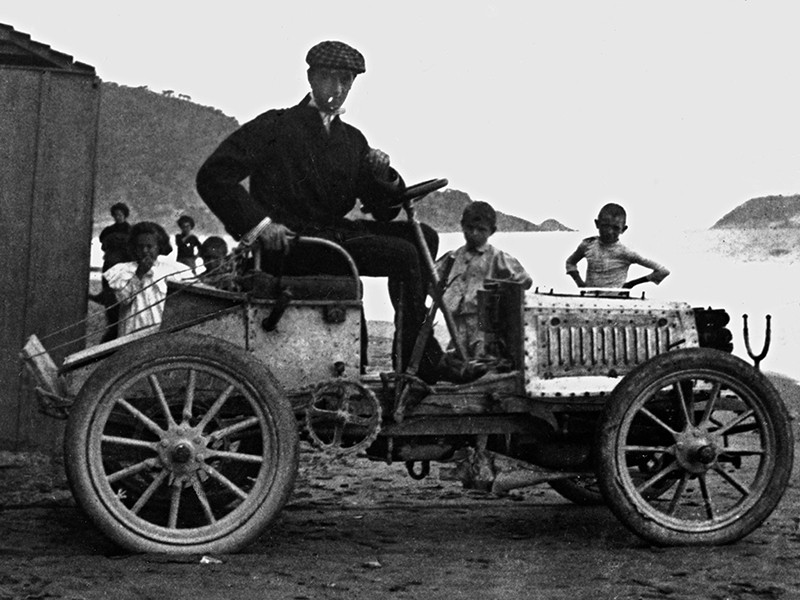
When he was only 17 he joined the bicycle and tricycle manufacturing firm of Prinetti & Stucchi as an apprentice. That is where he built his first vehicle, a motorized tricycle powered by two engines made by De Dion. This extraordinary achievement was soon followed by his very first automobile in 1900. The outstanding construction process had been financed by Count Gulinelli, who saw the talent that the young engineer and future car manufacturer was developing from such an early age. This project also won young Ettore an award at the Milan industry fair from that year.
His talent was recognized by other people as well so, on July 2, 1901, Bugatti received the job of technical director at the De Dietrich manufacturing plant. Since he was still a minor at the time, the first contract was signed by his father Carlo in his own name. For this job Ettore had to move to Niederbron in Alsace, which was in Germany then, where he stayed for a few years developing automobiles and entering car races. After spending a little over three years there, he left De Dietrich for a freelancing career in car development and manufacturing.
Photo: Bugatti
In 1907 he met Barbara Giuseppina Mascherpa, who soon had to change her family name to Bugatti, becoming his first wife. In the same year, on the first day of September, Ettore signed a multi-year contract with gasoline-engine plat Gasmotoren-Fabrik Deutz in Cologne, Germany. For this job he had to move again, only this time in Cologne-Mulheim, together with his wife. Following on his dream of someday becoming a car manufacturer in his own right, Ettore began working on a project for an extremely lightweight vehicle in his basement.
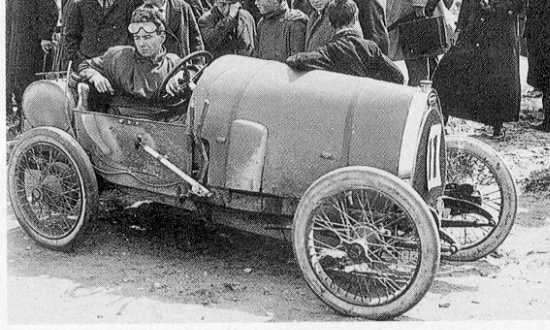
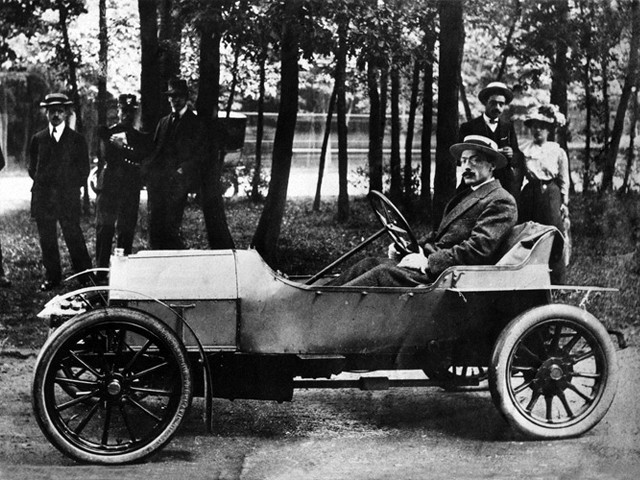
After concluding the project in 1909, he untimely ended his contract with Deutz, following the birth of his first son, Jean. With the severance pay and a few economies he bought an ex-dyeworks plant in Molsheim, Alsace, where he started producing the Bugatti T13.
The start of automobile production
During the following years, the newly established Bugatti automobile manufacturing continued to expand, Ettore also developing a few other extra projects, including the Bebe model for Peugeot. Bugatti design licenses were also bought by Diatto in Turin, Rabag from Dusseldorf and Crossley from Manchester, Great Britain.
Photo: Bugatti
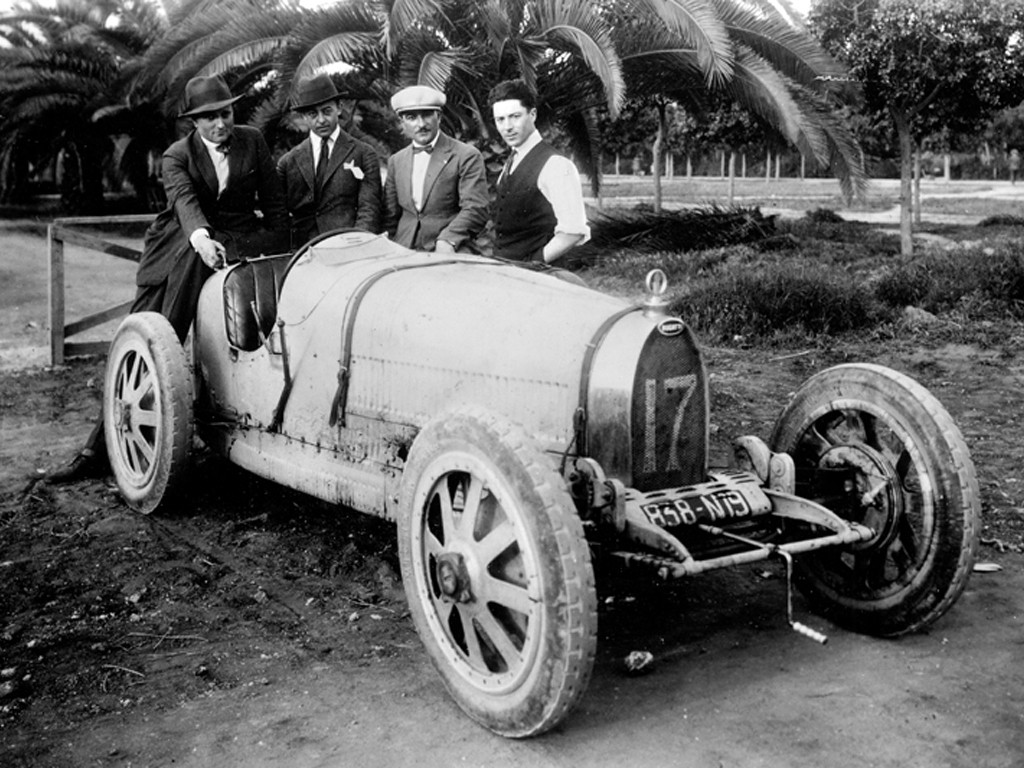
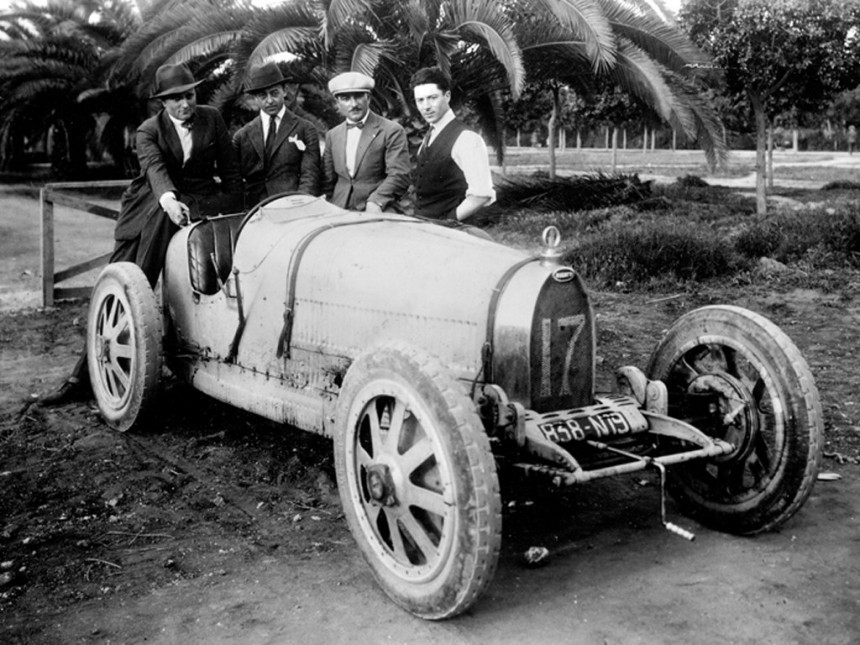
When the first World War started, the Bugatti family moved back to Milan and then to Paris, where Ettore started designing airplane engines with 8 and 16 cylinders. After the war ended he moved back to Molsheim - which had now become French territory - and continued to build lightweight sports cars at the old location. His cars gave him victories in 1920 at Le Mans and in 1921 at Brescia, winning three more times after this. The winning streak continued, reaching over 400 victories by 1925.
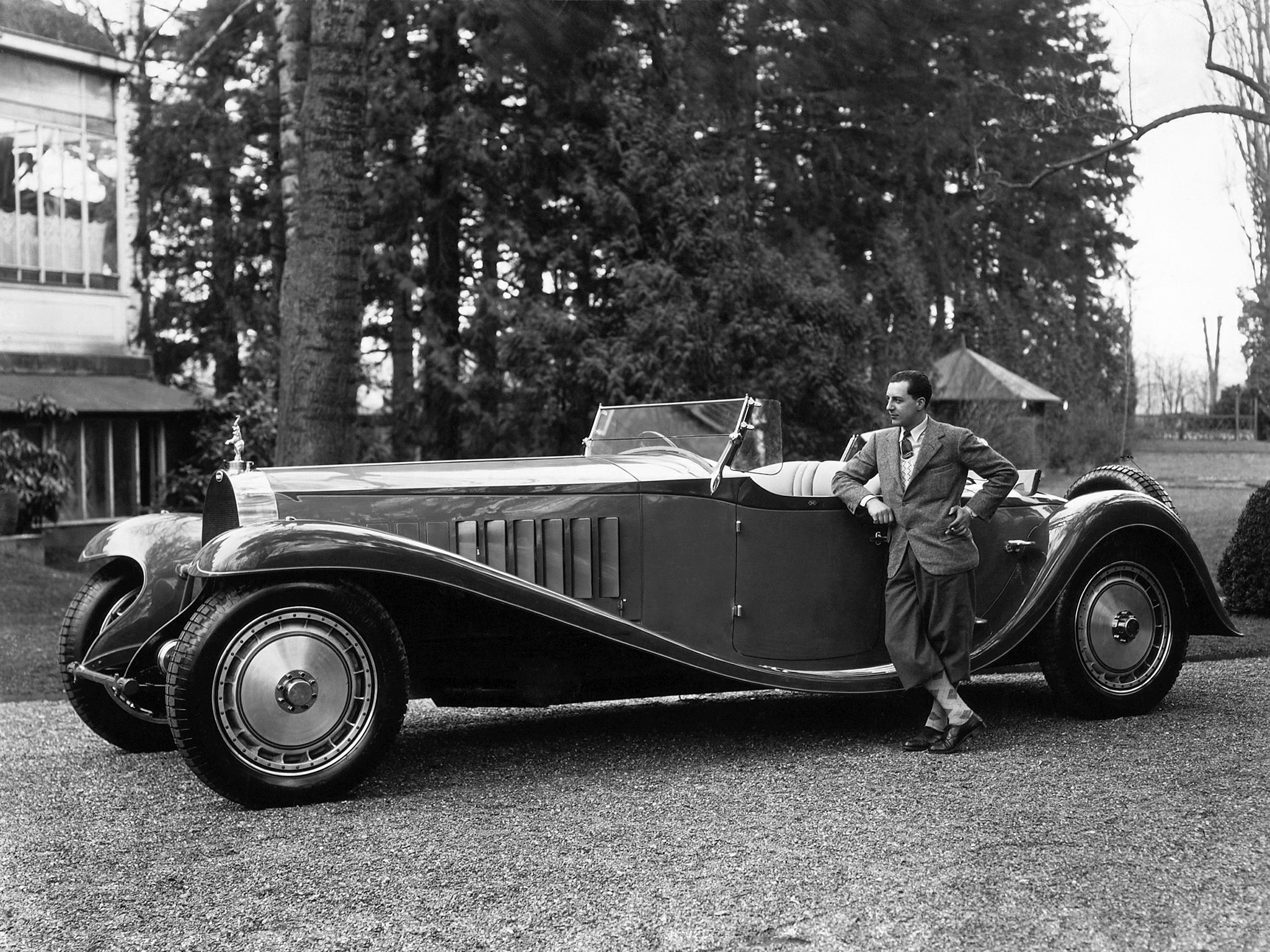
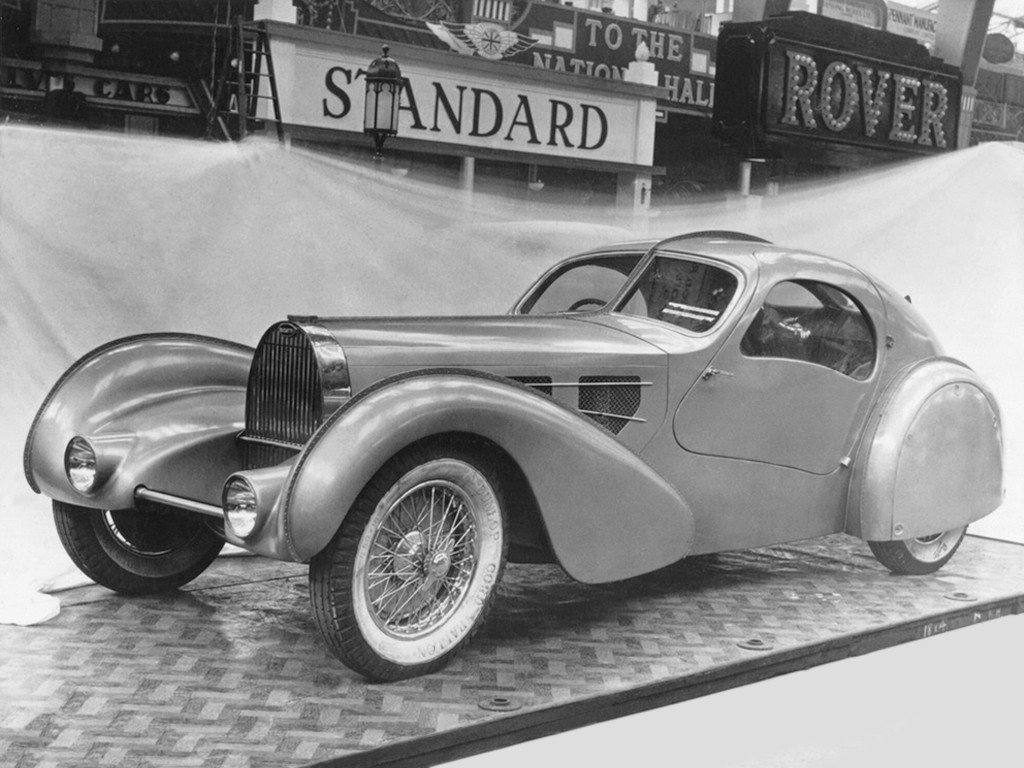
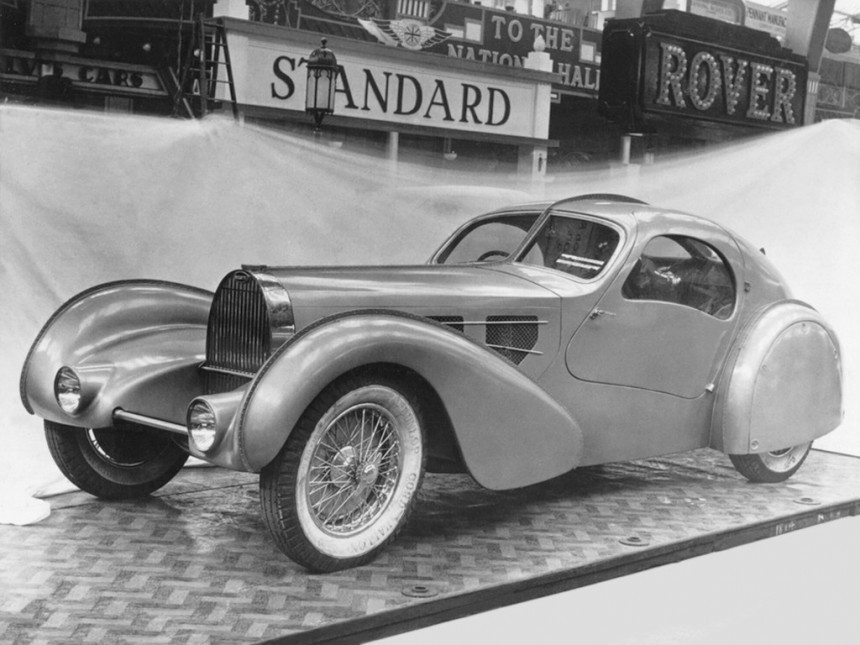
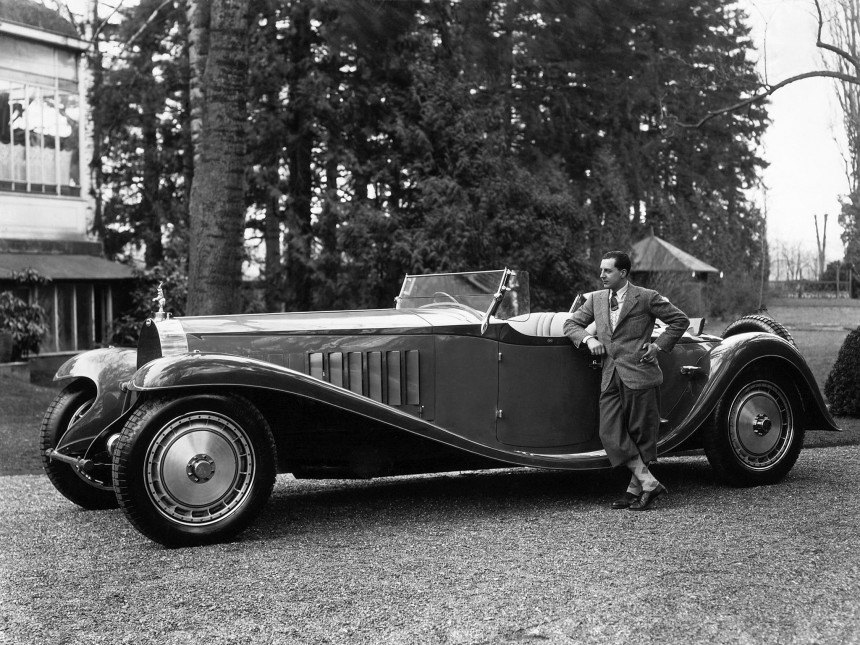
In the beginning of the 1930s, Ettore extended his production to include motorized rail cars – also known as “Autorails” - which were powered by Bugatti Royale engines. His son, Jean, was already actively involved in the company and a very talented engineer. In 1934, Ettore started manufacturing the infamous and more-expensive-than-you-can-comprehend Type 57 model, which had a chassis entirely designed by his son.
The fall of Bugatti
1936 was the beginning of the end for Bugatti automobiles. The Molsheim production ground to a halt following a national strike that year. With great disappointment induced by his workers and following increased debts, Ettore moved back to Paris, leaving his son Jean in charge of the Molsheim plant. Soon World War II started,and the Bugatti manufacturing facilities were temporarily moved to the city of Bordeaux.
During the war, Ettore was struck by two family deaths. First was his son, Jean, who was killed on 11 August 1939 while test driving a Type 57 C. Nicknamed “the tank”, the Type 57 C had recently won the 24-hour of Le Mans and was evidently too powerful for 30-year old Jean. Soon after this, Ettore's wife Barbara also died, leaving him without any close family.
Photo: Bugatti
The war ruined the production plant in Molsheim and Bugatti lost control of the property. During this time, Ettore married his second wife, Genevieve Marguerite Delcuze, with whom he had another son and a daughter. He had also planned to build a new factory in Paris, at Levallois, and designed a number of never-to-be-born cars while the war lasted, but the dream was killed from its infancy.
Even though Jean's brother, Roland, took over the Bugatti car business after the war, the cars he made never caught up with the latest automotive developments and it soon went bankrupt. Ettore died in Paris, on 21 of August 1947, and was buried in Dorlisheim, near Molsheim, in the Bugatti family plot.
He had just become a French citizen that year. The brand of exquisite automobiles he developed from the ground up ceased to exist until recent years, when it was revived first by an Italian lawyer and then by Volkswagen, who also rebuilt the old Molsheim facilities. Ettore's legacy lives on through the magnificent cars he built between the two World Wars and continues with the latest iteration of the brand under Volkswagen's umbrella.
Alex handled his first real steering wheel at the age of five (on a field) and started practicing "Scandinavian Flicks" at 14 (on non-public gravel roads). Following his time at the University of Journalism, he landed his first real job at the local franchise of Top Gear magazine a few years before Mircea (Panait). Not long after, Alex entered the New Media realm with the autoevolution.com project. Full profile
Would you like AUTOEVOLUTION to send you notifications?

 Google News