





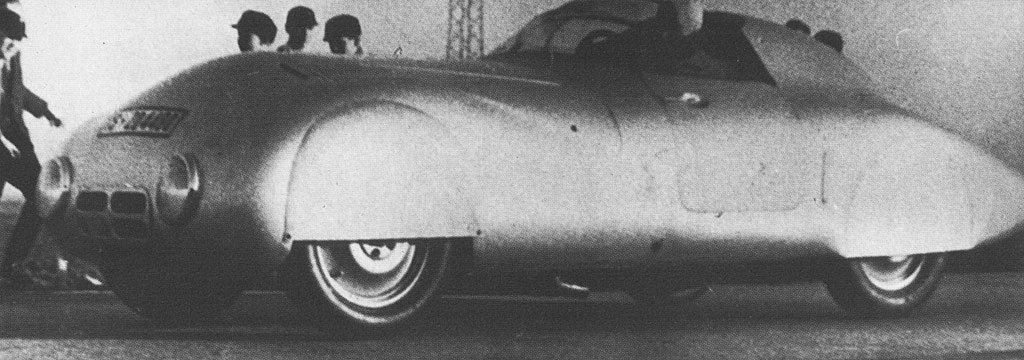
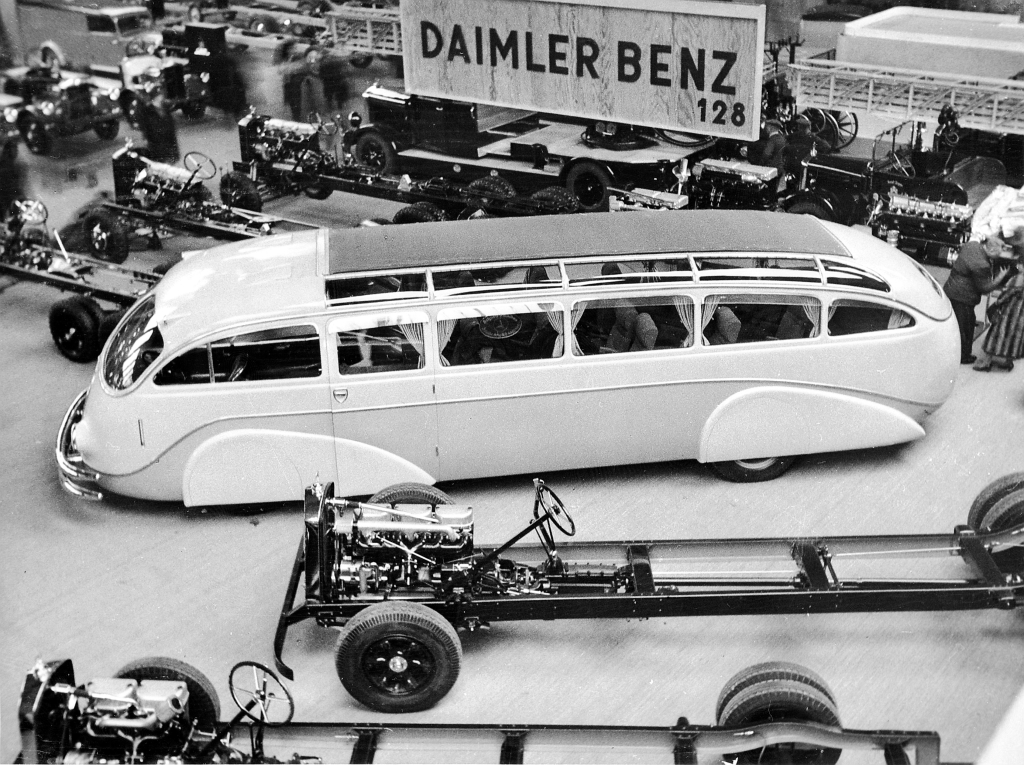
The interwar period was a time of changes throughout the world. The 1925 Paris exhibition, officially titled “Exposition Internationale des Arts Décoratifs et Industriels Modernes”, marked the starting point of the Art Deco movement. Influencing just about everything that had a design, the Art Deco revolution was first felt in Europe, but it rapidly caught on in the United States as well. Expressing mostly through visual and ornamental arts such as architecture and industrial design, it didn't pass long until it began to be found on cars also, but in another form: the Streamline Style.
From Art Deco to the Streamline Style
Unlike the Art-Deco movement, which was mostly concerned with upward movement and angular geometric shapes, the Streamline was more curved and organic. Both styles were preoccupied with the “movement” induced by the object they were representing, whether it was a static object, such as a building or a refrigerator, or wether it was moveable - such as an airplane, a train or, more importantly for our readers, a car.
Famous industrial designer Norman Bel Geddes wrote in 1932: “An object is streamlined when its exterior surface is so designed that upon passing through a fluid such as water or air the object creates the least disturbance in the fluid.”
The most important work in the study of aerodynamics in the beginning of the century was conducted by Hungarian-born engineer Paul Jaray, who first started by completely redesigning the now-famous Zeppelins from looking like a tube to the streamline shapes we know today. He was born in Vienna in 1889, and after studying mechanical engineering he moved to the town of Zeppelins and Maybachs, Friedrichshafen.
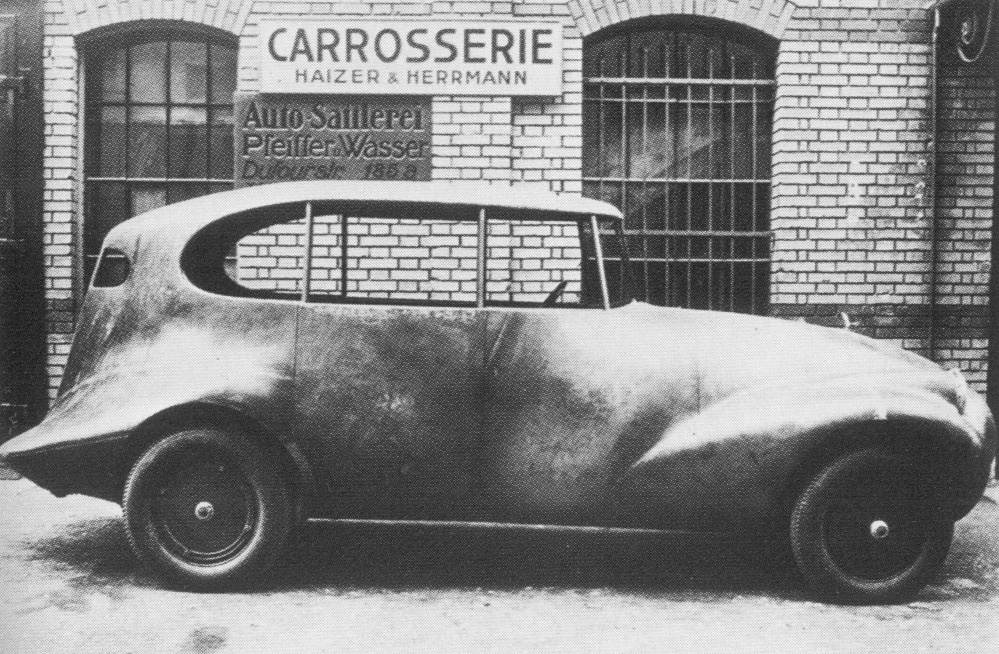
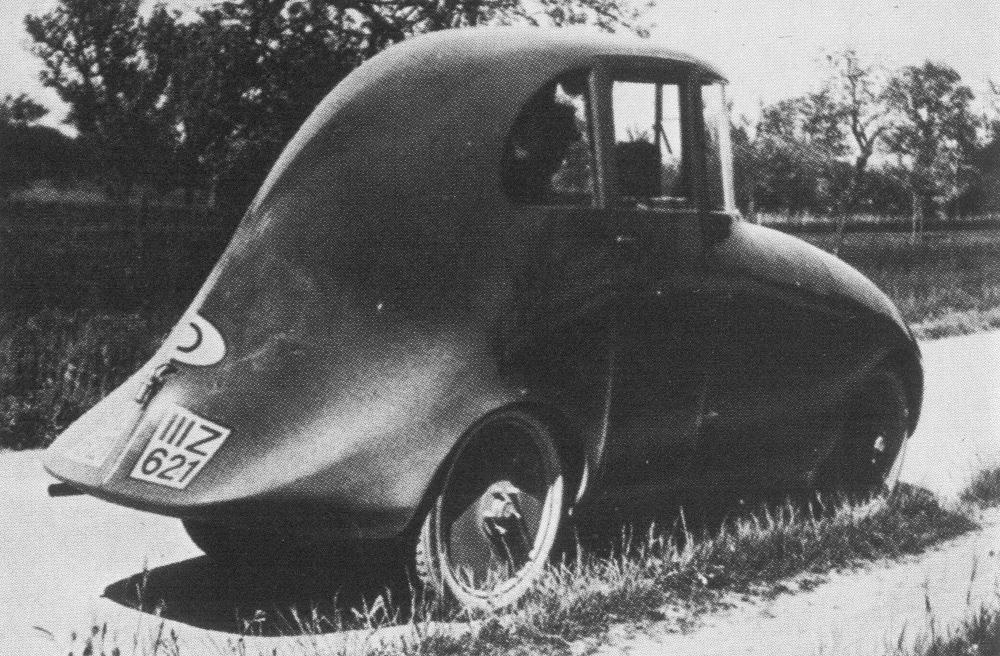 “The lower part of the body body has the form of a half streamline body and covers the chassis with the wheels, the engine compartment and the passenger compartment. The lower surface is even and runs parallel to the floor space. On this main part a substantially narrower streamline body is set, which is carried by a framework-like construction, which is developed on the chassis for its part,” is how Jaray's short description for the invention sounded.
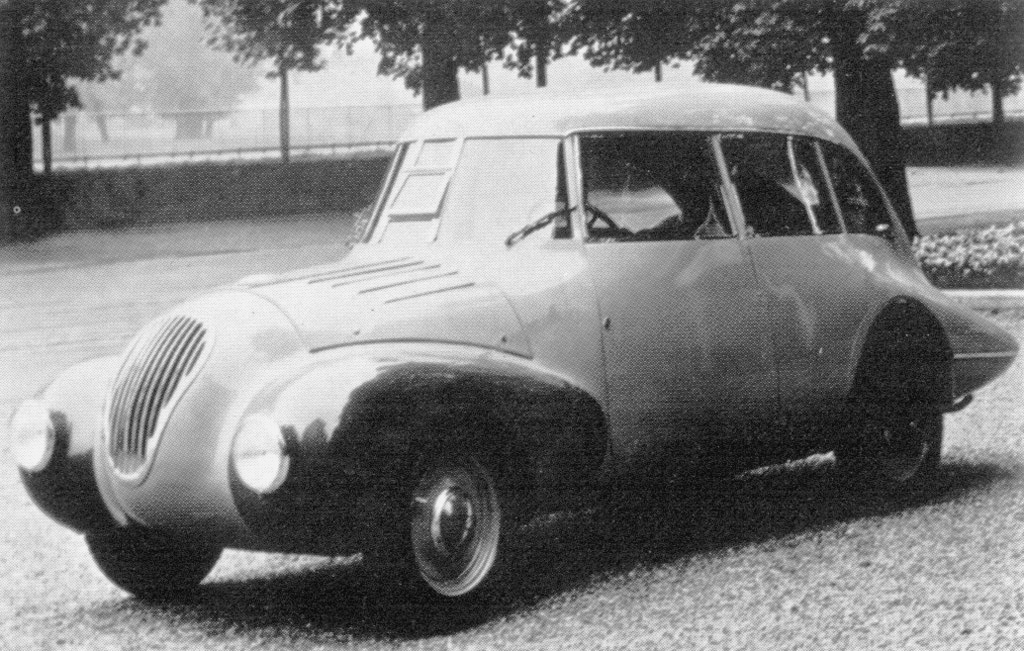
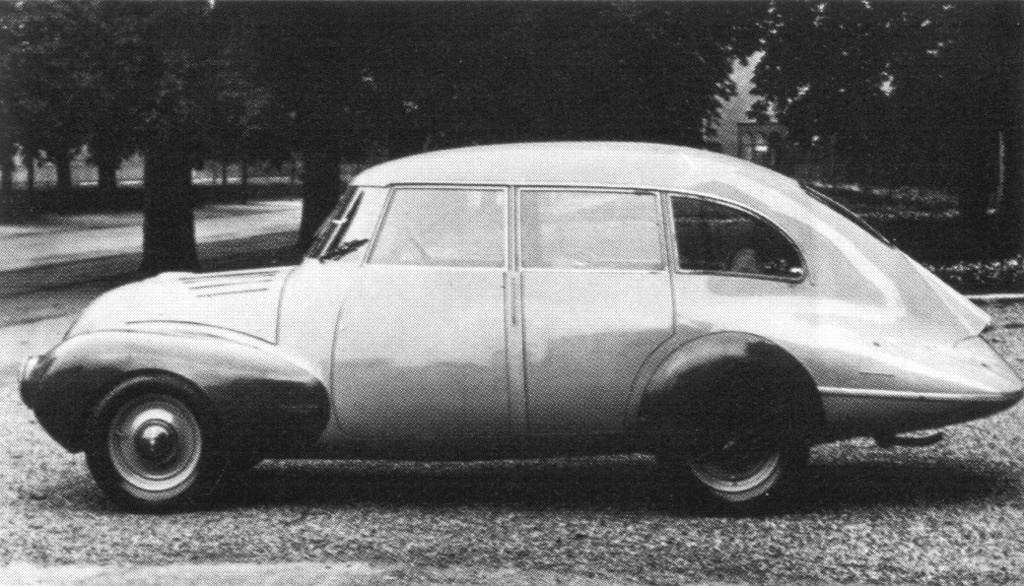
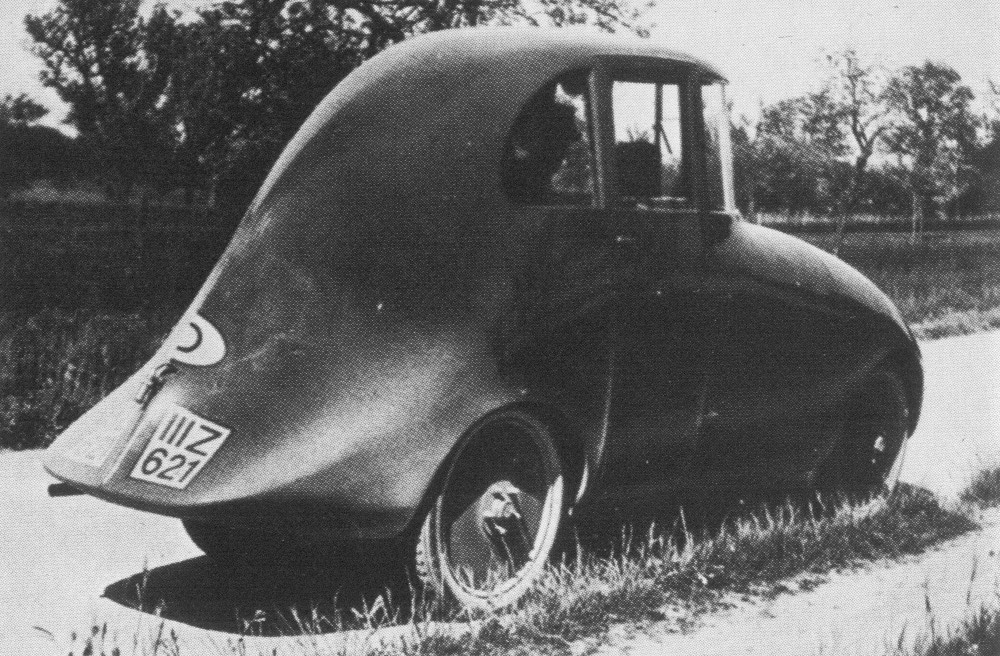
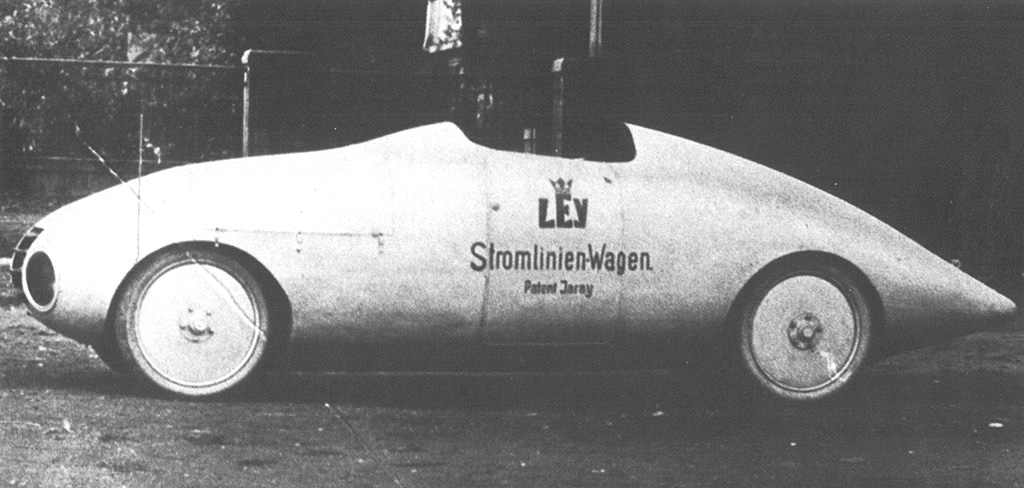
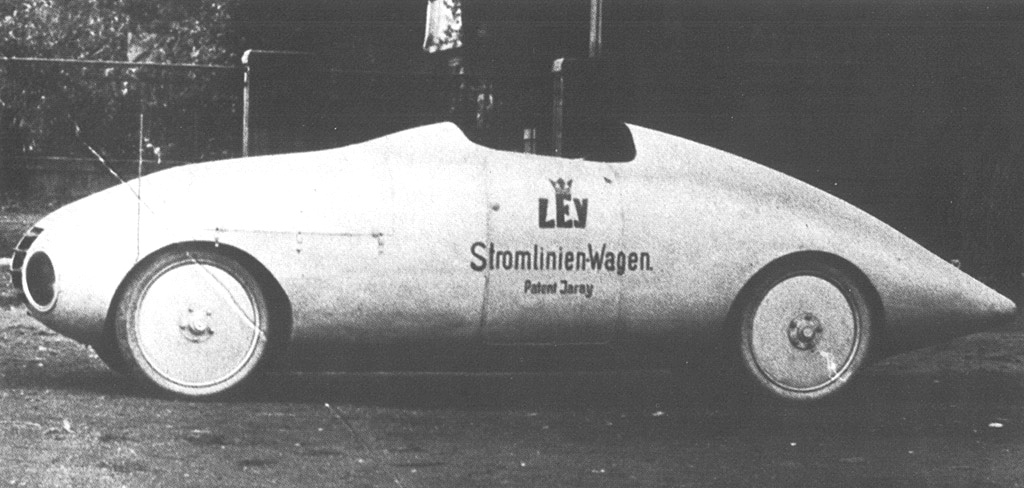
A year later, after a cooperation with Alfred Ley from "Rud. Ley Maschinenfabrik A.-G.", the world's first aerodynamic car appeared: the Ley T6. Following Jaray's streamline principles, the car could reach speeds in excess of 100 km/h (62 mph) using a four-cylinder 1.5 liter engine with only 20 hp. It was calculated that if a “regular” bodywork had been used, the maximum speed wouldn't have passed the 70 or 75 km/h mark (40-45 mph).
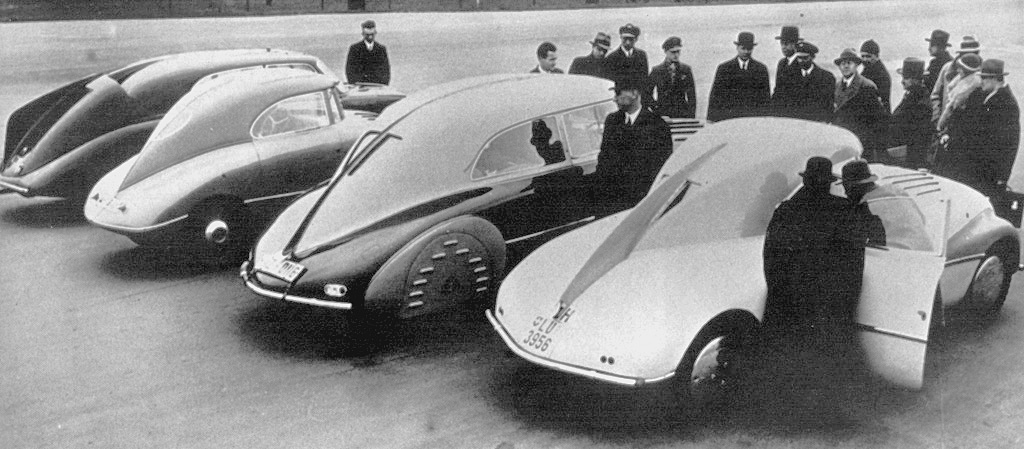
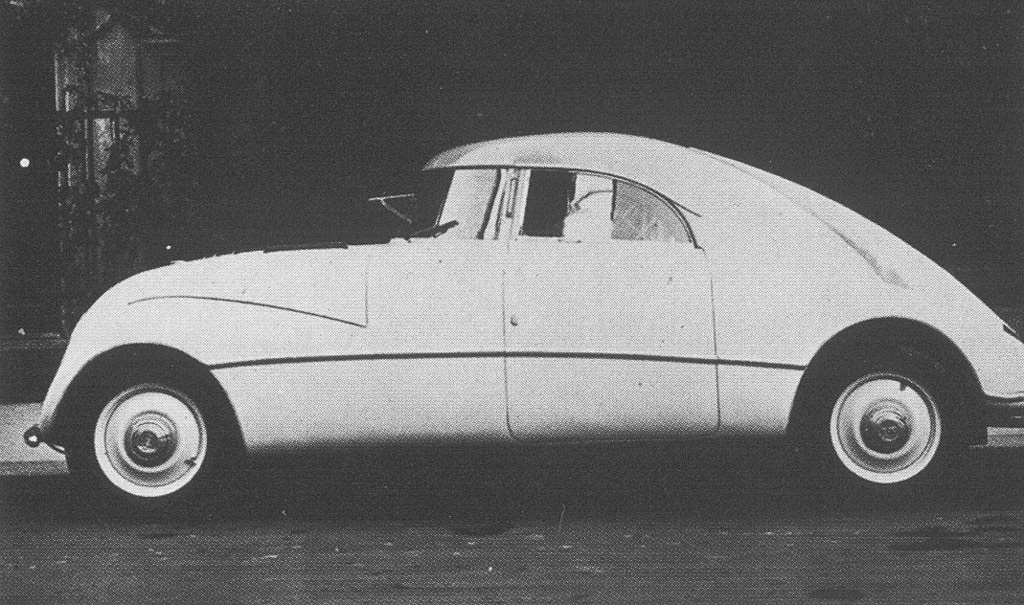
After successful tests with the car, other manufacturers requested or even stole Paul Jaray's revolutionary streamline principles. Reputed car makers like BMW, Hanomag, DKW, Fiat, Hansa, OPEL, Steyr, Mercedes-Benz and Maybach Manufaktur had numerous prototypes or short series-produced models in the following decades. Companies like Chrysler, with their Airflow models, or Peugeot, with the 402, had to pay royalties to Jaray for using his idea in the design of their cars.
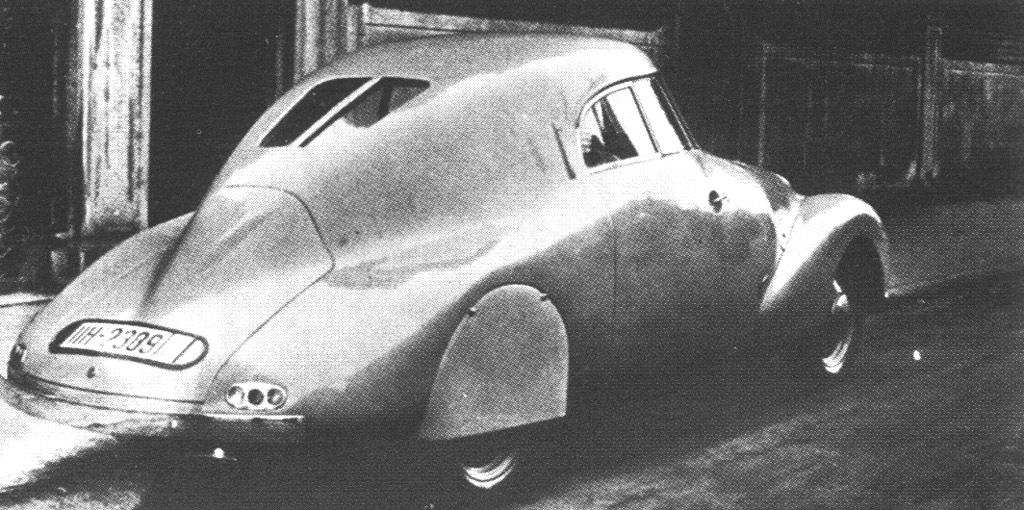
After starting his own design consulting company, Stromlinen Karosserie Ges. in Zurich, Paul Jaray started working with a a lot of manufacturers who wanted to use his revolutionary ideas. Sadly, apart from just a few aerodynamic vehicles produced by Maybach, the only series-production cars to utilize his teardrop shape following Jaray's full approval were the rear-engined Tatras from the 1930s.
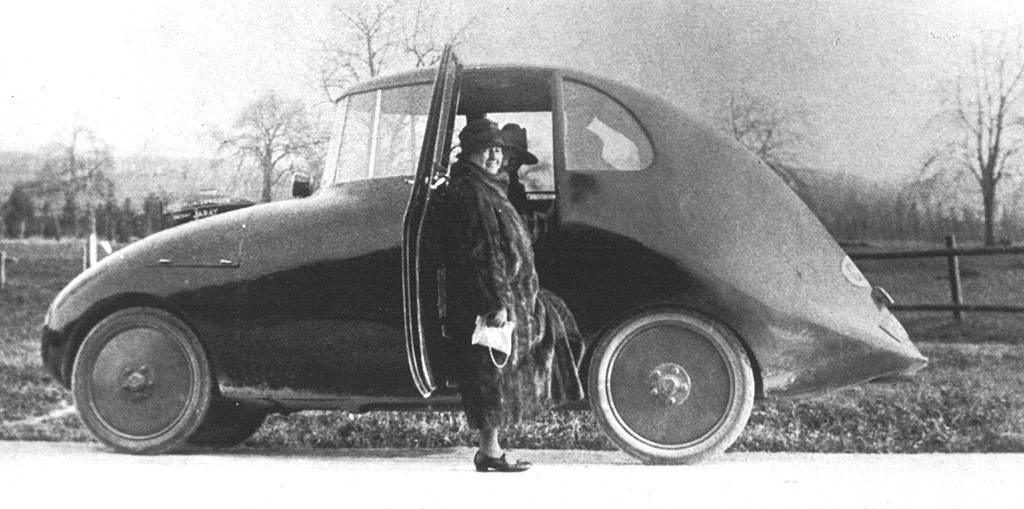

This drawback was completely resolved (in style, we might add) by Dr Wunibald Kamm, whose signature Kammback, or Kamm-tail is still used in some modern cars, like the Toyota Prius, or even the Chevrolet Corvette. The idea was that instead of a long sweeping line to the rear to form the teardrop shape, Kamm cut off the tail at an intermediate point, therefore gaining the benefits of the aerodynamic shape without the inherent size problem.
Now, over 80 years later, it is almost impossible to conceive the fact that for over three decades in the dawn of car production not even one manufacturer in the world had even thought about designing a model with an aerodynamic shape in mind. What else can we say? Goodbye flat windscreens, hello curved shapes!
Famous industrial designer Norman Bel Geddes wrote in 1932: “An object is streamlined when its exterior surface is so designed that upon passing through a fluid such as water or air the object creates the least disturbance in the fluid.”
The most important work in the study of aerodynamics in the beginning of the century was conducted by Hungarian-born engineer Paul Jaray, who first started by completely redesigning the now-famous Zeppelins from looking like a tube to the streamline shapes we know today. He was born in Vienna in 1889, and after studying mechanical engineering he moved to the town of Zeppelins and Maybachs, Friedrichshafen.
The first streamline cars
Since 1912, he was actively involved in aerodynamics in every shape or form, but beside the dirigibles, his most famous work consists of the revolution he brought to car design. His first working prototype was announced as early as 8 of September 1921 with the request for a patent he made at the Berlin office for inventions.A year later, after a cooperation with Alfred Ley from "Rud. Ley Maschinenfabrik A.-G.", the world's first aerodynamic car appeared: the Ley T6. Following Jaray's streamline principles, the car could reach speeds in excess of 100 km/h (62 mph) using a four-cylinder 1.5 liter engine with only 20 hp. It was calculated that if a “regular” bodywork had been used, the maximum speed wouldn't have passed the 70 or 75 km/h mark (40-45 mph).
After successful tests with the car, other manufacturers requested or even stole Paul Jaray's revolutionary streamline principles. Reputed car makers like BMW, Hanomag, DKW, Fiat, Hansa, OPEL, Steyr, Mercedes-Benz and Maybach Manufaktur had numerous prototypes or short series-produced models in the following decades. Companies like Chrysler, with their Airflow models, or Peugeot, with the 402, had to pay royalties to Jaray for using his idea in the design of their cars.
After starting his own design consulting company, Stromlinen Karosserie Ges. in Zurich, Paul Jaray started working with a a lot of manufacturers who wanted to use his revolutionary ideas. Sadly, apart from just a few aerodynamic vehicles produced by Maybach, the only series-production cars to utilize his teardrop shape following Jaray's full approval were the rear-engined Tatras from the 1930s.
Practice makes perfect
Although he was the originator of the streamline design in automobiles, Paul Jaray's teardrop shape wasn't exactly a total revolution and maybe that is why it wasn't embraced by every manufacturer in the world. Apart from the obvious weirdness the aforementioned shape brought, one of the main disadvantages was the very long tail.This drawback was completely resolved (in style, we might add) by Dr Wunibald Kamm, whose signature Kammback, or Kamm-tail is still used in some modern cars, like the Toyota Prius, or even the Chevrolet Corvette. The idea was that instead of a long sweeping line to the rear to form the teardrop shape, Kamm cut off the tail at an intermediate point, therefore gaining the benefits of the aerodynamic shape without the inherent size problem.
Now, over 80 years later, it is almost impossible to conceive the fact that for over three decades in the dawn of car production not even one manufacturer in the world had even thought about designing a model with an aerodynamic shape in mind. What else can we say? Goodbye flat windscreens, hello curved shapes!
 Google News