Other sections
  • Editorial
  • Coverstory
  • Girls Only
  • Auto Guide
  • Crash Test
  • Glossary
  • Newsletter
  • Car finder
  • Editorial Team
Editorial
Editorial
Car Industry's 2010 Face Off... ... If 2009 was the year of thundering bankruptcies and an almost total collapse of the American car industry - while the Japanese more or less flourished - 2010 seems to be the exact opposite. General Motors, Ford and even Chrysler – who were technically dead as ... Continue reading >
Weekly Poll
100+ years since the invention of the self-propelled car, three new engines battle for a place in the automotive future. Which one do you see in your car 10 years from now?


Submit | Show results
 

LATEST LOG ENTRIES:


QUICK STATS:


More stats >>

26th of February 2009 | 14:46 GMT | Daniel Patrascu

Lotus Omnivore Two Stroke Engine Detailed

STORY HIGHLIGHTS:

Text size - +
  • Lotus Omnivore is a two stroke monobloc engine
  • No poppet valves makes the engine allow better compression
  • The single cylinder engine will be displayed at Geneva

 
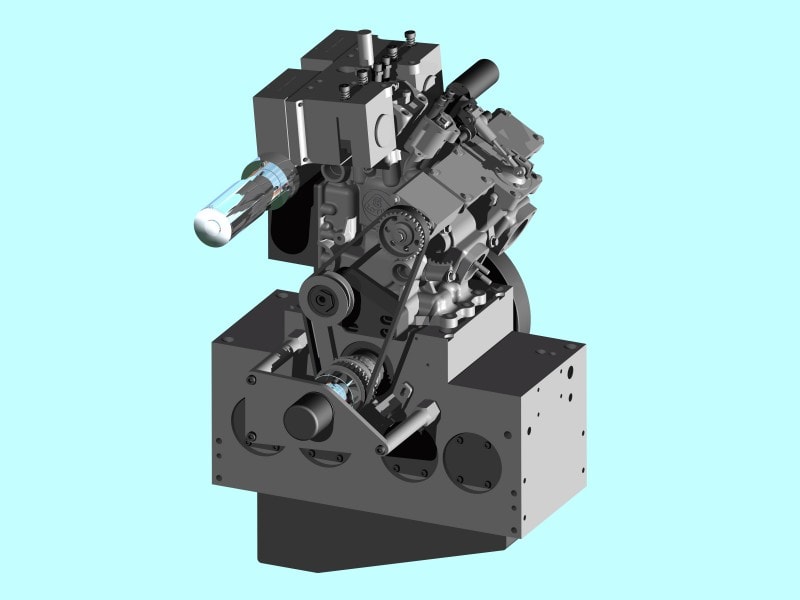
Click to enlarge [The single cylinder research engine you will see in Geneva]
The single cylinder research engine you will see in Geneva
Research into developing better yet more fuel-efficient engines is getting more an more of a rhythm these days, as the 2009 Geneva Auto Show is about to begin. What went on behind the scenes until now gets uncovered, as engine and car manufacturers try to get the upper hand. In that note, lotus Engineering released details on the work they have been doing so far.

The Omnivore engine concept does not use meat and vegetables to function. It just has a variable compression ratio system and two-stroke operating cycle with direct fuel injection that allows it to increase fuel efficiency for sustainable alcohol based fuels.

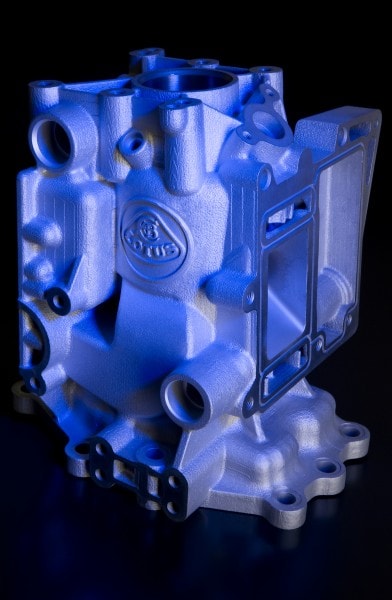
The engine features a monoblock construction that blends the cylinder head and block together. By doing this, there is no need for a cylinder head gasket. The application of a monoblock is possible due to the absence of poppet valves. A charge trapping valve in the exhaust port allows asymmetric timing of exhaust flow and continuous variation of the exhaust opening point.
Click to enlarge [Lotus Omnivore Two Stroke Engine Detailed - pic 2]
The variable compression ratio is achieved by the use of a puck at the top of the combustion chamber. This system moves up and down affecting the change in geometric compression depending on the load demands on the engine.

“The absence of poppet valves in two-stroke engines makes the incorporation of a variable compression ratio system relatively straightforward. Our research into these systems on four-stroke engines has led us to the conclusion that while thermodynamically it is a desirable technology to incorporate, practically it is very difficult, particularly taking into consideration production feasibility," said Geraint Castleton-White, Lotus powertrain chief.

"This two-stroke engine could solve these practical difficulties and simultaneously permits a much larger range of compression ratio adjustment," added the official.

On display at the 2009 Geneva Auto Show will be the single cylinder research engine monoblock, which has an architecture designed for high thermal efficiency when fueled on any alcohol based fuel or gasoline.

Share, bookmark, add

Read by 3,707 users | Add comment | Link to this article | Subscribe to news Subscribe to news | Print article Print | Send to friend Send to friend
 

User comments

 
  1. Yomi :

    I am so much interested in reasearch that to prove 2 stroke engines are beter than 4 stroke. theoretically is possible then practally why not. i need guidance for that will u please????


Leave a comment

 
(required)
(optional, fill in only if you expect a reply from us) (will not be published)

Prove you're not a bot: Math problem   =  
 

Submit