For a long time, safety wasn't a priority for automotive manufacturers. In the olden days, the vast majority of motorists were not preoccupied with safety and survivability because – obviously enough – they didn't understand the potential risks of a crash as well as their modern counterparts do.
Getting impaled by the steering wheel in a frontal collision, crushing both legs, hitting one's head on the dashboard or A pillar, or becoming one with a tree on the outside of a corner due to understeer/oversteer are only a few grim scenarios from not that long ago. However, advancements in safety tech and automotive design have increased driver and occupant survivability to a level that wouldn't have been imaginable back in the 1950s.
Automotive safety can trace its roots back to the 1910s. Back then, Detroit-based inventor Charles Kettering demonstrated the electric starter to the detriment of the potentially dangerous hand crank. Tucker is credited with introducing the first padded dashboard in 1947, then Swedish automaker Saab produced the first car with a safety cage in 1949.
Another Swedish automaker made the three-point seatbelt a reality in the late 1950s, then airbags were introduced in the 1970s. The subsequent anti-lock brake system, traction control system, and electronic stability control system paved the way for more complex technologies, including automatic emergency braking, lane-keep assist, and so forth.
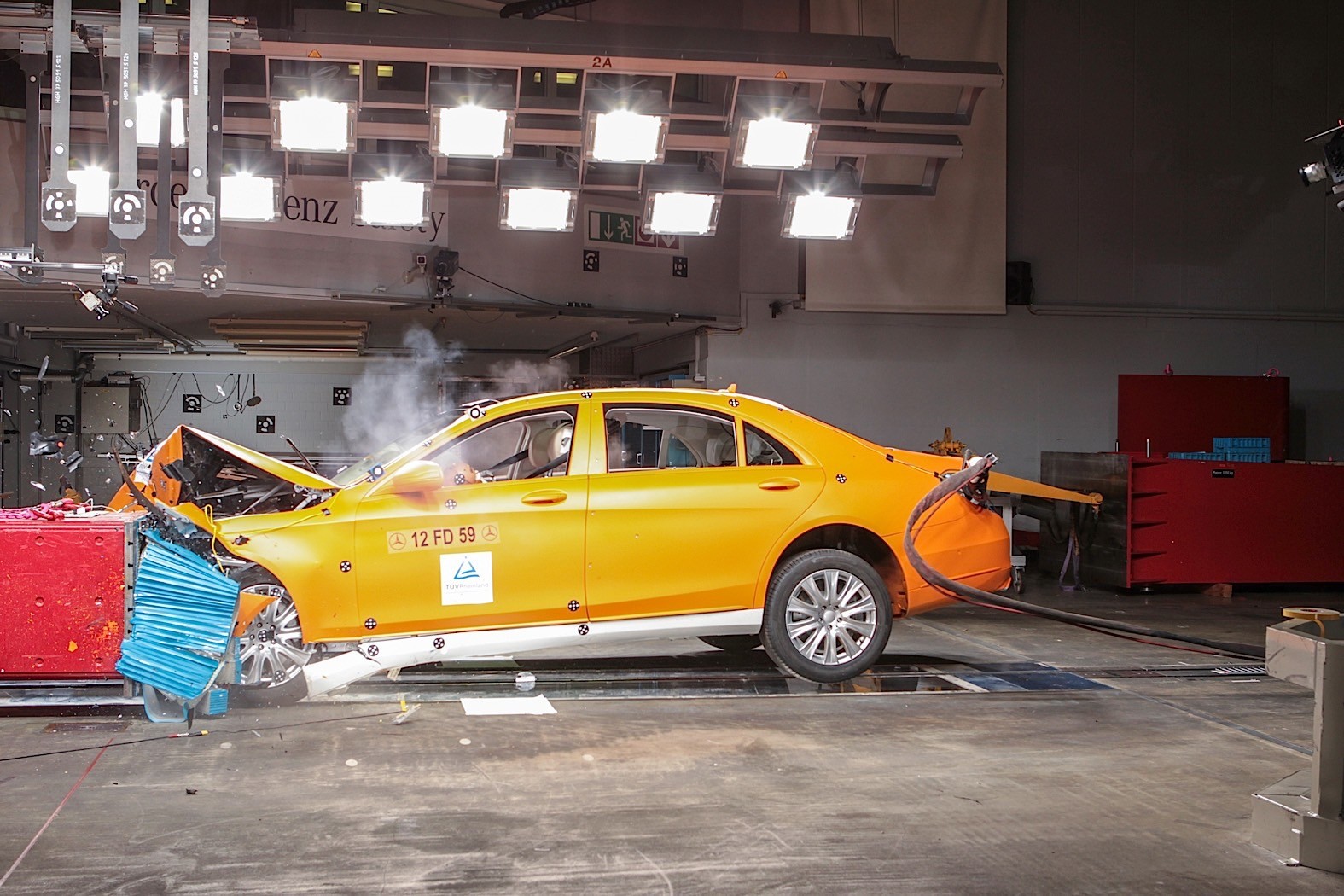
Photo: Mercedes-Benz AG
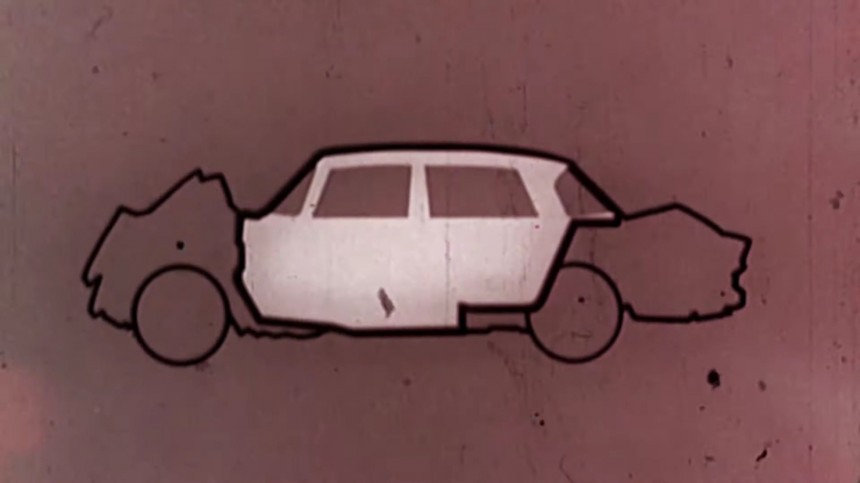
One of the most hideously underrated automotive safety technologies out there is the crumple zone. Hungarian engineer Bela Barenyi is widely considered the father of the crumple zone, a passive safety feature patented in 1937. It wasn't until after World War II that Barenyi's three-section vehicle body concept would come to fruition, those sections being the front crumple zone, the safety cage in the middle, and the rear crumple zone. The first series-production vehicle to partially implement this concept was the 1953 Mercedes-Benz Ponton.
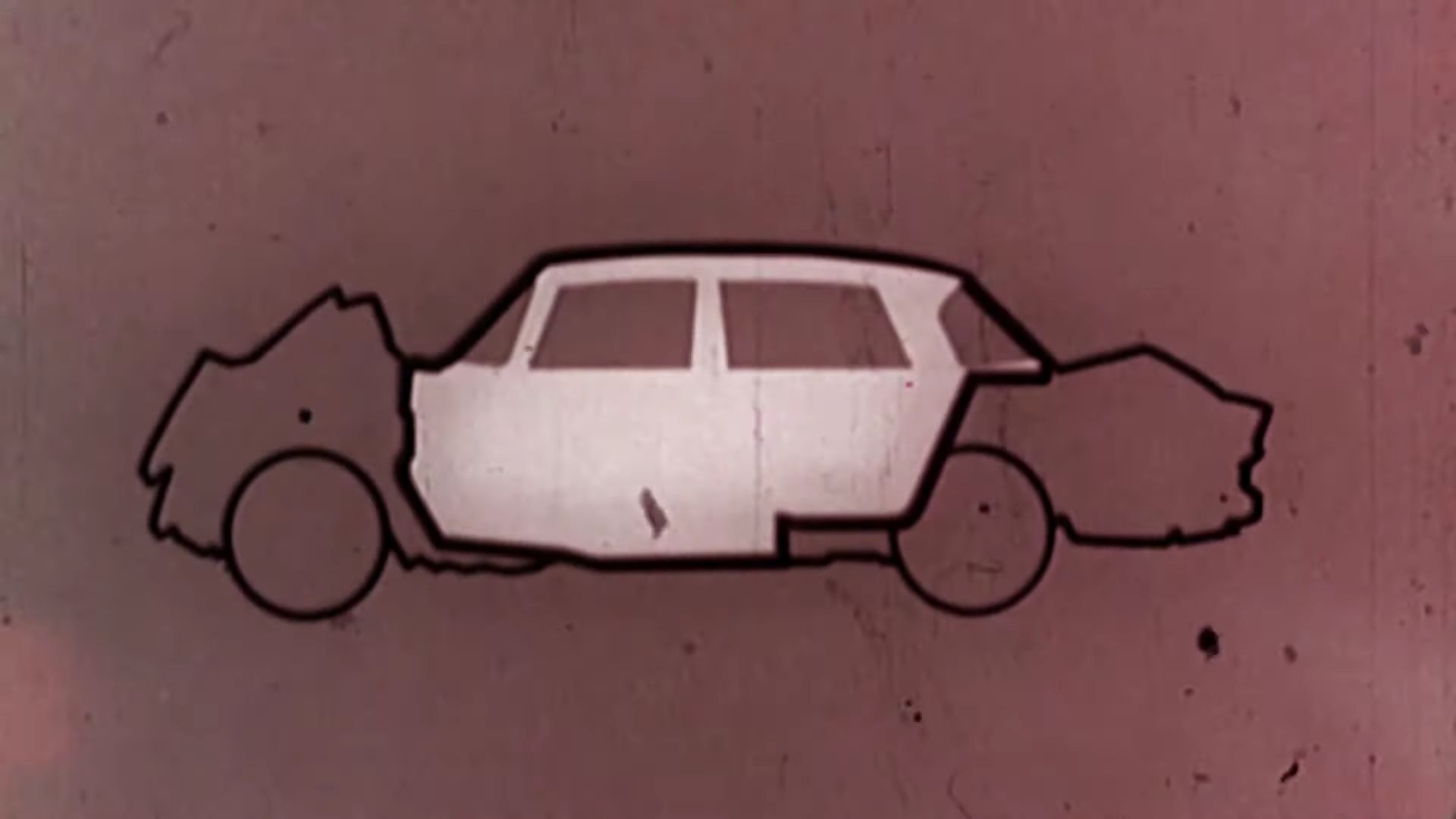
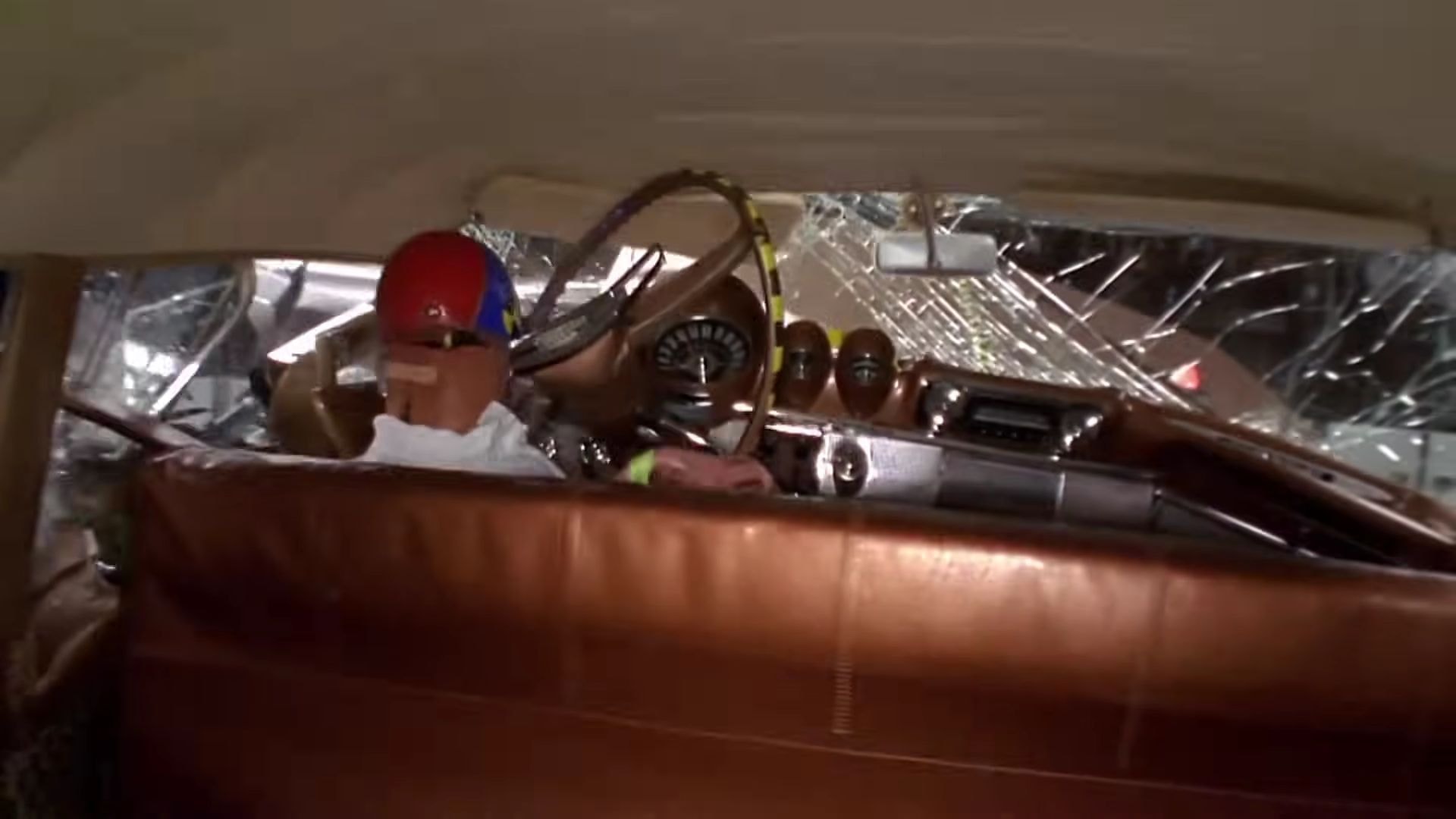
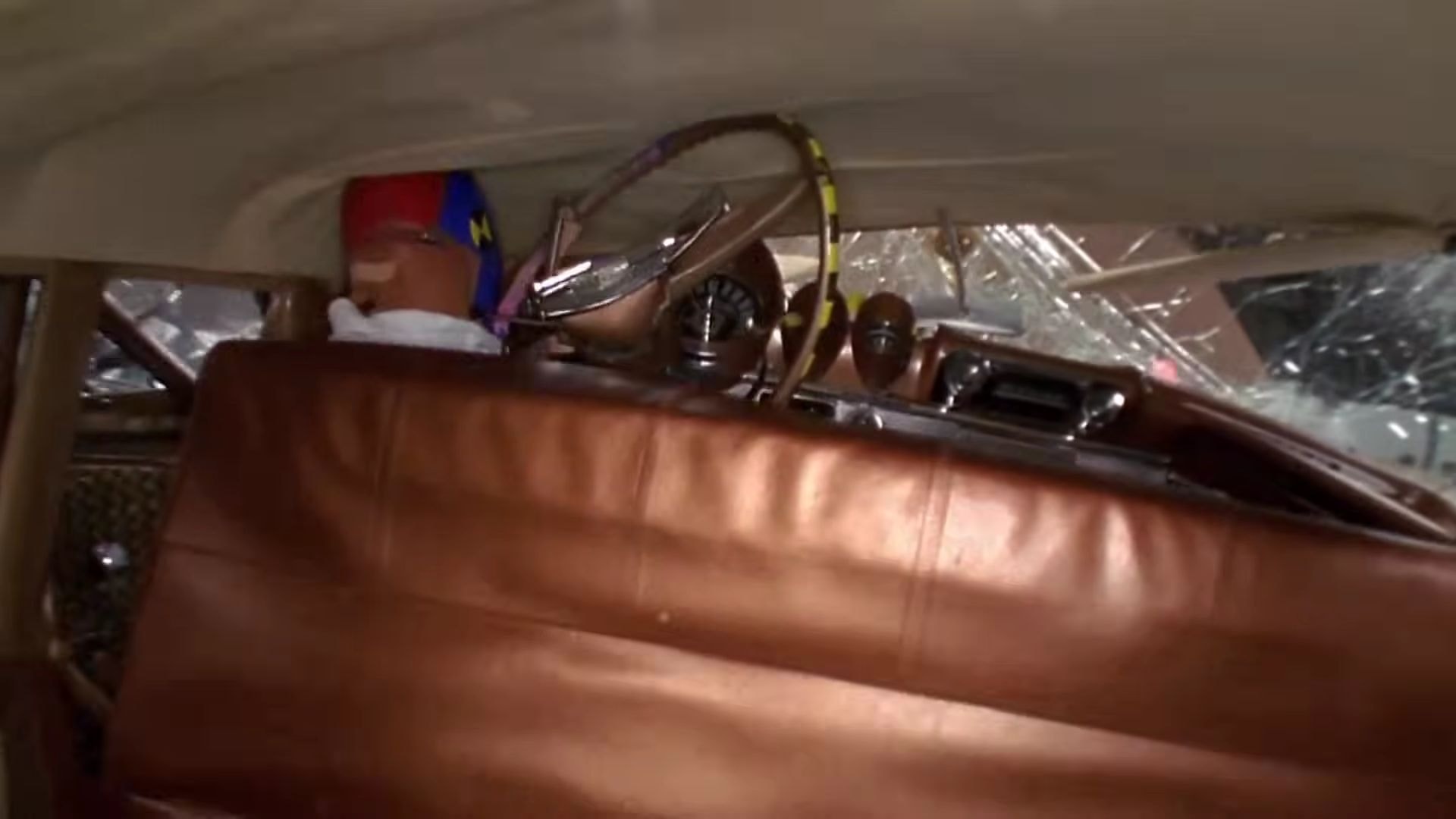
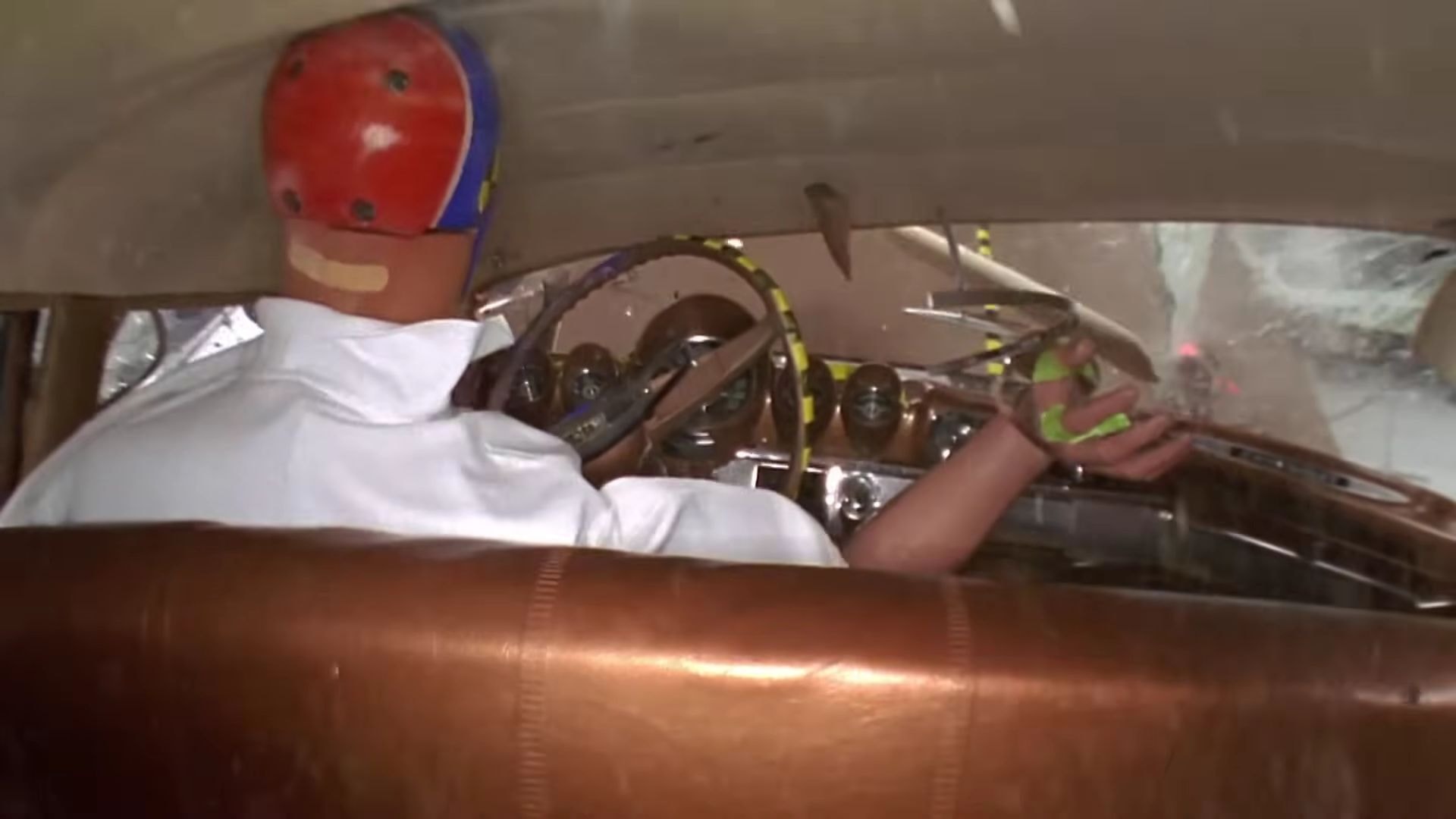
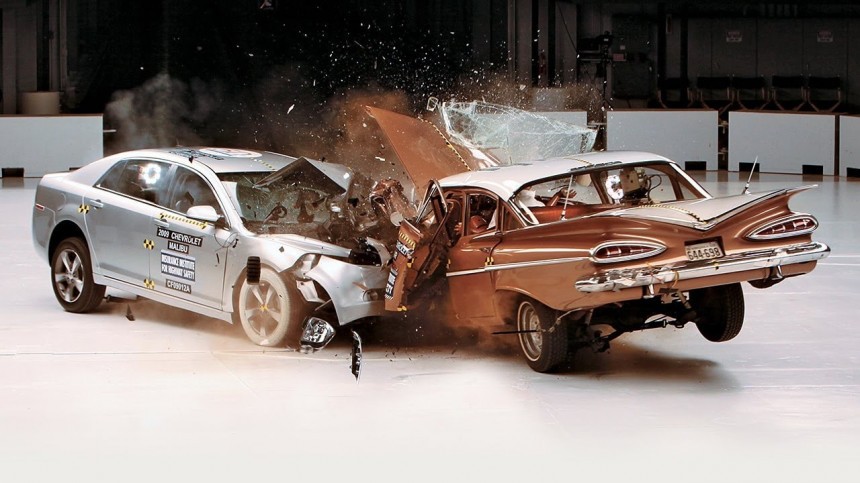
The entirety of Barenyi's three-section vehicle body concept was applied to the W111-series Fintail, which Mercedes-Benz produced between 1959 and 1971 in just under 371,000 examples. Gifted with a passenger safety cage and two crumple zones, the Heckflosse protects the driver and occupants in a rather simple way. As implied, the crumple zones up front and out back are designed to deform, thus dissipating kinetic energy to reduce whiplash and internal organ injuries. The automotive safety cell is designed to not crumple around the occupants.
The safety cell forms a cage-like structure with three main strengthened areas, those being the pillars (from the floor all the way to the roof), the roof frame, and – of course – the floor pan. It shouldn’t come as a surprise that automakers have also implemented beams and other stiffeners in the doors to distribute kinetic energy and resist intrusion.
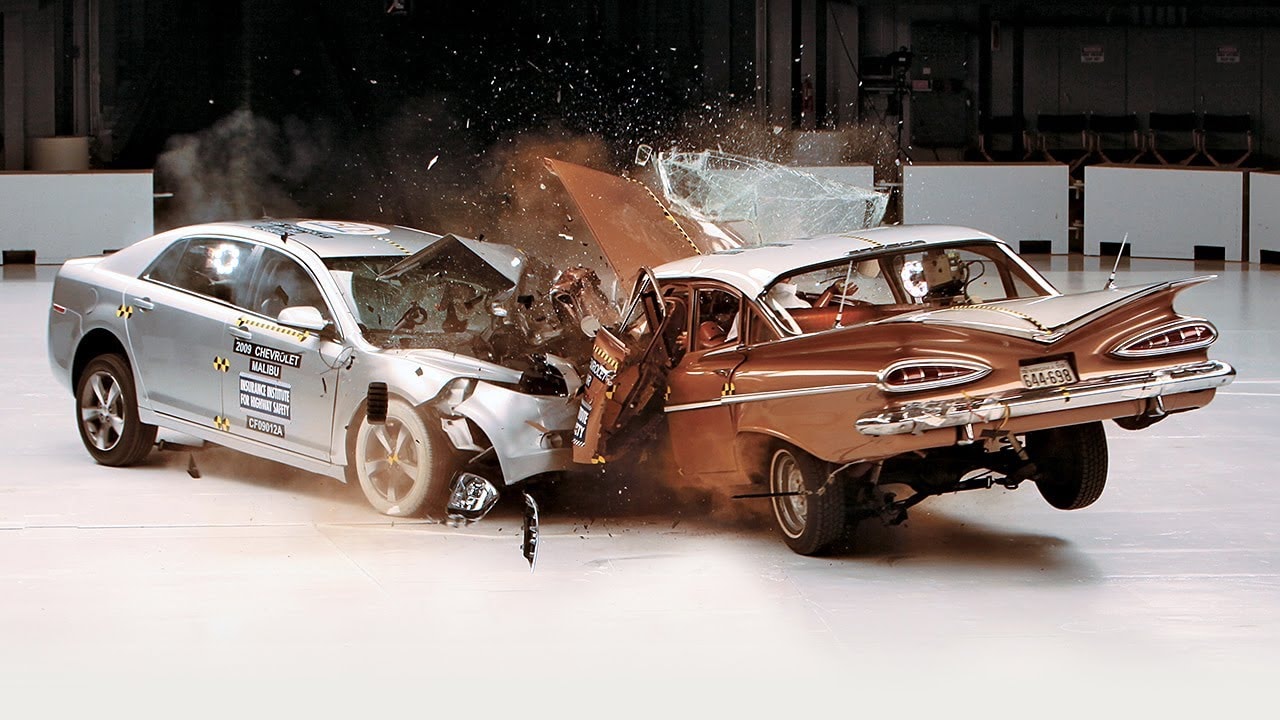
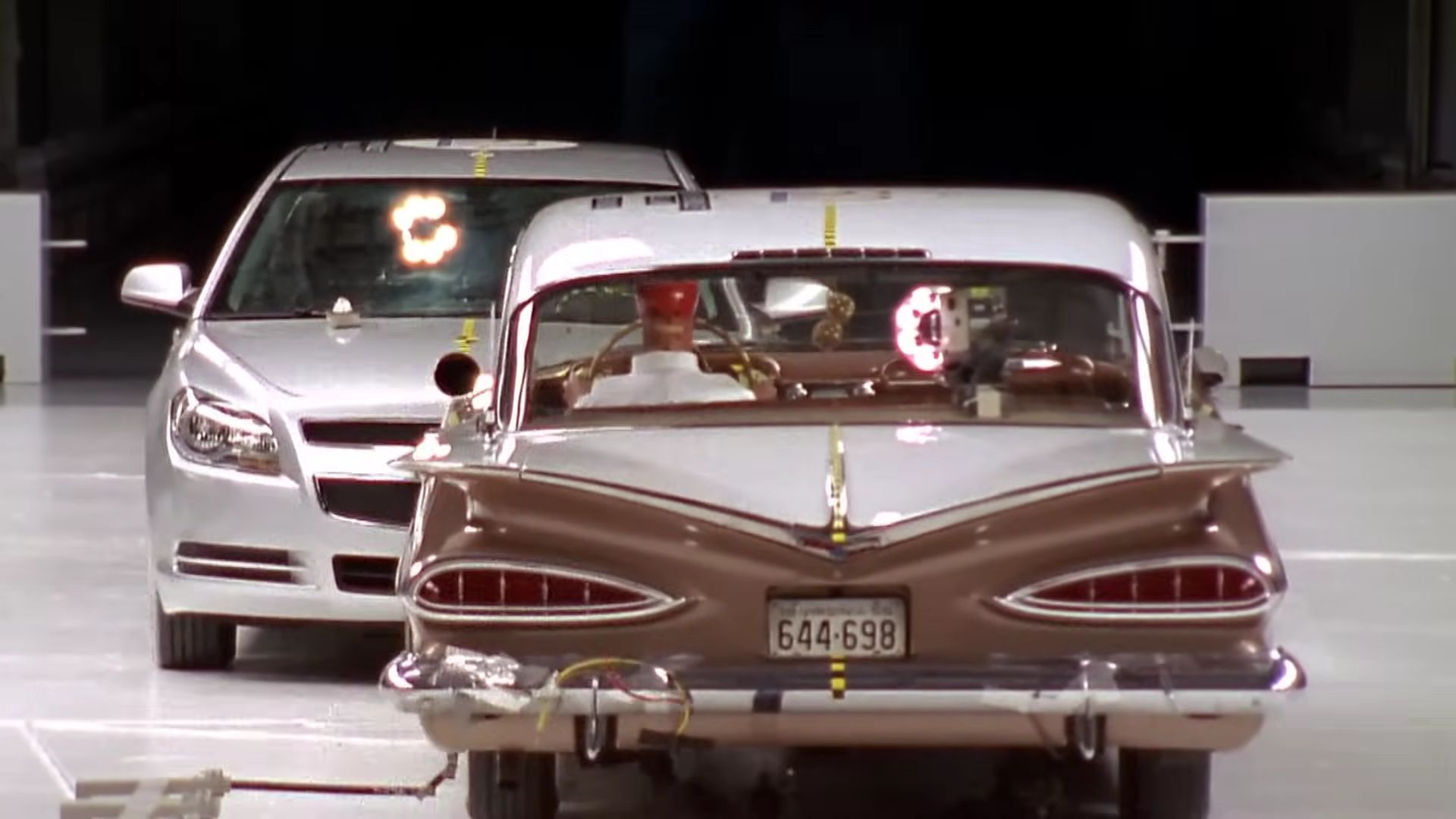
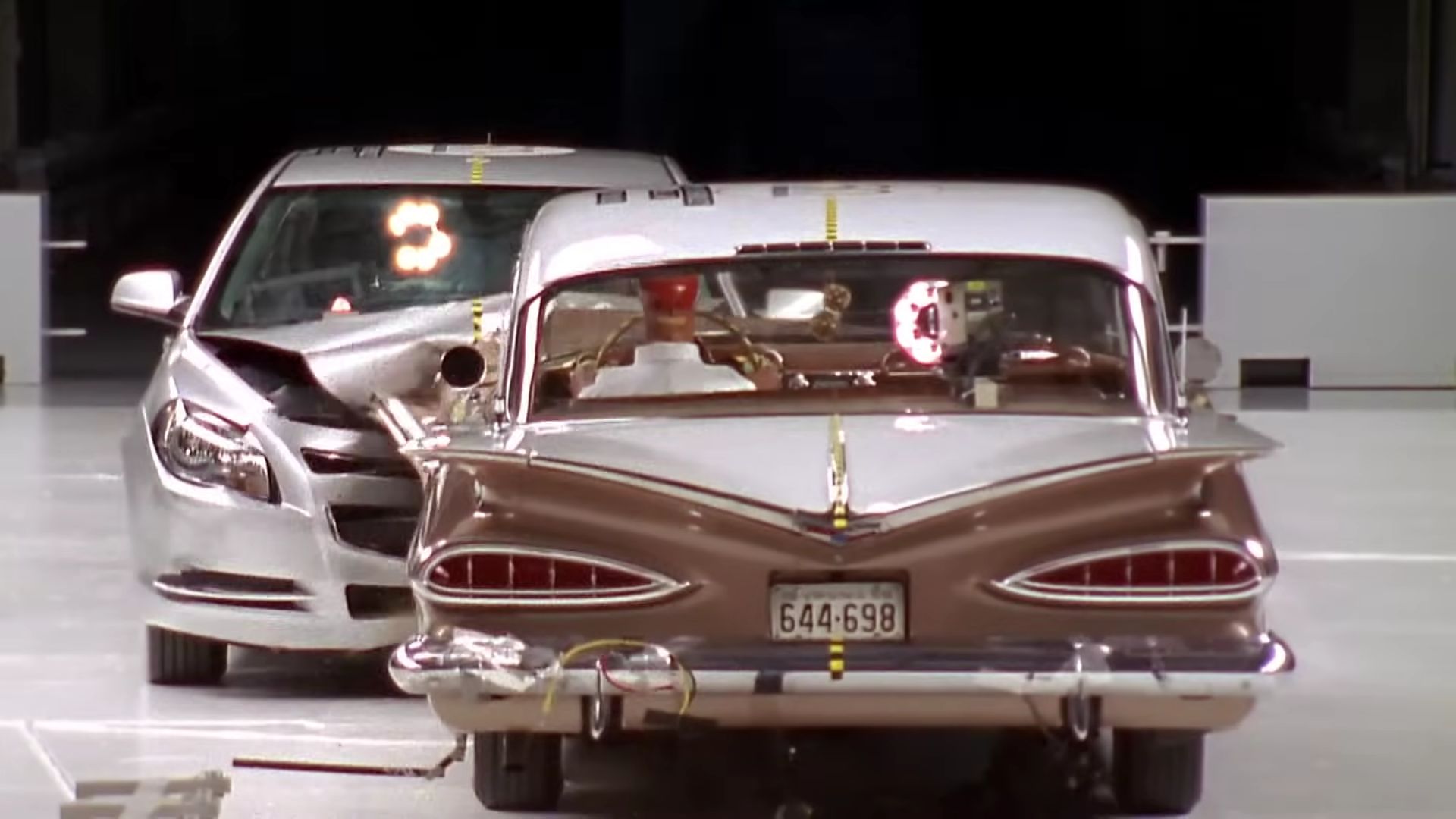
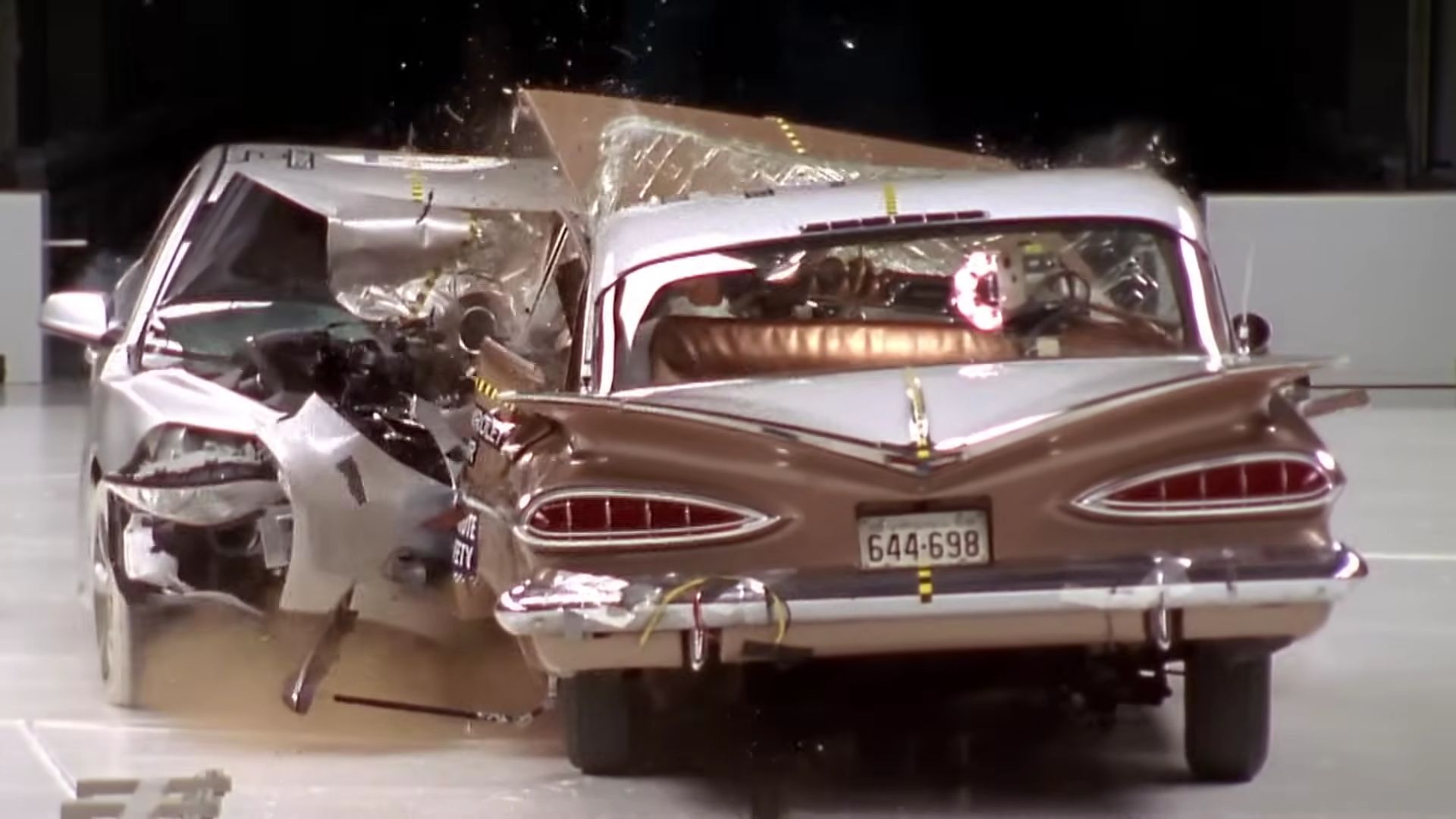
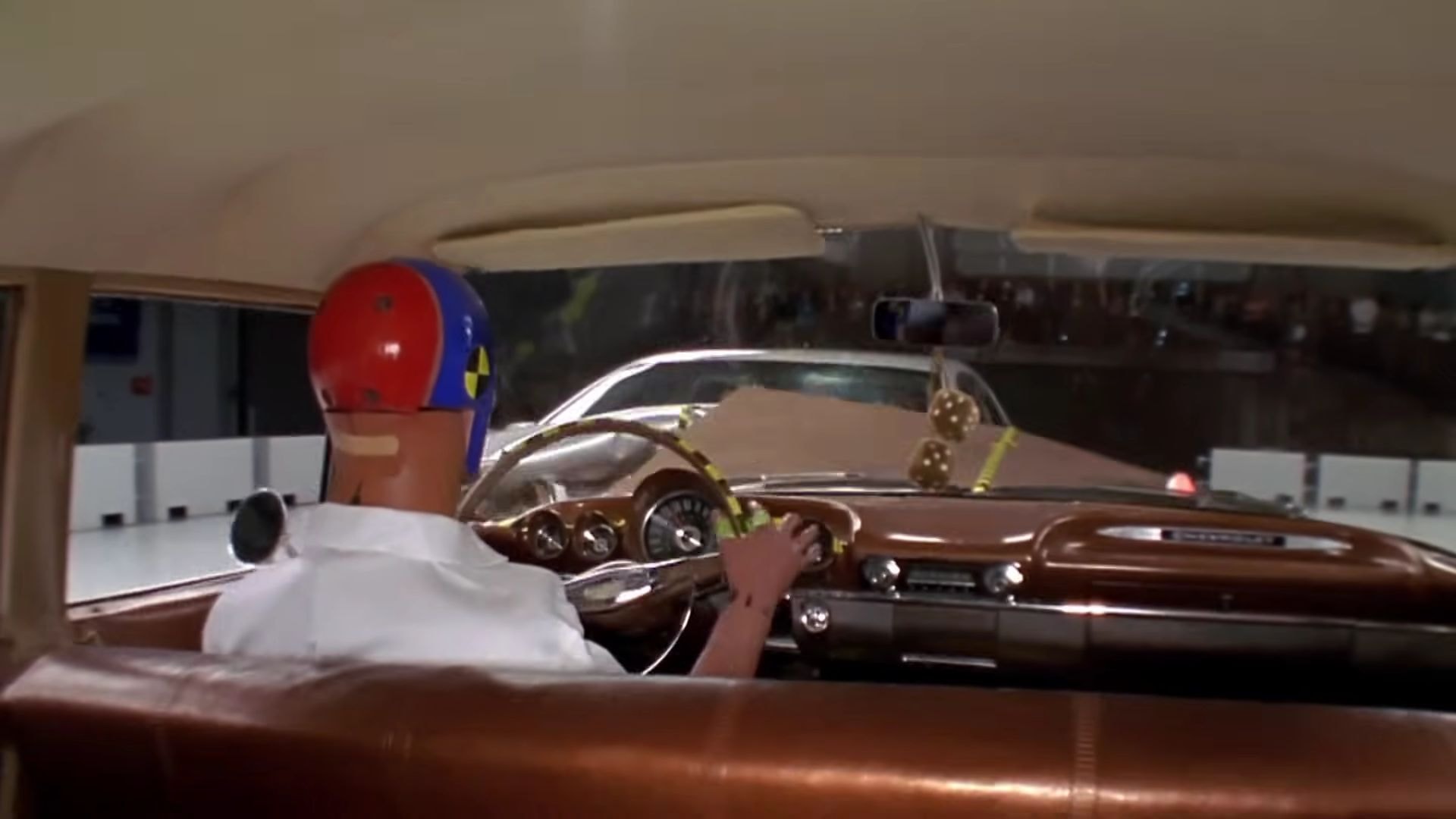
Photo: IIHS
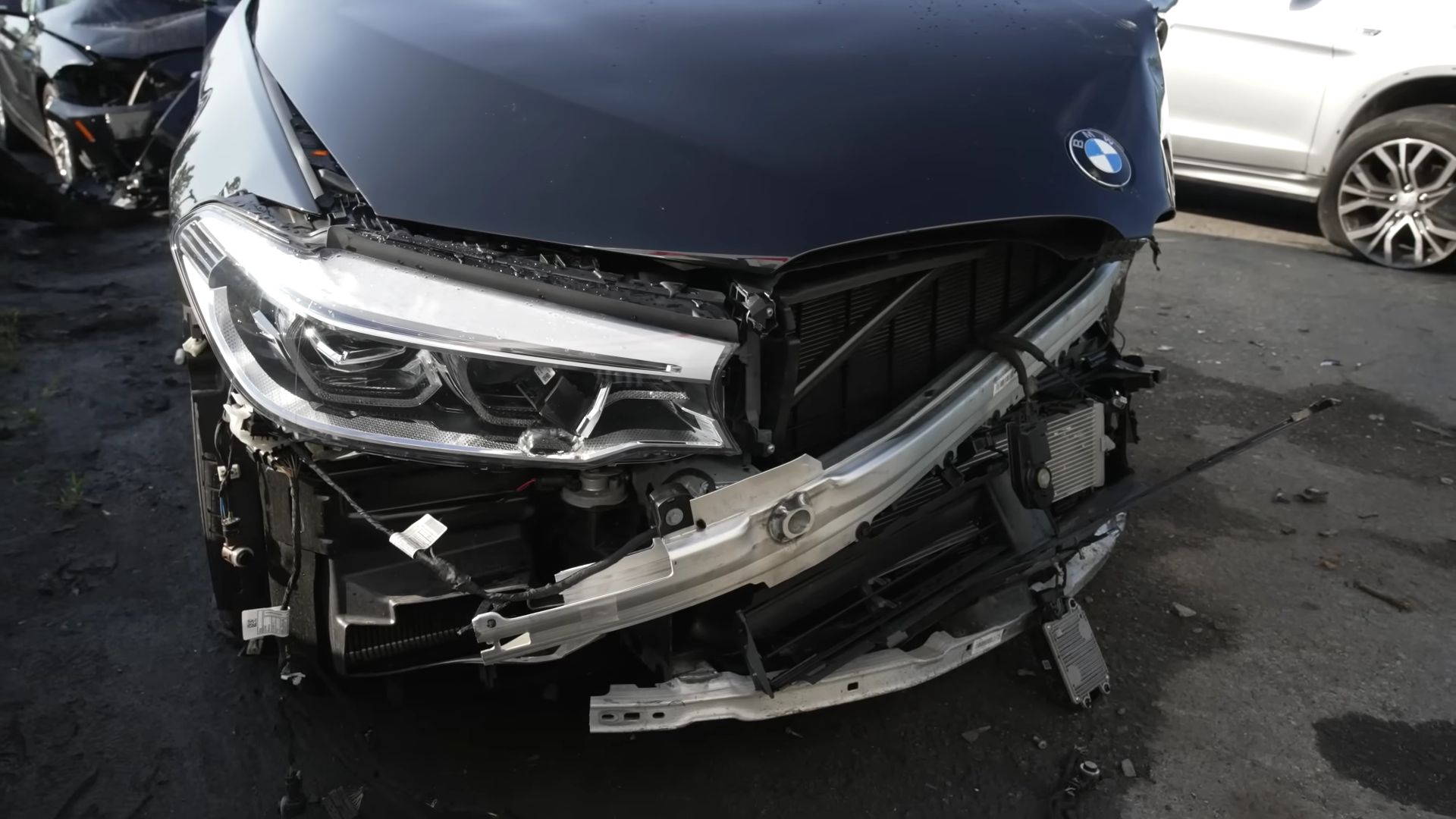
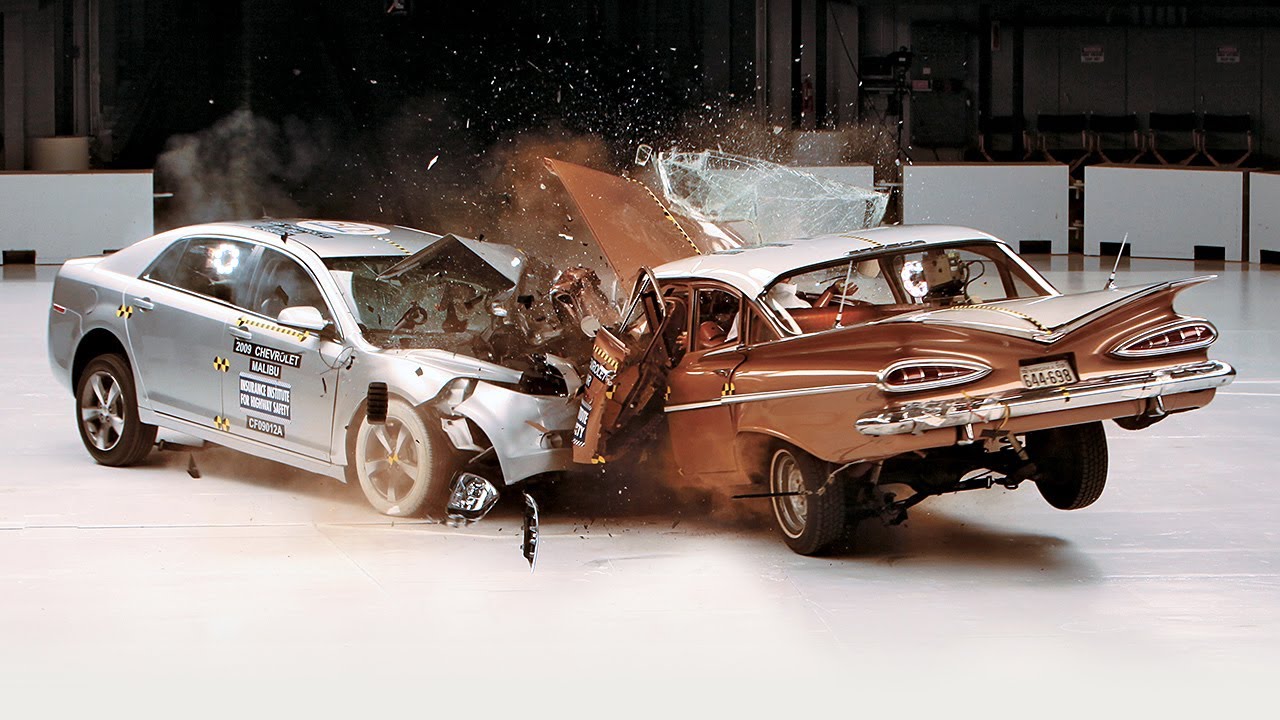
Crumple zones are more than meets the eye, though. From the very beginning, crumple zones were designed with outer edges that fold up first in the event of a crash. The inner structures crumple progressively, redirecting as much of the kinetic energy as possible from the cabin. The safety cage and crumple zones also happen to be a balancing act, namely a balancing act between safety performance, curb weight, and production costs.
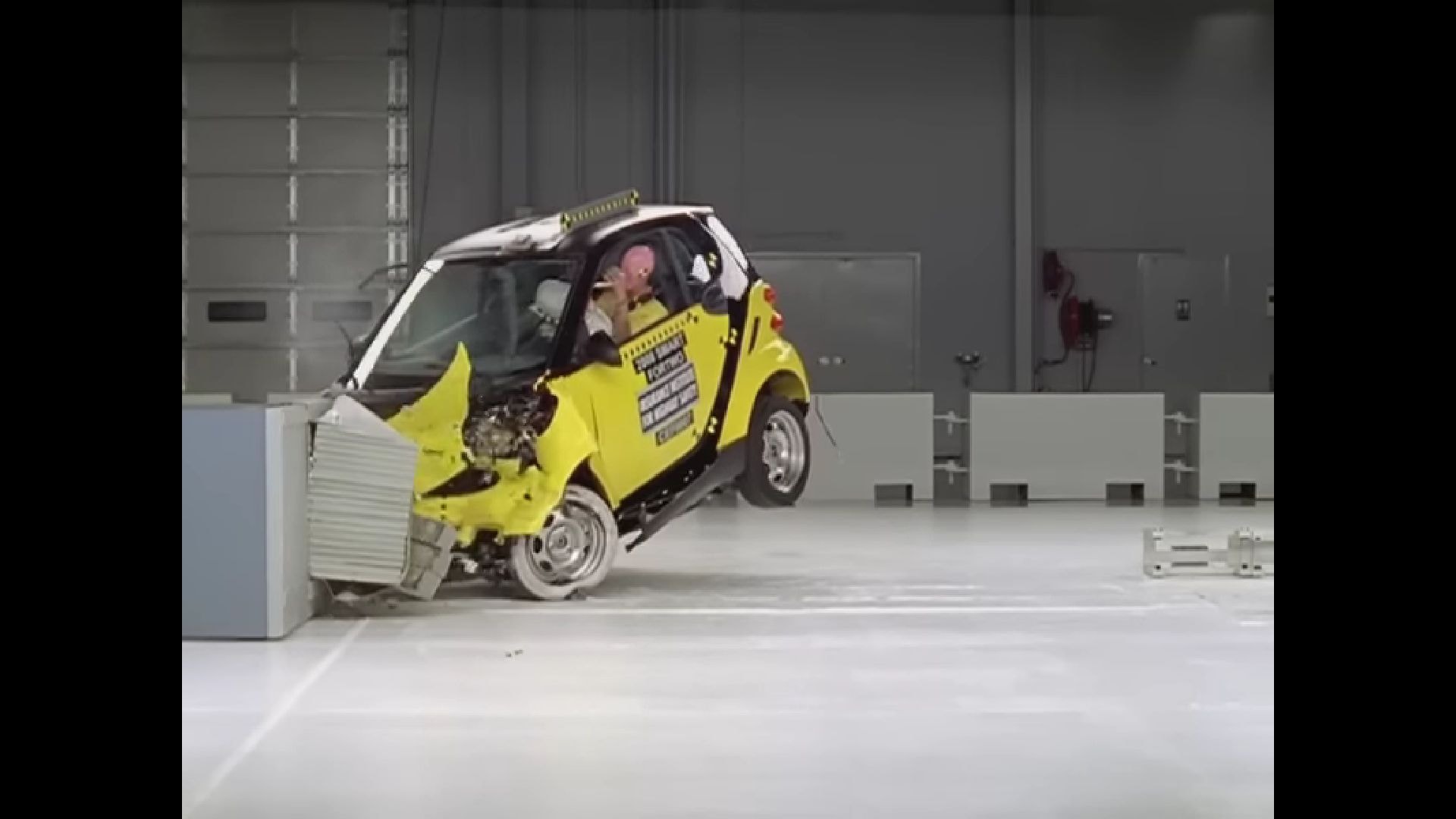
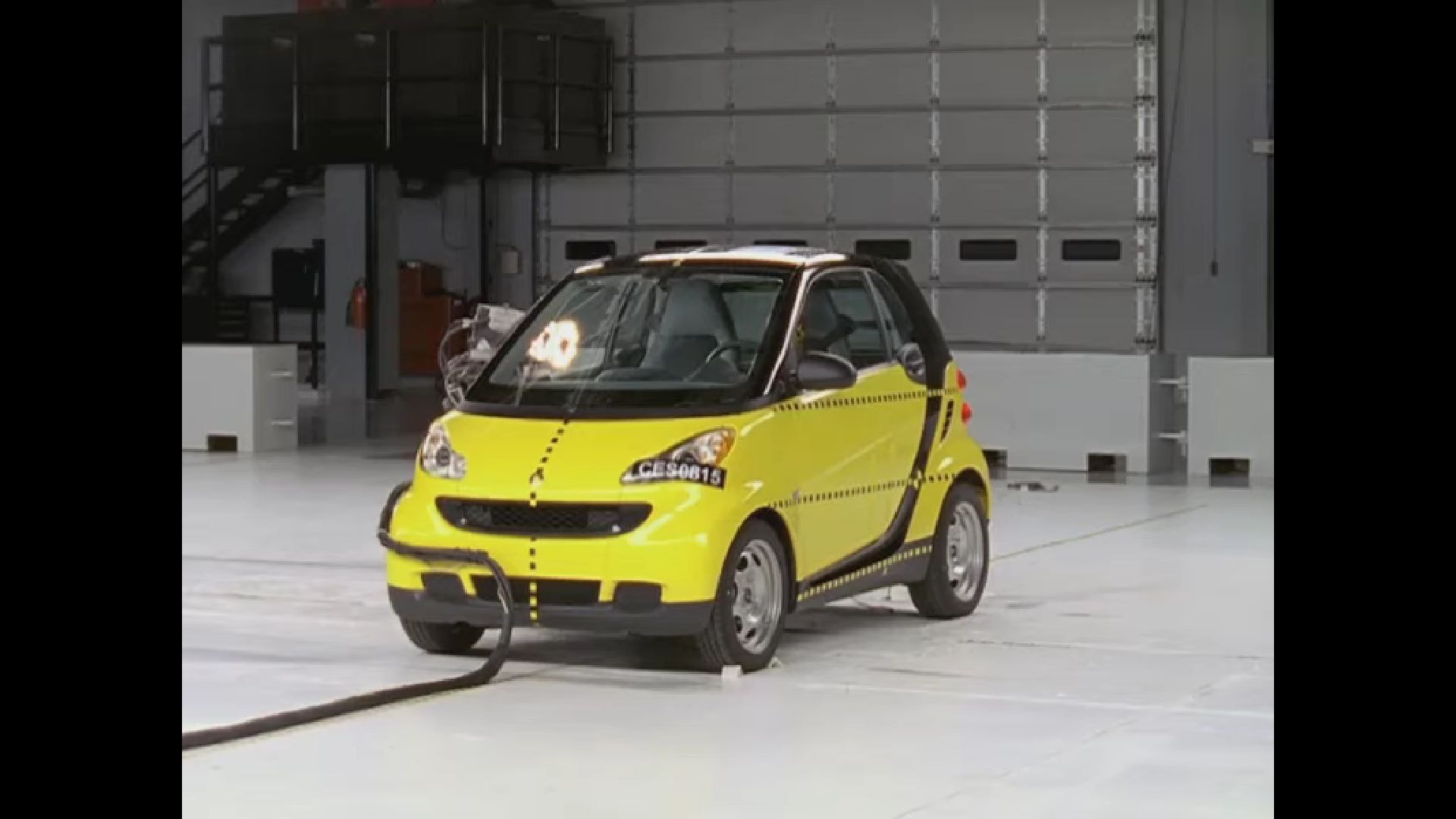
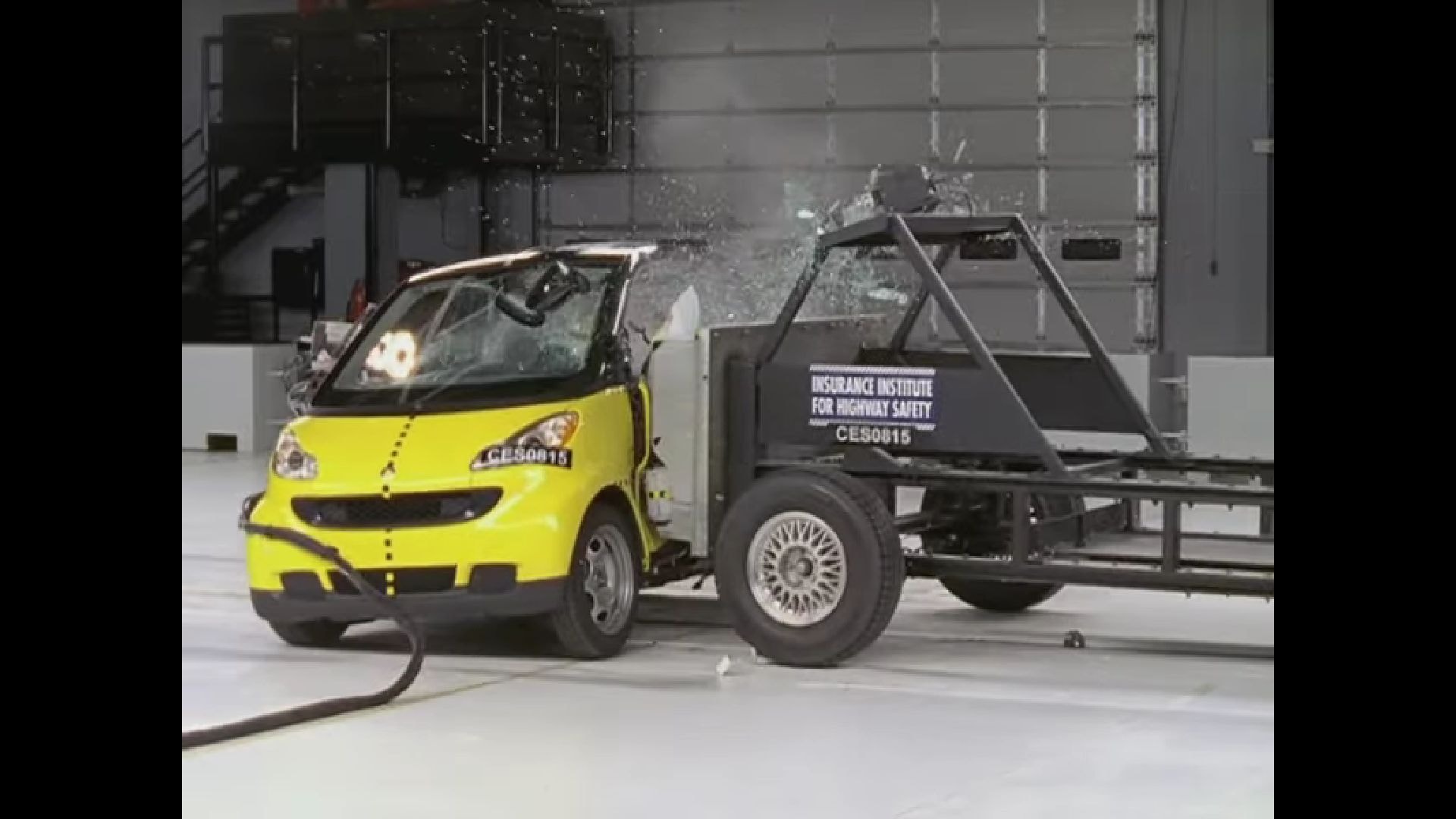
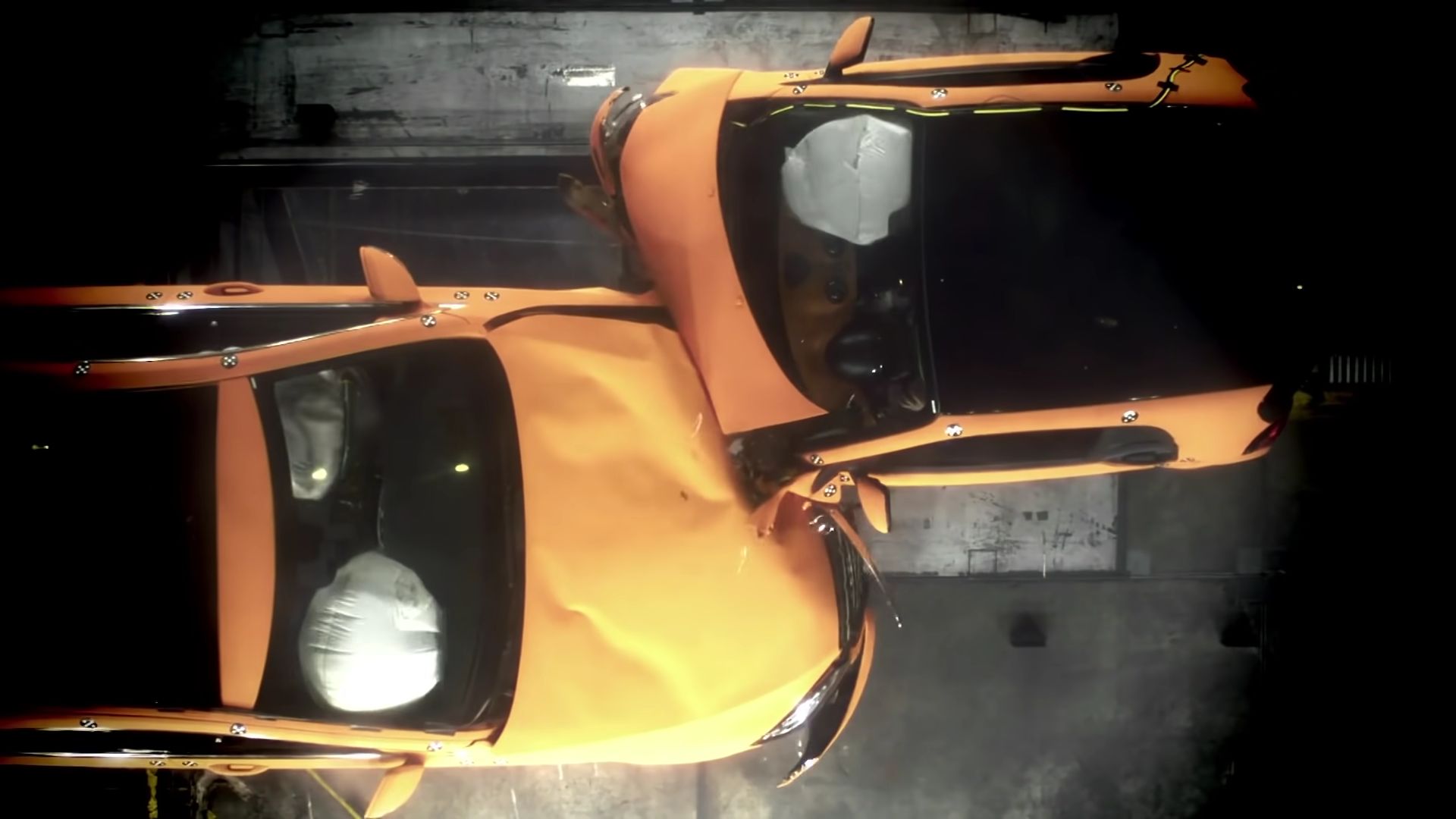
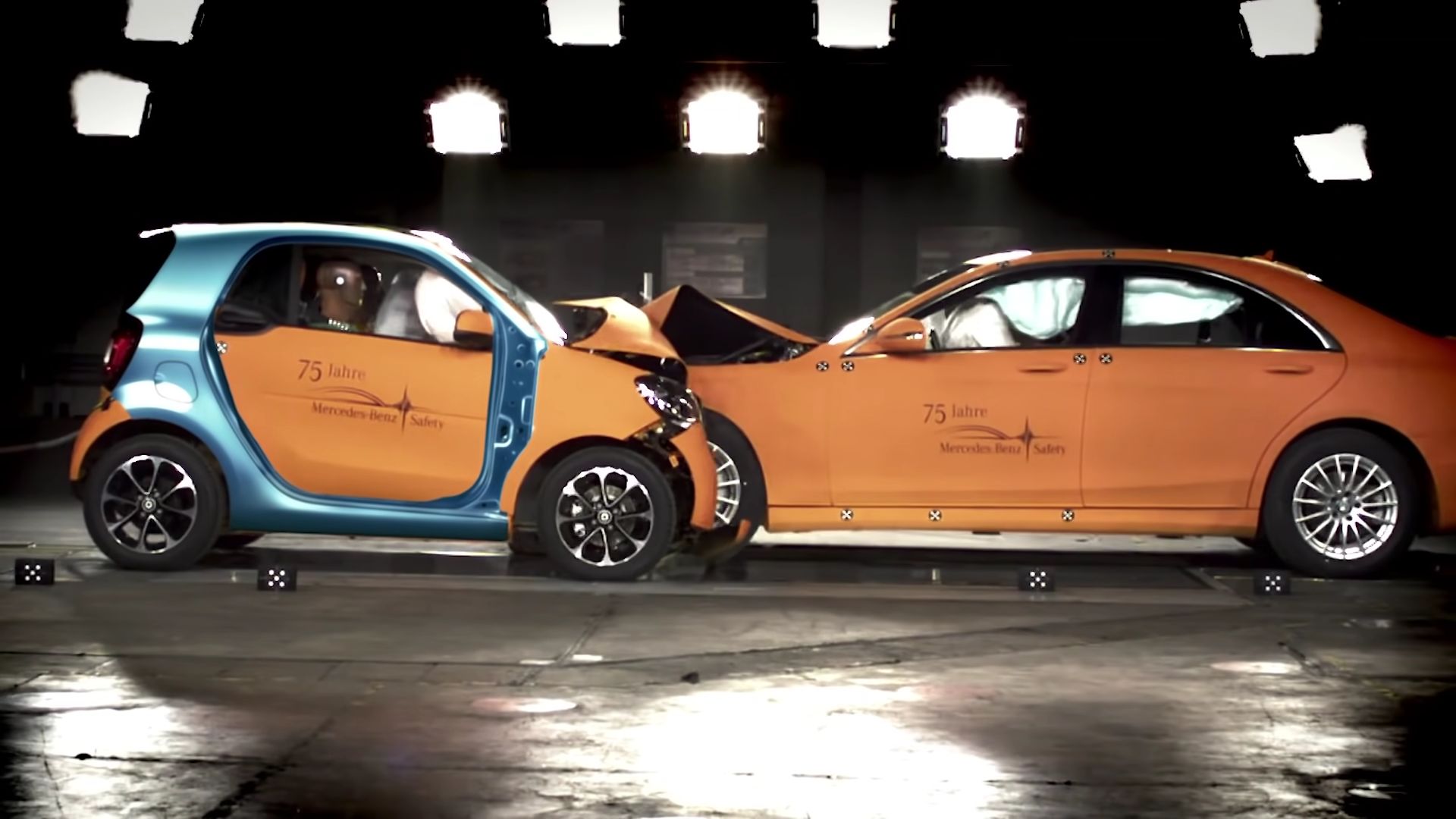
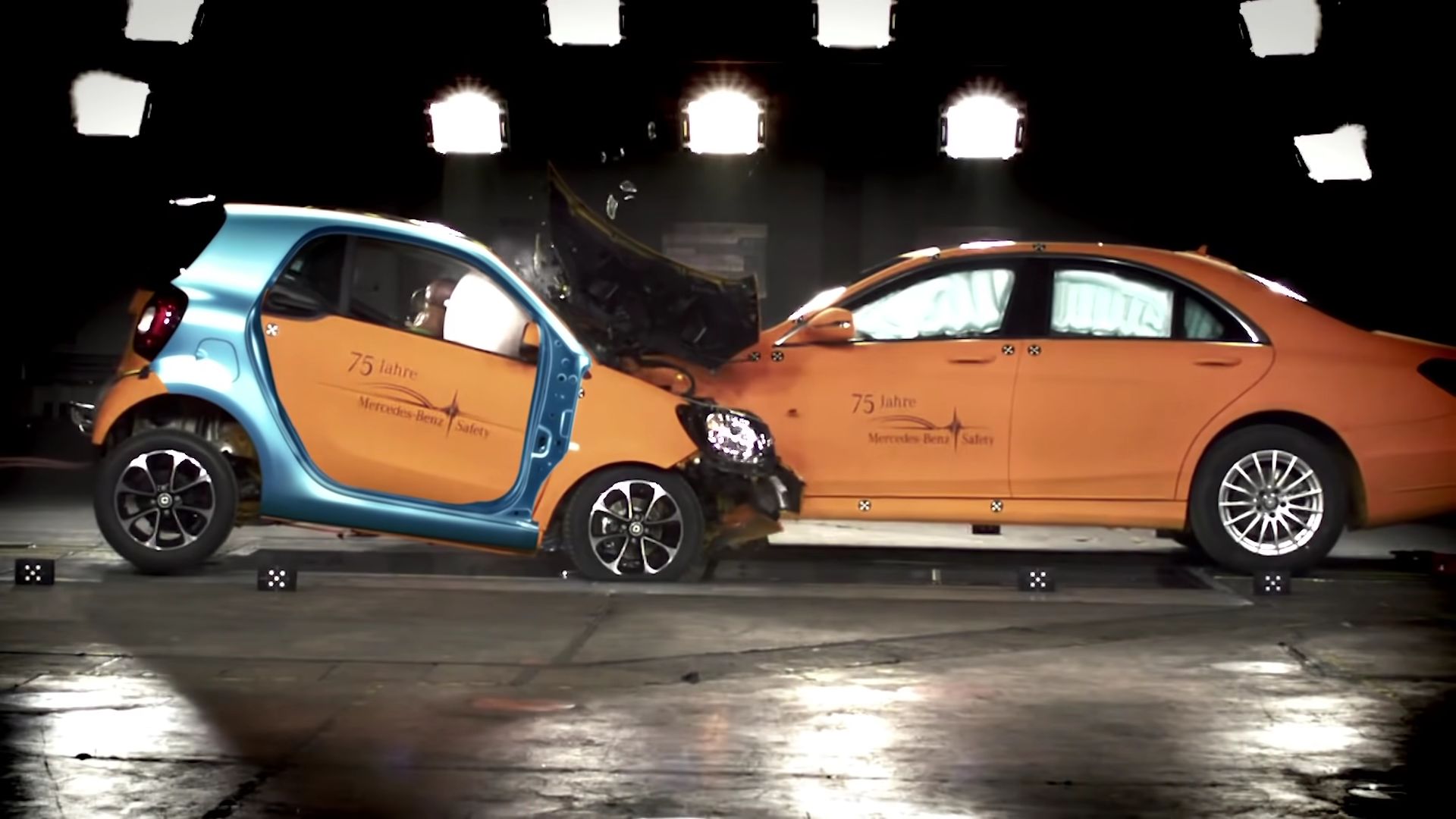
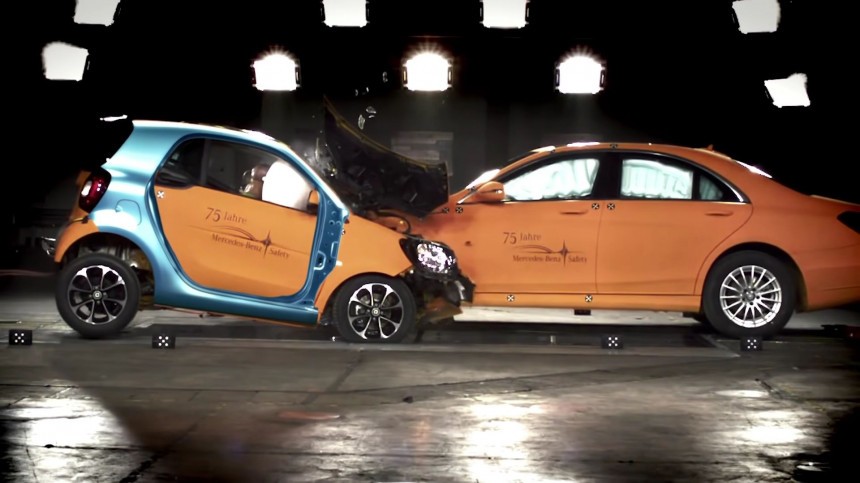
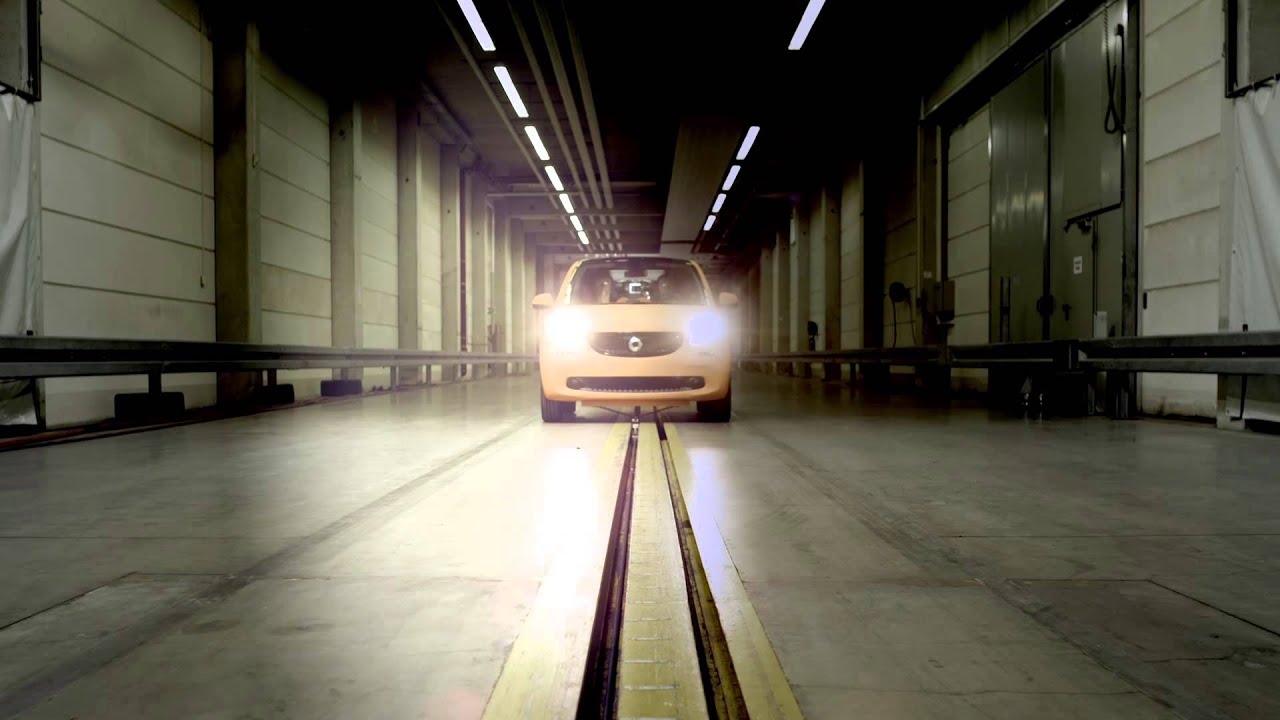
Crumple zones are even more important in sport utility vehicles and vans, two vehicle types that lack the additional crumple space of a sedan's trunk compartment. We also have to remember that small vehicles have it even harder. Safety engineers tackled the small car's inherent limitations in a multitude of ways, but the smart fortwo definitely stands out from the rest thanks to its tridion cell.
Many peeps, but more so American motorists, originally dismissed the smart fortwo as nothing more than a frugal death trap. They were proven wrong by the aforementioned tridion cell and slip tubes that move to keep the impact away from the safety cell. The front-mounted slip tubes protect the safety cell in crashes at speeds of up to 10 miles per hour (16 kilometers per hour), whereas the tridion cell protects the occupants at higher speeds by dispersing the impact's energy over its entire surface. At the rear, there is a crash box that crumples in the event of a rear-end collision.
Photo: Mercedes-Benz AG
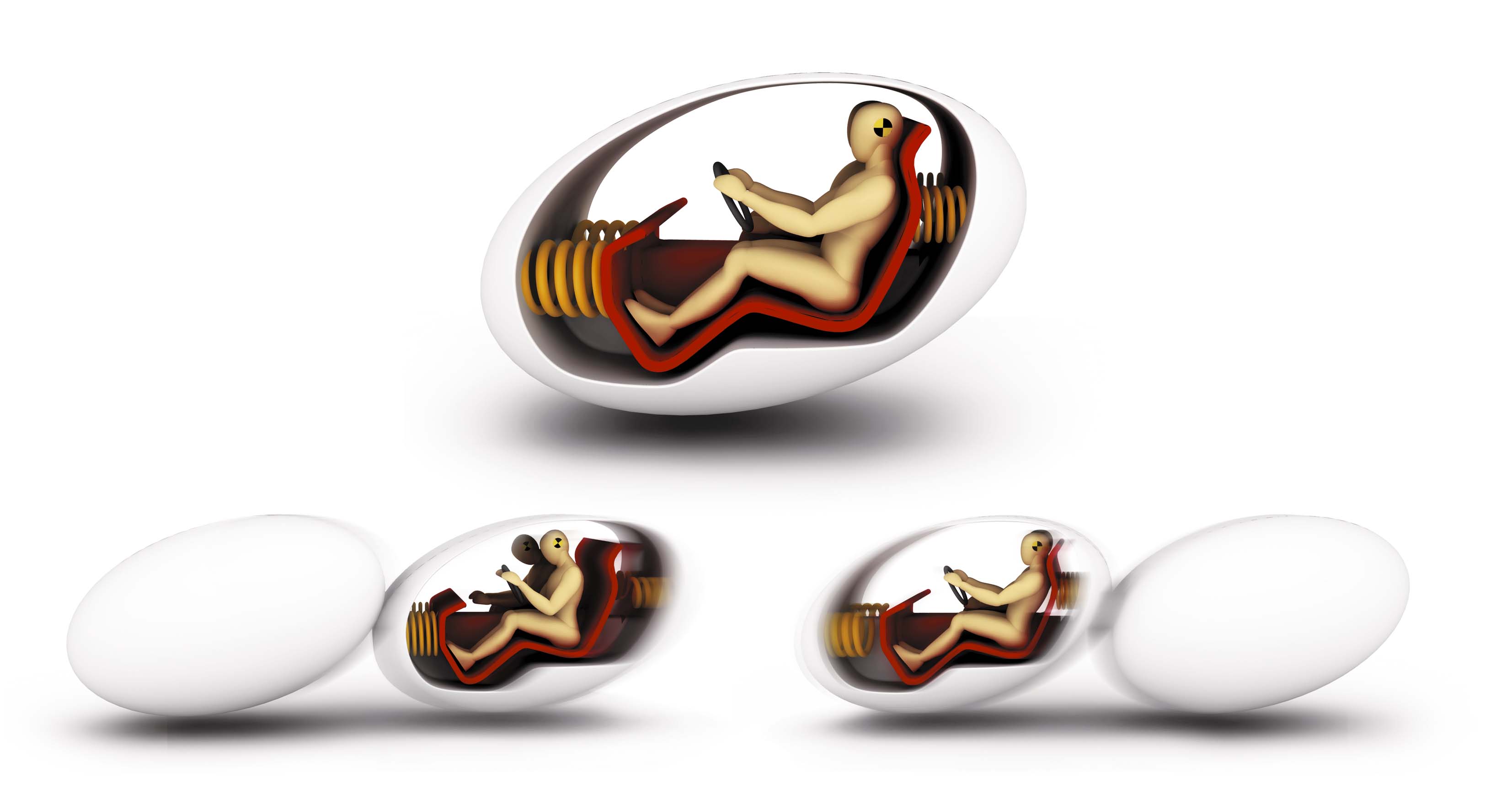
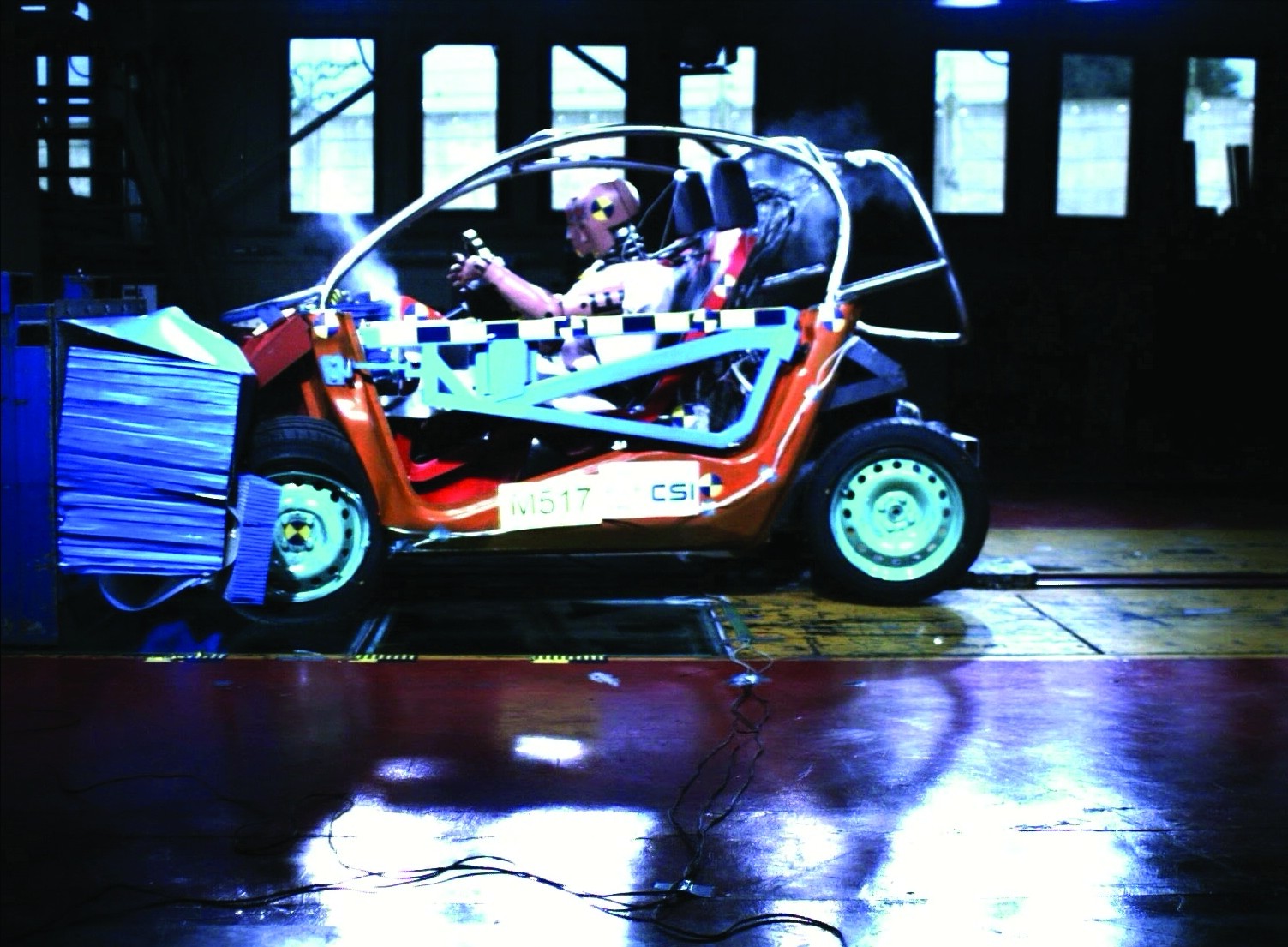
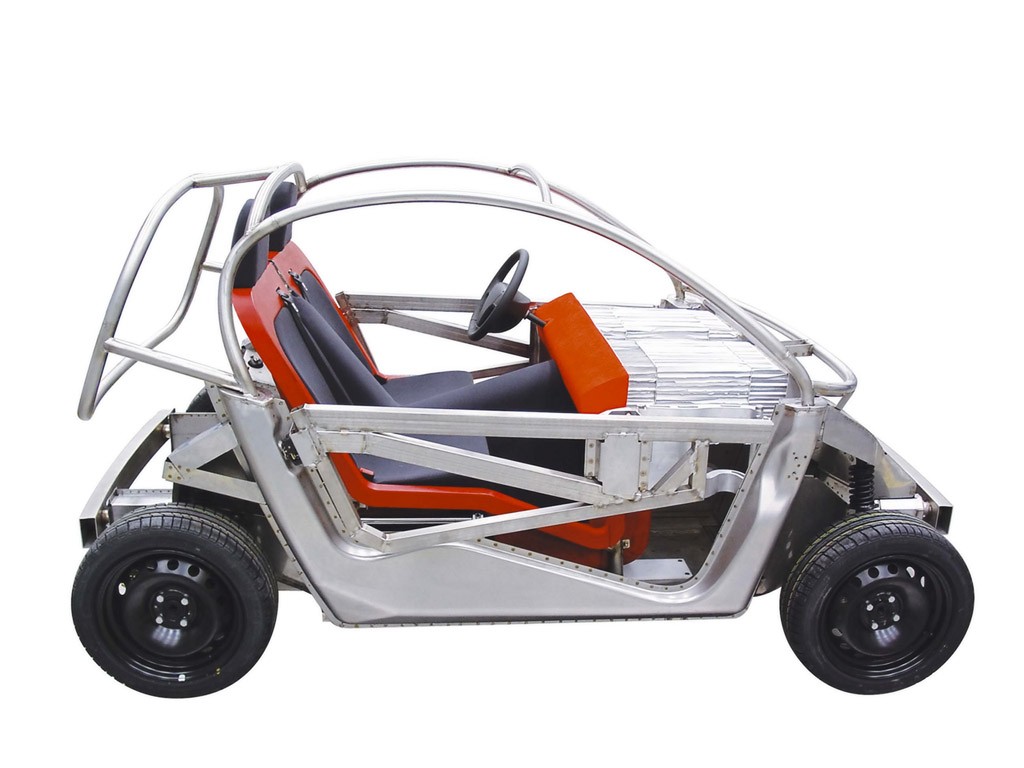
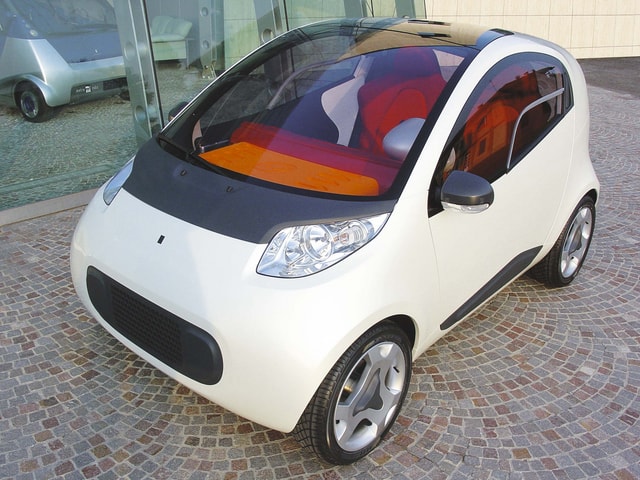
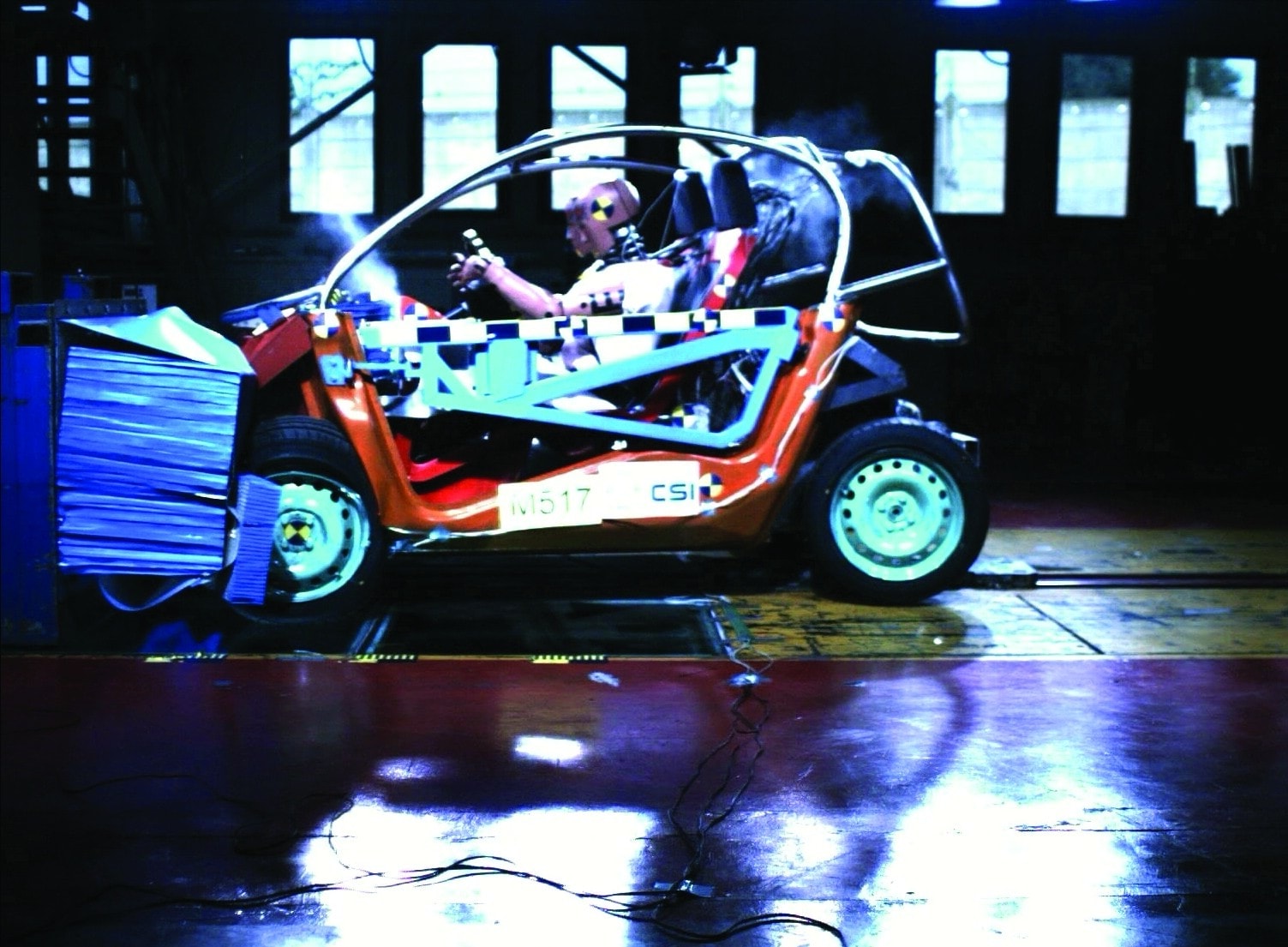
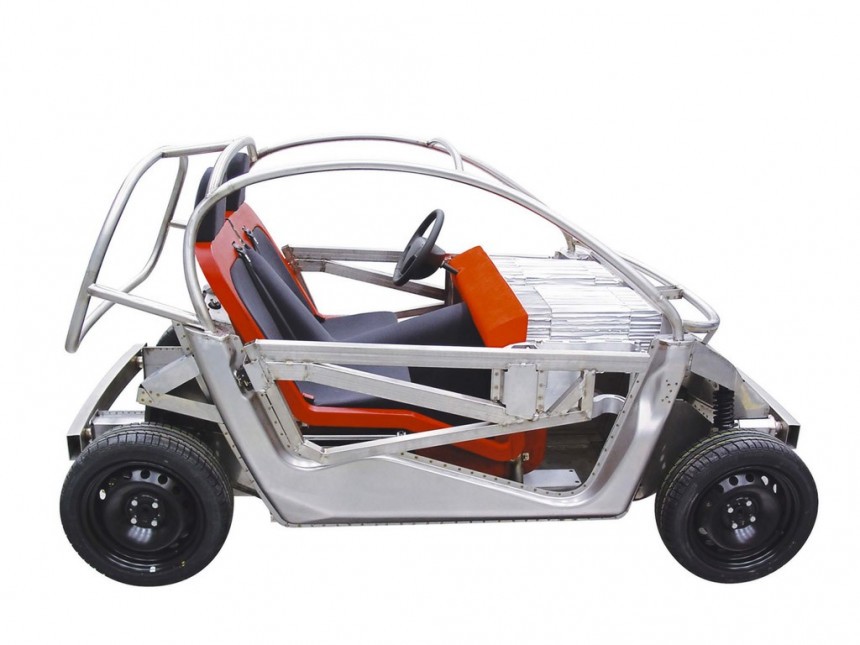
The Pininfarina Nido concept from 2004 showed automotive safety engineers and us car enthusiasts yet another interesting alternative to crumple zones. A two-seat city car with a rear-mounted engine and rear-wheel drive, the Nido comprises four main safety elements, beginning with the chassis. By chassis, Pininfarina also refers to the rigid safety cell and the concept's deformable front section.
The rigid safety cell is joined by a sled-type shell, which runs horizontally along a central runner within the rigid safety cell. The final two main safety elements of the Nido, which is the Italian word for nest, are the energy-dissipating absorbers that connect the rigid cell and the sled via three honeycomb sections of different densities.
It's easy to understand how safe the Nido is in the event of a front or rear collision, but what about a side impact? Pininfarina thought of that as well, integrating extra-large underdoor side members with crash-box elements to absorb the energy. Transverse structures in the sled are also featured to dissipate lateral impact energy from one side to the other. Door intrusion is nigh-on impossible because the doors rest on said transverse structures.
Photo: Pininfarina
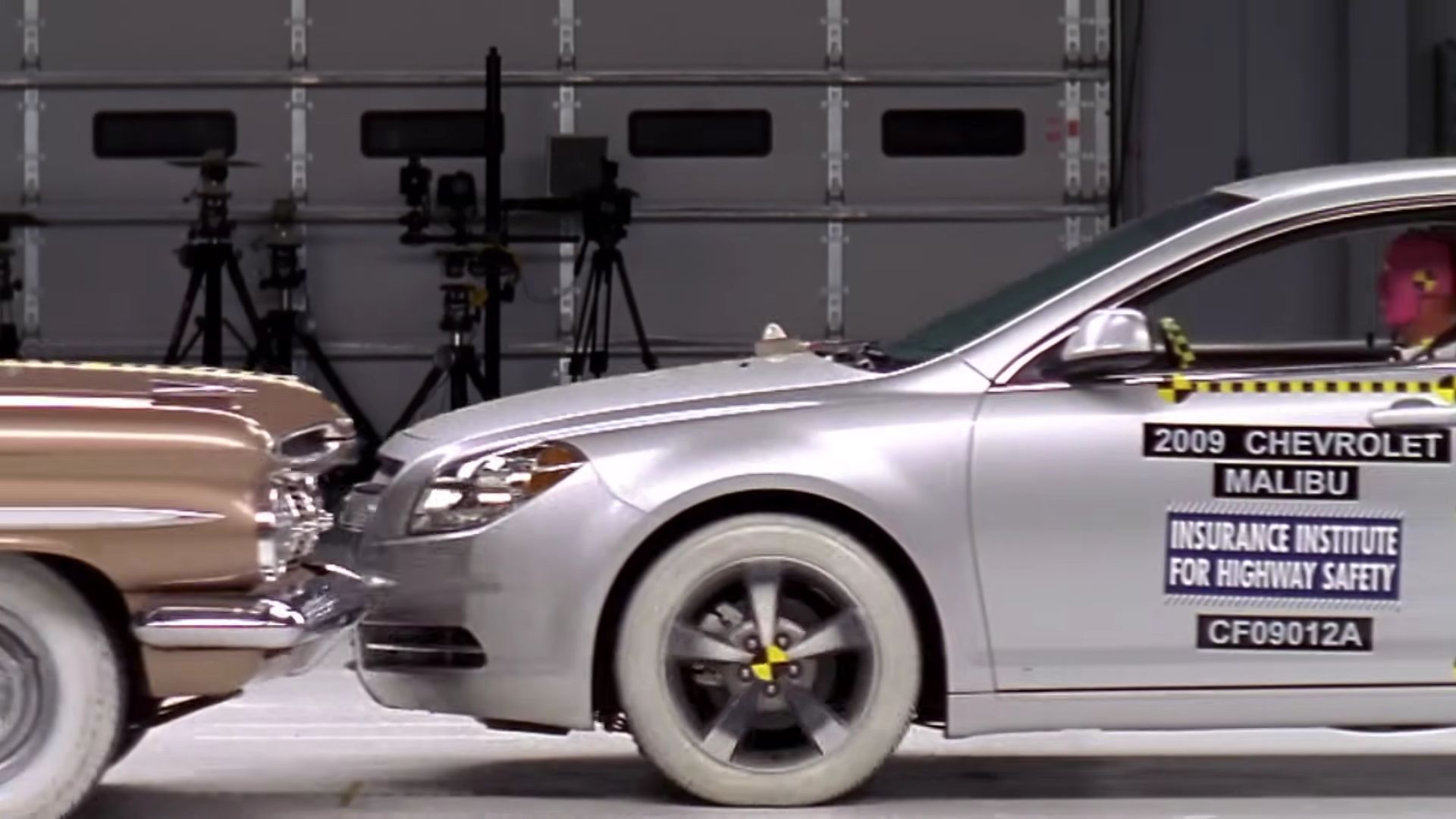
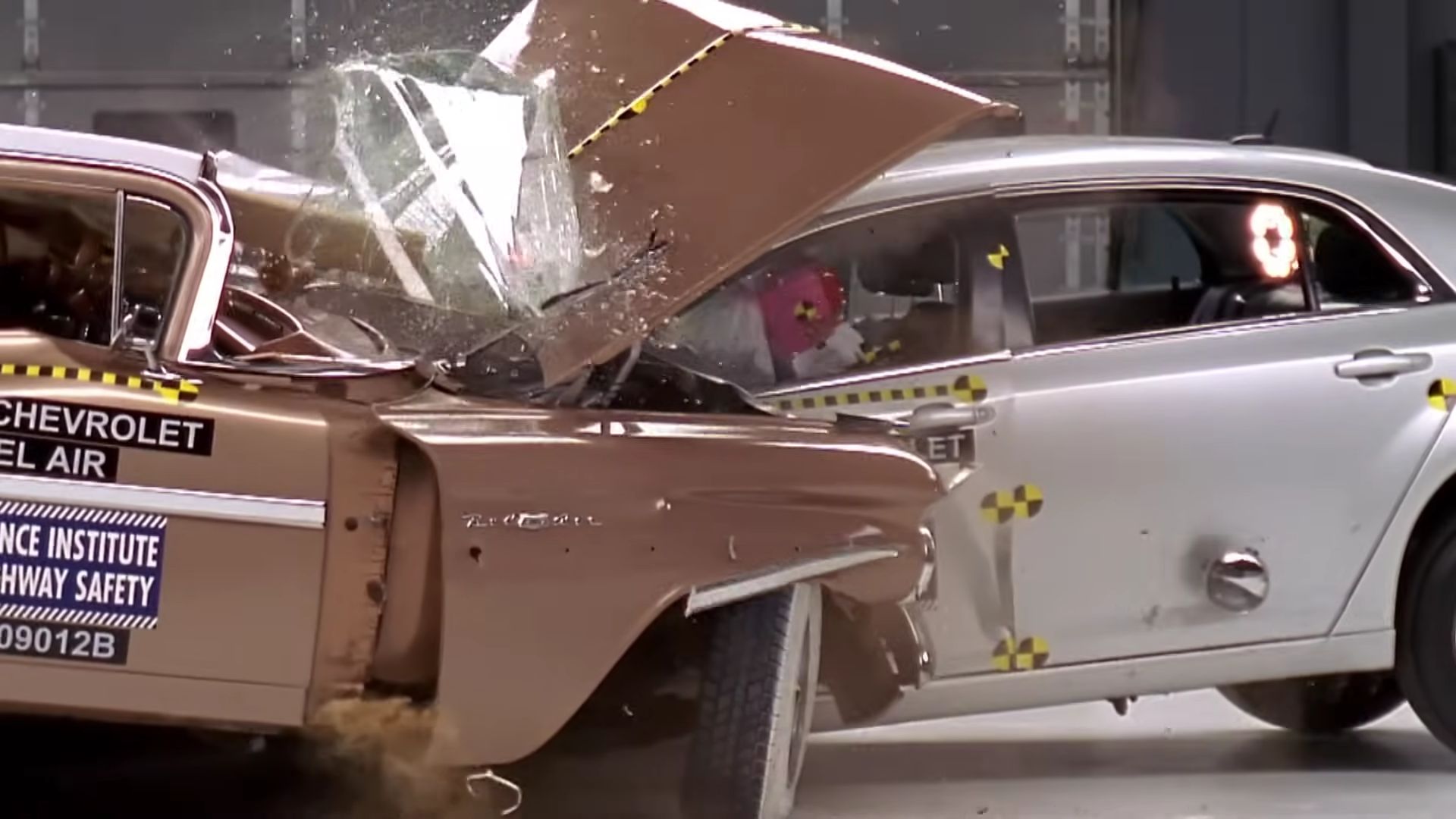
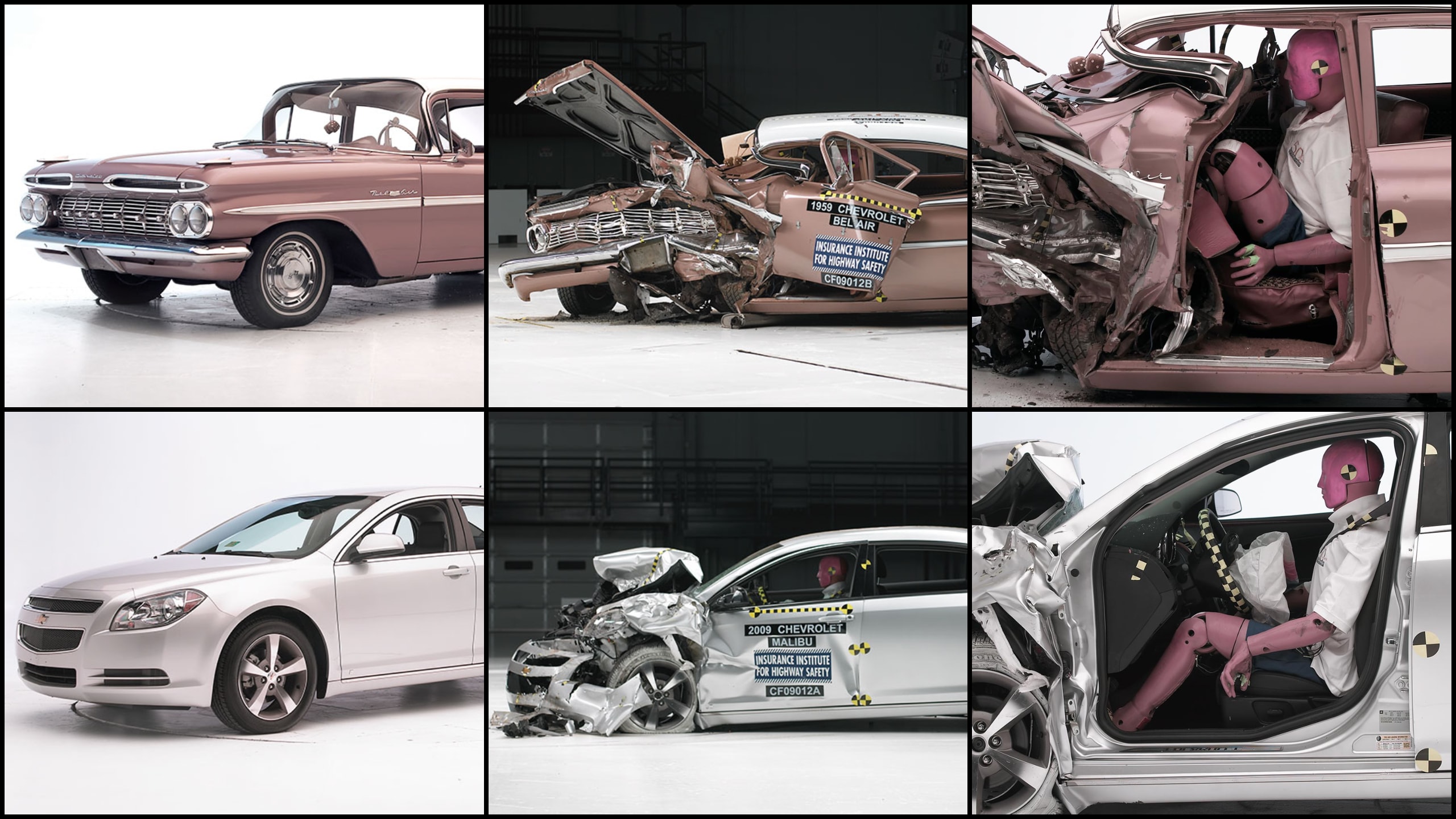
As far as crashworthiness testing is concerned, the leading organization is – without a shadow of a doubt – the Insurance Institute for Highway Safety in the United States of America. Founded in 1959 by three insurance groups representing a whopping 80 percent of the auto insurance market in the United States at the time, the IIHS became an independent research organization a decade later.
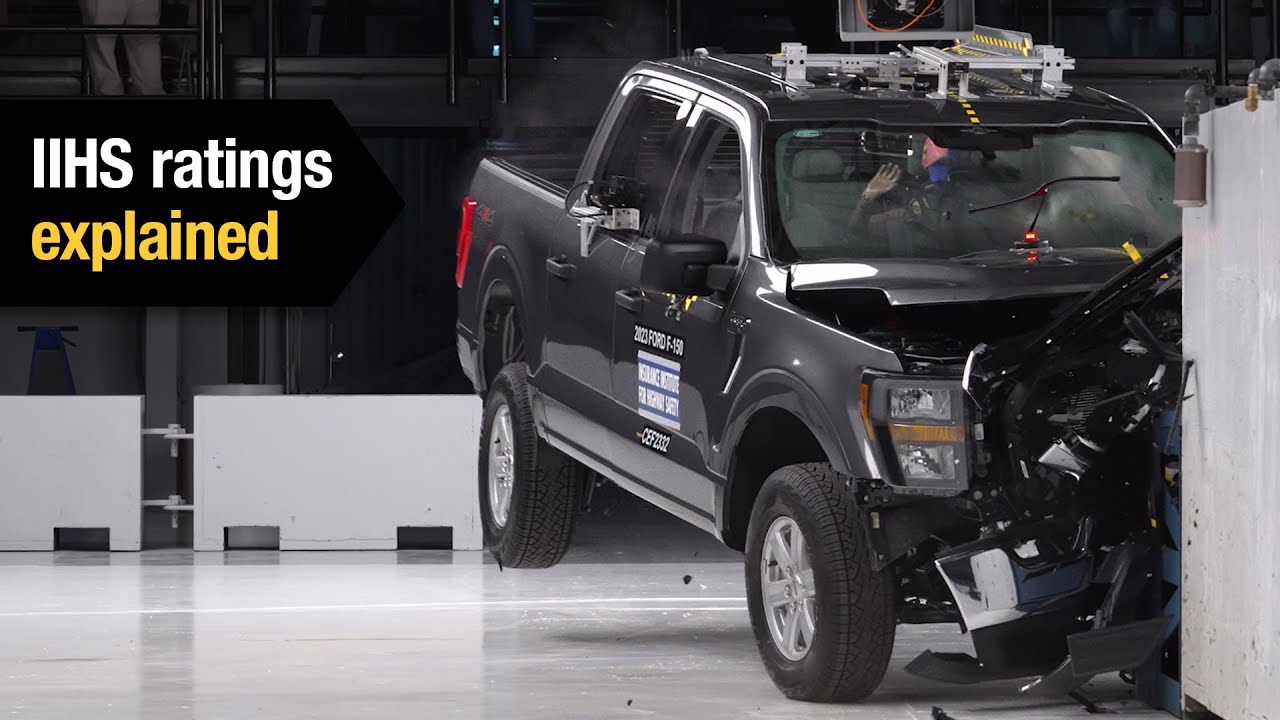
Crash test ratings became a thing in 1995, beginning with the moderate overlap front crash test. The nonprofit organization from Arlington, Virginia performs frontal crash tests, side crash tests, roof strength tests, as well as head restraints and seats tests to determine a vehicle's crashworthiness.
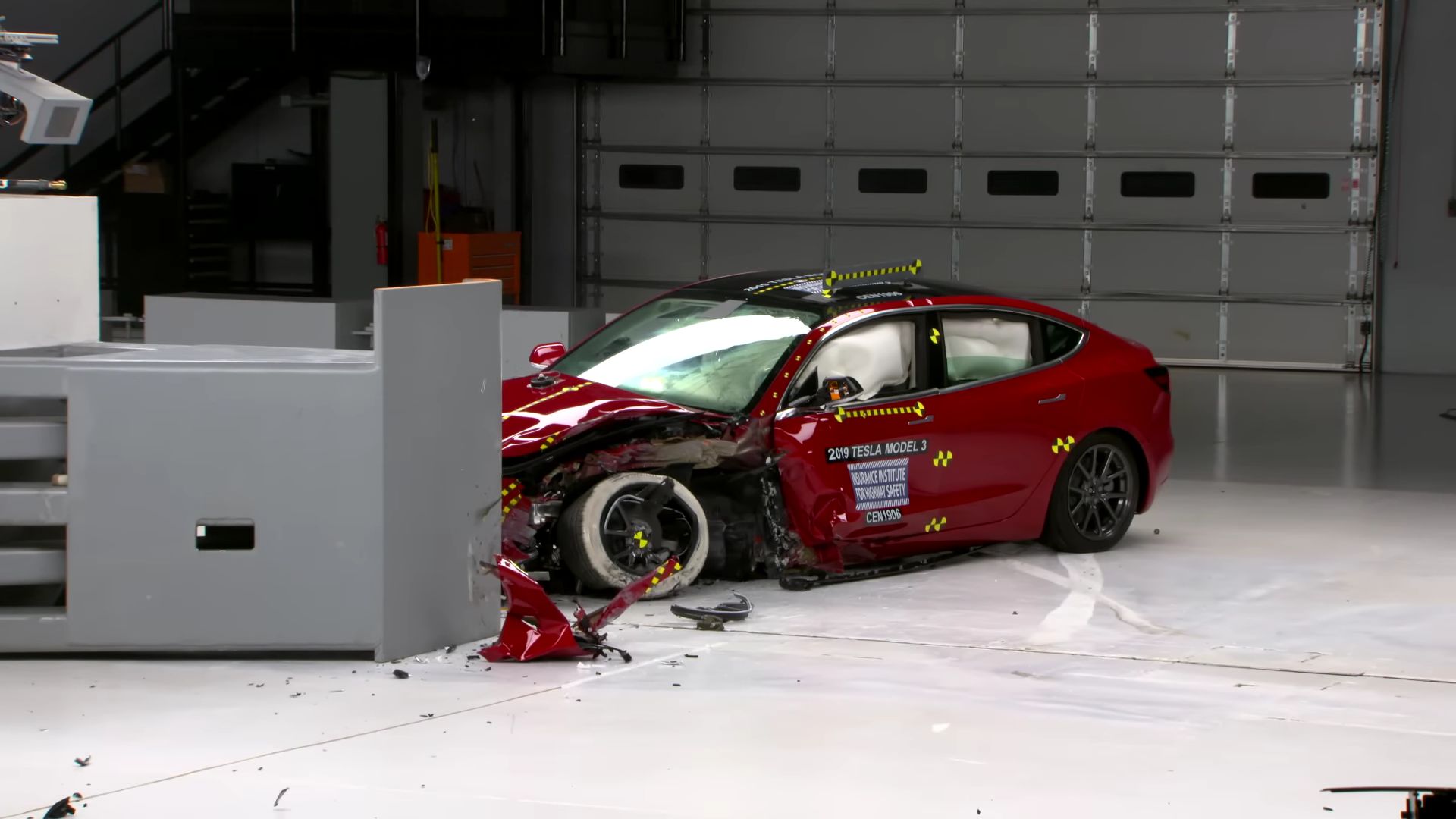
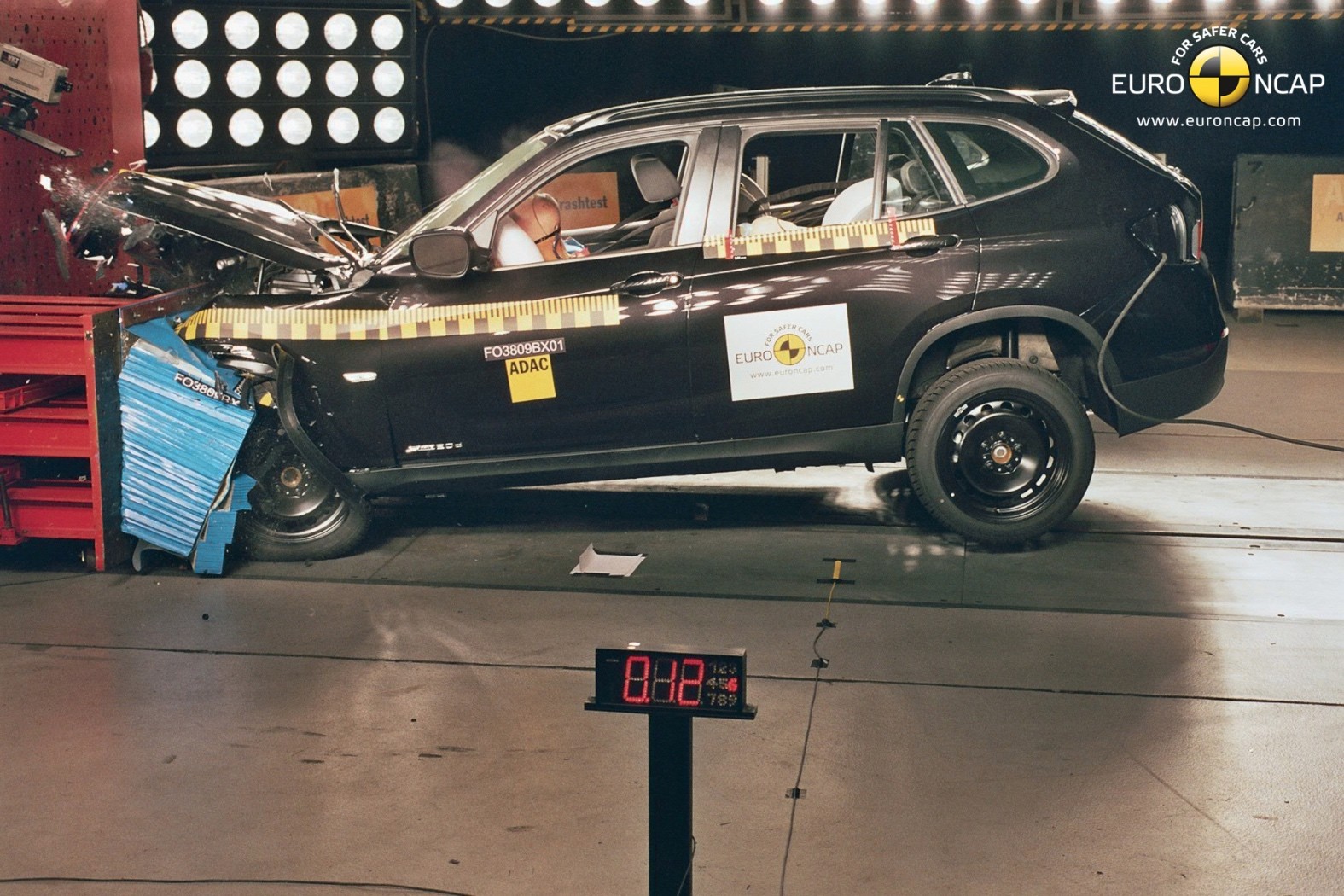
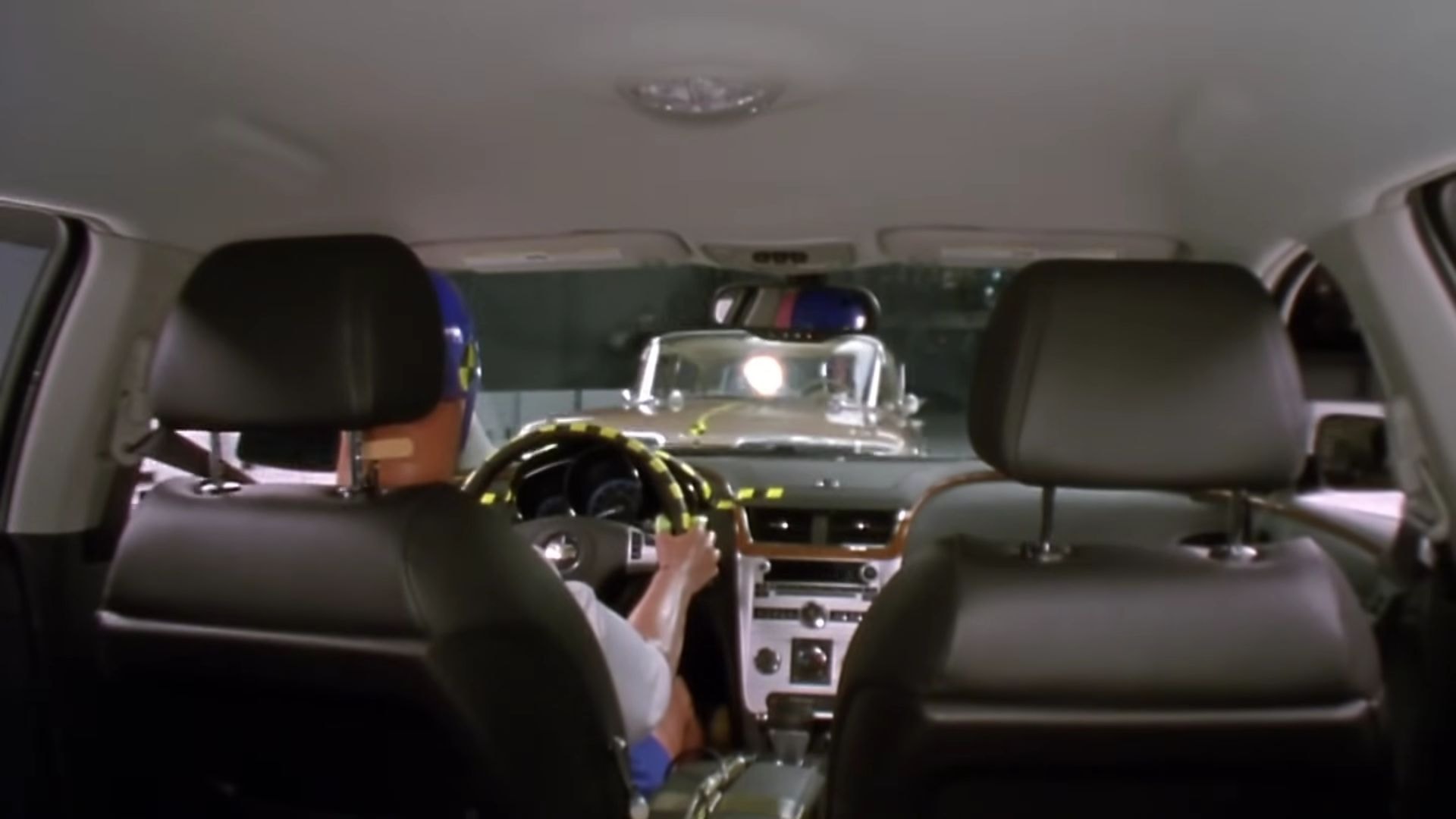
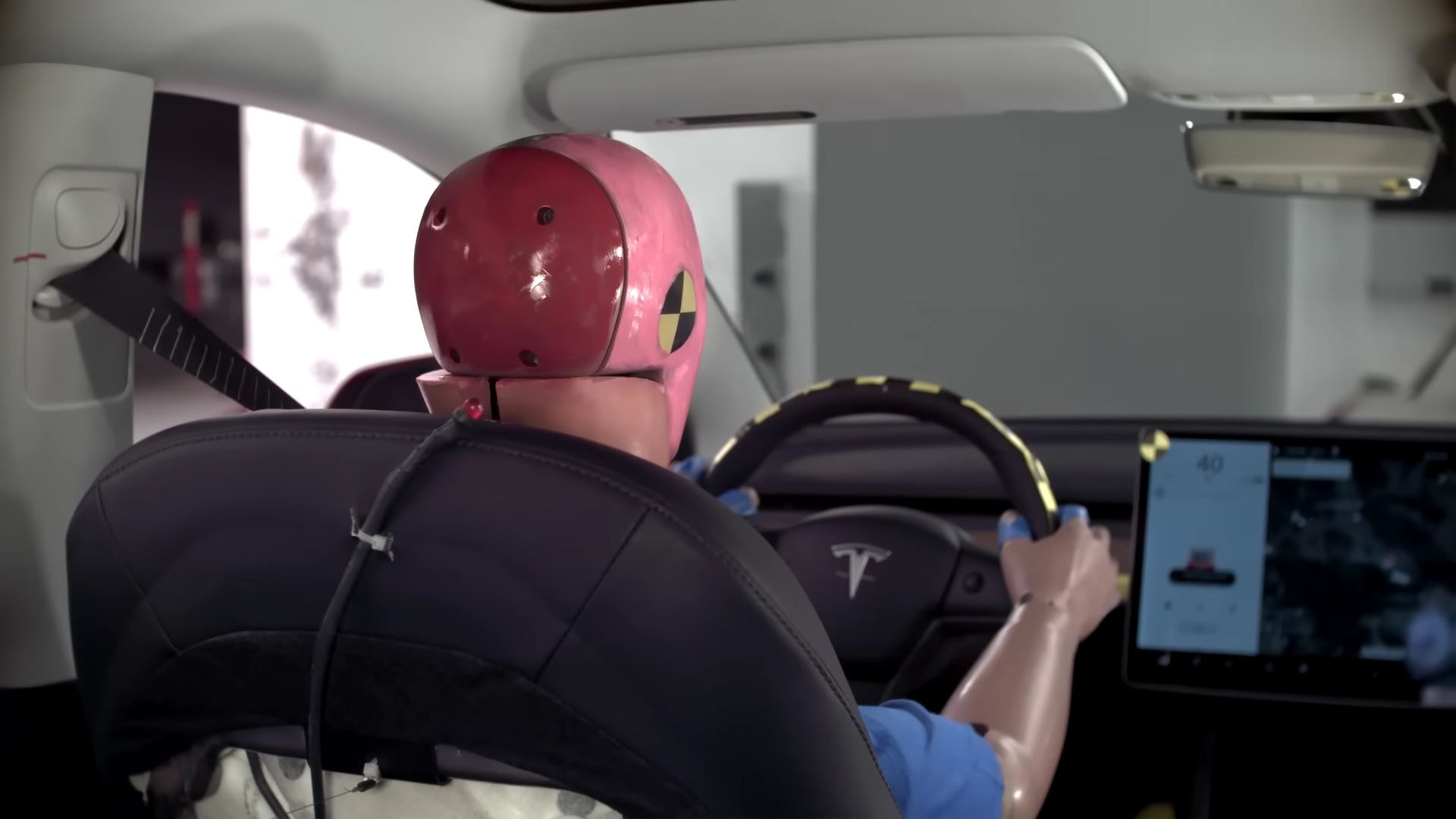
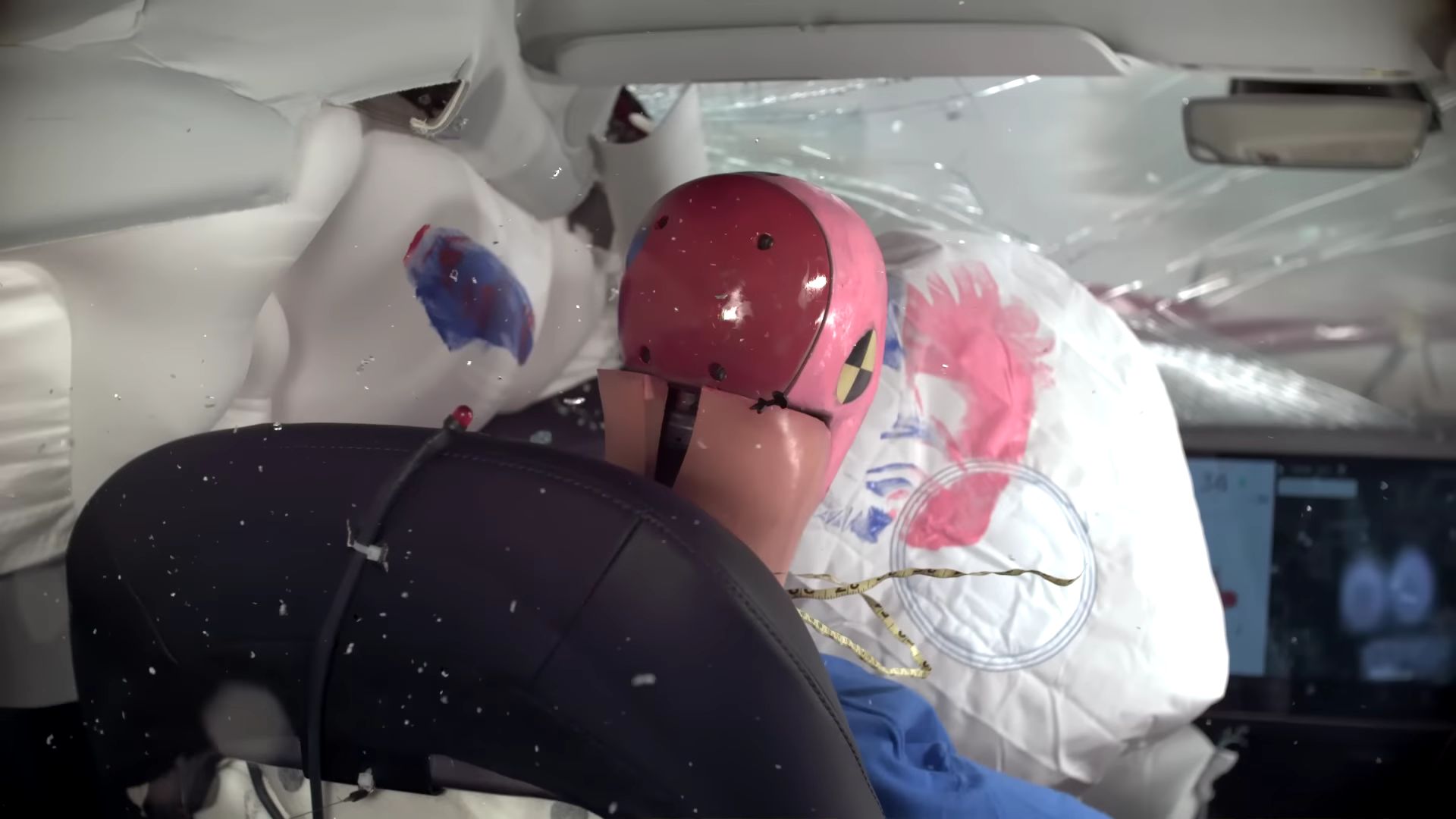
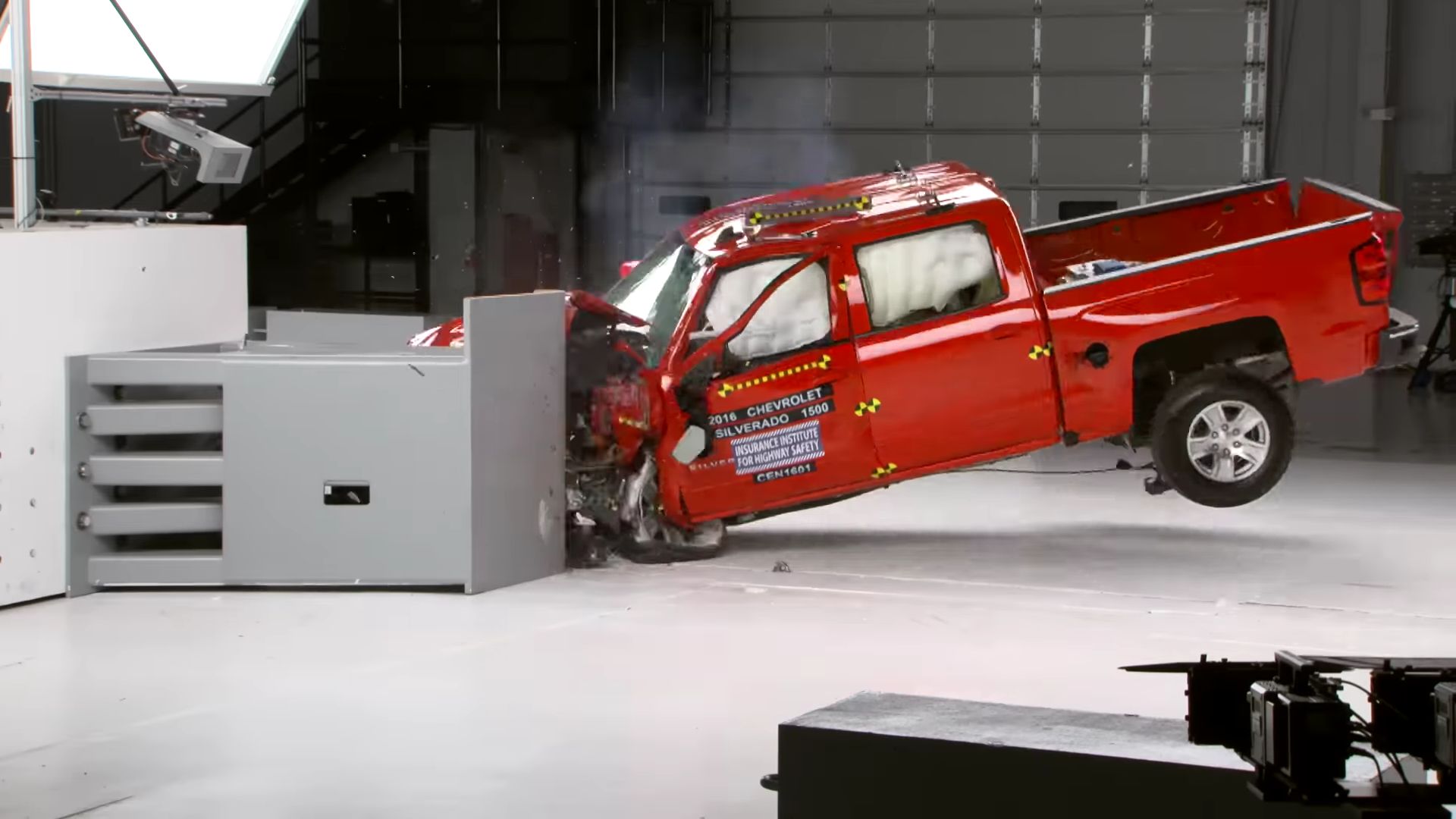
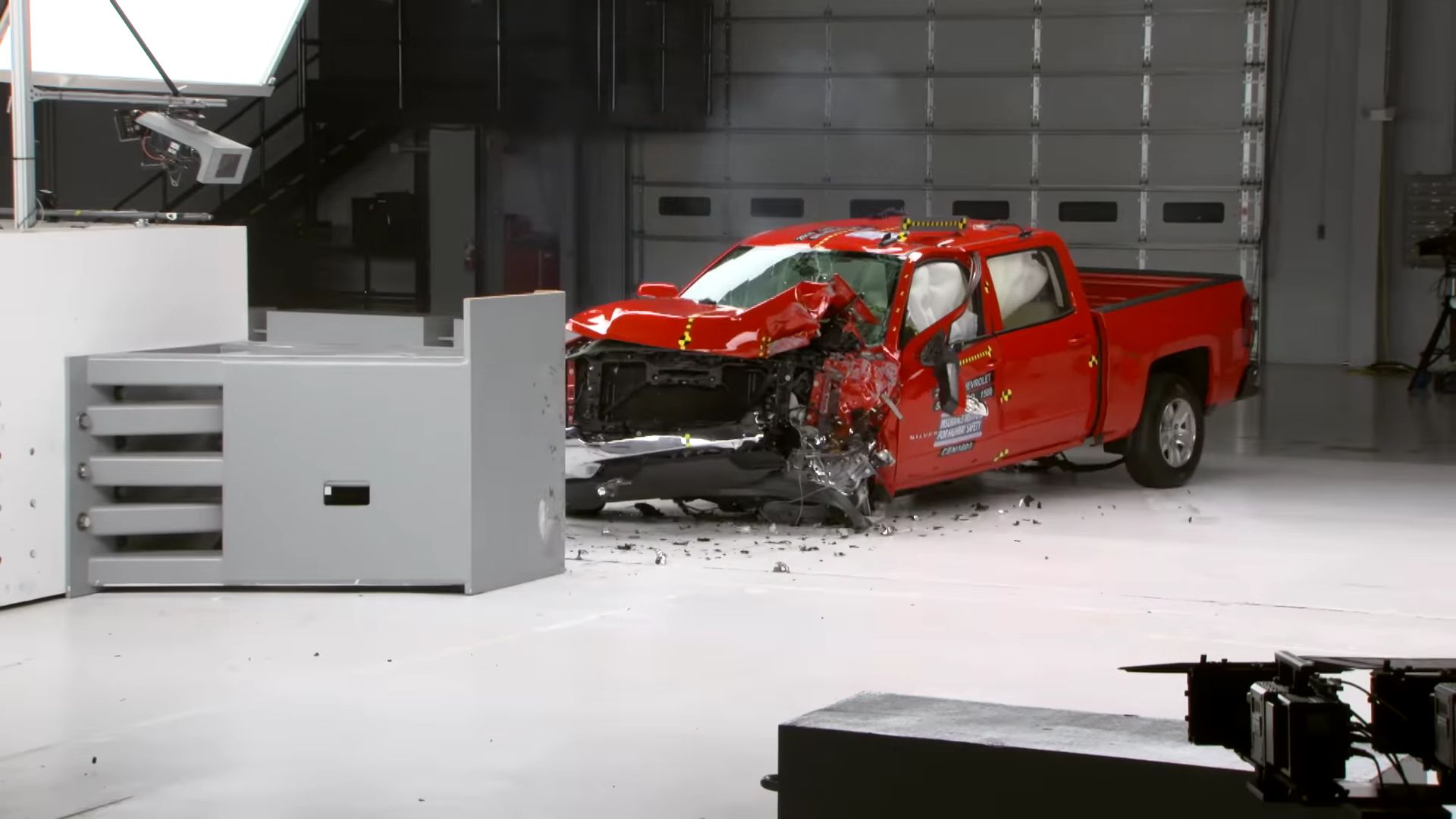
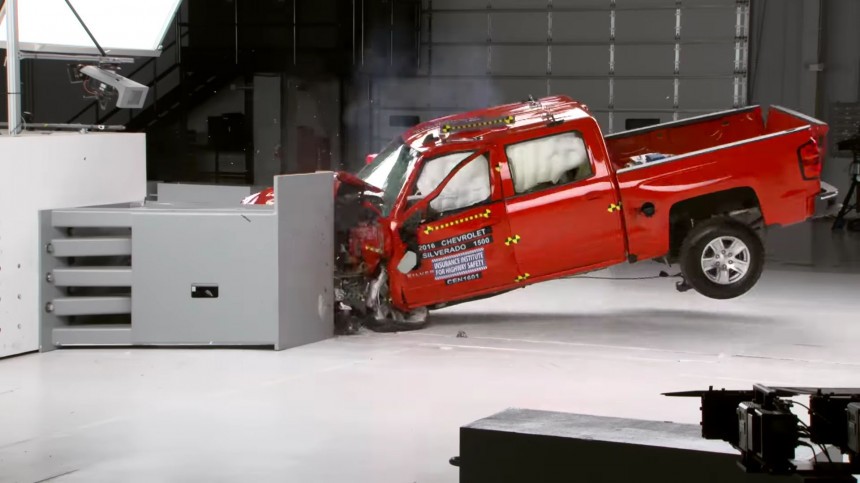
Moderate overlap front means that a vehicle travels at 40 miles per hour (64 kilometers per hour) toward a barrier with a deformable face, with 40 percent of the vehicle's total width striking the barrier on the driver's side. This crash test replicates the tremendous forces that would result from the frontal offset crash between two vehicles of the same weight, each traveling at approximately 40 mph.
Photo: IIHS
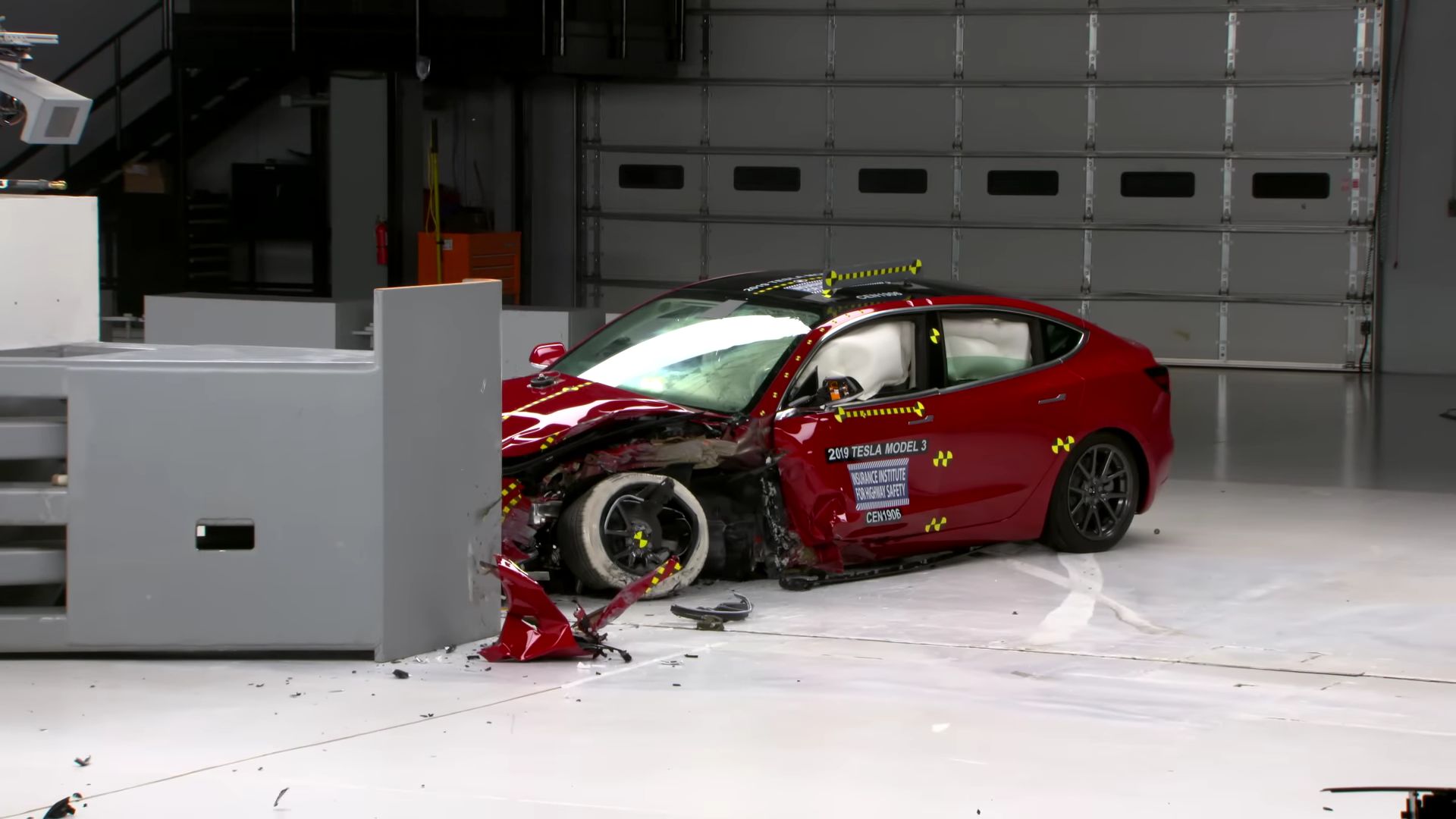
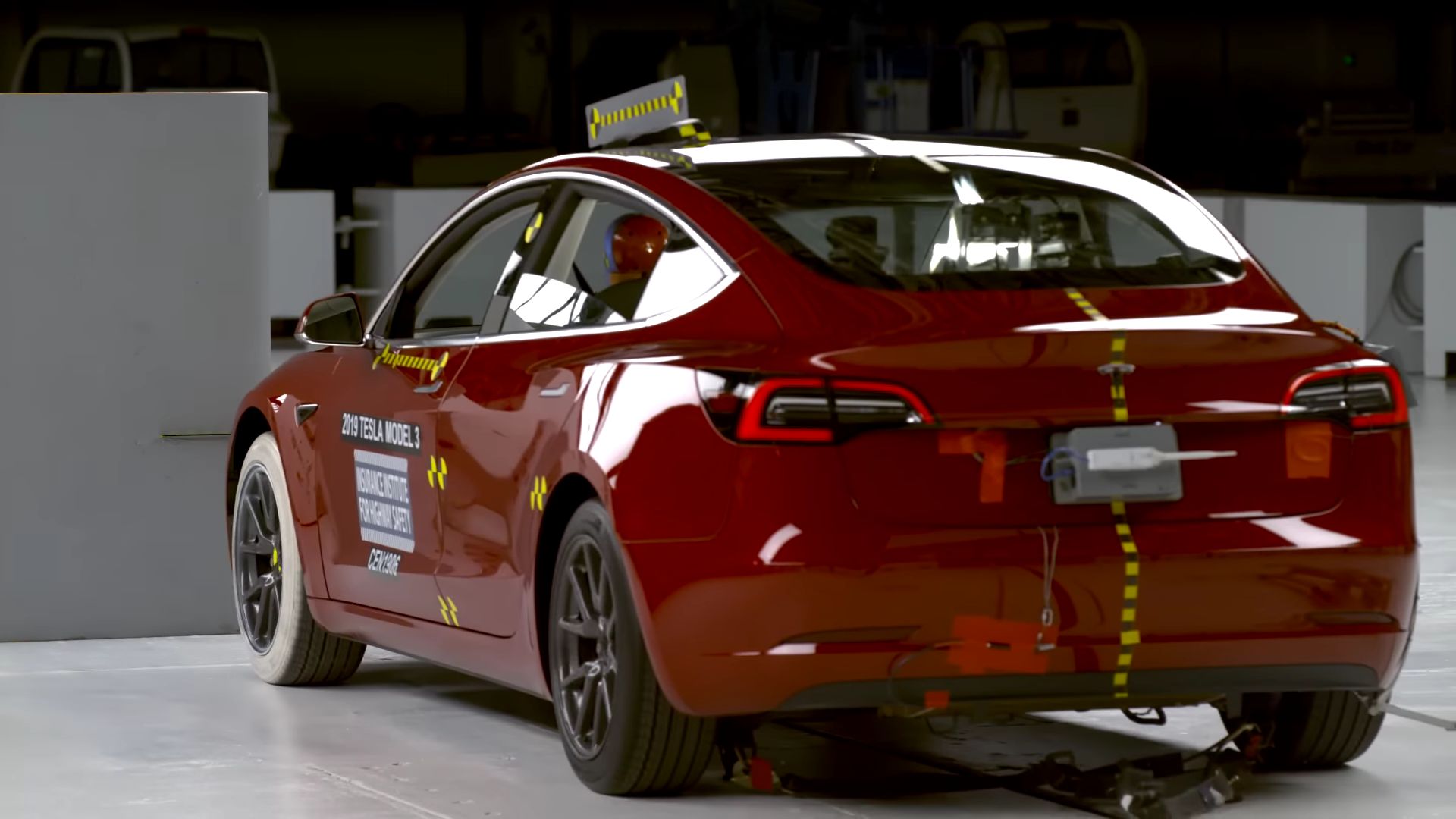
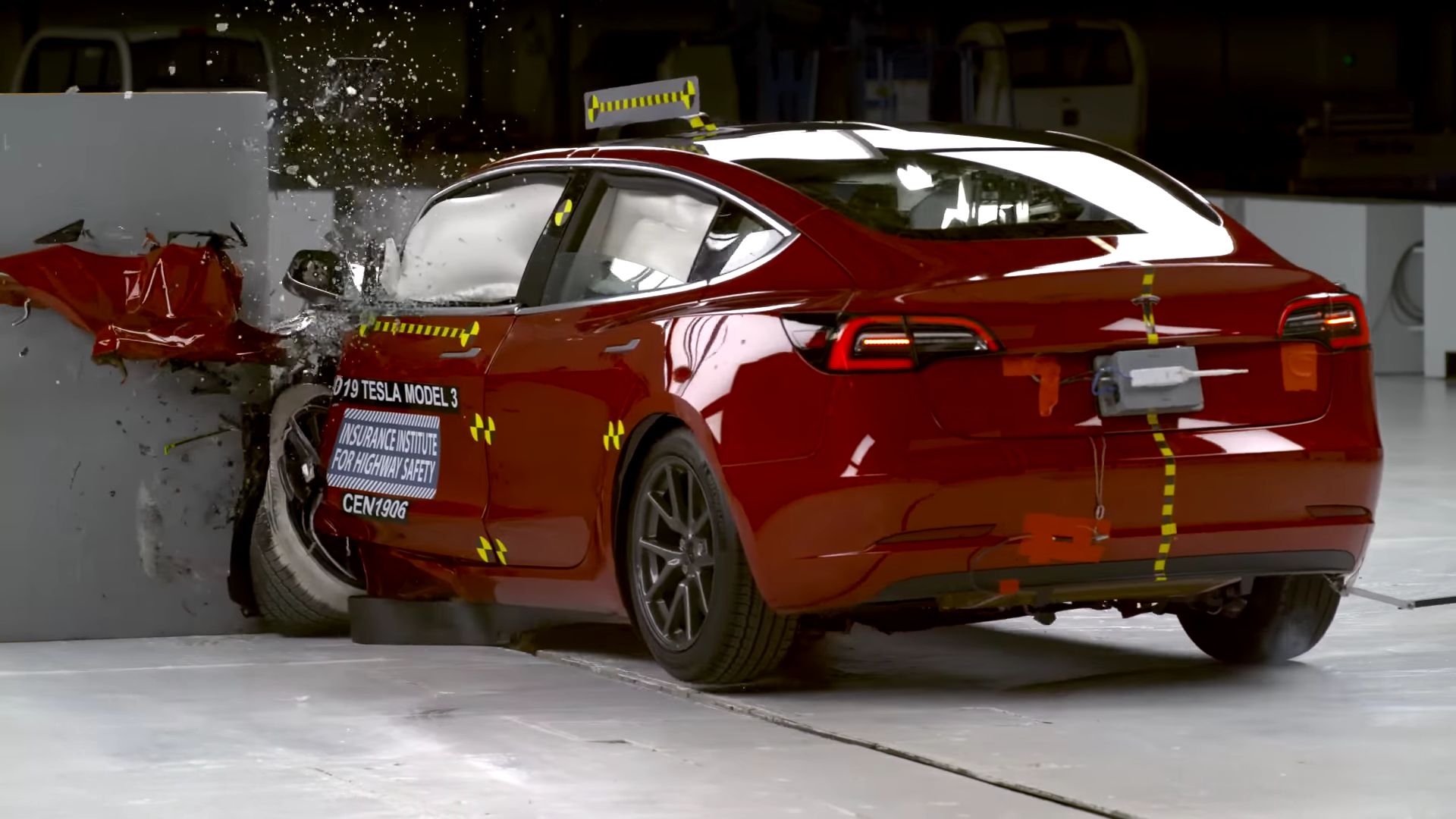
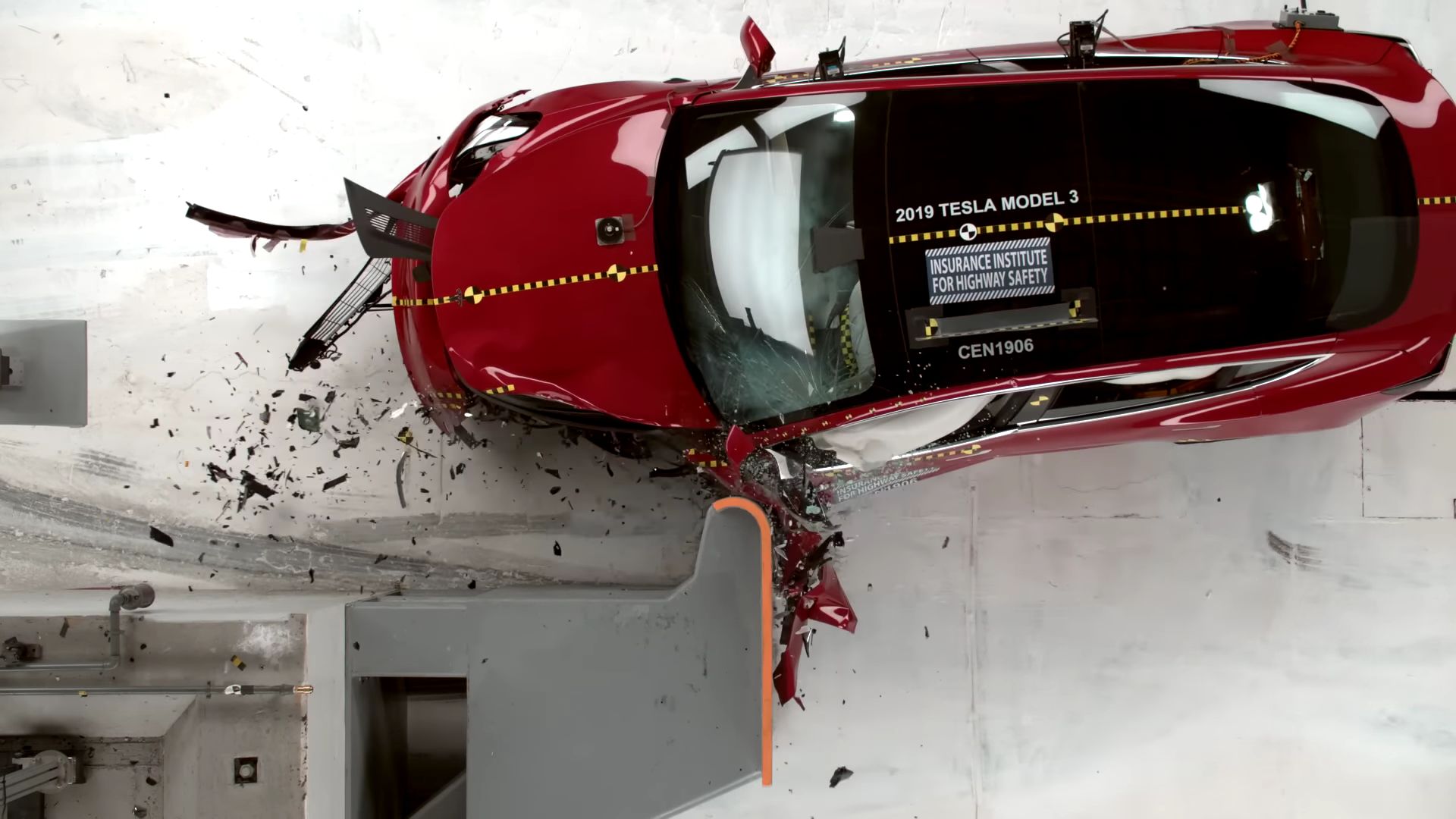
The driver-side and passenger-side small overlap tests also see the vehicle traveling at 40 miles per hour toward a barrier, but as opposed to the moderate version, the small overlap tests require the vehicle to strike the barrier on either the driver's or passenger's side with 25 percent of the vehicle's total width.
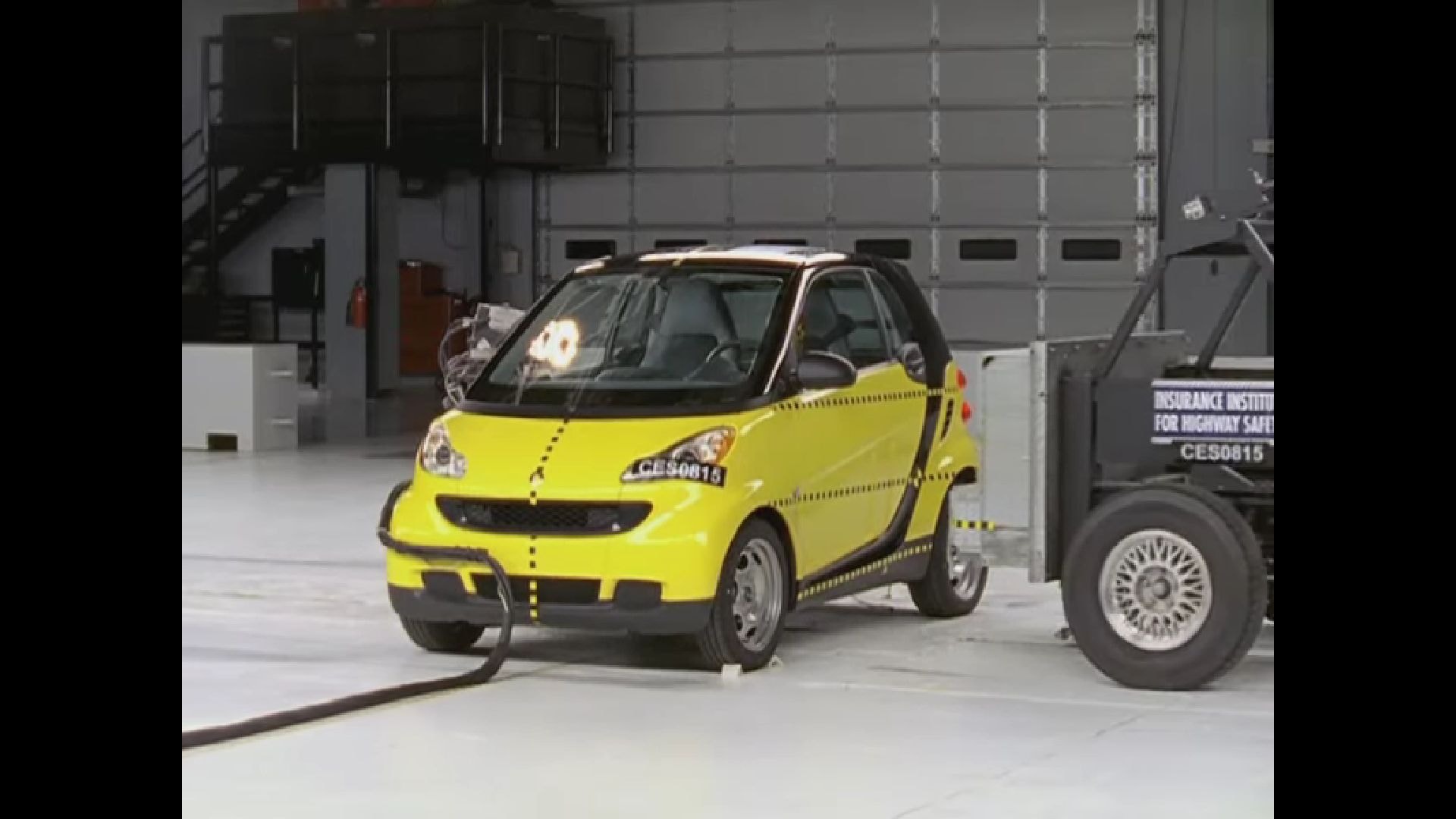
All three crash tests go beyond testing a vehicle's crumple zones, which are concentrated in the middle 50 percent of the front end. Rather, the crash forces are transferred to the front wheel, the suspension, and the firewall. Side crash tests were introduced in 2003, and the organization's testing program has played a key role in bringing industry-wide improvements to crash protection in this scenario by using a full-size crash test dummy and another one representing a small woman (5th percentile) or a 12YO child, with the second dummy positioned in the rear seat behind the driver.
The majority of new cars, utility vehicles, and pickups tested by the IIHS receive the maximum rating possible in the small overlap and moderate overlap tests. The same can be said about the side impact test, roof strength test, as well as the head restraints and seats test. However, automakers need to up their game in the updated moderate overlap front crash test due to a high probability of head, neck, and/or chest injuries to the rear passenger.













 Google News