Other sections
  • Editorial
  • Coverstory
  • Girls Only
  • Auto Guide
  • Crash Test
  • Glossary
  • Newsletter
  • Car finder
  • Editorial Team
Editorial
Editorial
Pedigree of the Brands - A Different View of the Story... ...Many of us own cars which come from rather famous brands. Plenty of times, even if you hate to admit it, the badge is the main reason to look at a certain car and, in the end, it's the decisive reason in actually choosing the "perfect"model. OK, there ... Continue reading >
Weekly Poll
100+ years since the invention of the self-propelled car, three new engines battle for a place in the automotive future. Which one do you see in your car 10 years from now?


Submit | Show results
 

LATEST LOG ENTRIES:


QUICK STATS:


More stats >>

4th of March 2009 | 16:37 GMT | Daniel Patrascu

Fiat Multiair Reduces Fuel Consumption and CO2 Emissions

STORY HIGHLIGHTS:

Text size - +
  • Fiat Multiair helps reduce fuel consumption and CO2 emission
  • Multiair will be used on 1.4l 16V naturally aspired engines
  • 1.4l 16V turbocharged engine will also use Multiair

 
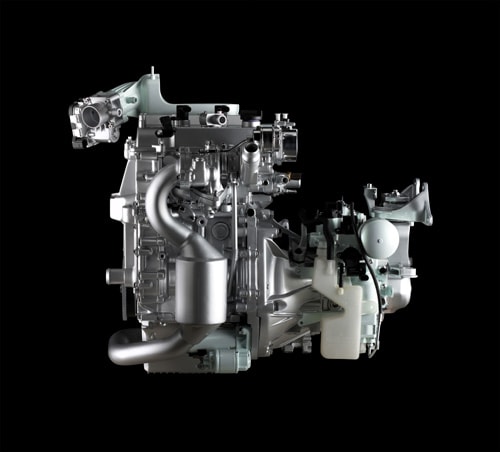
Click to enlarge [Fiat engines will get a fresh breath of air]
Fiat engines will get a fresh breath of air
As cars would not be worthy of the name without engines, research and development into improving powerplant performances is a vital part of the manufacturer's strategies. Events such as the 2009 Geneva Auto Show are the perfect opportunities for these new technologies to be showcased.

Fiat Group and Fiat Powertrain Technologies took advantage of the event to unveil its new Multiair air management technology. The system is an electro-hydraulic system of engine valves for dynamic and direct control of air and combustion, cylinder by cylinder and stroke by stroke. Thanks to a direct control of the air through the intake engine valves without using the throttle, Multiair helps reduce fuel consumption and engine emissions.

The operating principle of the system is as straight forward as it gets. A piston, moved by a mechanical intake cam, is connected to the intake valve through a hydraulic chamber, which is controlled by a normally open on-off Solenoid Valve.

When this valve is closed, the oil in the hydraulic chamber behaves like a solid body and transmits to the intake valves the lift schedule imposed by the mechanical intake cam. When the solenoid valve is open, the decoupled hydraulic chamber and intake valves close under the valve spring action.

Technical details aside, Multiair was developed because of its benefits. The system allows for low rpm torque to be reduced by 15 percent and improve the dynamic engine response. Multiair's strongpoint reside in its ability to reduce fuel consumption and CO2 emissions.

Turbocharged engines fitted with the system can achieve up to 25 percent fuel economy over naturally aspired engines with the same level of performance. Together with the internal exhaust gas recirculation system, CO2 emissions are reduced by 40 to 60 percent.

Share, bookmark, add

Read by 1,847 users | Add comment | Link to this article | Subscribe to news Subscribe to news | Print article Print | Send to friend Send to friend
 

Leave a comment

 
(required)
(optional, fill in only if you expect a reply from us) (will not be published)

Prove you're not a bot: Math problem   =  
 

Submit