TOYOTA GT 86 Review
OUR TEST CAR: TOYOTA GT 86 Manual 2012
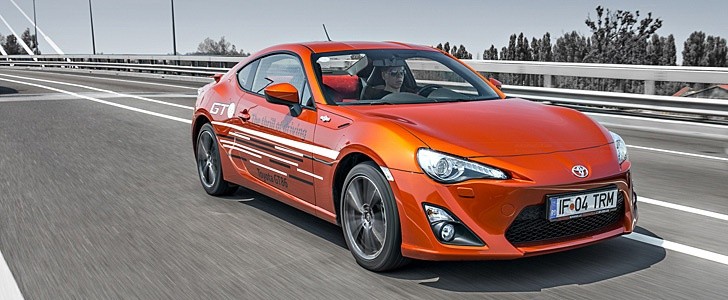
We're using this occasion to appologise for not behaving like we should - we think we're responsible for the numerous delays that led to the pushing of the Toyobaru's release to 2012.
But now all that is behind us, as the cars are here. There's no time for thoughts about the past, as we're rushing towards the Toyota office in order to get our driving gloves on the GT 86.
Toyota has placed the sports car game on "pause" for enough years to allow names like MR2, Celica or Supra to exit most people's vocabulary and now the company wants to make up for all that and even more, so it used "86" in the designation of the car to remind us of the Corolla Levin AE86, an early 80s compact sports car that has become a drift and tuning legend which still lives on in enthusiast circles.
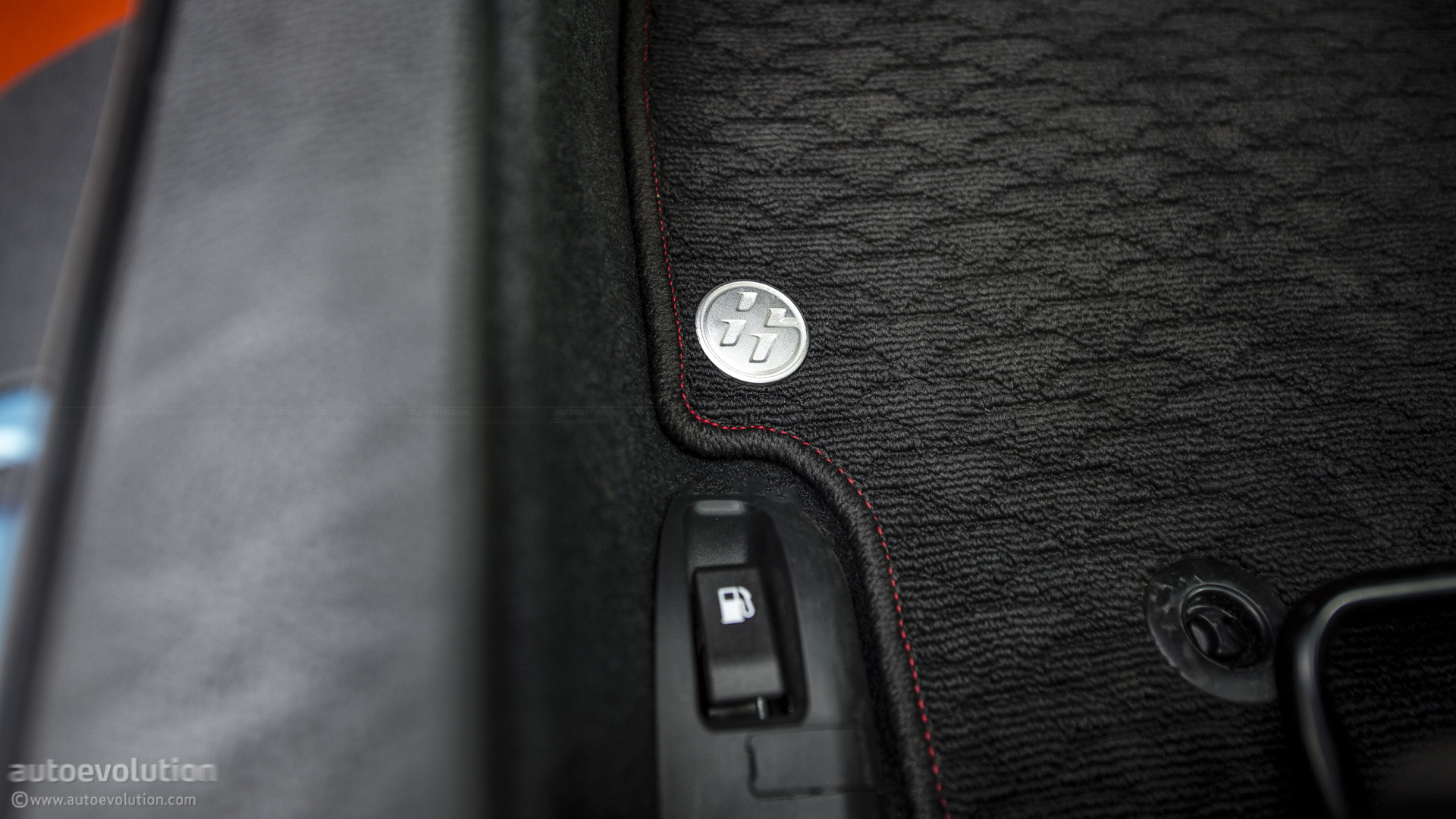
As we're going to see over the course of this test drive, the number 86 is included in multiple areas of the car, being much more than just a marketing trick aimed at reminding us of the Hachi-Roku, another nickname for the AE86, which means "eight-six" in Japanese.
However, a contrasting thought crosses our minds as we start the four-cylinder boxer engine: Toyota has chosen an extremely difficult period to launch its budget-buy sports car, as the last few years have seen the hot hatch segment explode.
So, the GT 86 can't just be good in isolation, it also has to be able to face the gauntlet thrown by those cheeky hot hatches. Let's turn the key and find out what this sports car is made of. Oh, wait, the engine comes with a "Start" button.
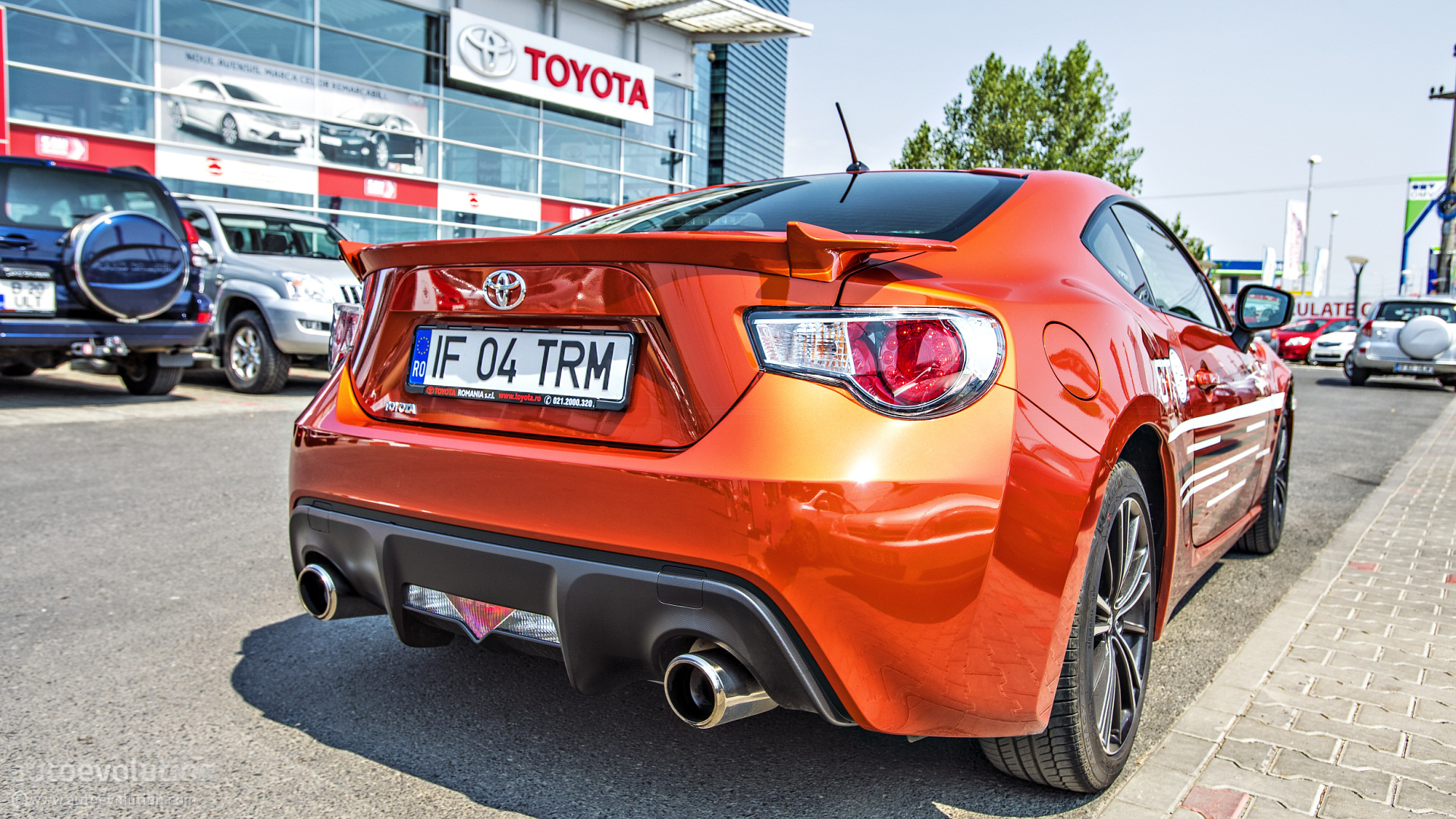
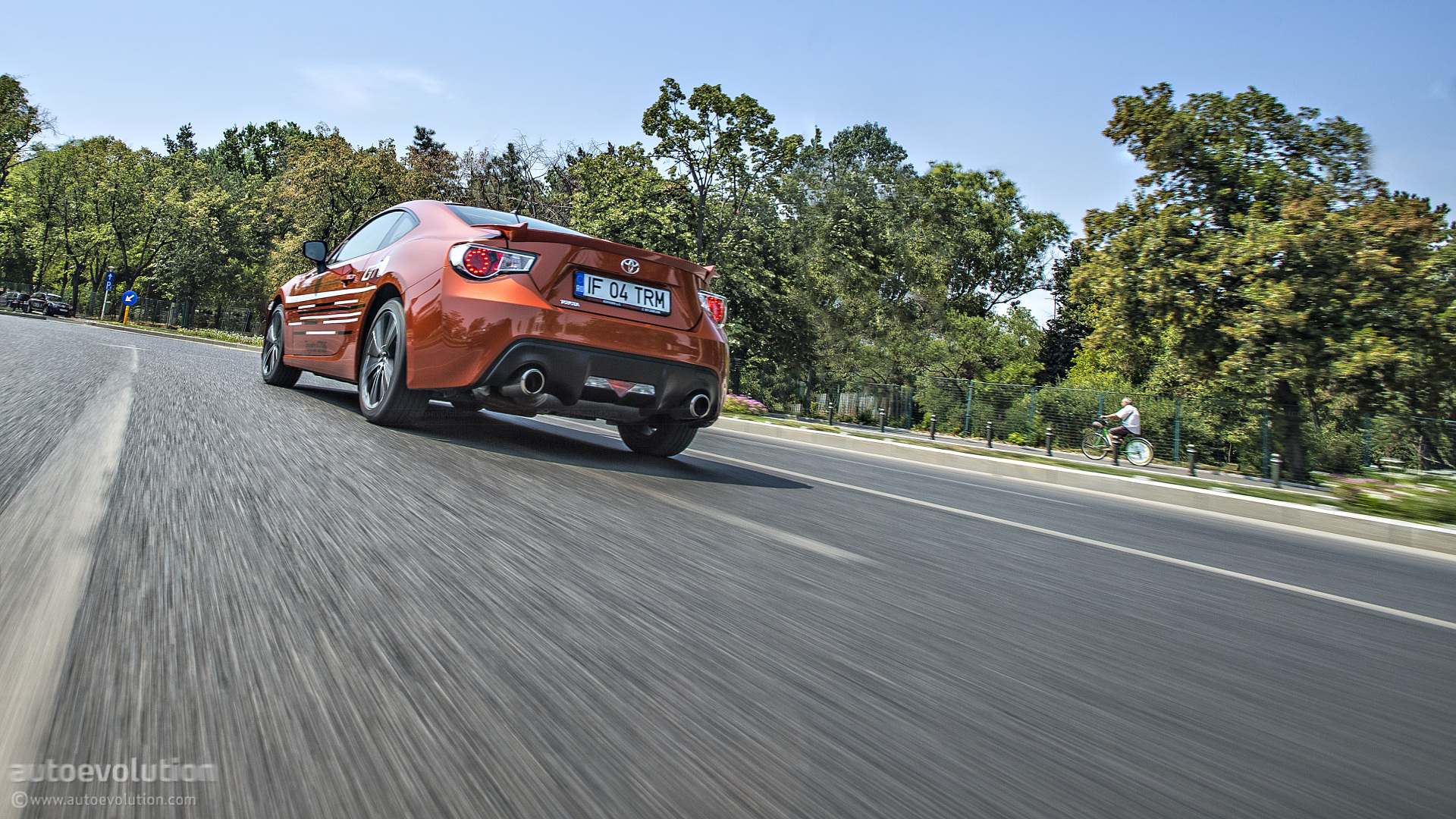
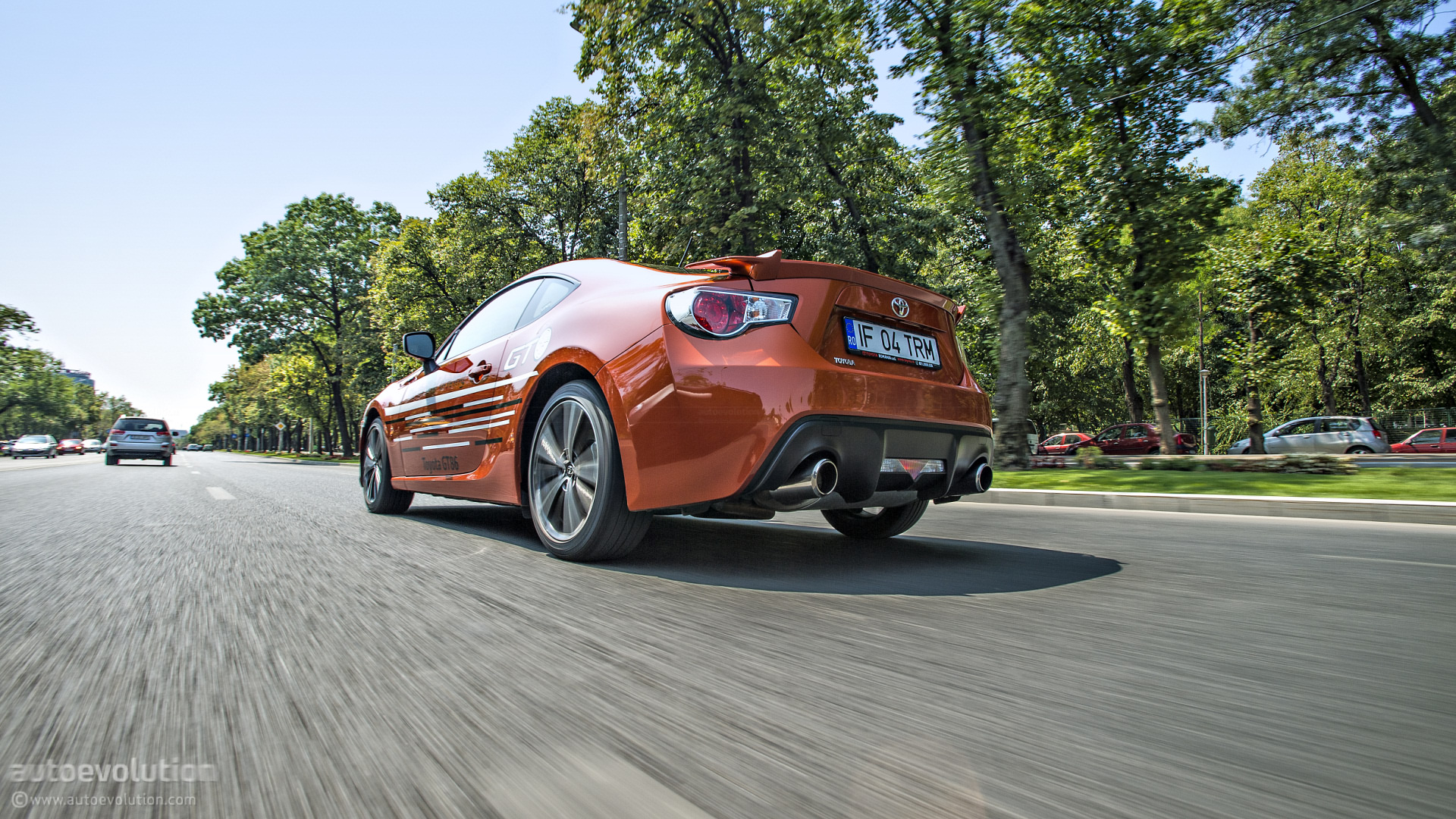
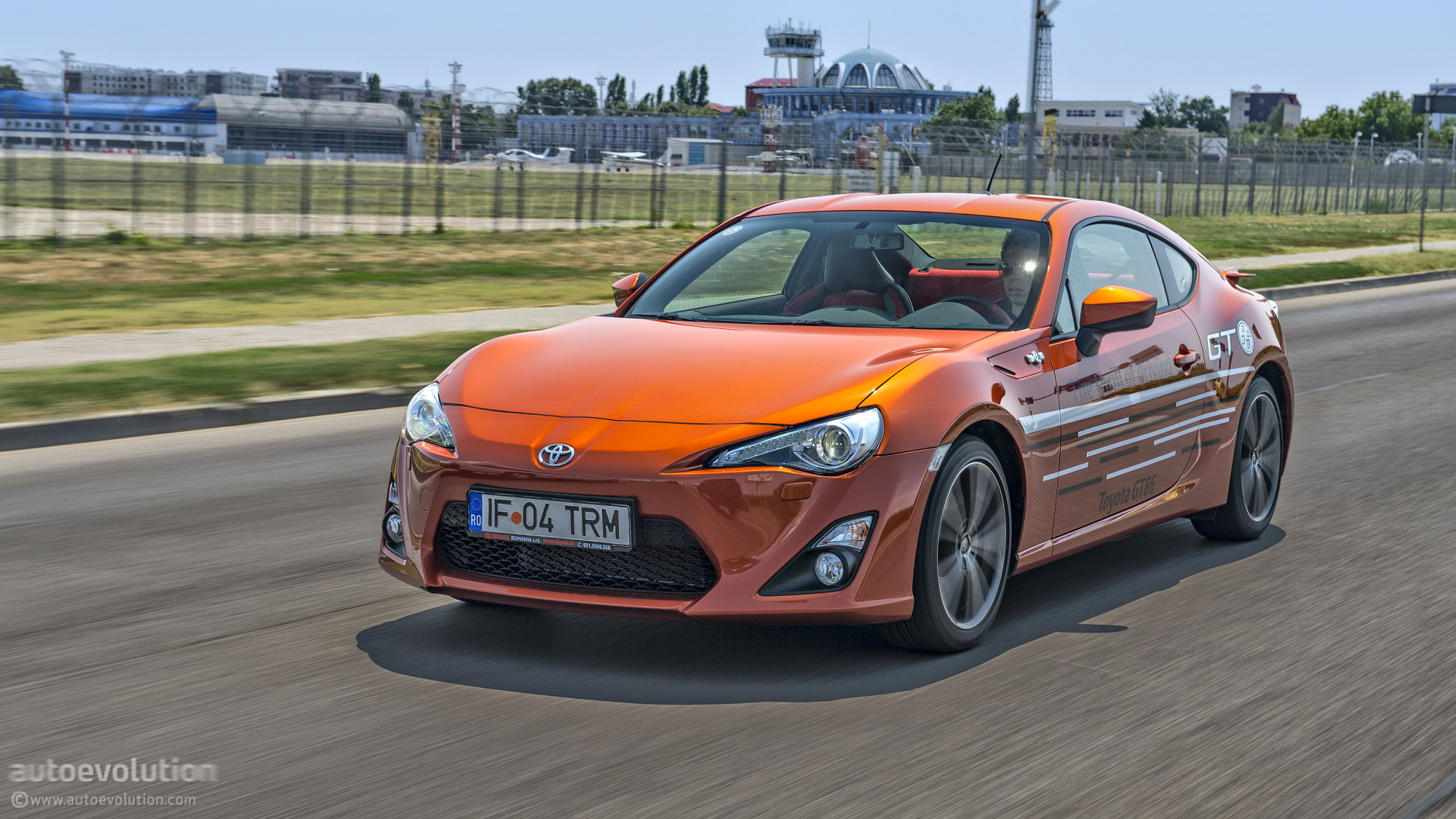
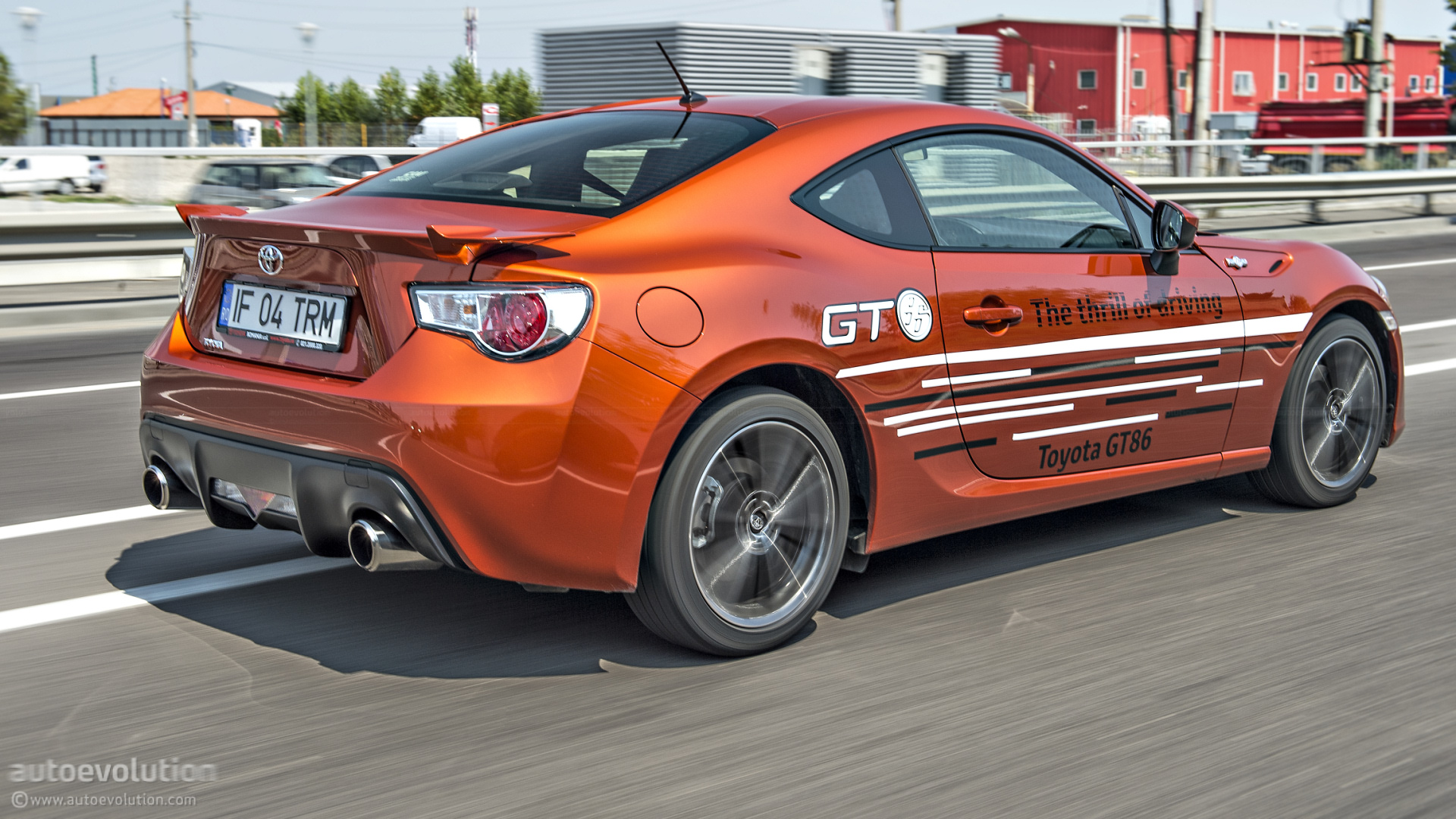
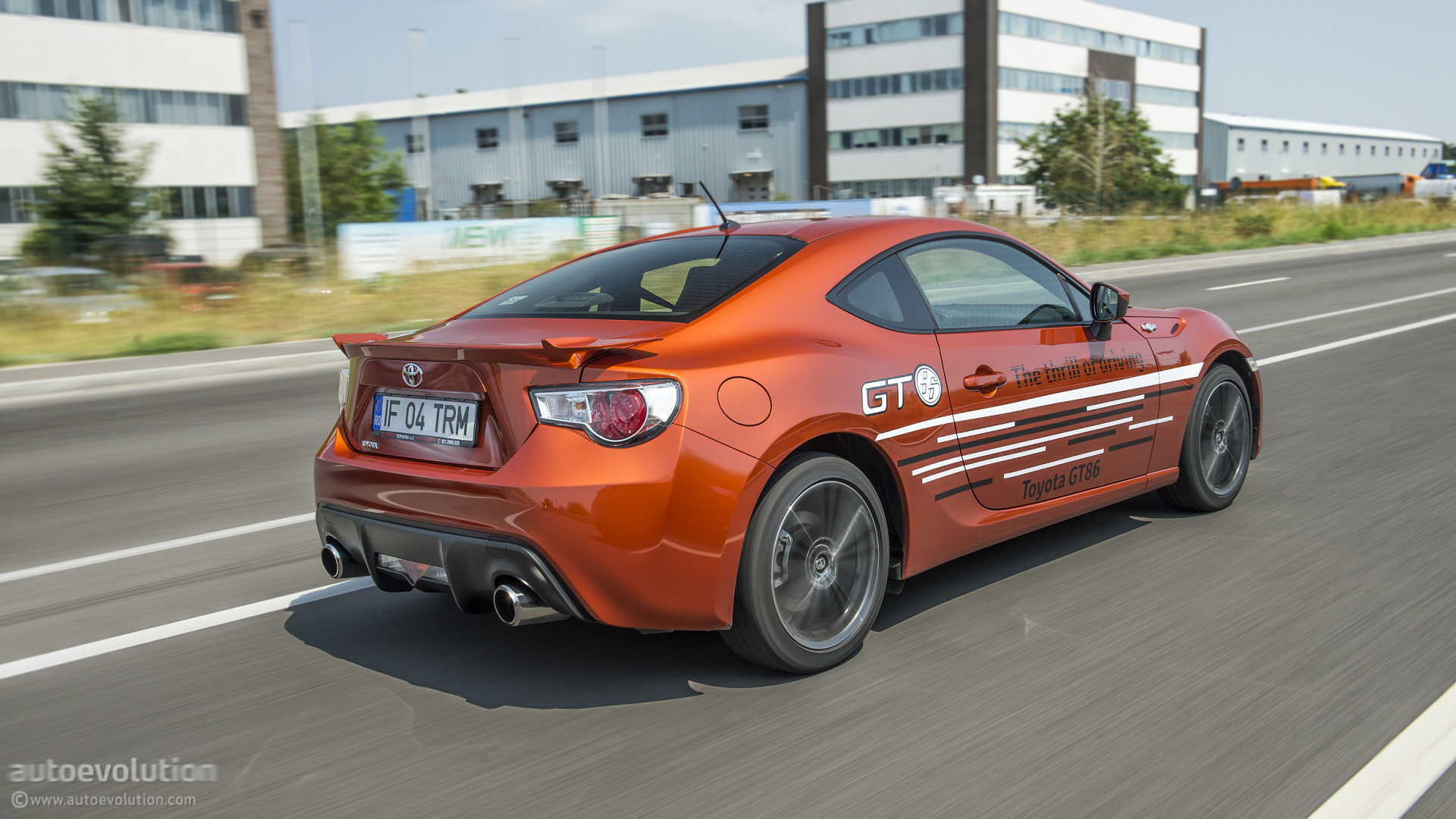
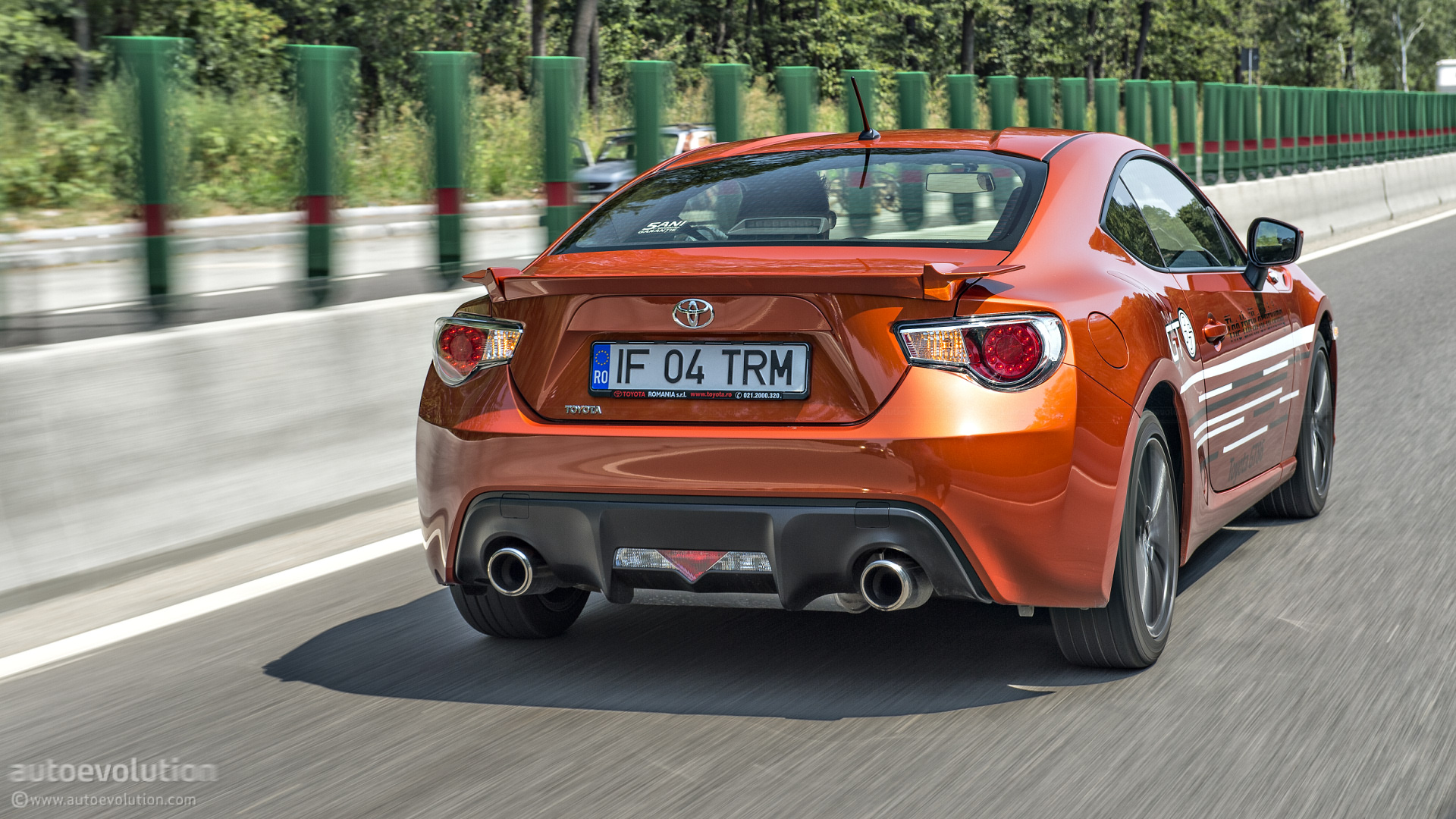
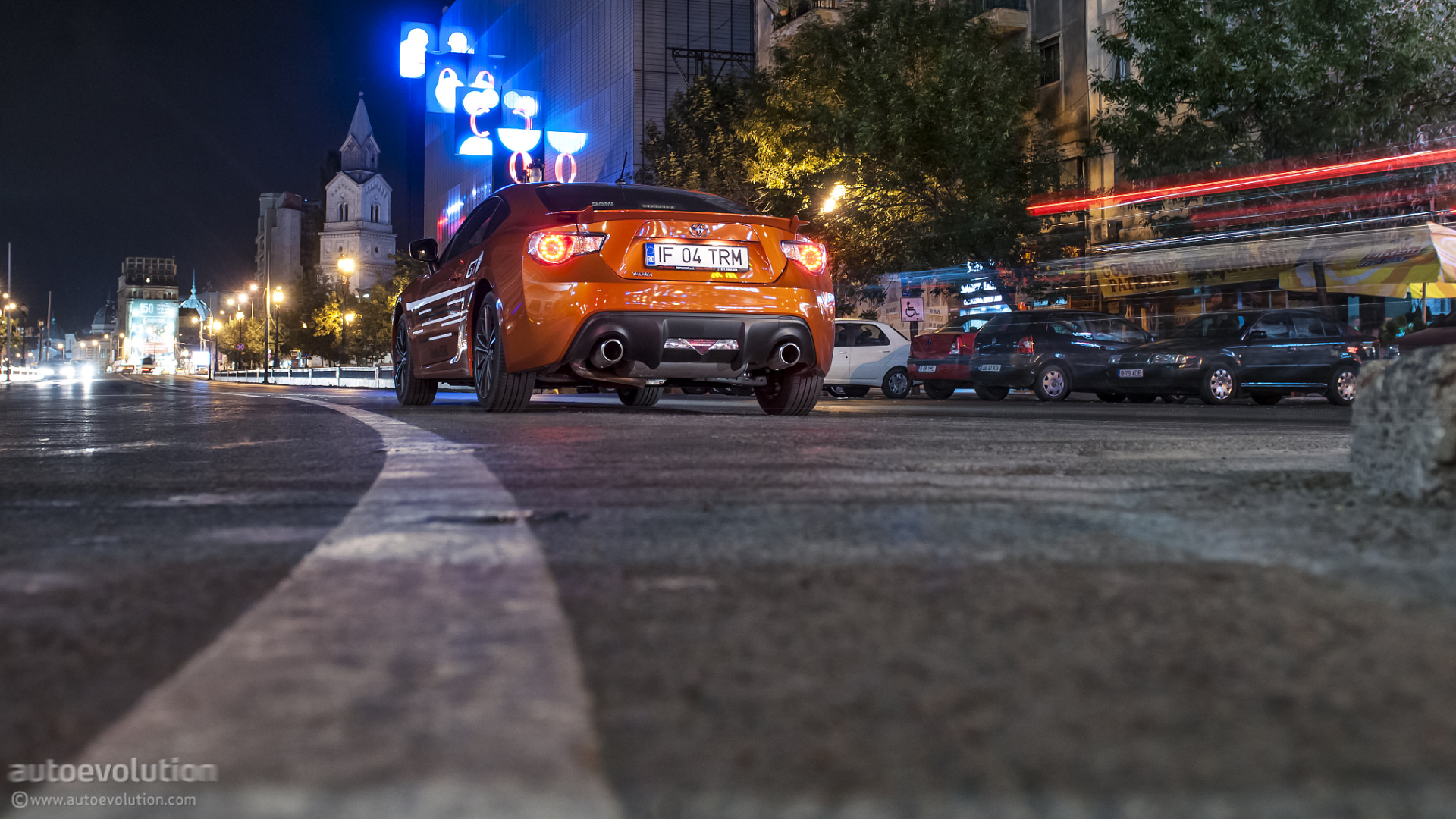
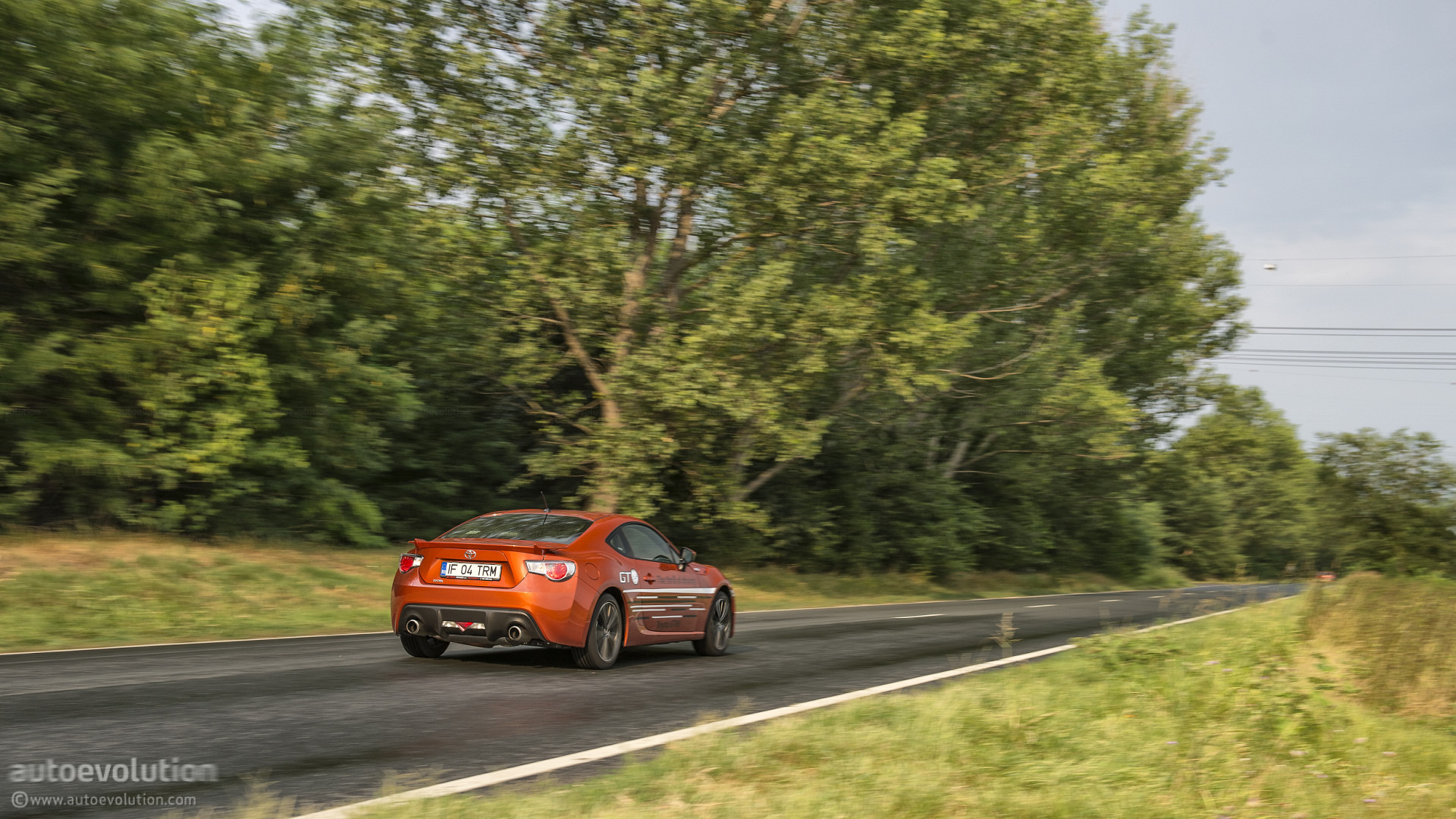
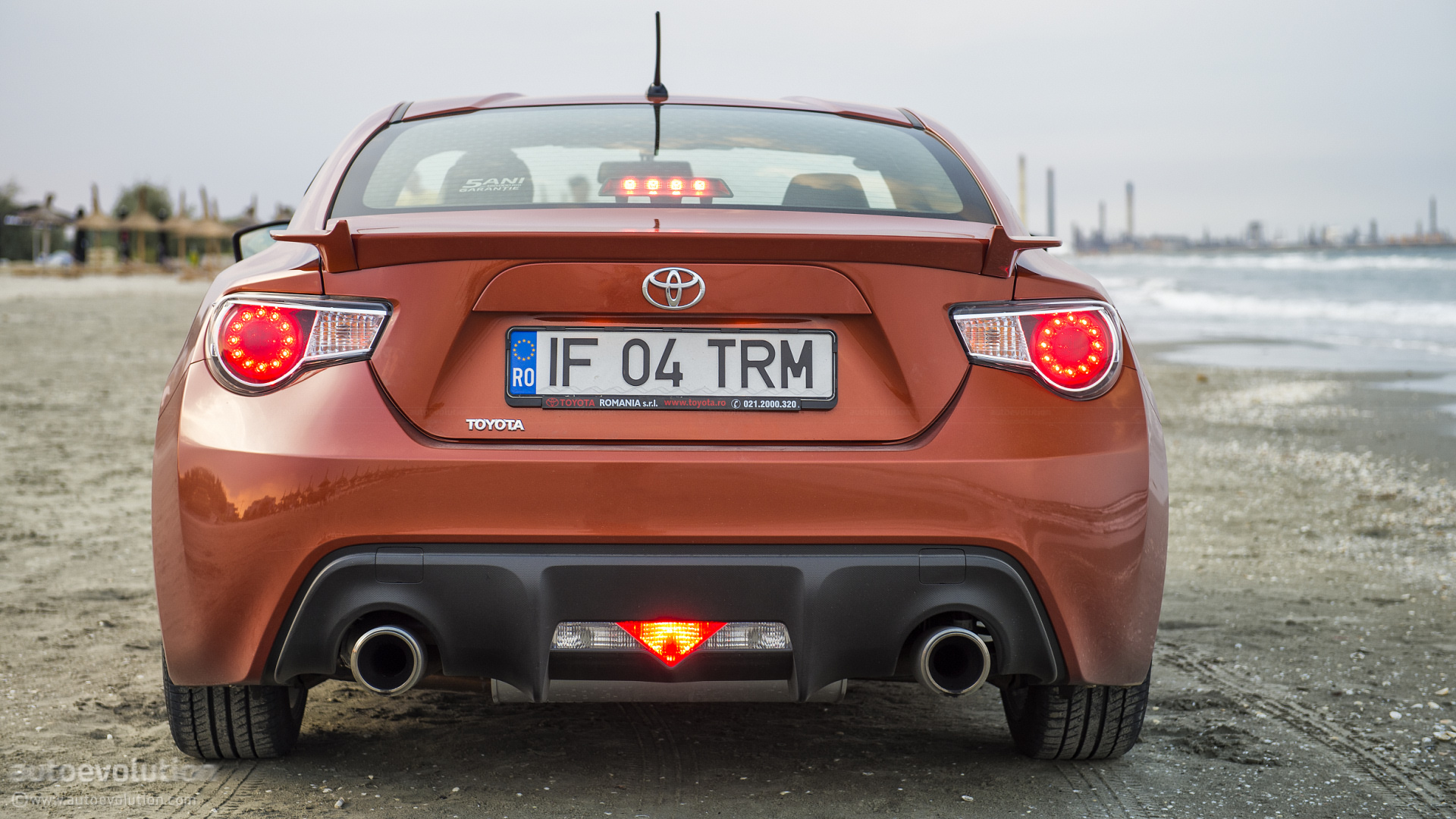
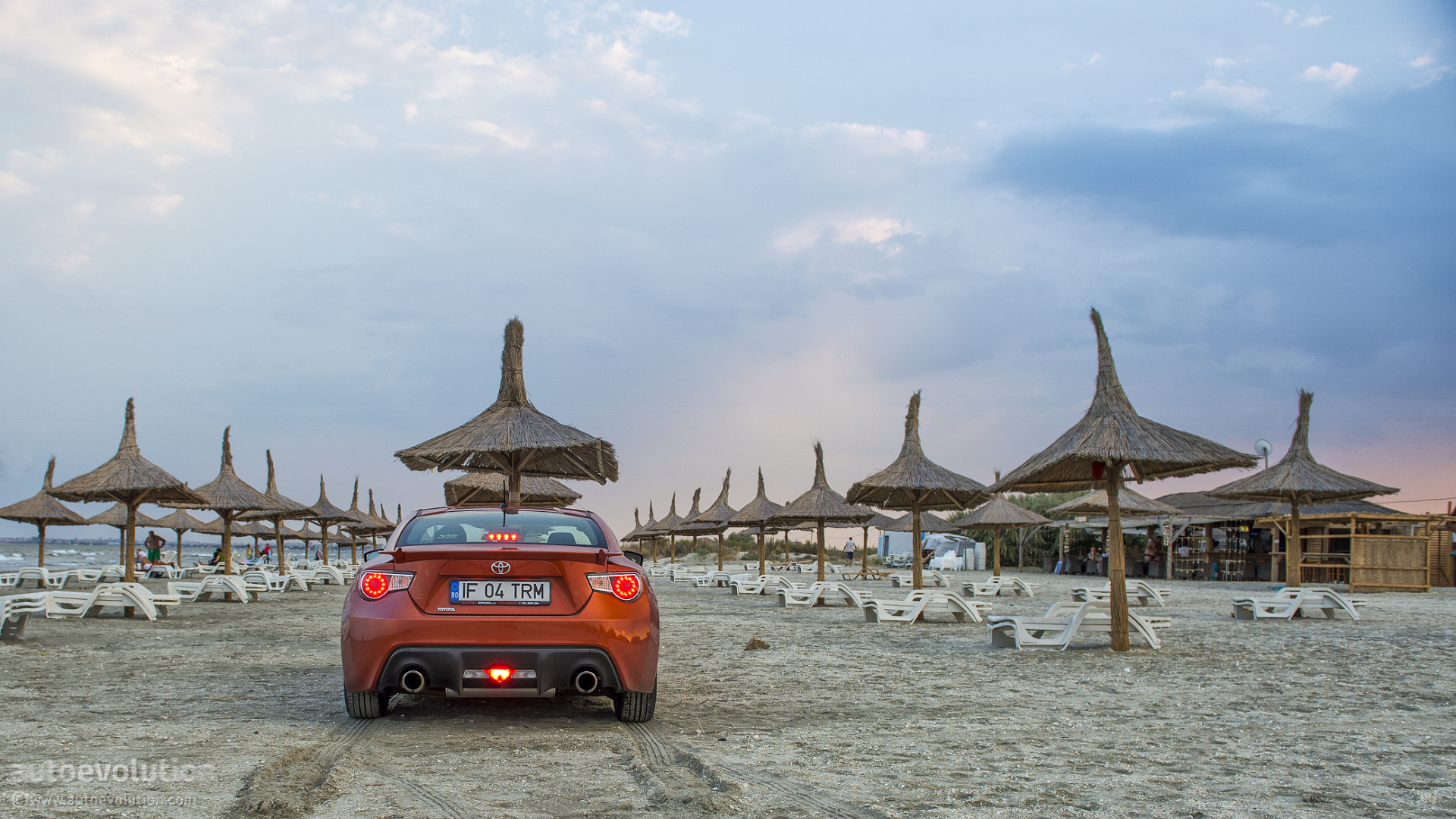
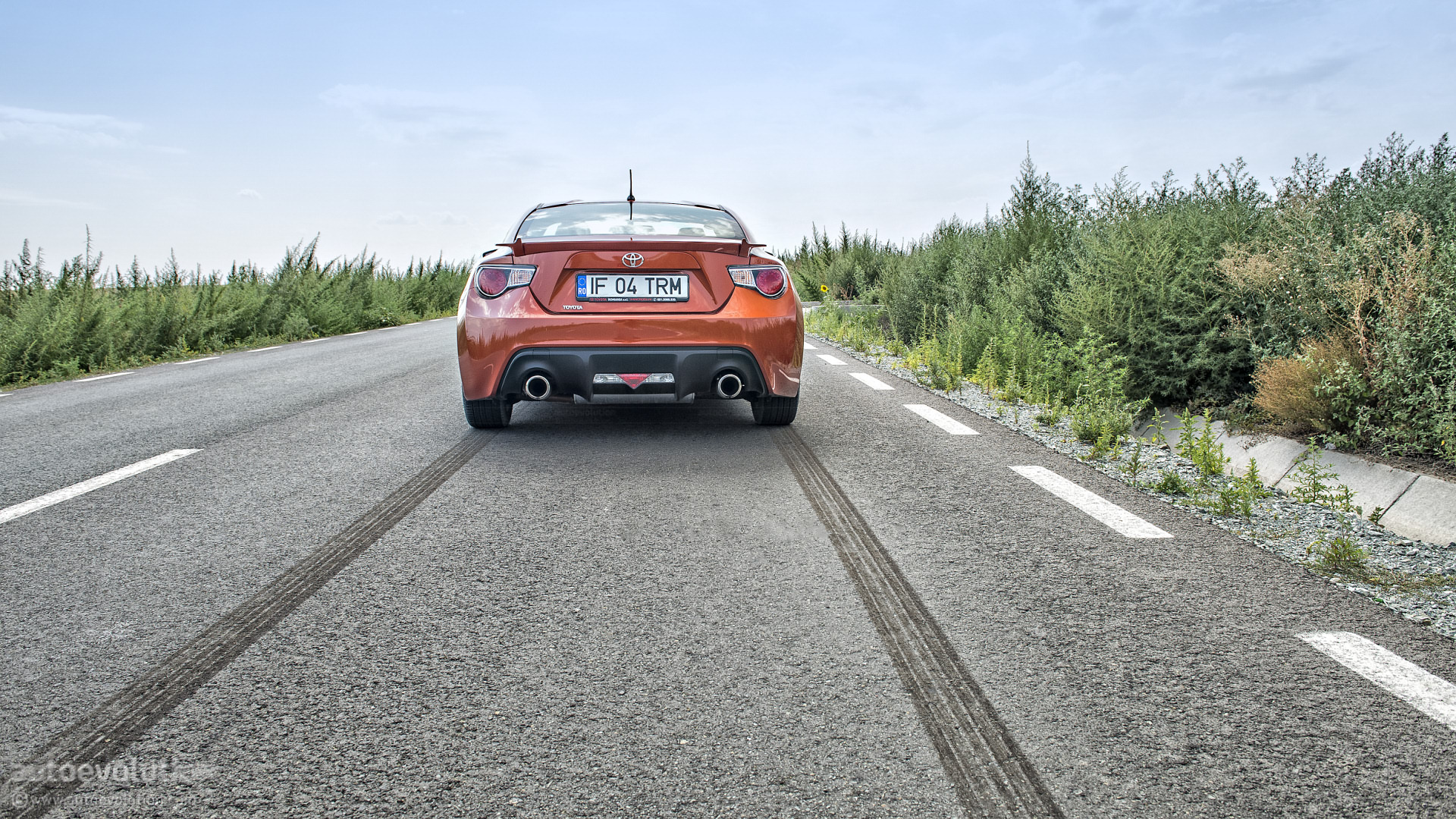
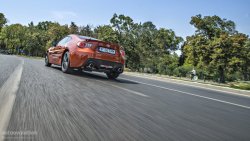
This time we'll start looking at the tested vehicle from behind, where Toyota has fitted a pair of chromed exhaust tips that measure exactly 86 mm in diameter. These channel the gasses coming from a flat four engine that uses an 86 mm bore and stroke. Like we said, Toyota went very far with integrating "86" into this car.
The designers must've had a huge pressure on their fingers, as they not only had to cope with the aforementioned requirement, but also mix Toyota's design language, one that's mostly used on much more civilian vehicles, with styling cues that define a sports car.
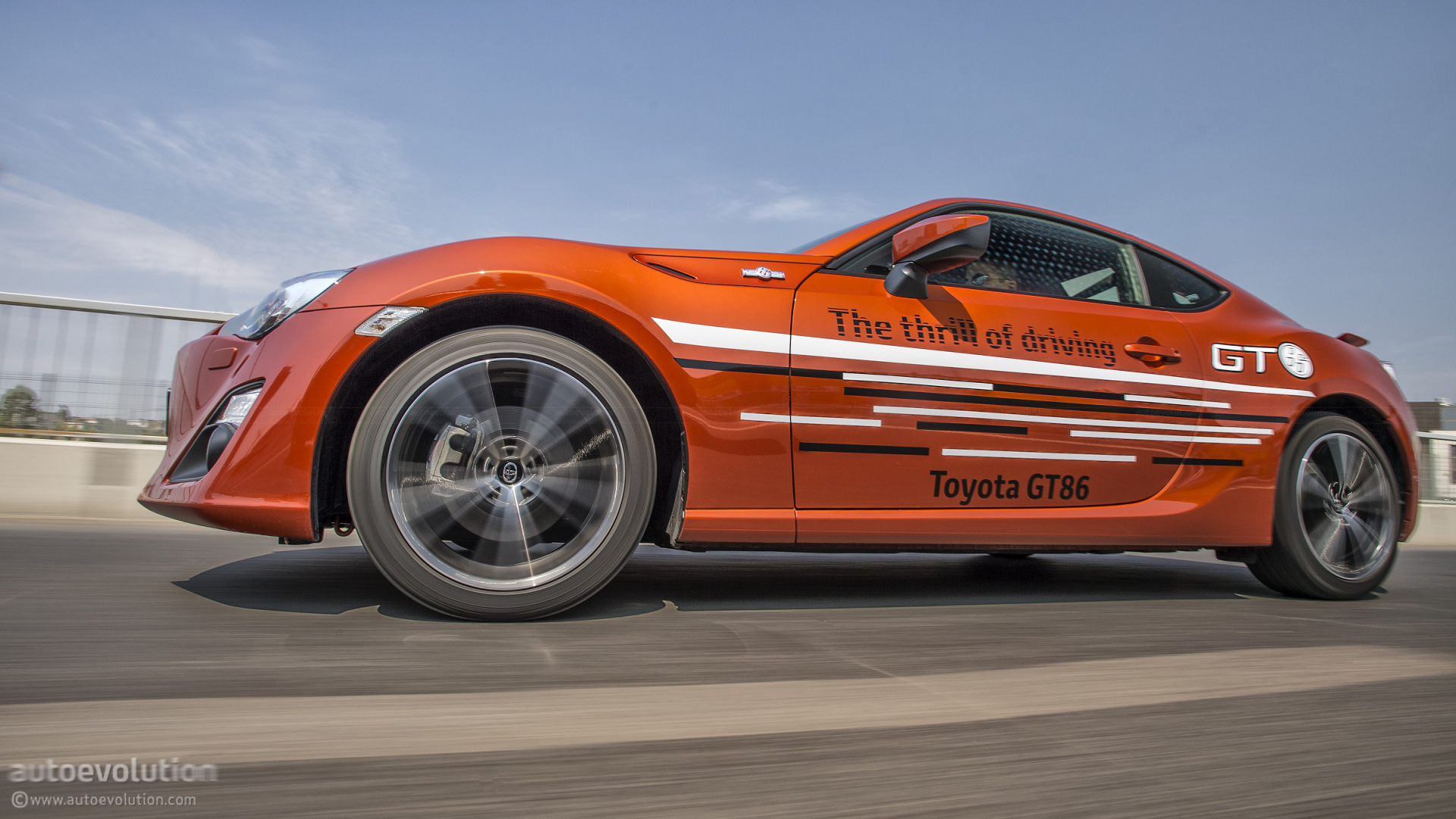
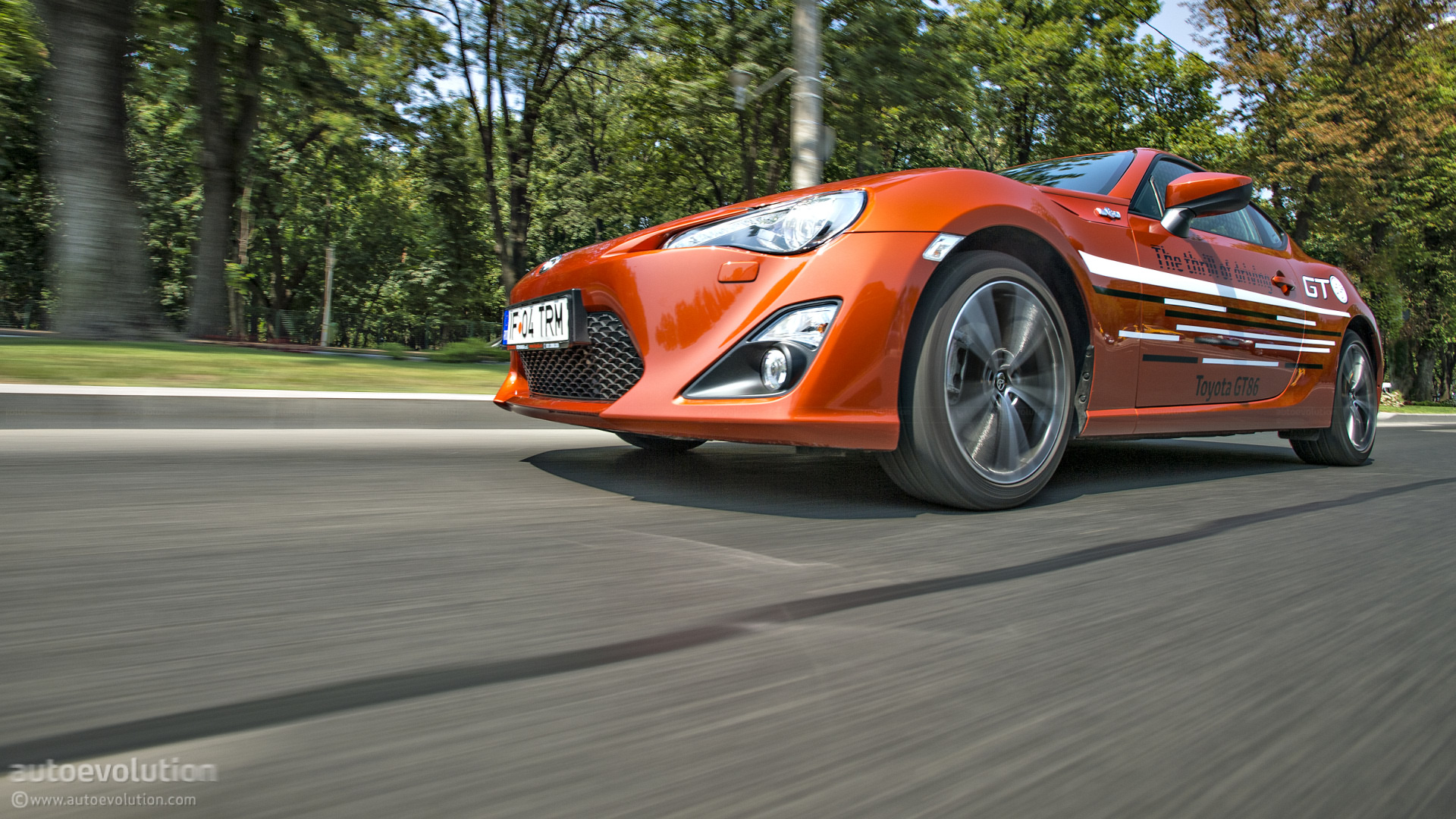
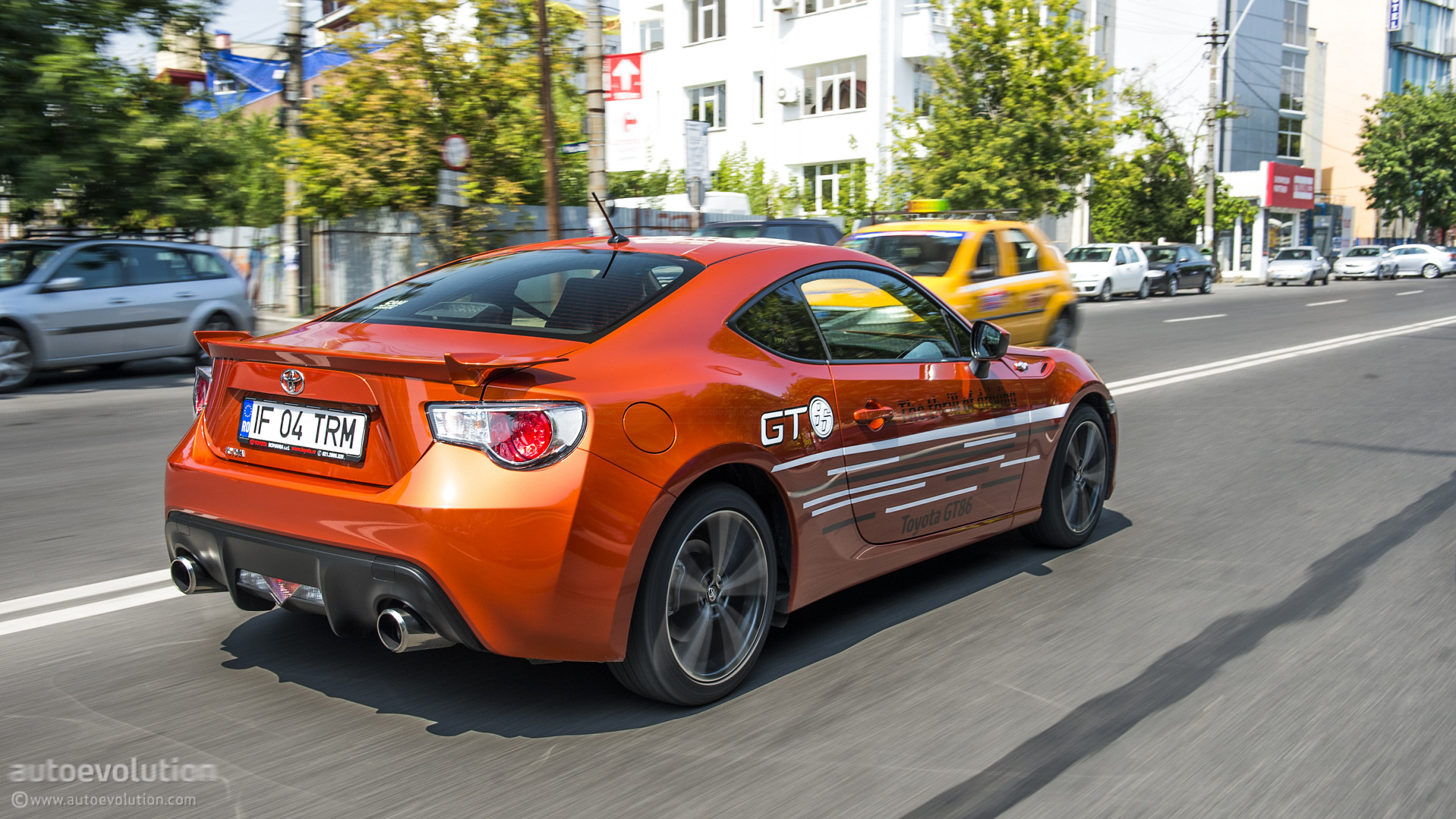
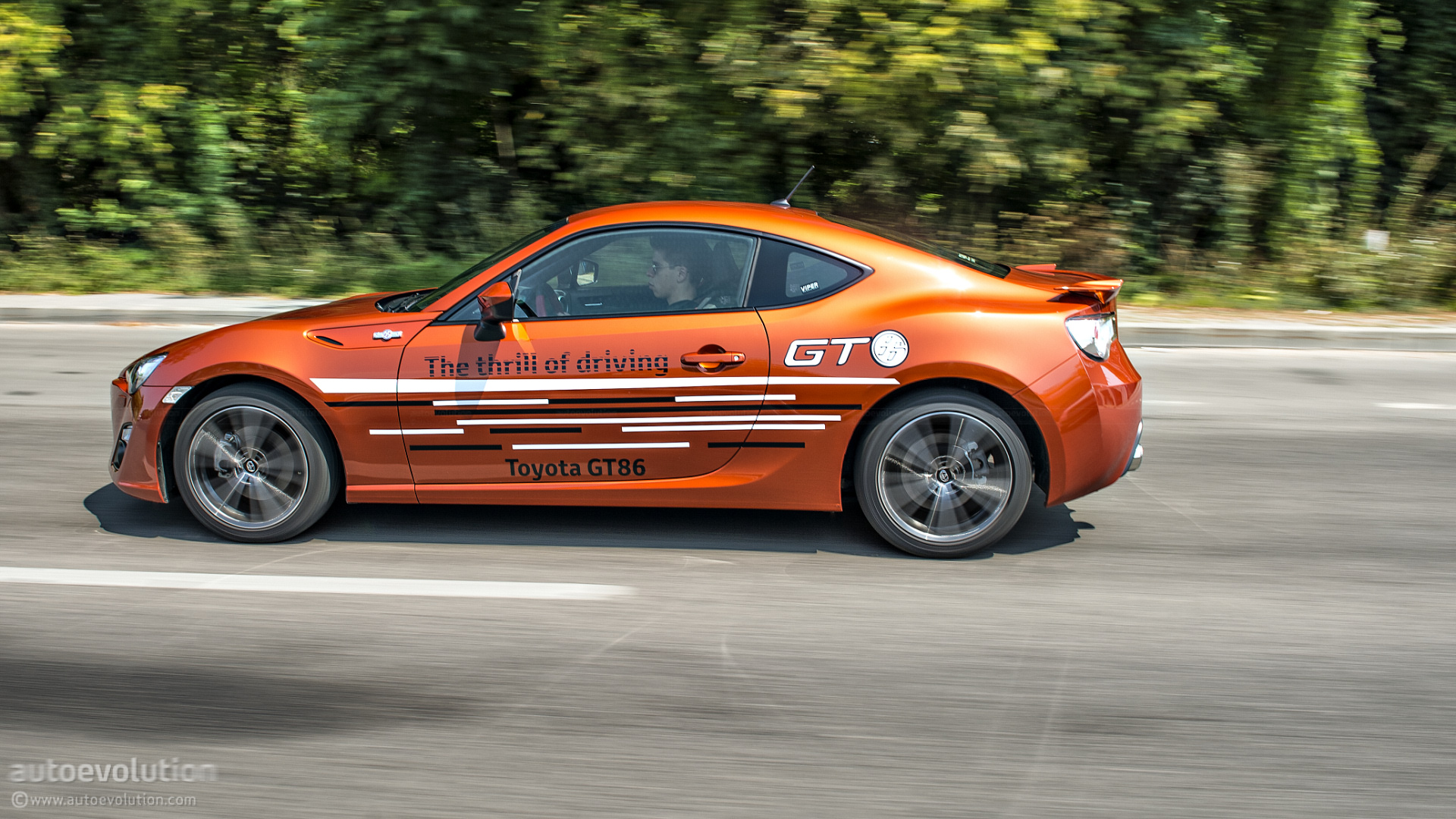
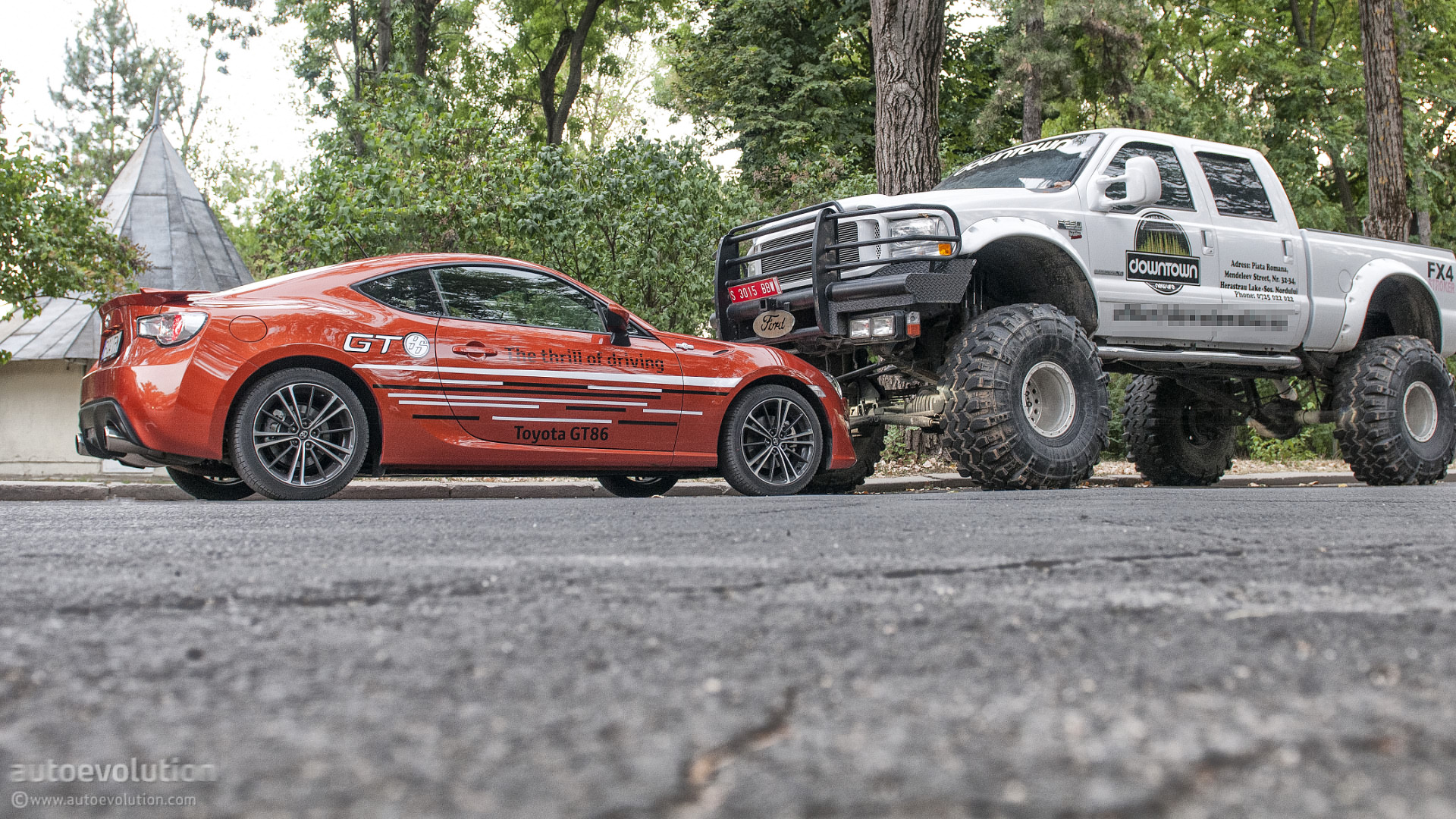
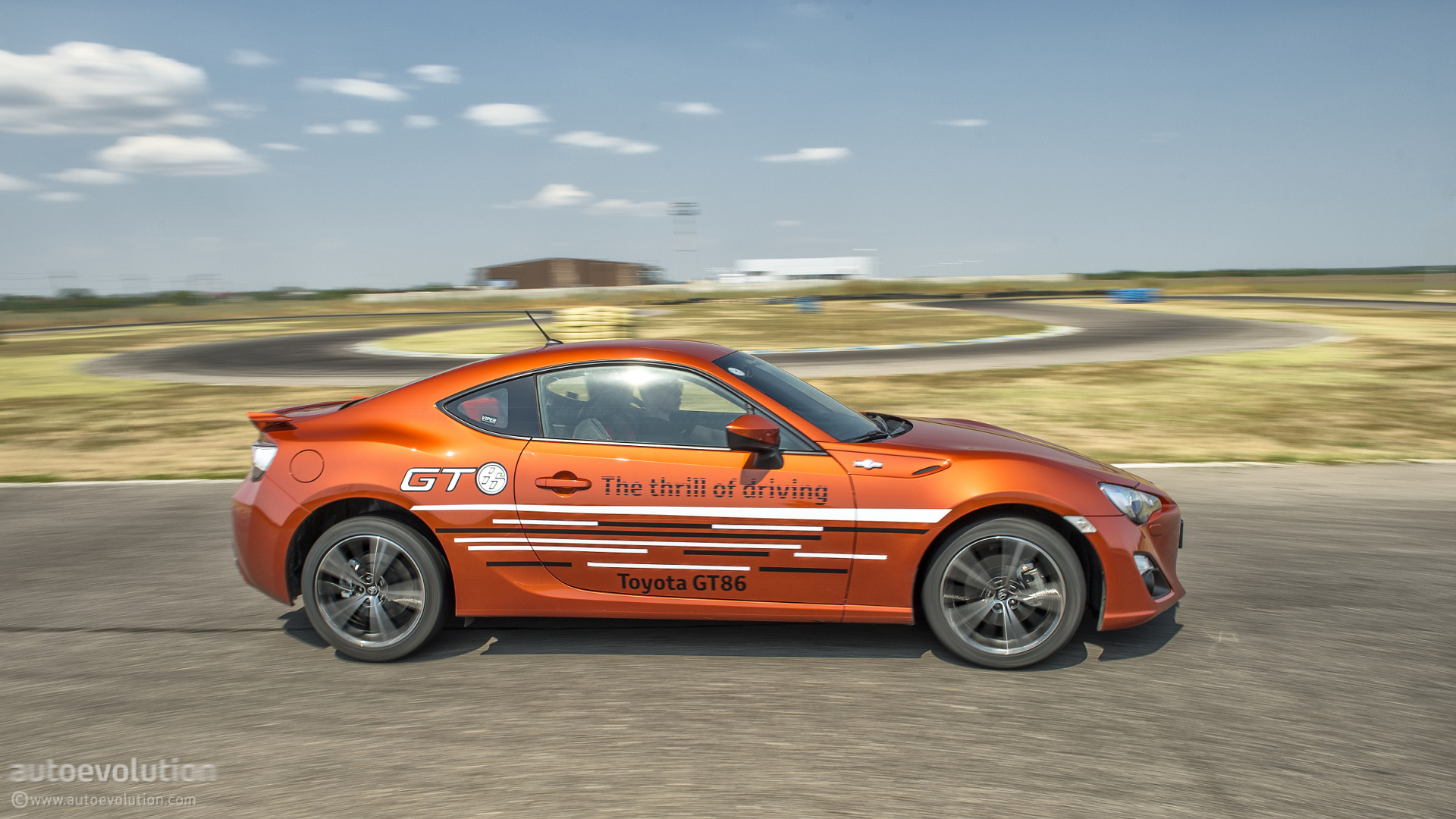
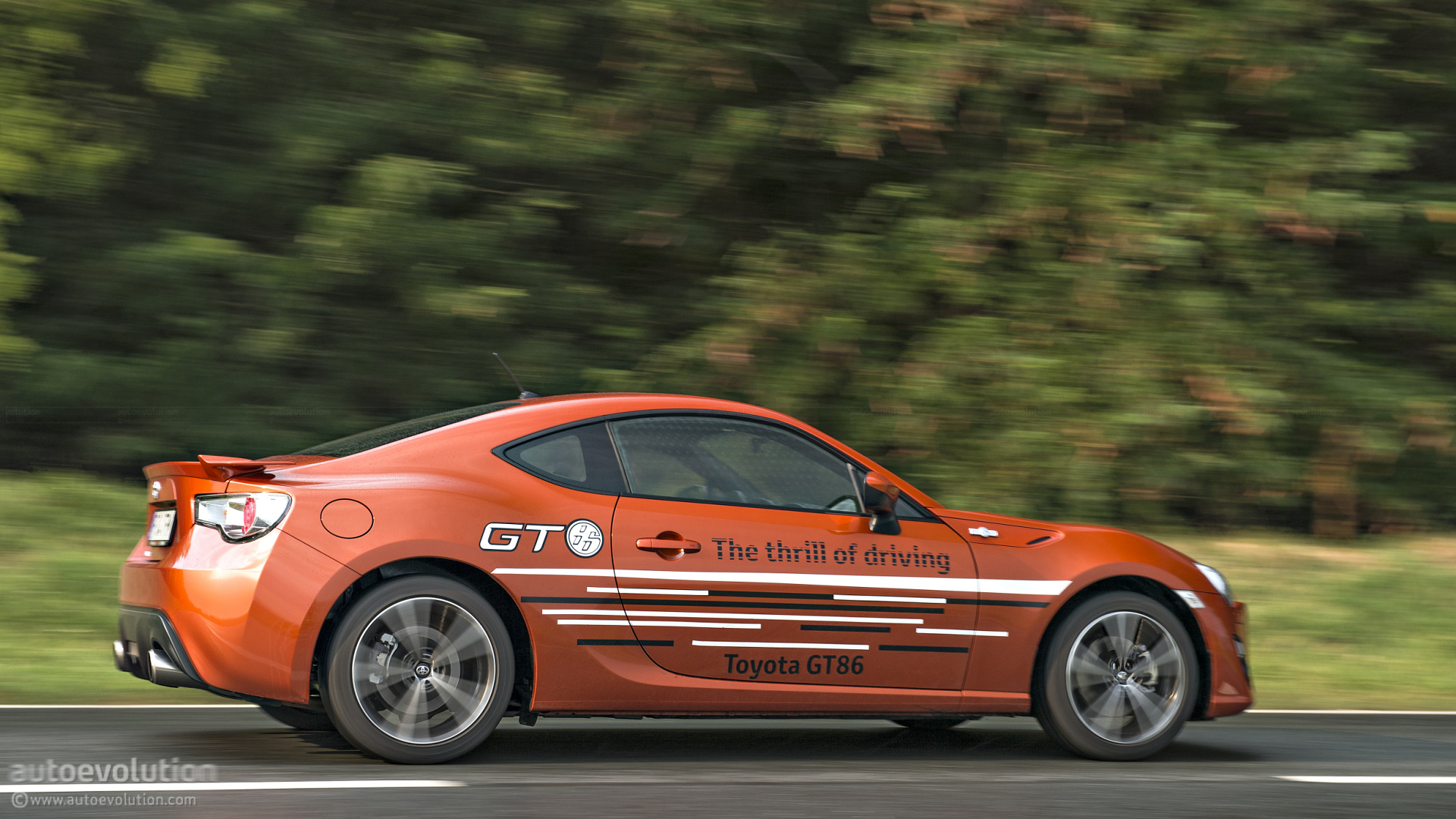
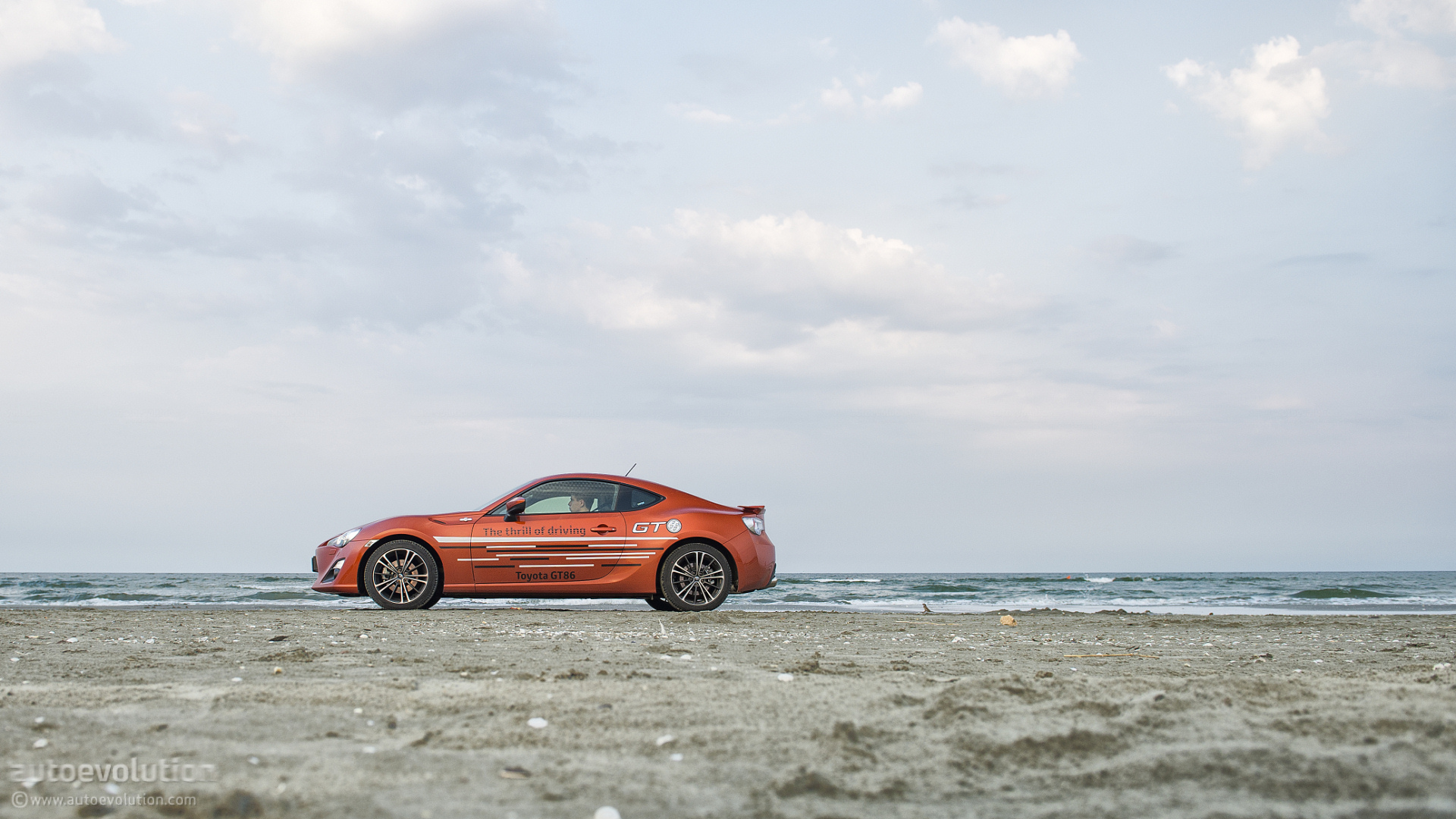
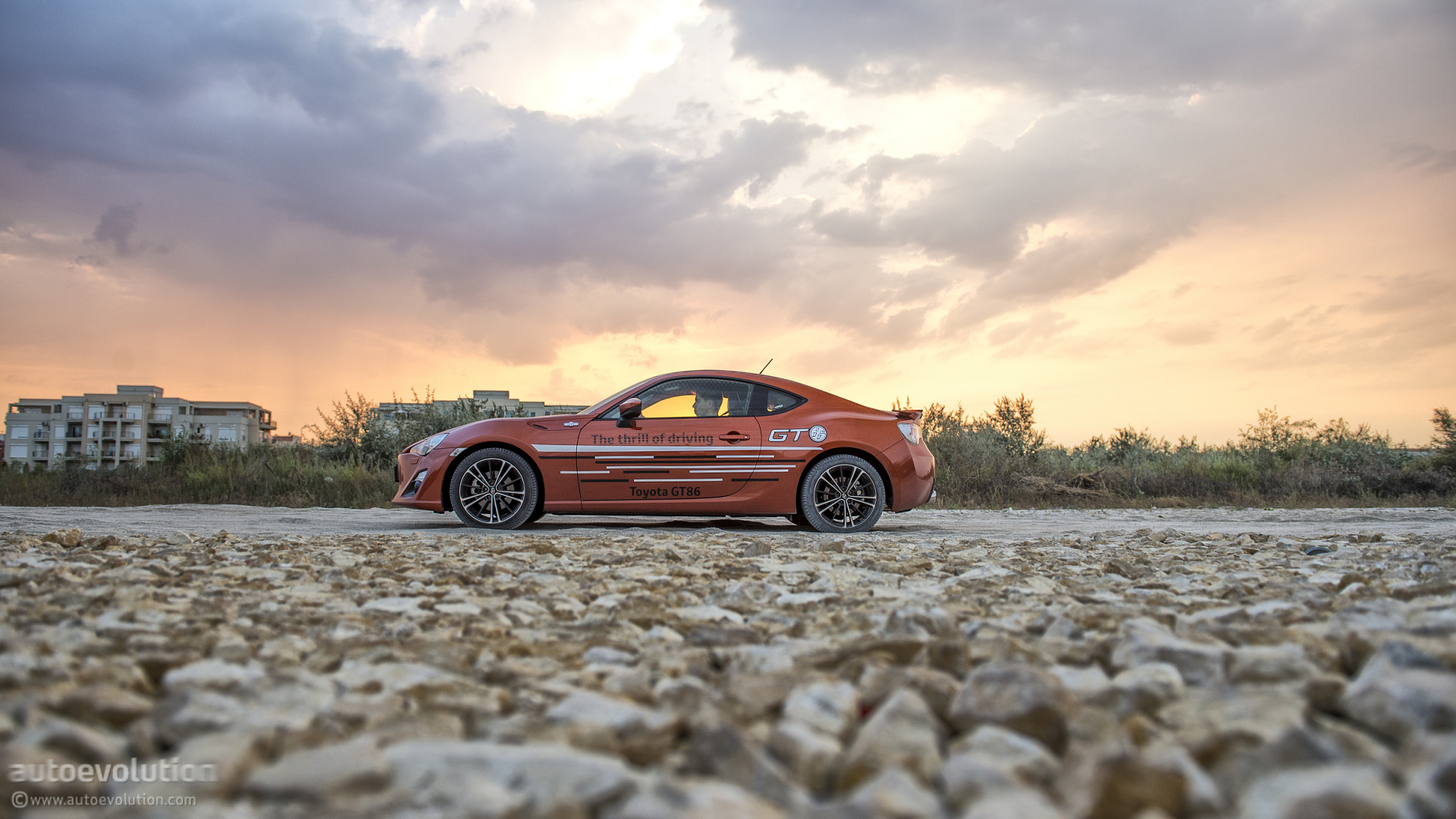
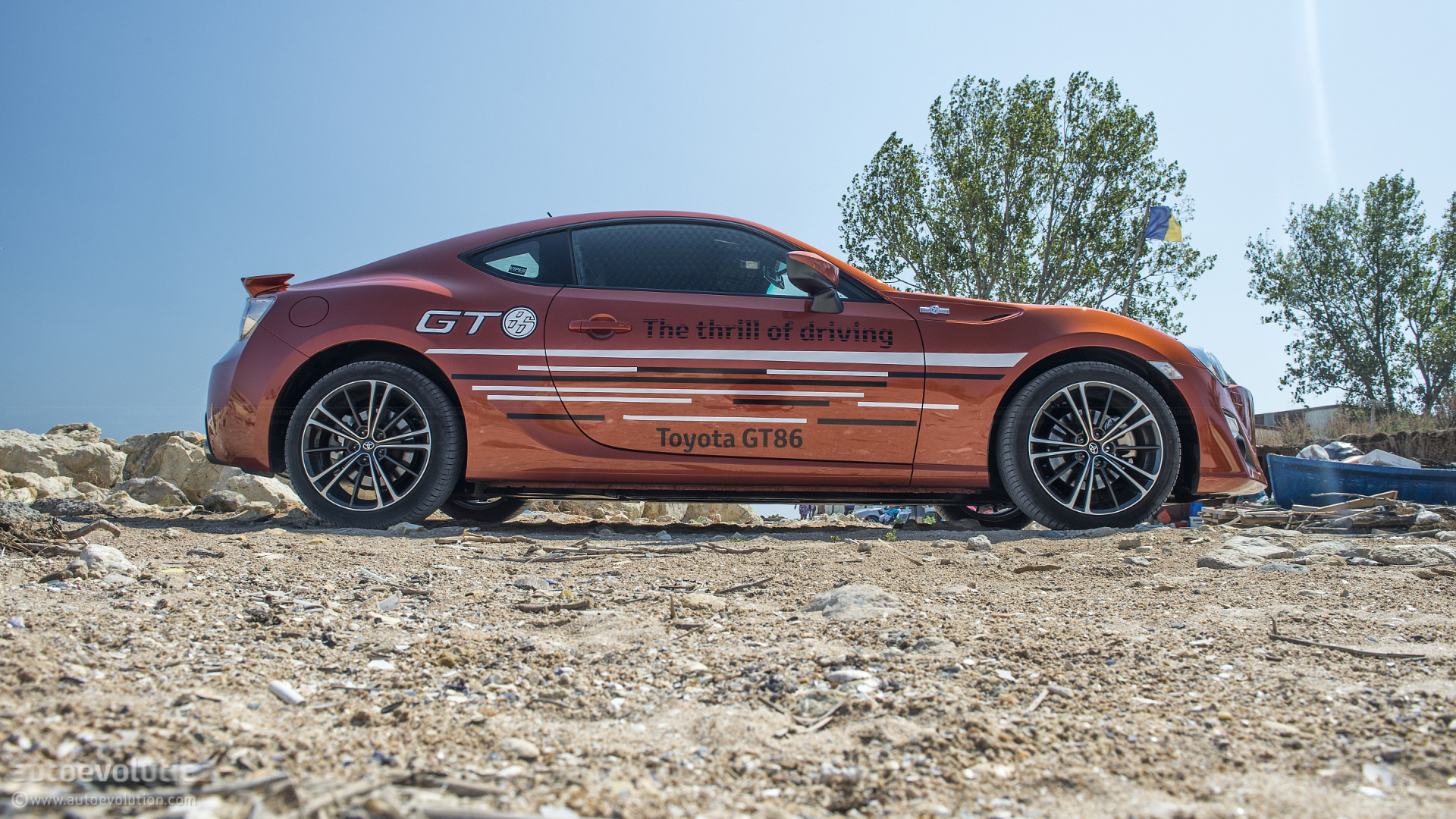
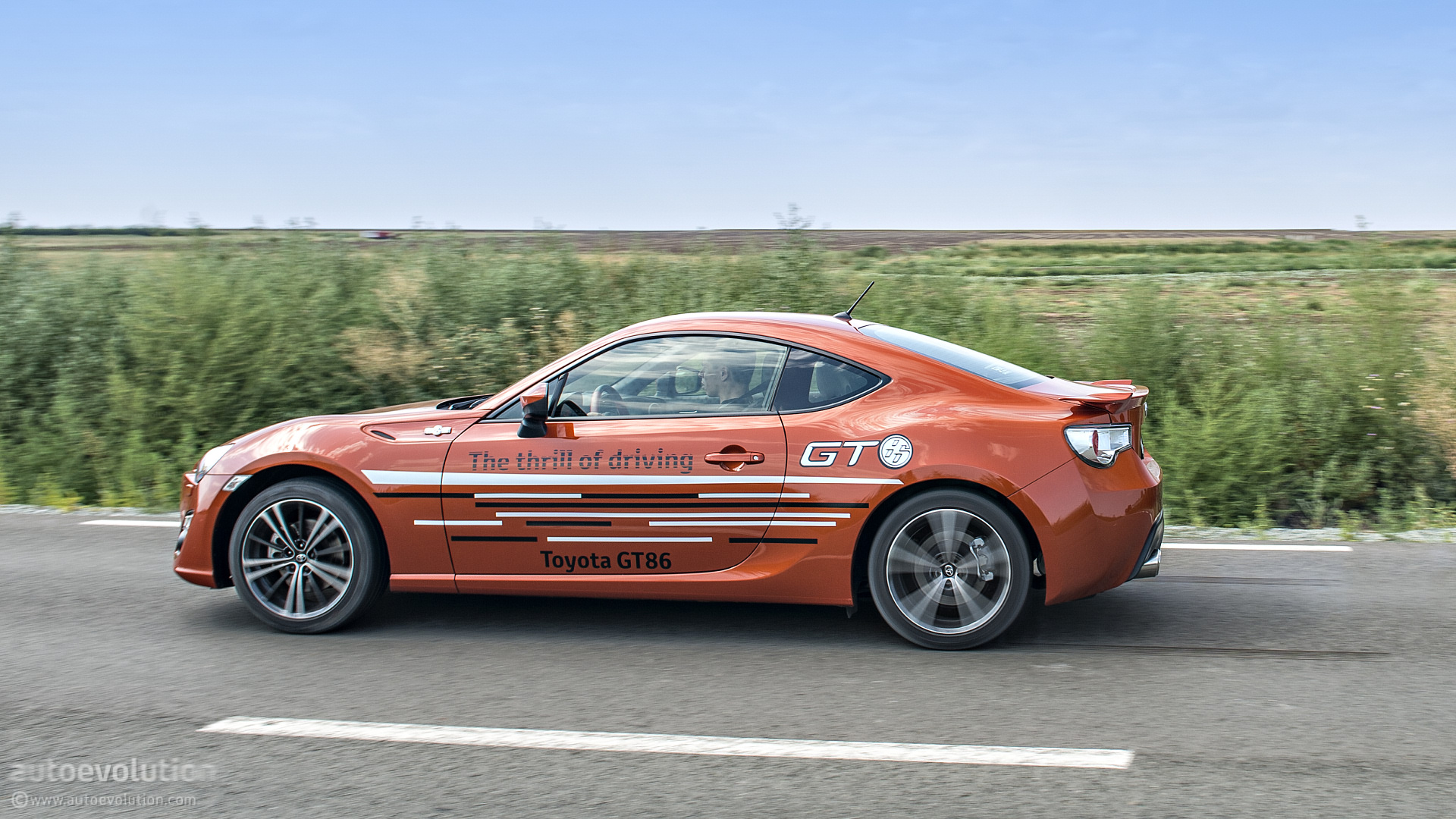
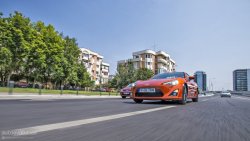
Everything had to be wrapped in an ultra-compact package and the result is, according to Toyota, the smallest four-seater sports car in the world. And if there's one thing that stands out the most in the appearance of the GT 86, this is it's low stance. The next thing you notice is how skinny the tires are for a sports car.
No, you're not wrong, you have seen these 215/45 ZR17 pieces of rubber before, on the Prius. So, they're not just skinny (again, for a sports car), but also not super-sticky. This is because Toyota wanted us to have a car that we can play with, not an overly grippy machine that's difficult to control once it lets go. But we'll talk more about this in the Tech Facts chapter.
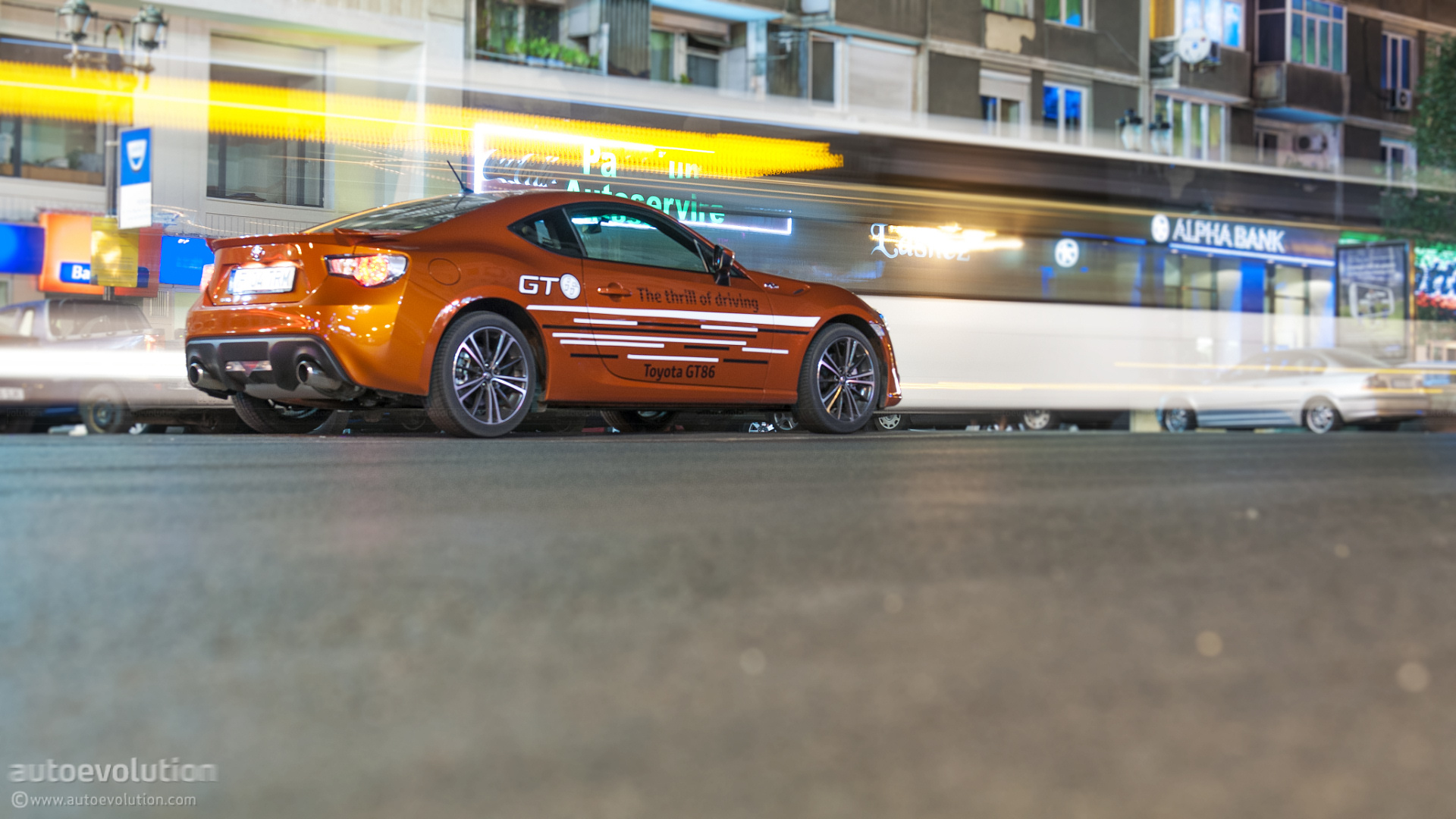
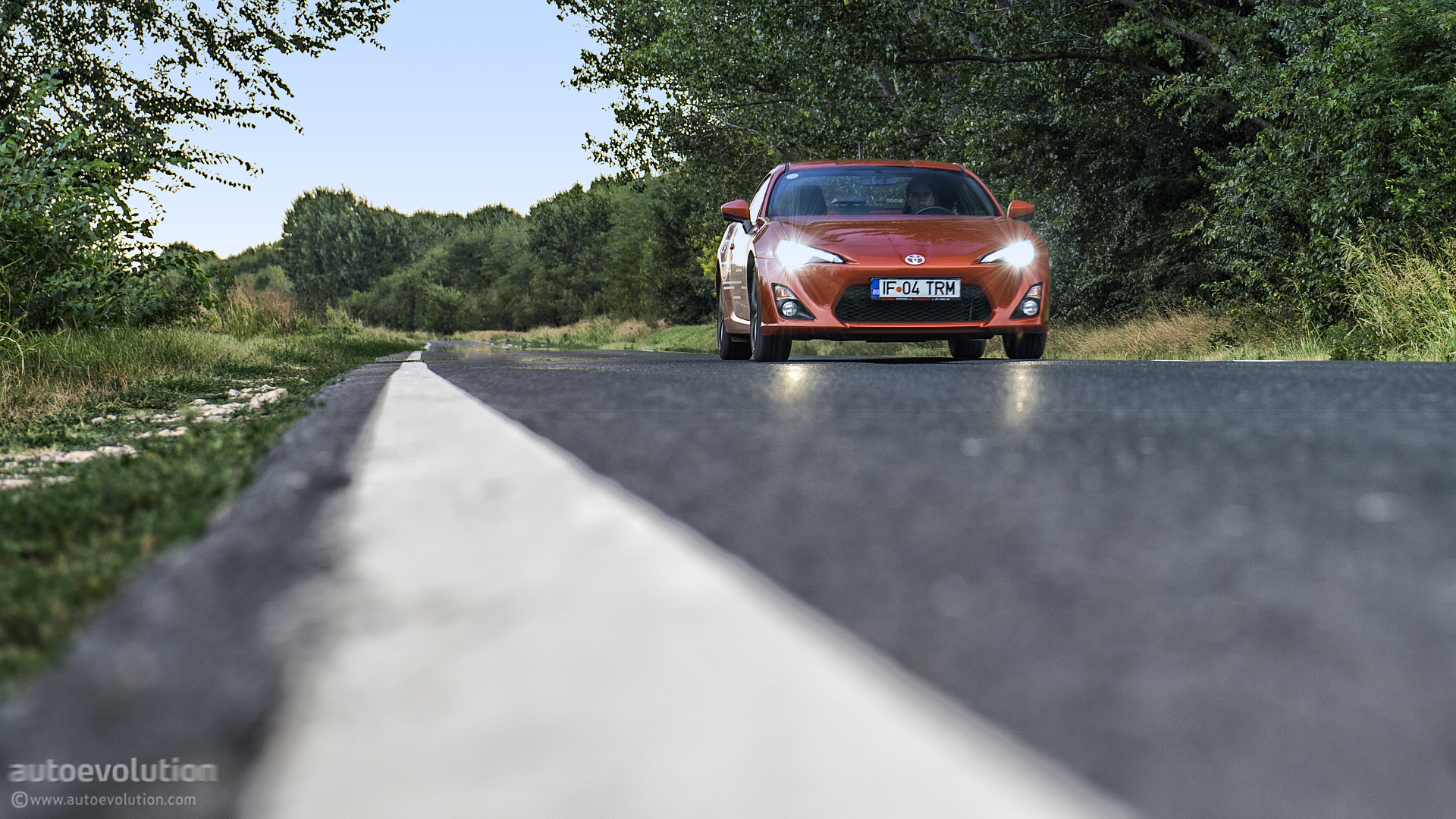
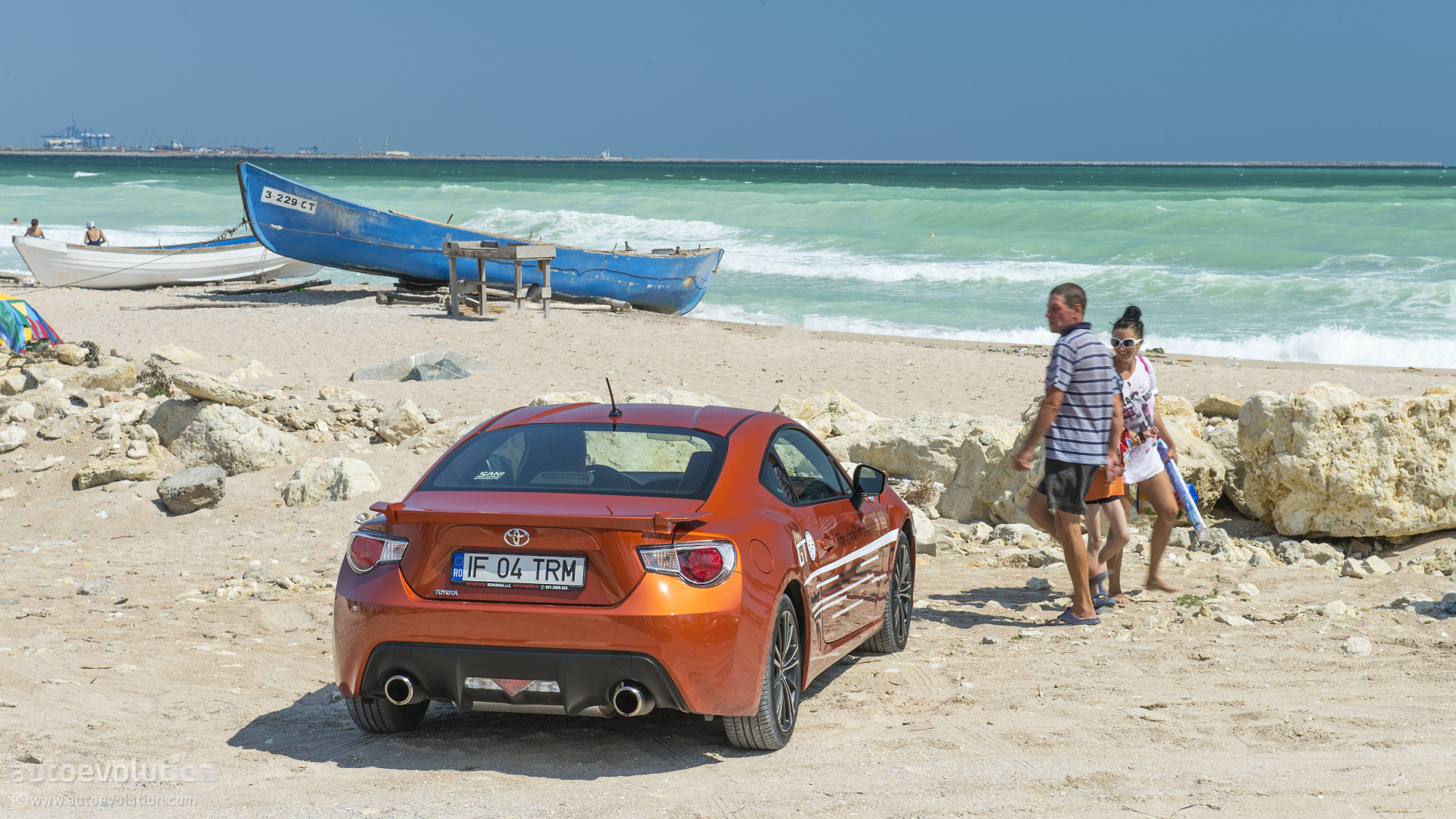
We like the appearance of the GT 86 but it seems that it's not that impressive on the street. We tested it's wow factor like we do with all cars, by noticing people's reaction to it, and we have to tell you that it turned less heads than we expected it to.
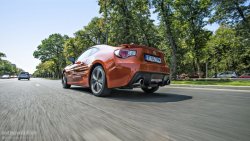
We'll return to the rear of the car where we started this chapter to tell you that the aforementioned exhaust tips are integrated in a diffuser element that also holds a rear fog light placed down low as if it belonged to an F1 car.
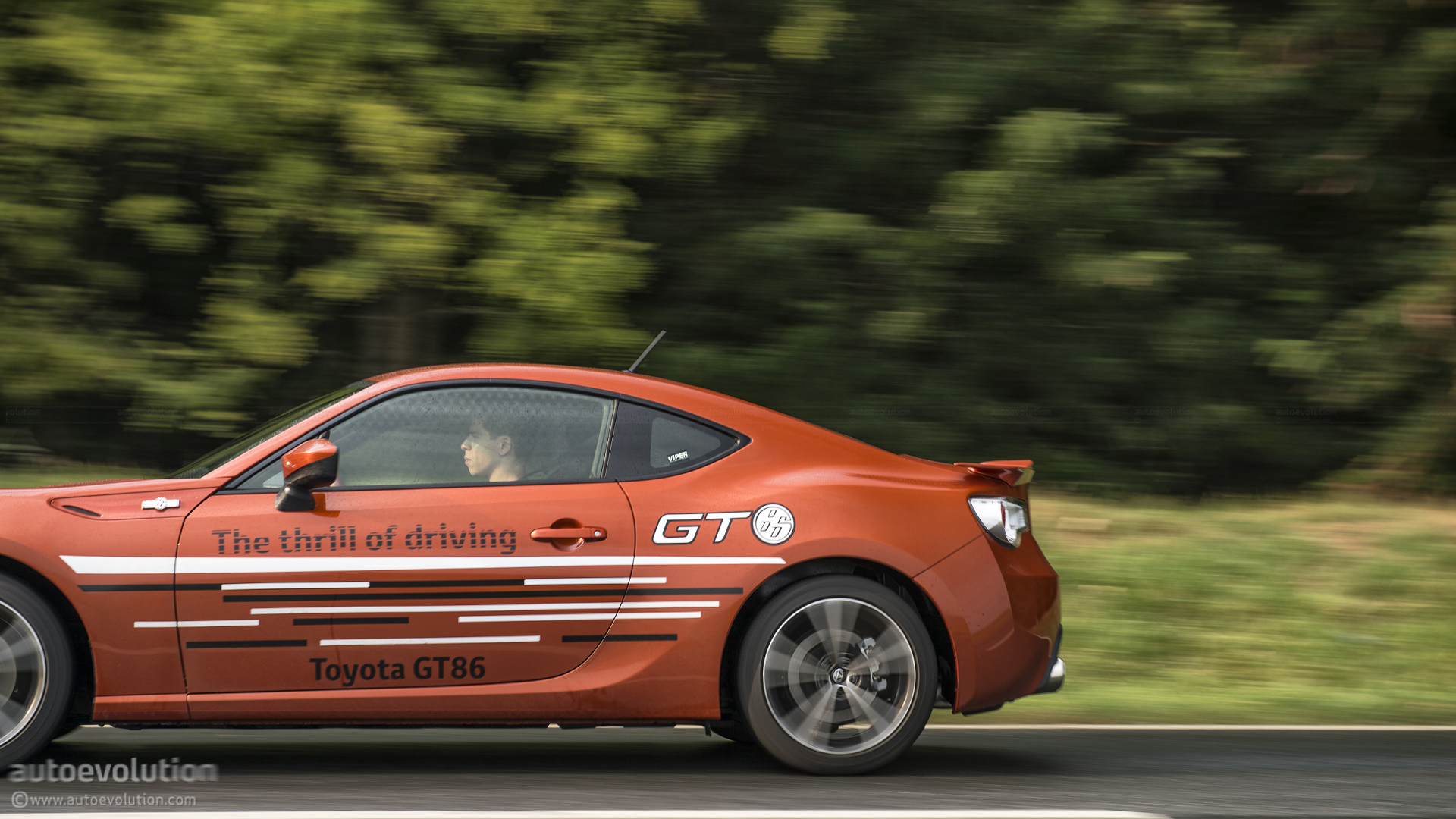
The car has a healthy dose of go-fast visual elements, so looking higher we find a fixed rear wing. Moving to the side, we see wide shoulders, which are so muscular that they create an extremely nice view in the exterior mirrors and can also serve a more trivial purpose as our guest editor "Lou Cheeka" points out.
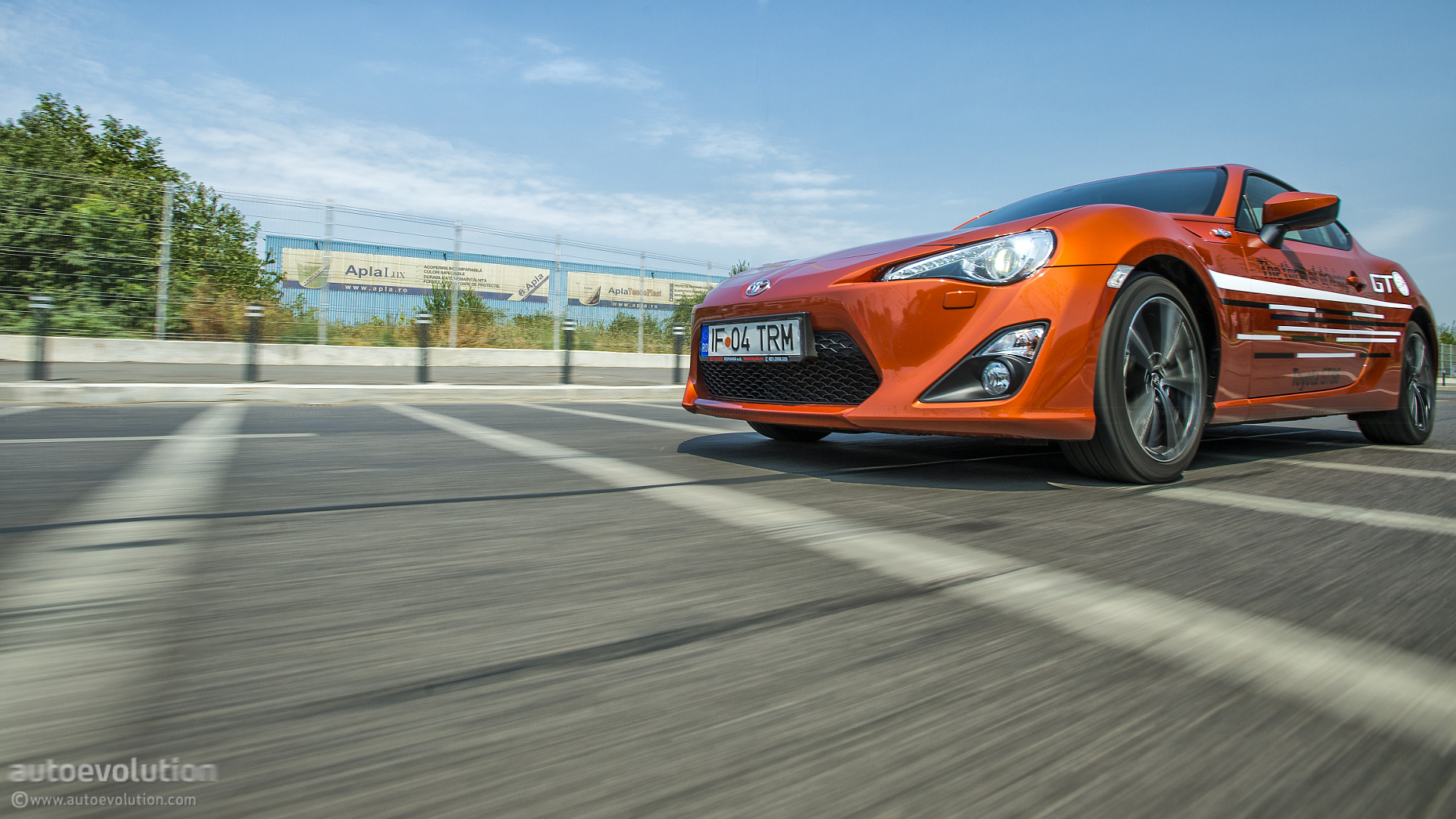
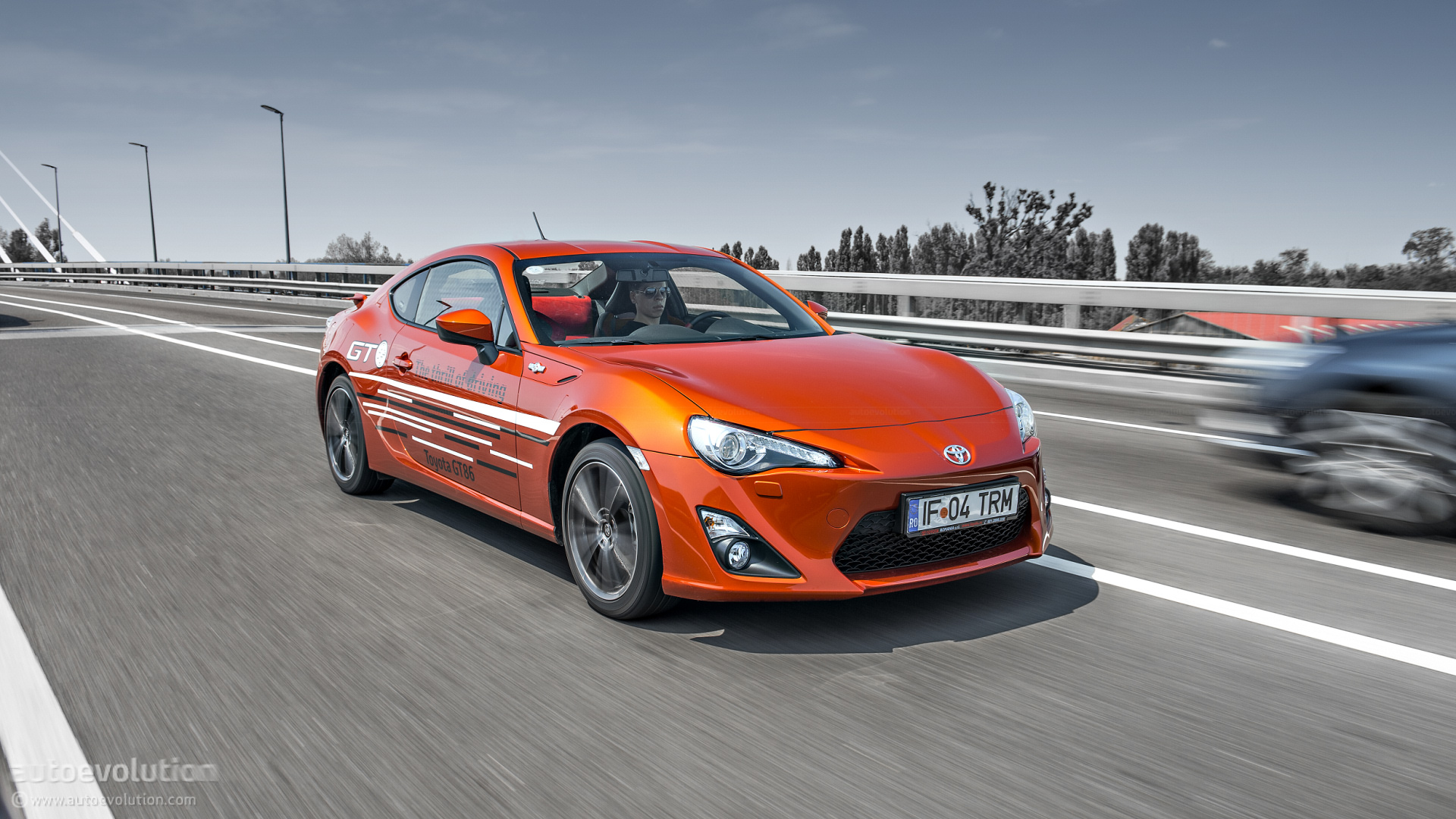
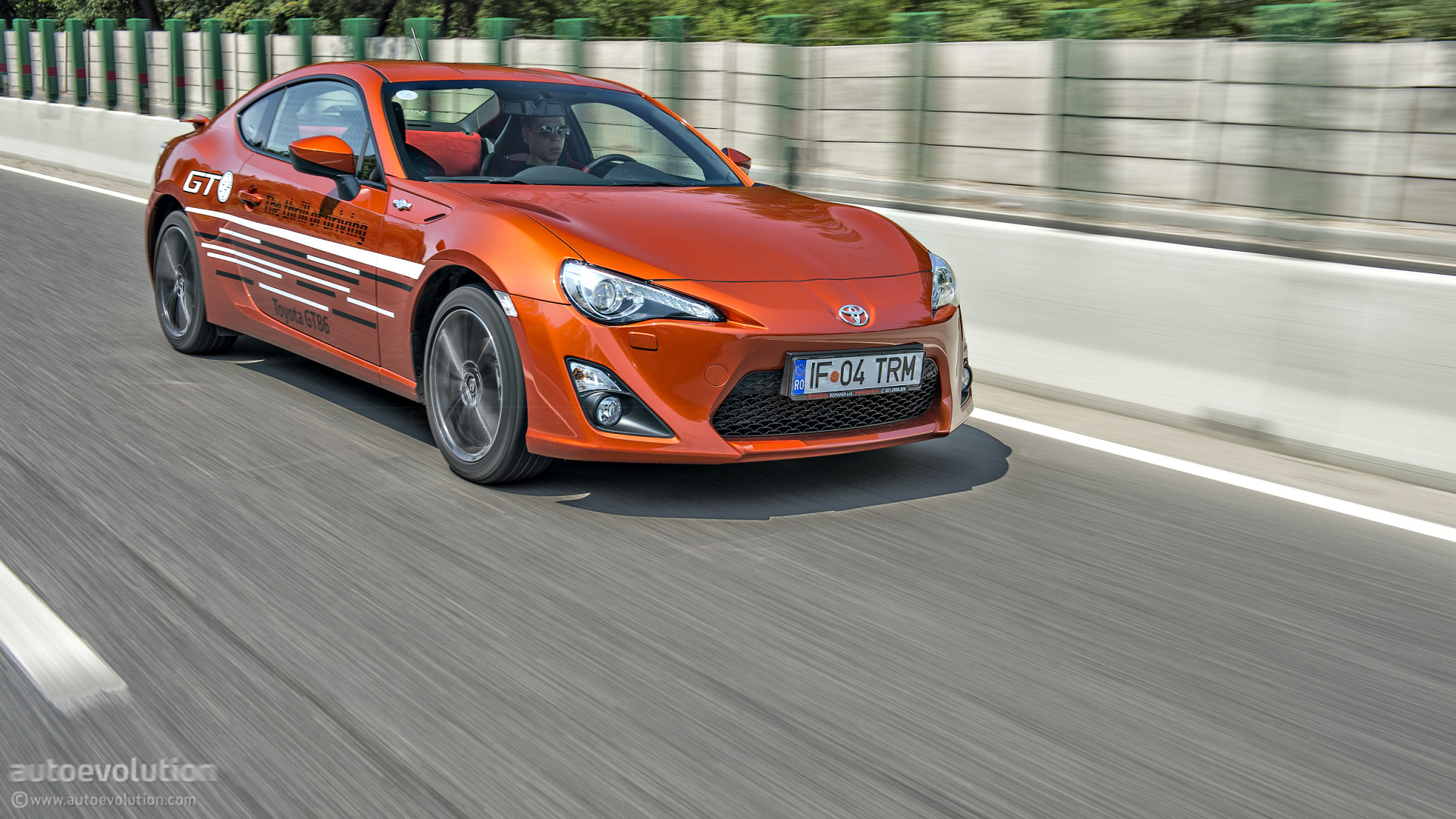
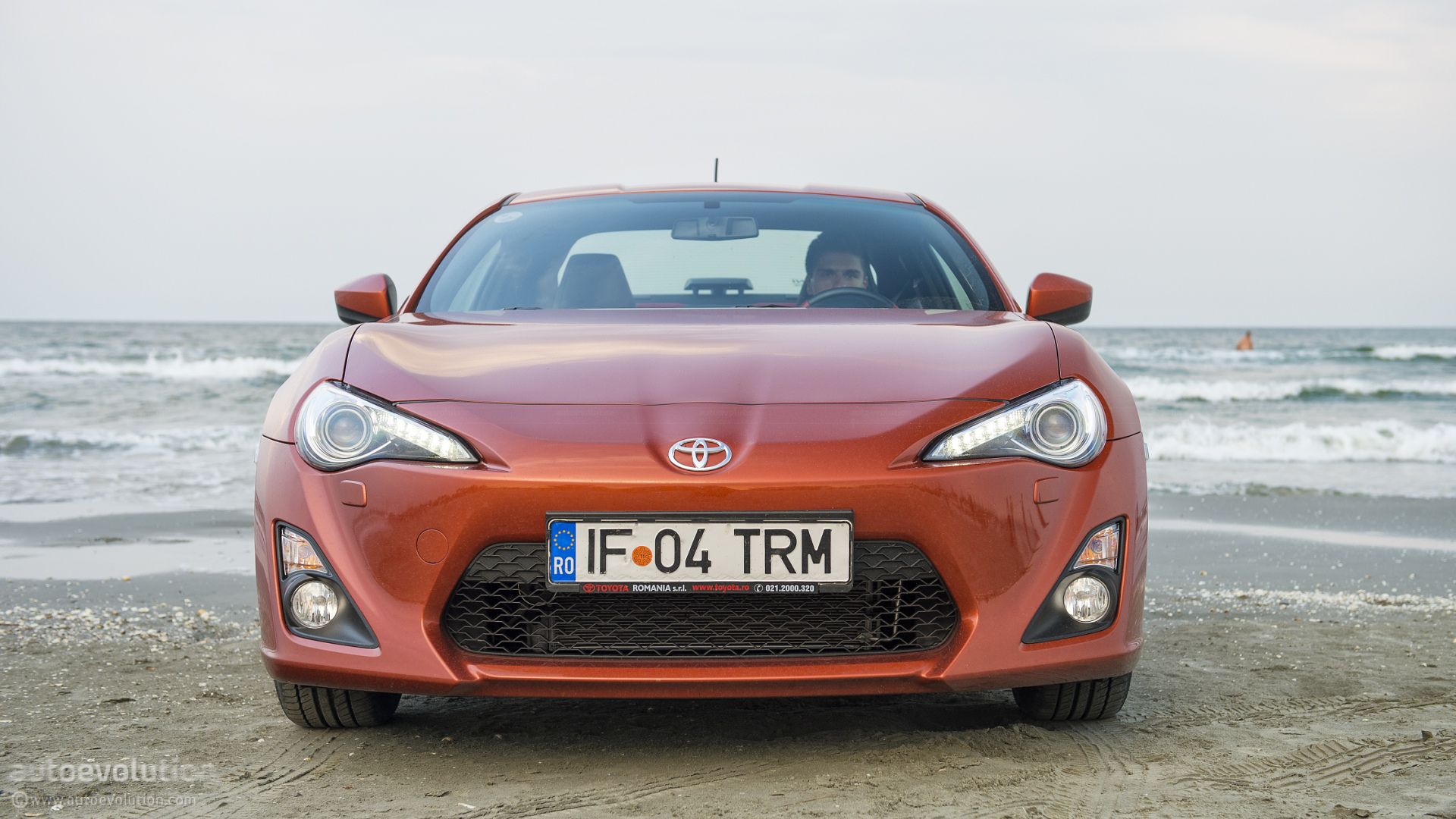
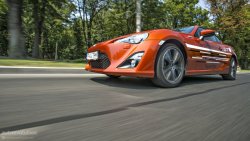
The front fascia borrows a few visual tricks from the Lexus family, but comes with an appearance that screams "aggression" and with that one-piece, generously-sized air intake, you know the car means business.
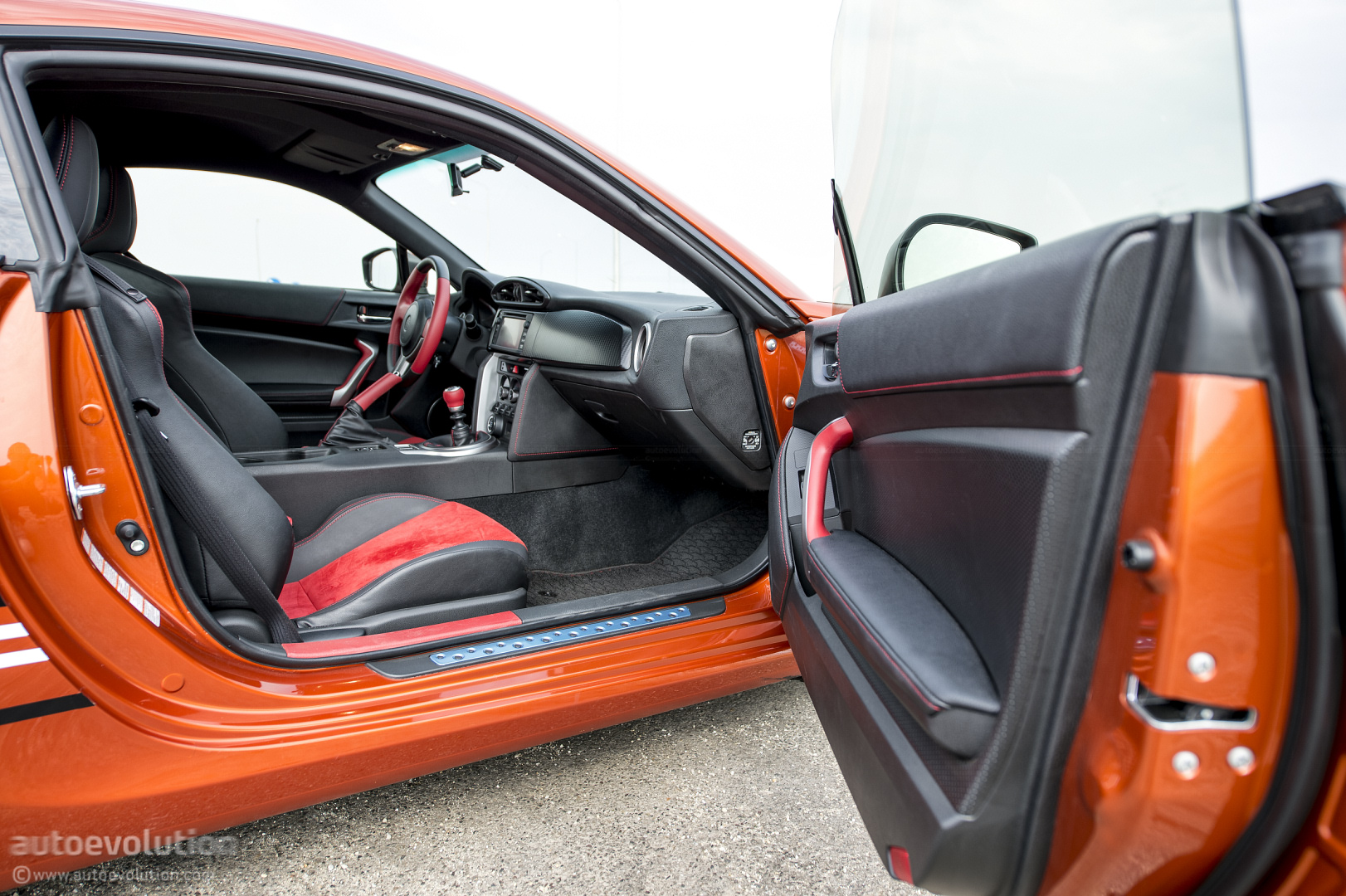
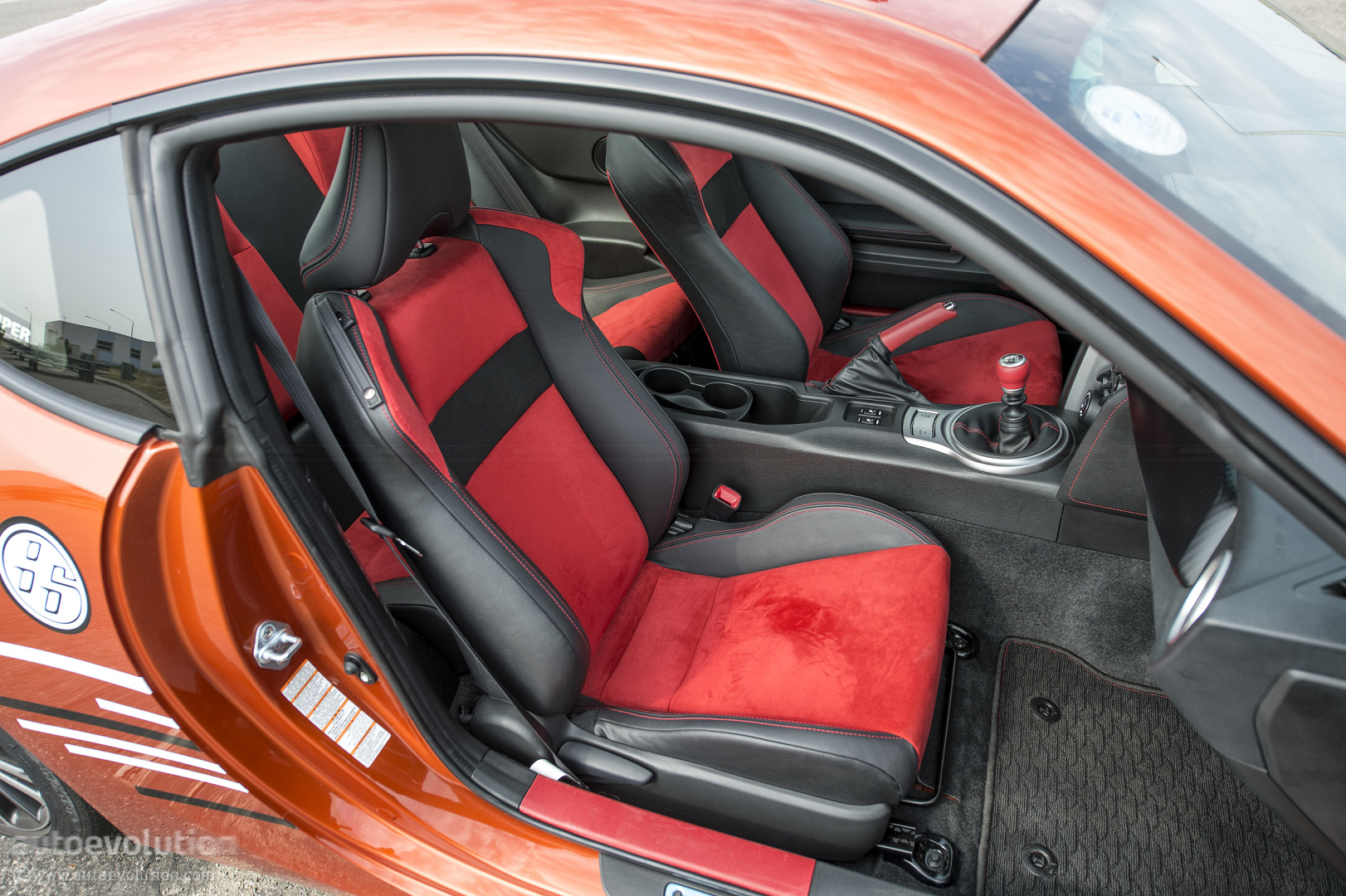
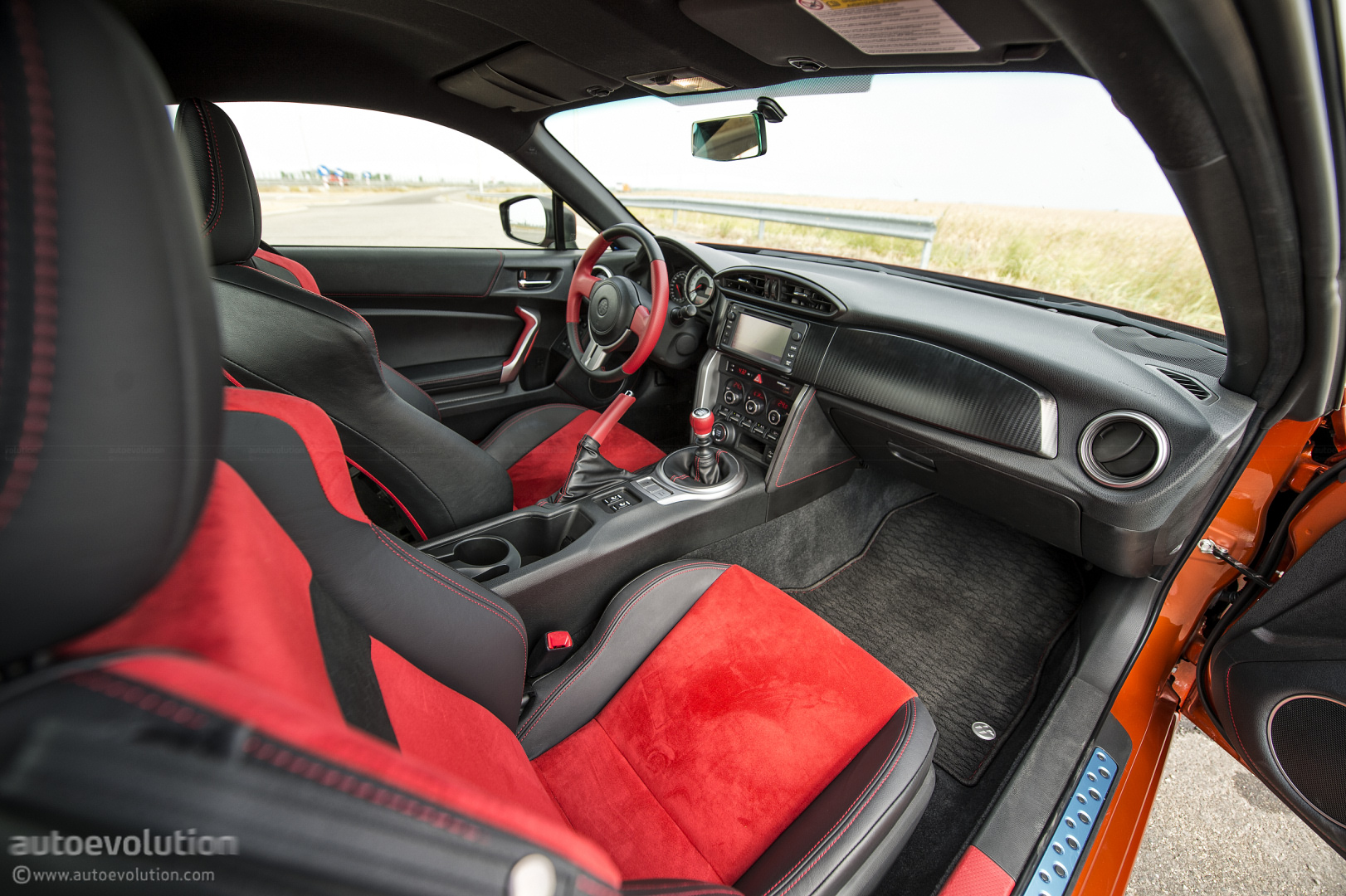
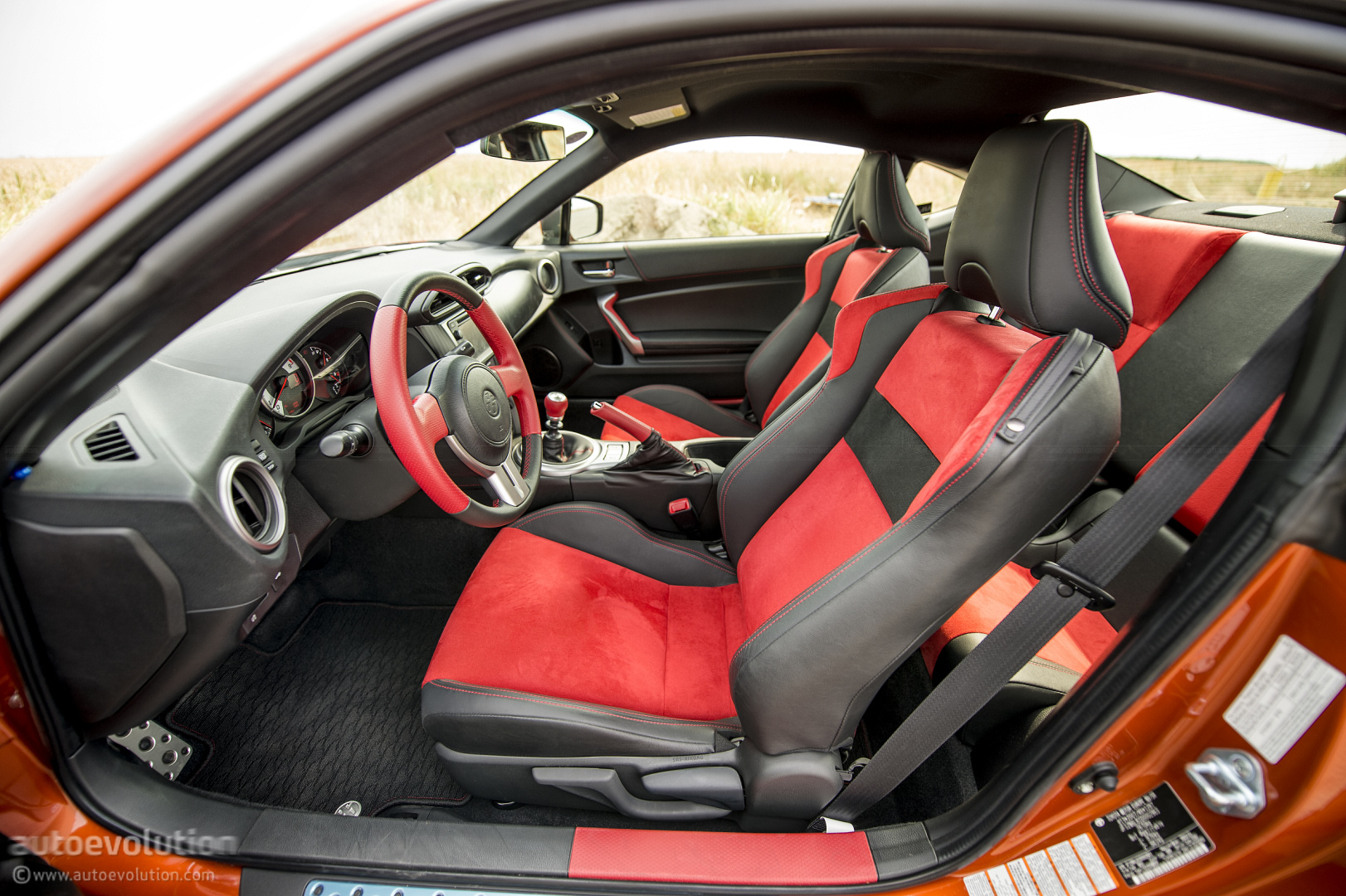
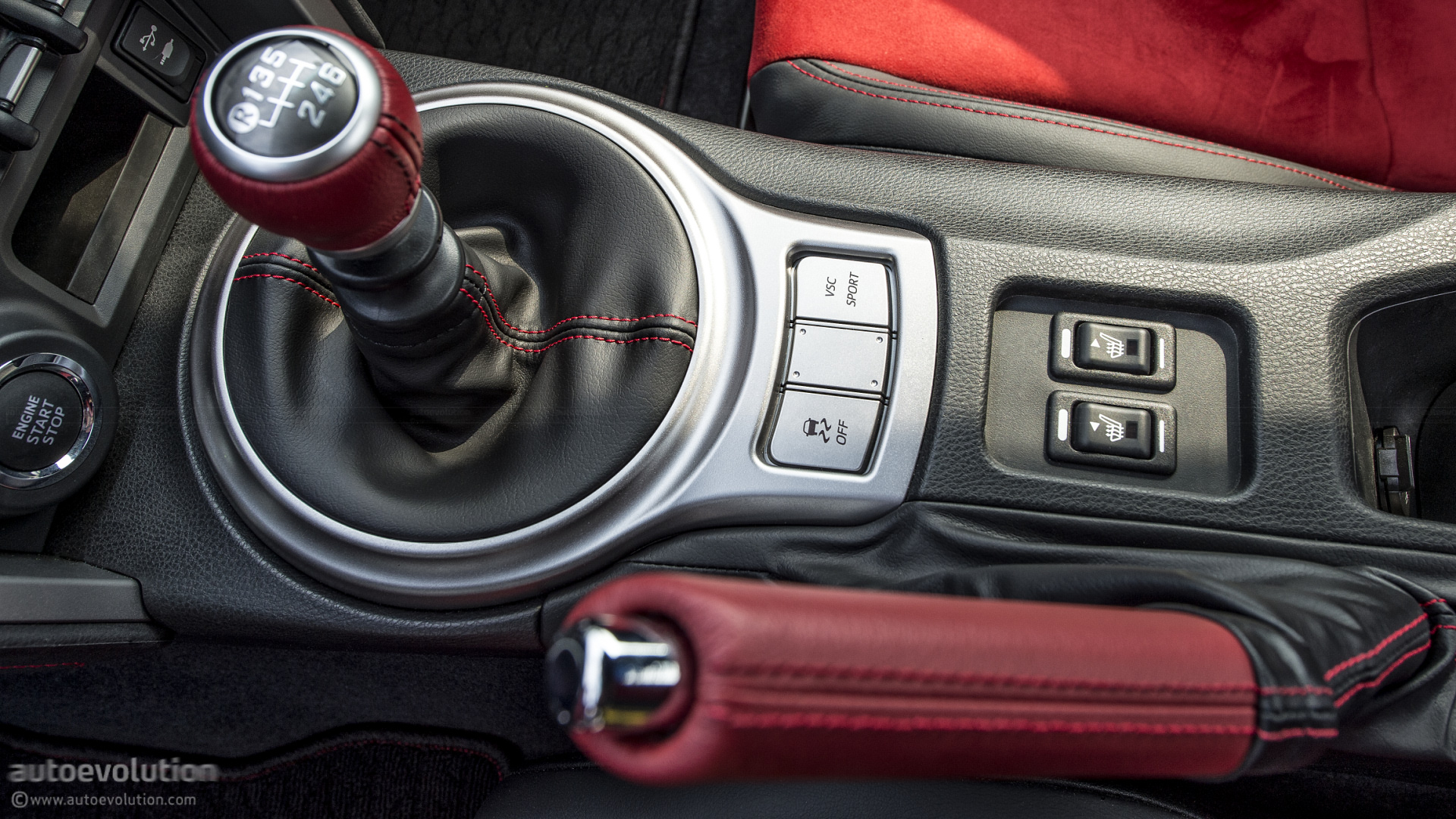
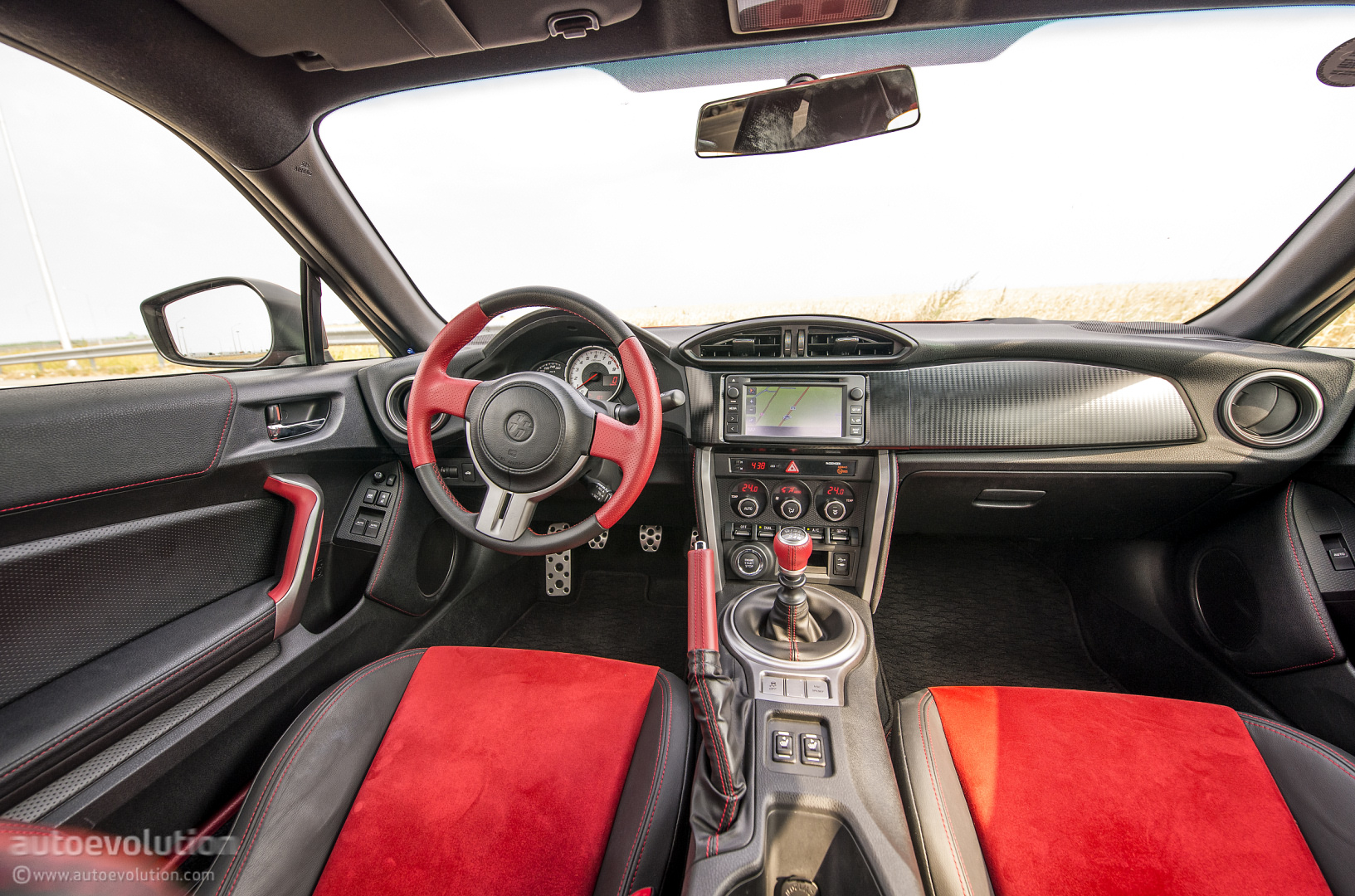
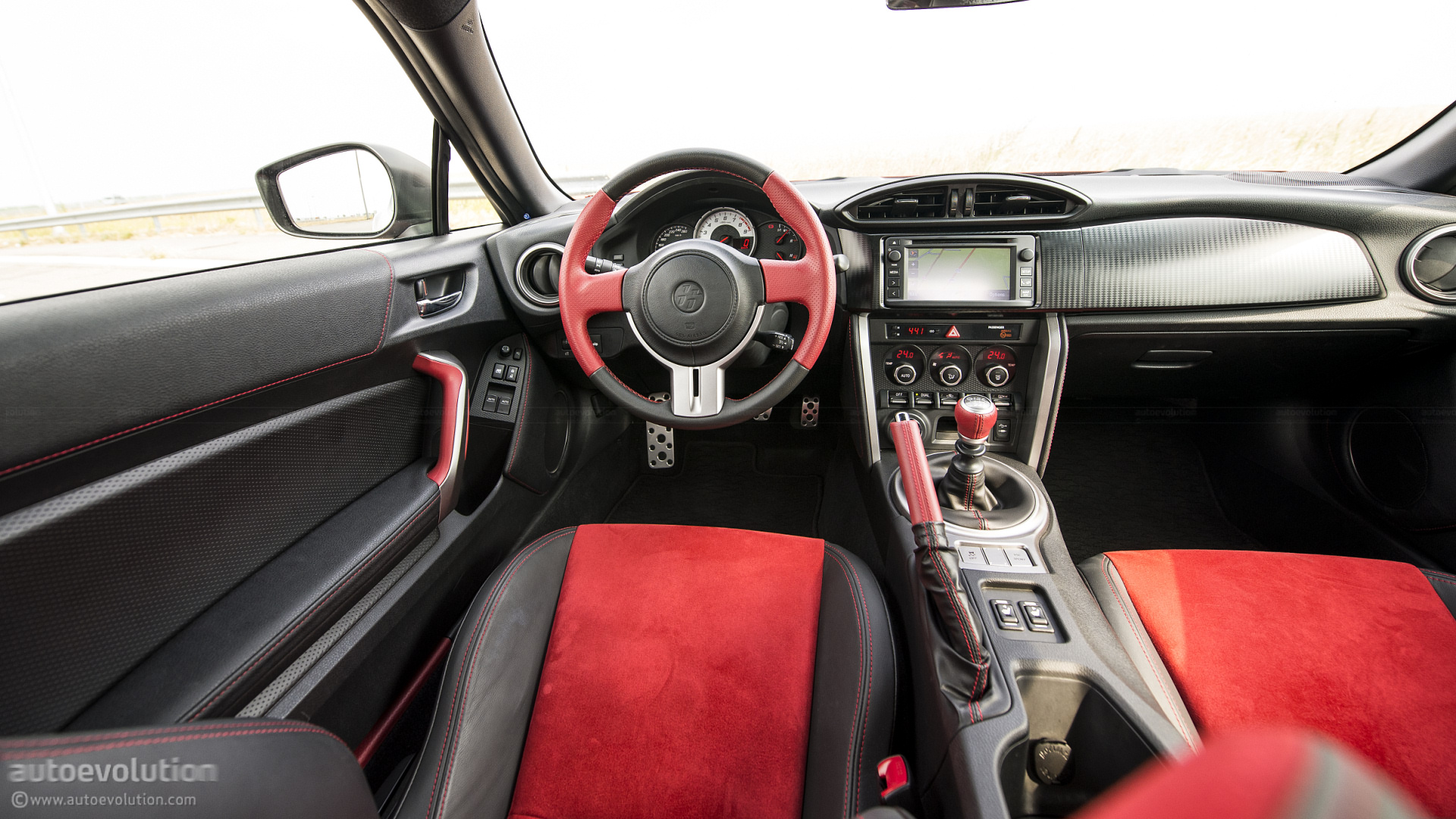
Step inside the GT 86 and you'll find Toyota's translation for "driver-focused". Everything is there to serve a driving purpose, you sit extremely close to the road and the luxury features did not receive too much attention.
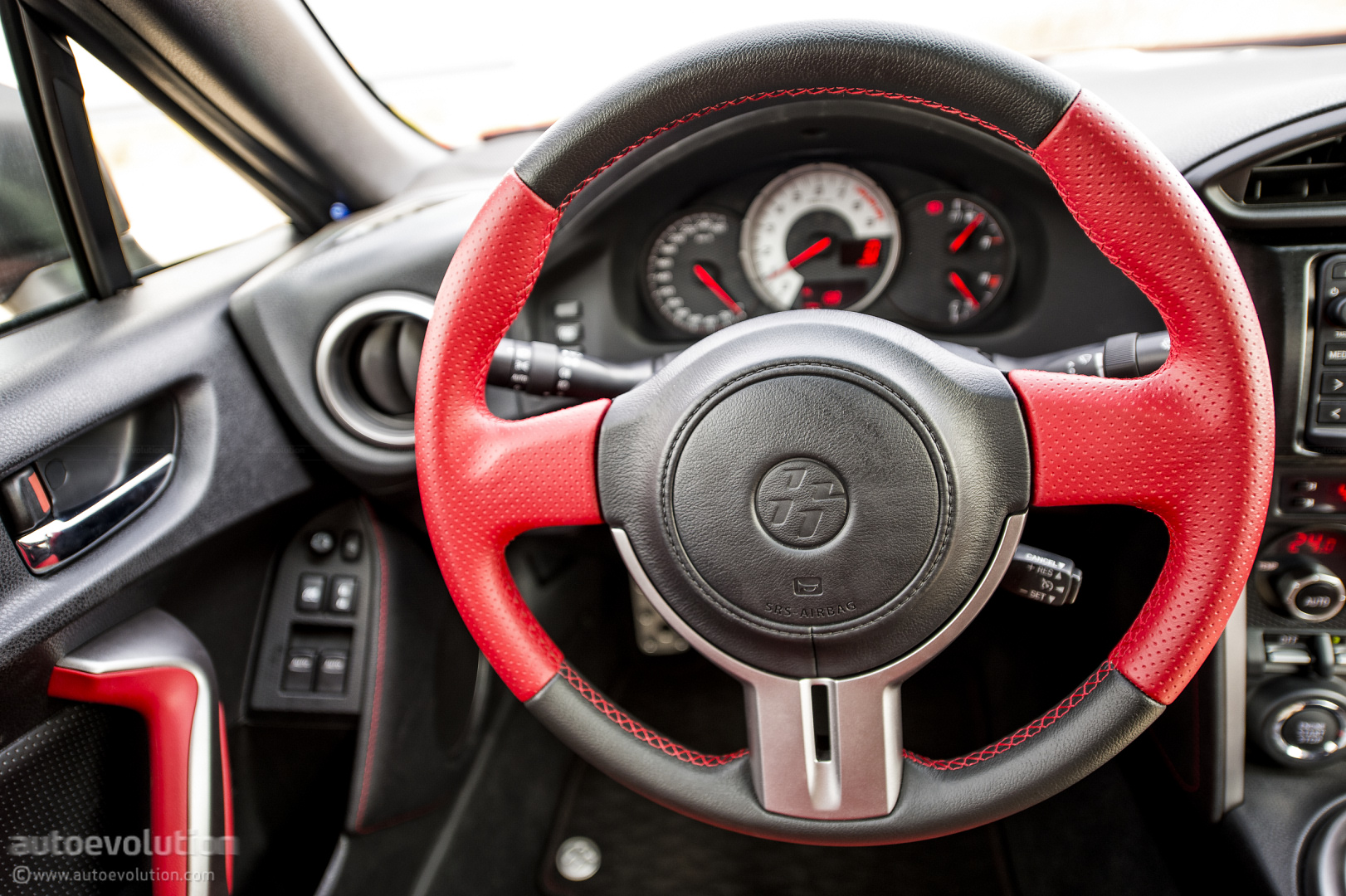
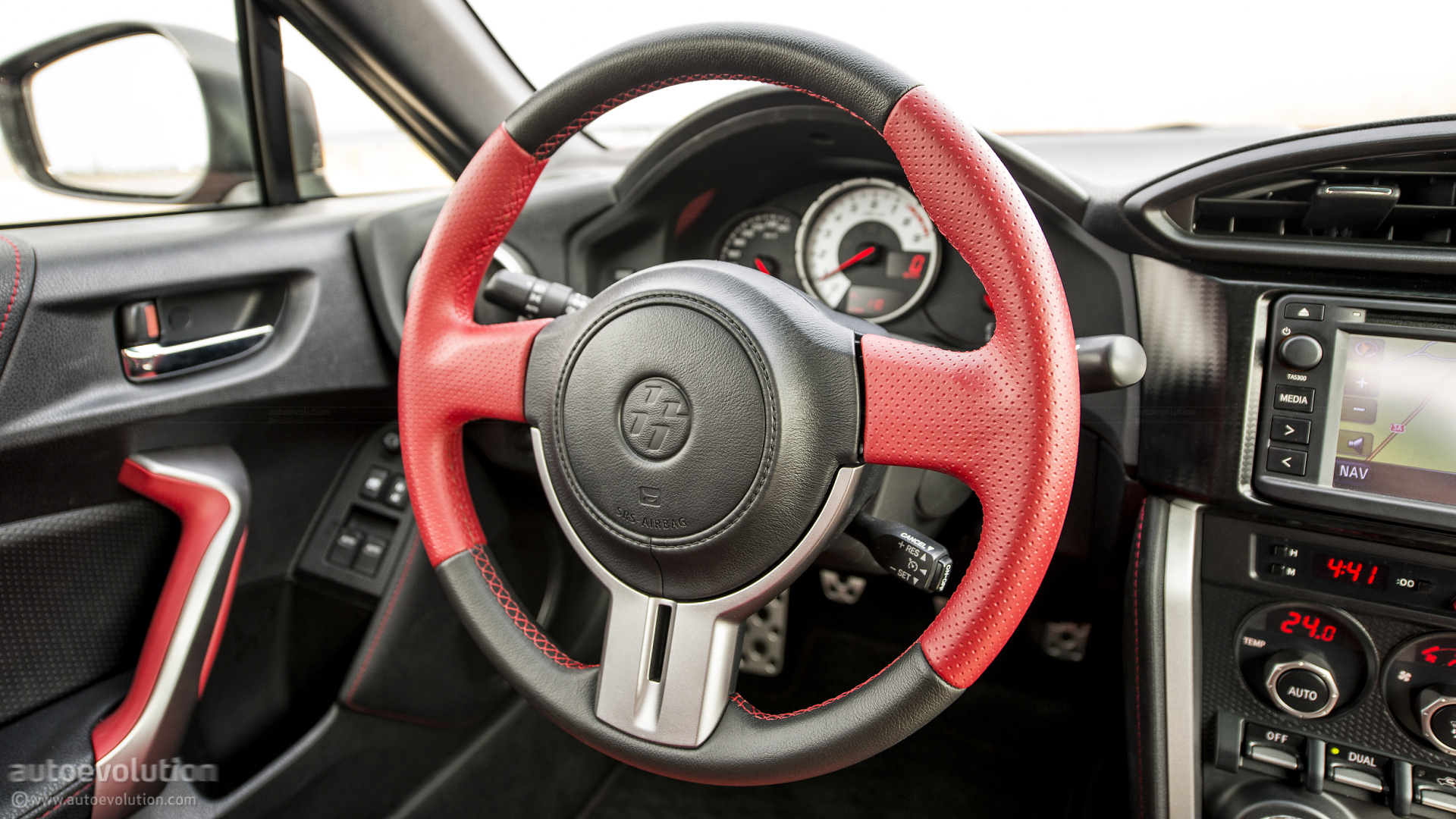
We have to start with the driving position, which is defined by two Toyota records: the hip point is the lowest ever seen in a car wearing this badge, while the steering wheel is also the smallest in the history of the carmaker.
The bucket seats might seem a bit tight at first, but after you get used to them you'll see that they're just fine. However, we would've preffered a bit more width and some manual adjustments for how much lateral support we wanted.
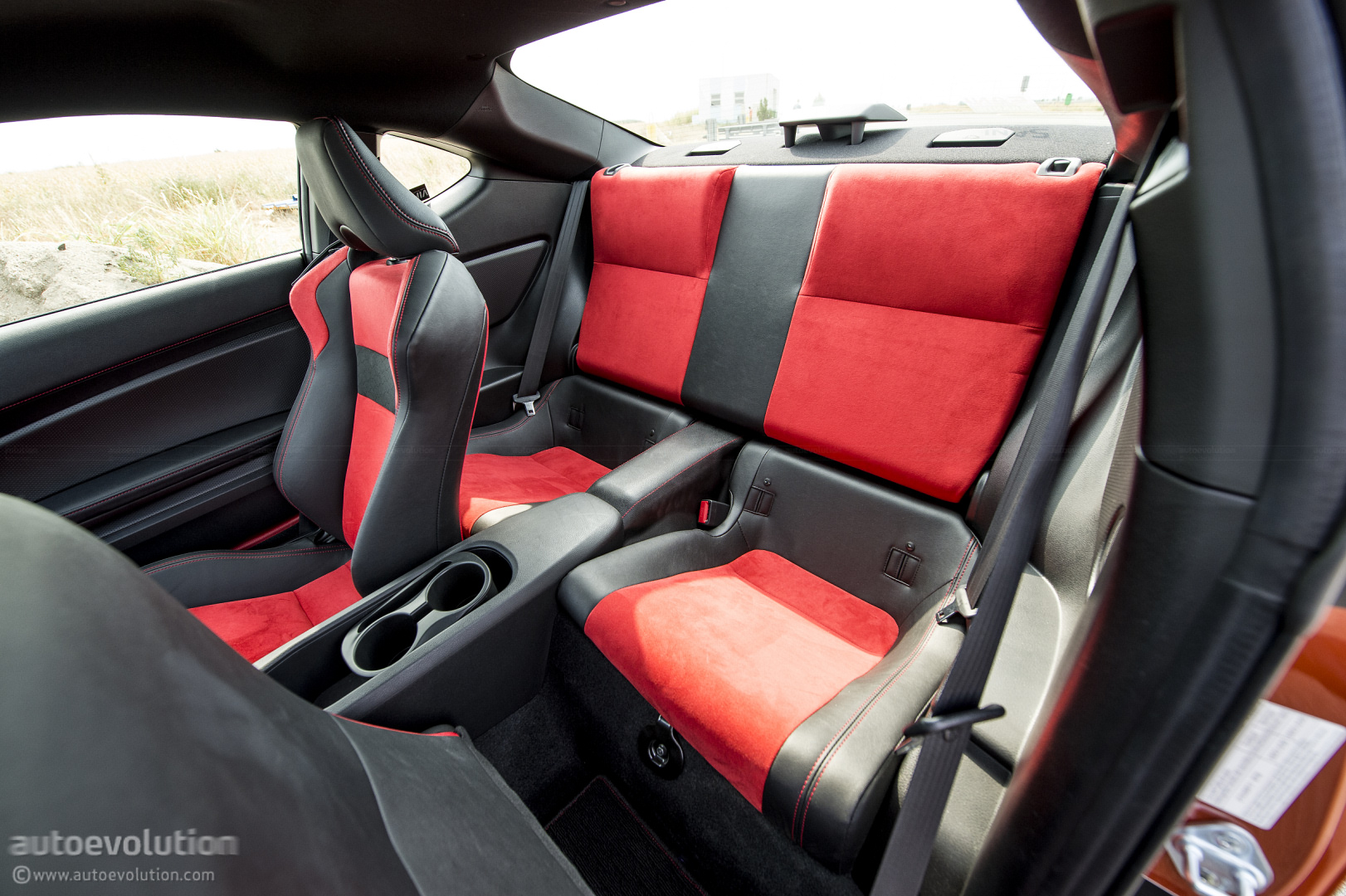
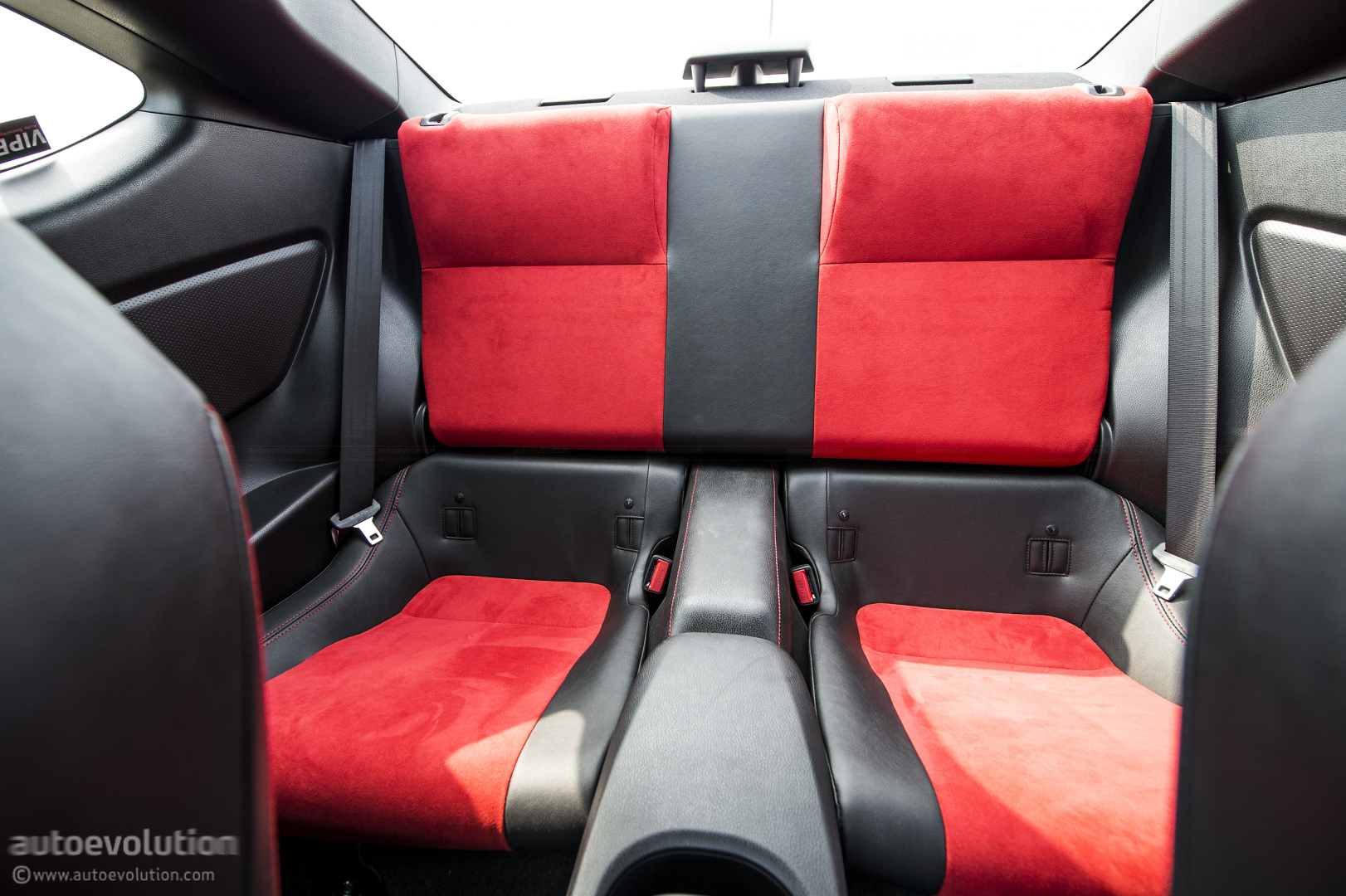
The space up front is pretty impressive considering the exterior dimensions of the car, but since this is the world's most compact four-seater sports car, don't even think about using the back seats for anything else than luggage.
Another surprise was the overall visibility, which is superior to that in many sports cars. However. it's a pity that Toyota rested on these laurels and didn't fit the with parking sensors, with this feature also being absent from the list of optional goodies, which is rather frustrating.
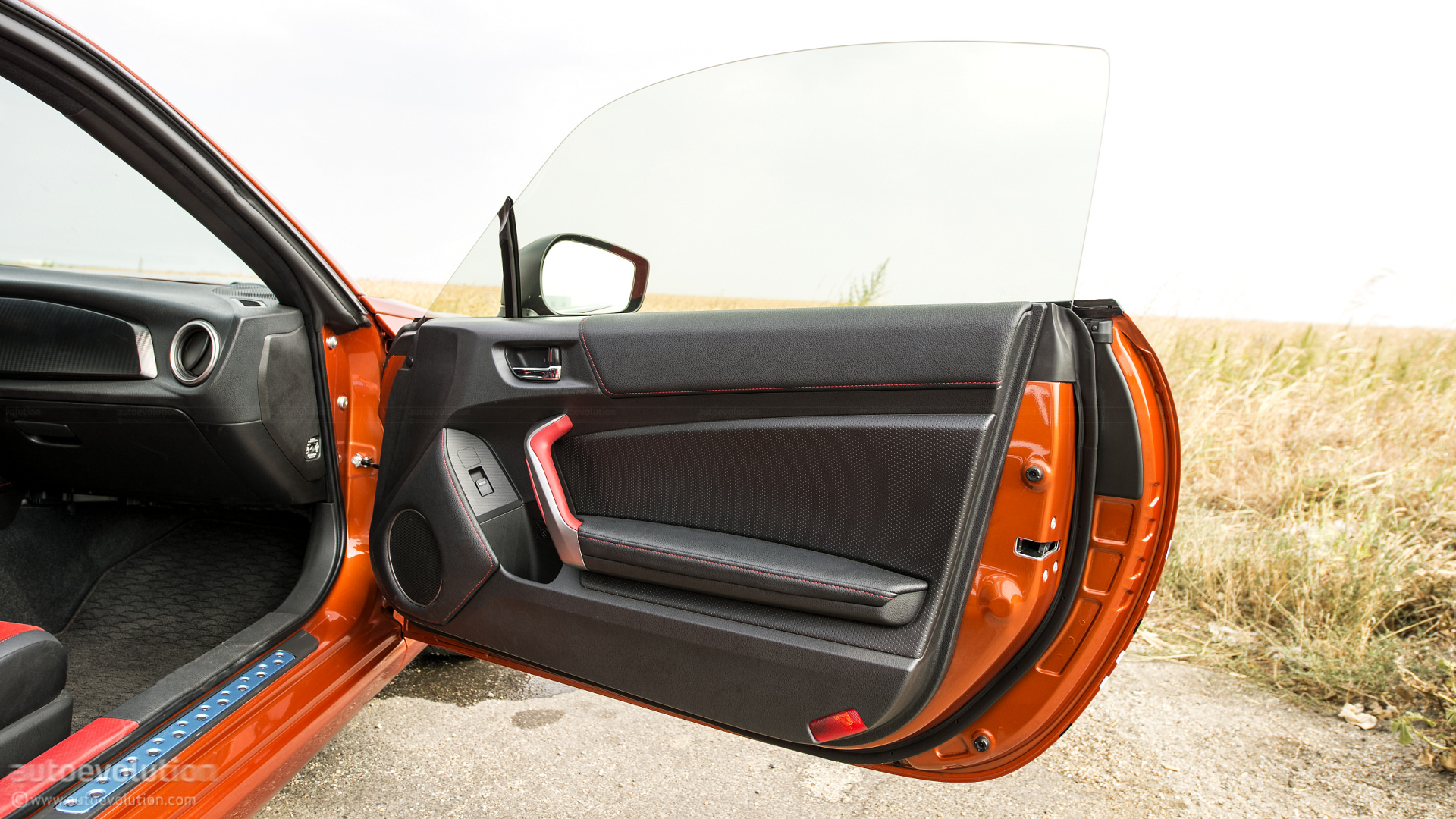
Toyota took good care of the passengers by using soft padding for the center console and the doors, so that their knees are protected when the lateral Gs climb high, the rest of the cabin is not that pleasant to touch.
So while the vertical design of the dash gets you in the go-fast mood, the materials used feel cheap. During our test drive, we were surprised (in a negative way) to see the massive top of the dashboard constantly reflecting in the windscreen.
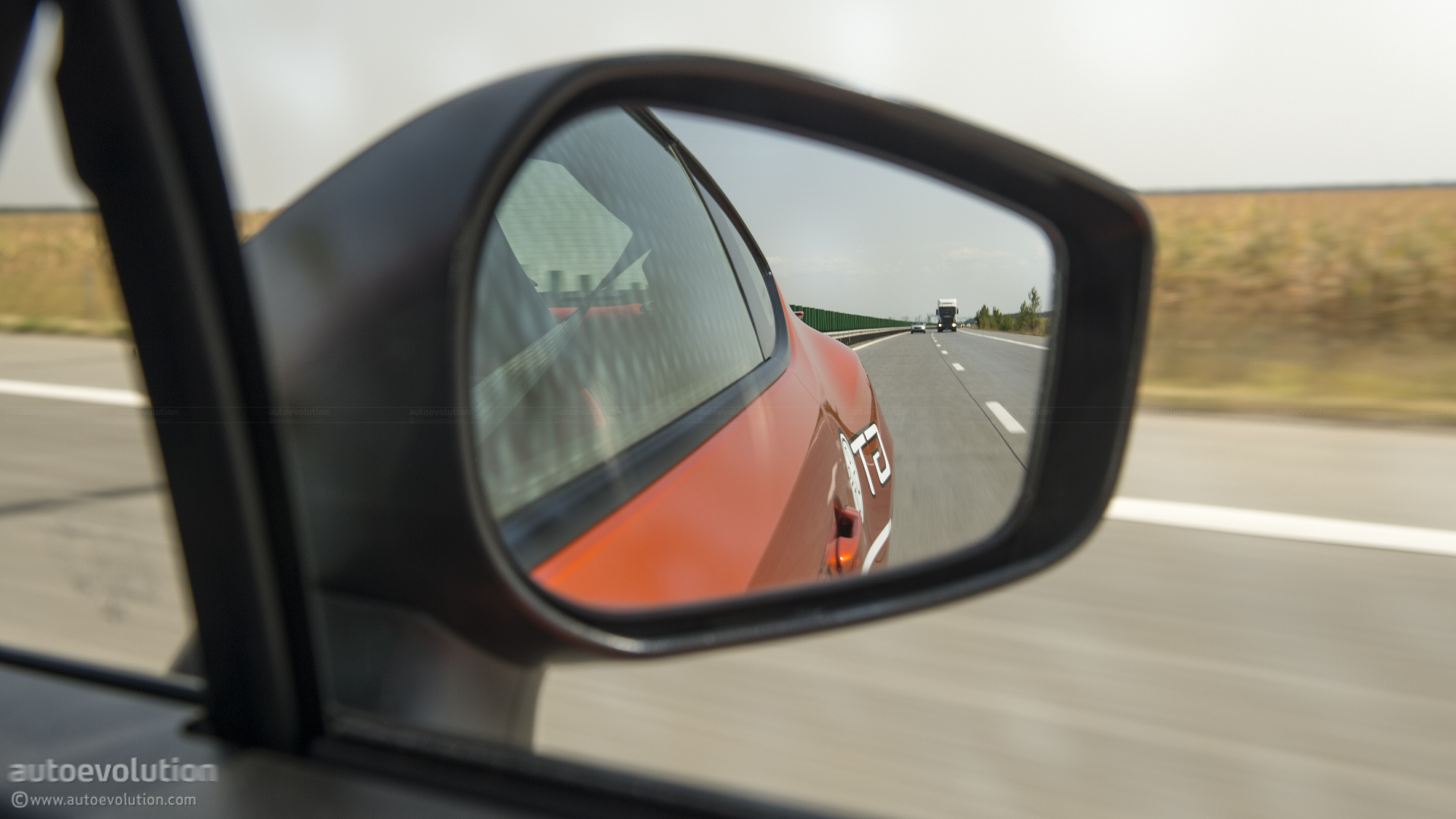
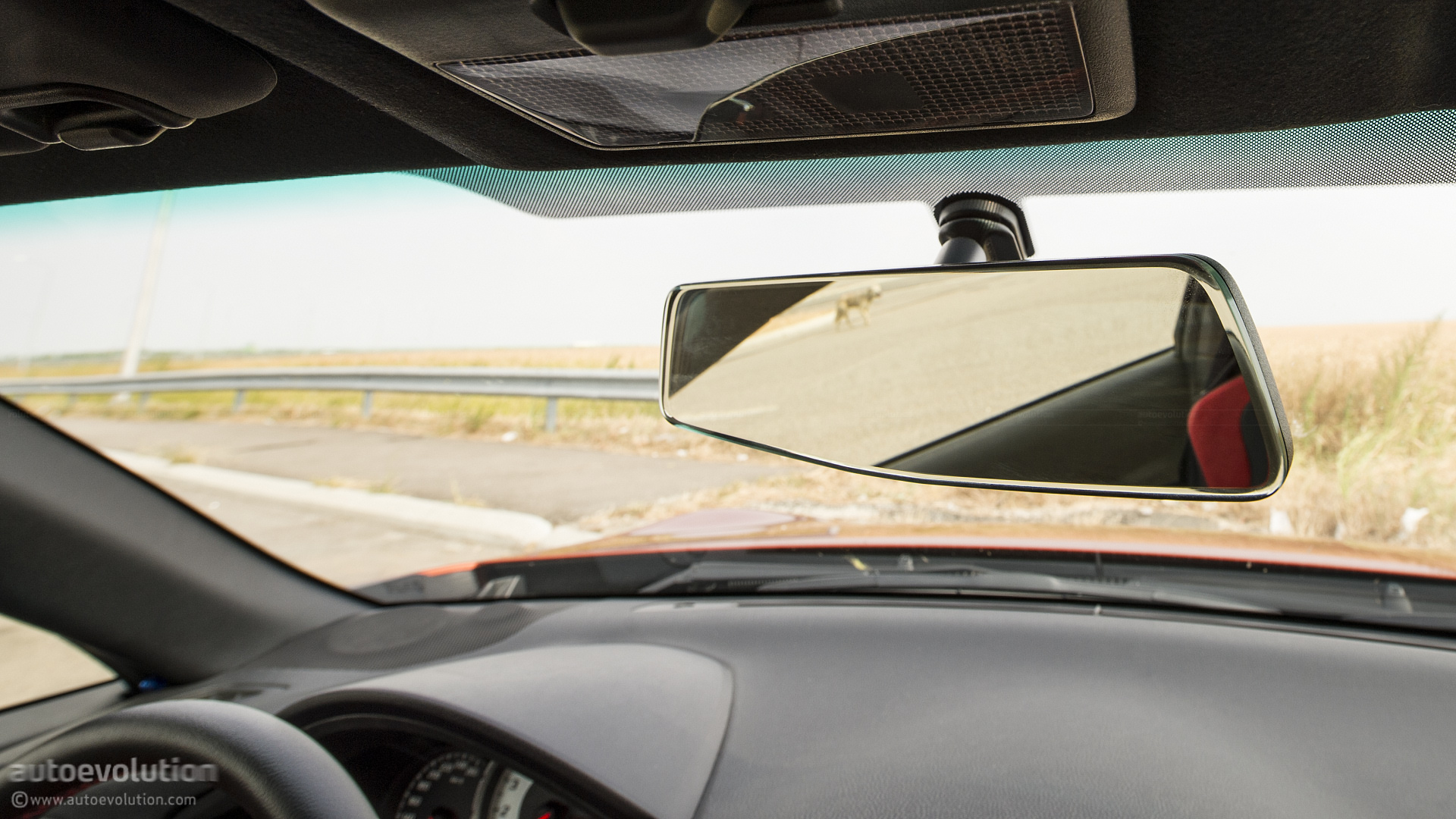
We did have a problem with "the world's first frameless rear view mirror" - while the design is nice, it kept shaking at most levels of revs and we couldn't, for example, read the number plates of cars that were close behind, an action that would normally be done in a blink.
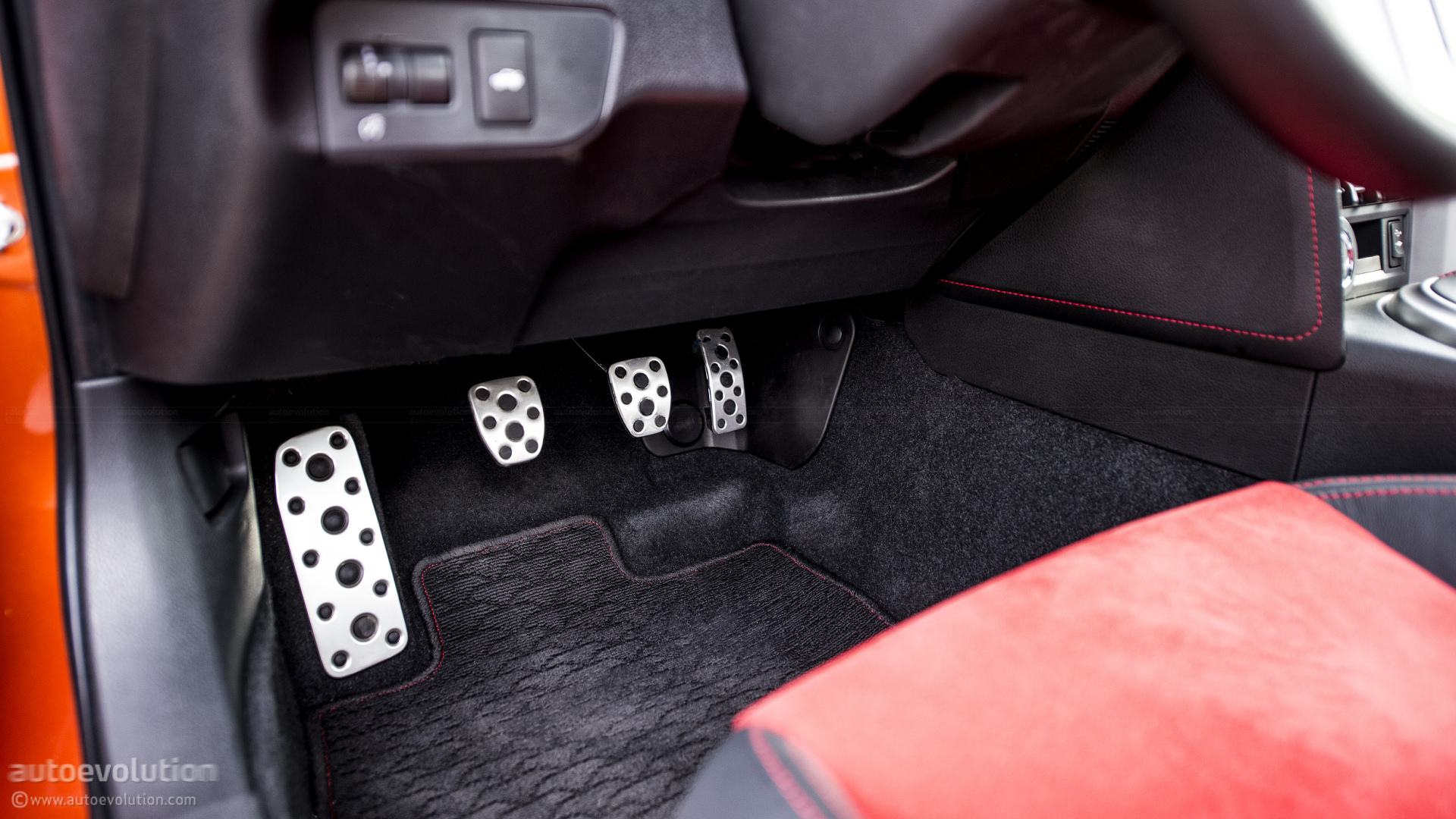
Toyota has created a purpose-built cabin, which takes the driver to heaven, with the exception of the pedals, which are a bit too further apart for heel and toe maneuvers. However, the carmaker hasn't also thought about other situations in which one can enjoy the car, so the materials used aren't exactly what you'd expect from a sports car launched these days.
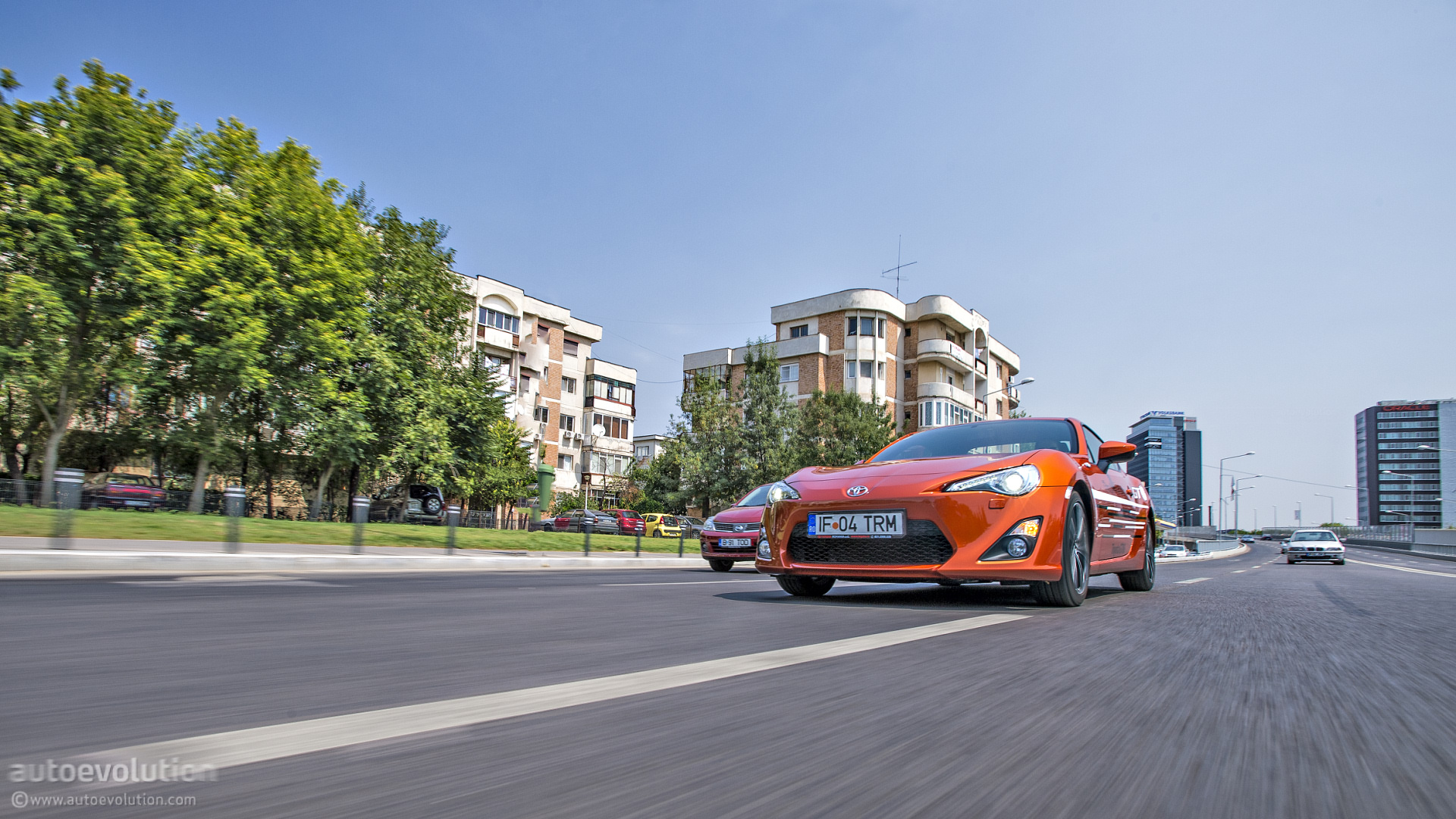
Sports cars generally lack the diplomatic touch needed to cope with city life, as their clutch, ride height, visibility and fuel efficiency defies the requirements of urban transportation. However, there are also exceptions to this rule and the GT 86 is definitely one of them.
First of all, despite the low profile of the car, you don't have to work at the circus to be able to climb in and out of the vehicle. Once you're in and you get going, the clutch does require a bit of getting used to, but isn't that kind of difficult tech feature which trades usability for the ability to handle high torque loads, so you won't stall the engine at the traffic lights.
The overall visibility is better than you'd expect, even though it's not perfect. OK, it's not as if you take a supermodel home and she makes you a 10-course breakfast next morning, but she can cook in a satisfying manner.
The natural aspiration of the engine and the well-balanced ratios of the gearbox (read: not as short as in a hot hatch) mean that you can enjoy playing with the GT 86 also while in the city.
This is a crucial asset for a car that's supposed to serve as a pleasure button, as the GT 86 manages to achieve what cars with many times its price don't. You have to push the high-revving 2.0-liter boxer unit hard to get performance, which means that you don't jump past the speed limit in the first moment you touch the gas pedal, so you'll be able to play with the car while inside the city too.
And the Subaru-built, Toyota-tweaked (we'll talk more about this in the "Tech Facts" chapter) engine has another asset that really helps in the city: it's pretty frugal. During our test drive, it required 9.7 liters of petrol to take us through 100 km of urban roads, with this value being recorded using a mid-level driving style.
The fact that the engineers worked hard to keep the weight down (the GT 86 tips the scales at 1,250 kg / 2,755 lbs) offers the car an agility that fits the urban environment like a driving glove. The boot is not very generous and it comes with an opening that's not inviting, but we do appreciate the fact that you can place a slim spare wheel under it if you want to.
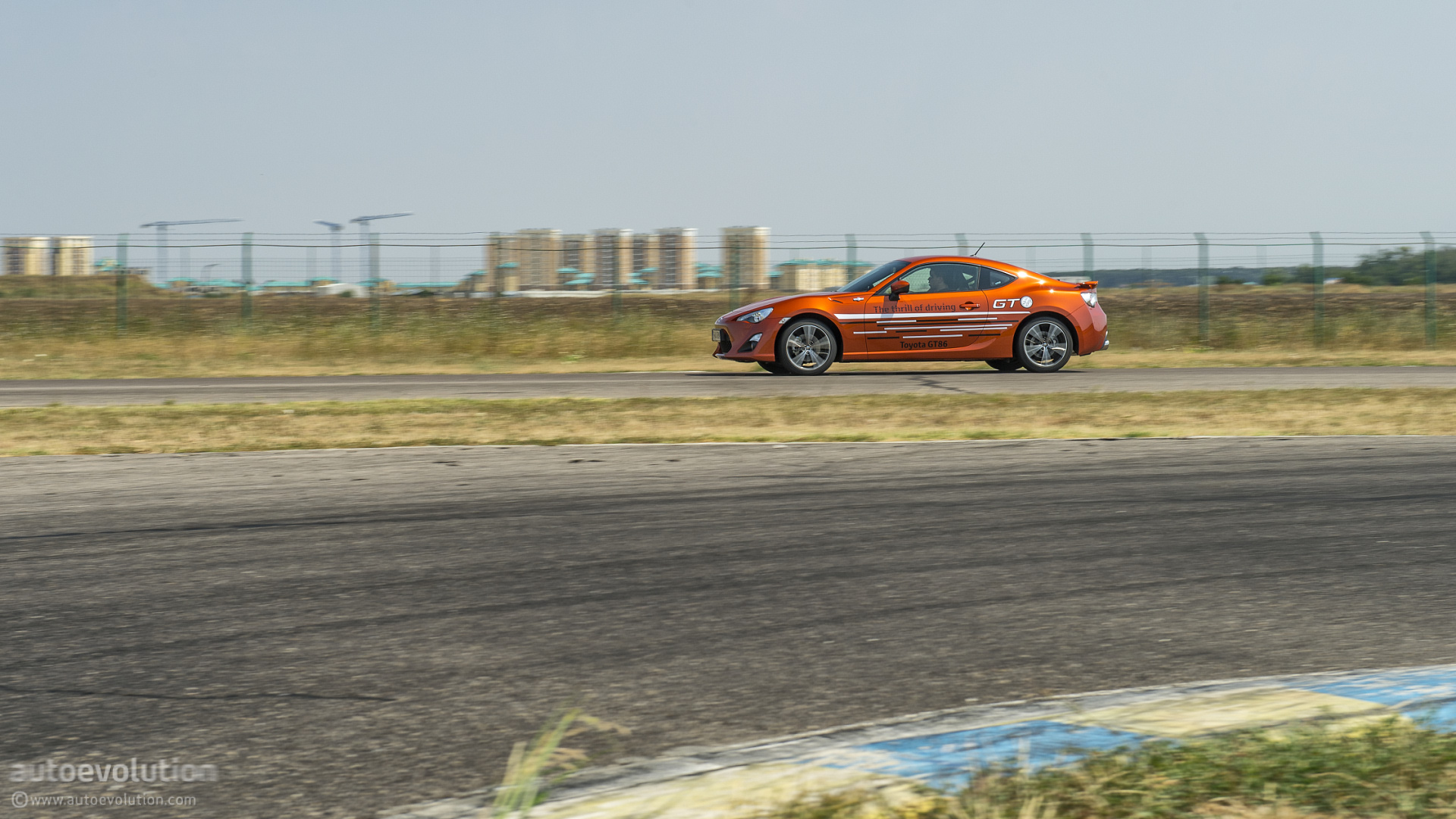
Toyota claims that the GT 86 comes with a concept called “Aero Sandwiching”, which means that the car uses aerodynamic elements that stabilize it from all directions, such as the dented contour on its roof and underbody. The carmaker claims that this doesn’t affect the drag coefficient and while we can’t tell you how that car would’ve felt without them, we did feel it sticking to the road very well at high speed, especially if we consider the fact that it uses normal tires, not supersport ones.
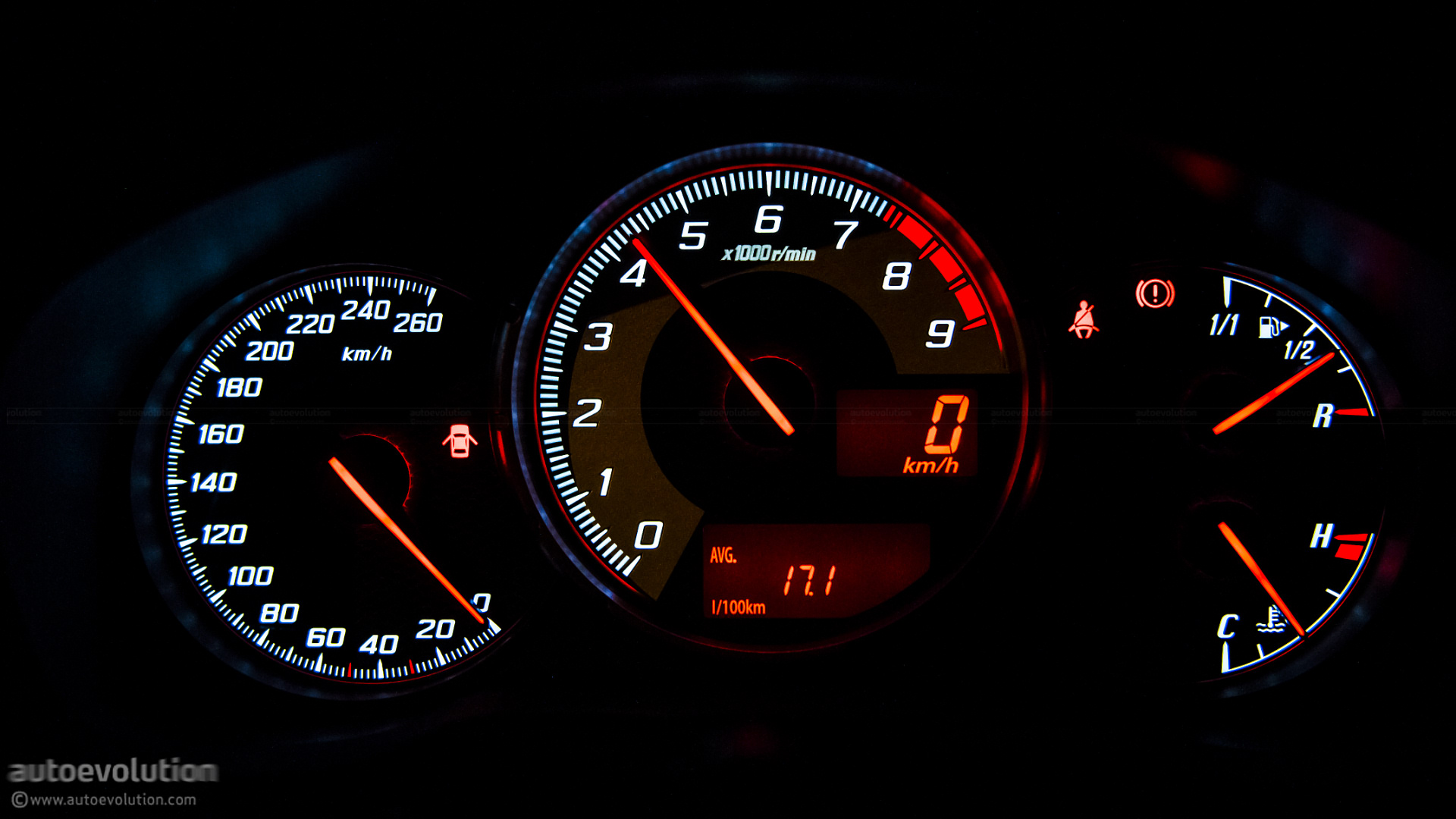
But before you reach the top speed, which, sits at about 220 km/h (137 mph), you first have to go through a series of steps, which we’ll cover below.
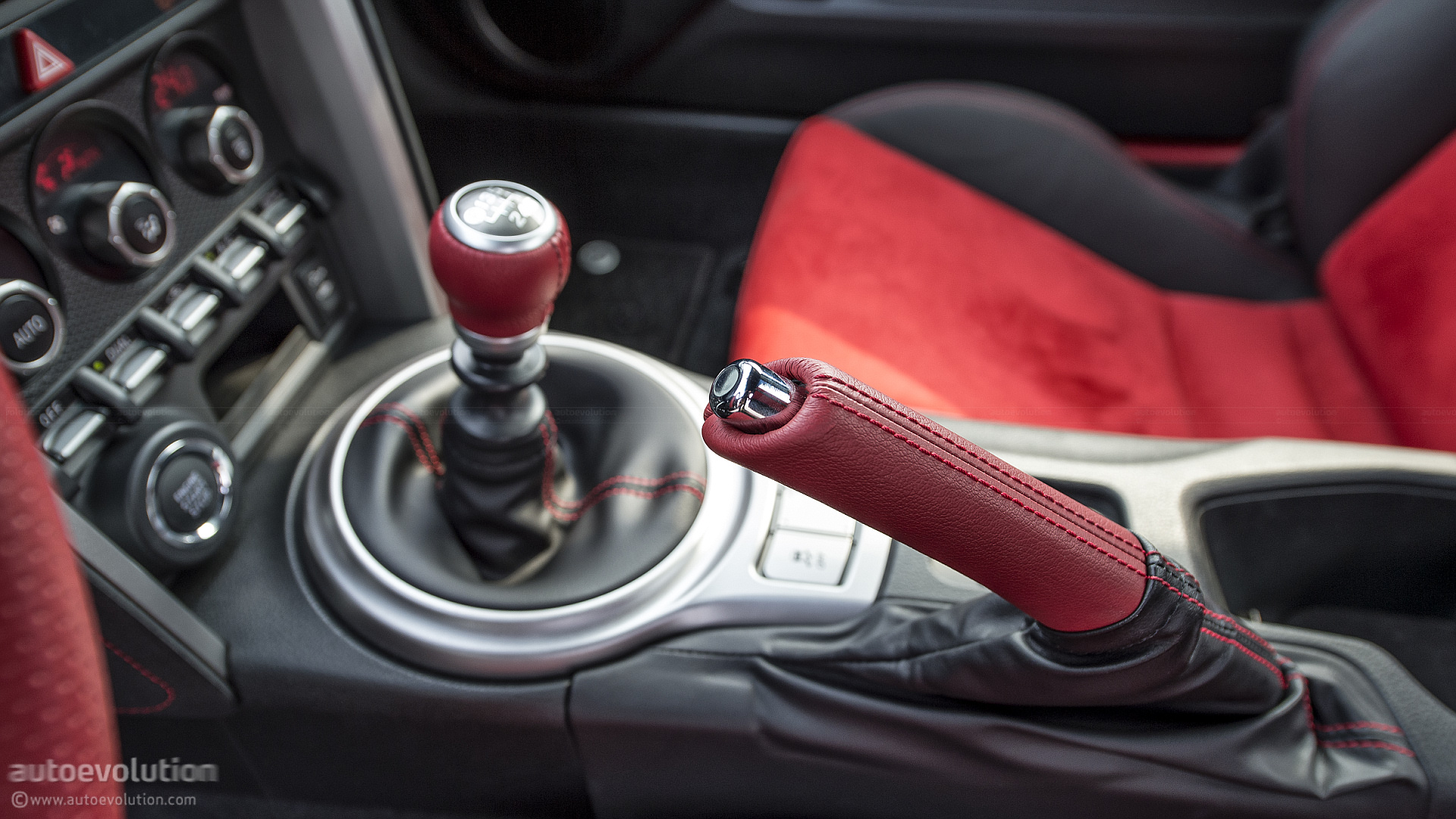
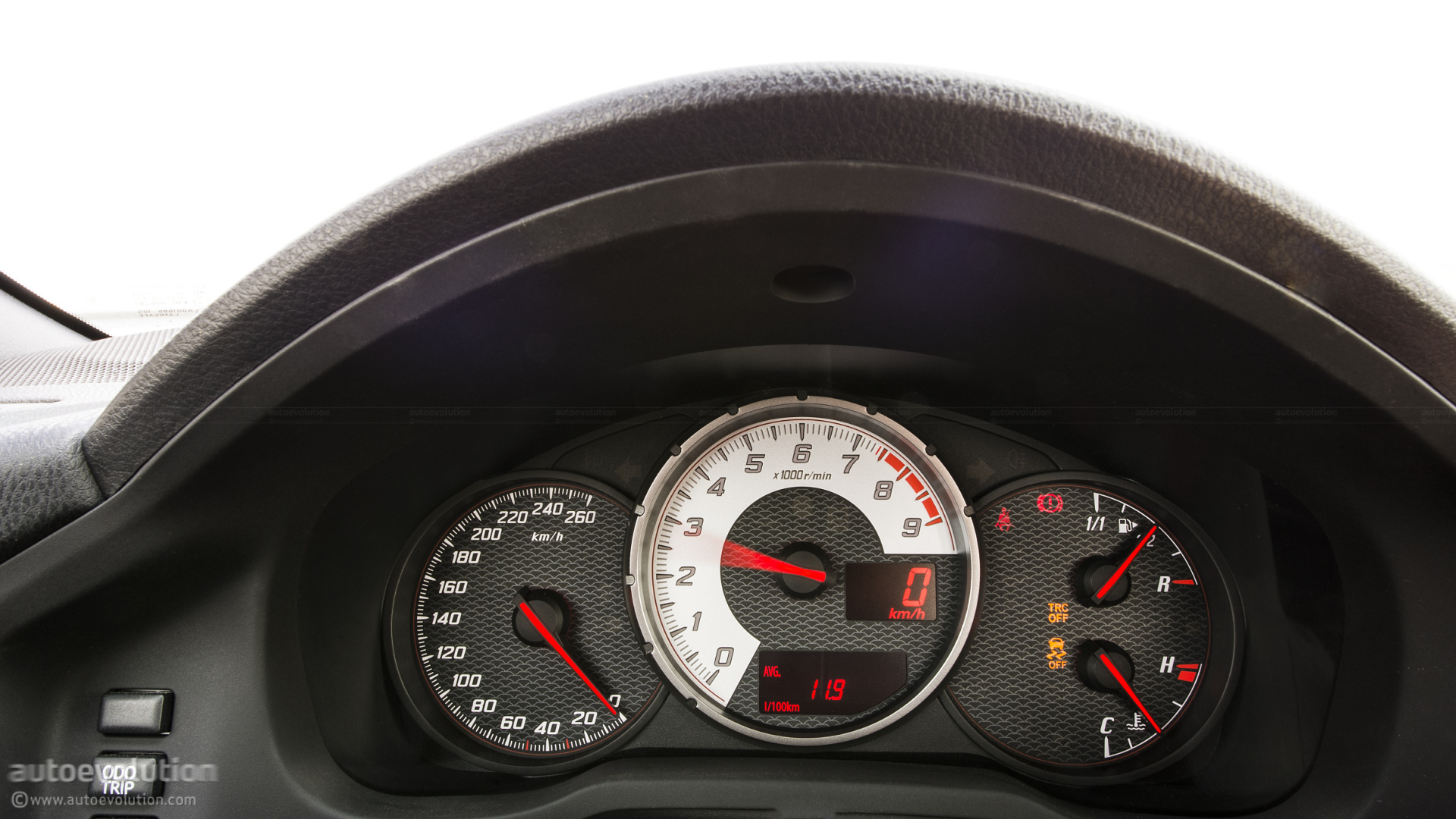
The LSD does its job extremely well, so you can take of quickly regardless of the road surface. The gearing is not short, like you get in hot hatches and the engine is begging you to take it to its 7,500 rpm limit. Actually, there’s a red shifting light that blinks before you hit 7,000 rpm, the point where the maximum power of 200 hp is offered. The short throw lever offers incredibly precise shifts, but you do get a few notches.
The closest competitor we can think of, in terms of power, weight and power delivery, is the Renault Clio RS - it also has 200 hp delivered by a naturally aspirated engine, which also works with a six-speed manual and it weights about the same.
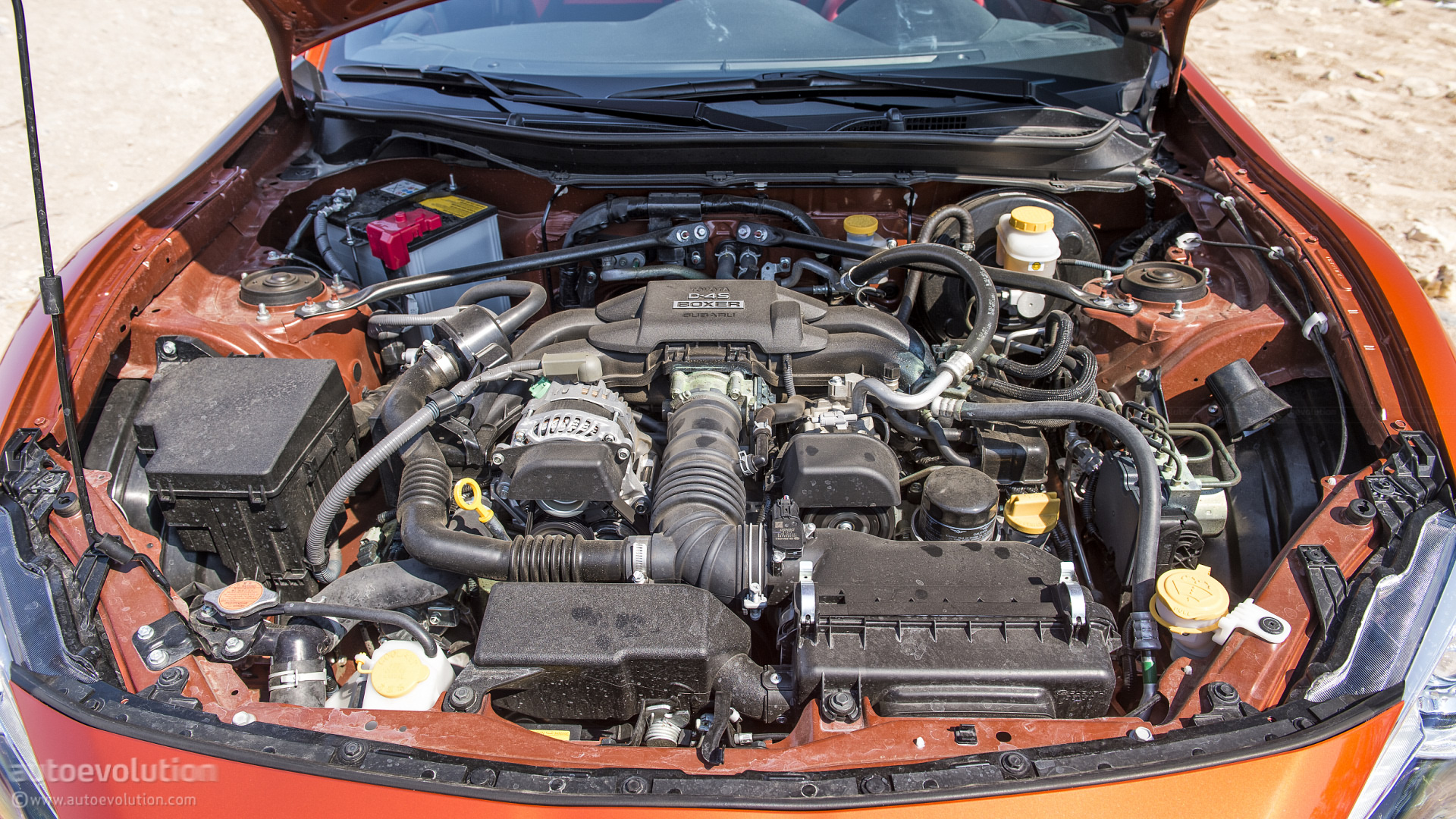
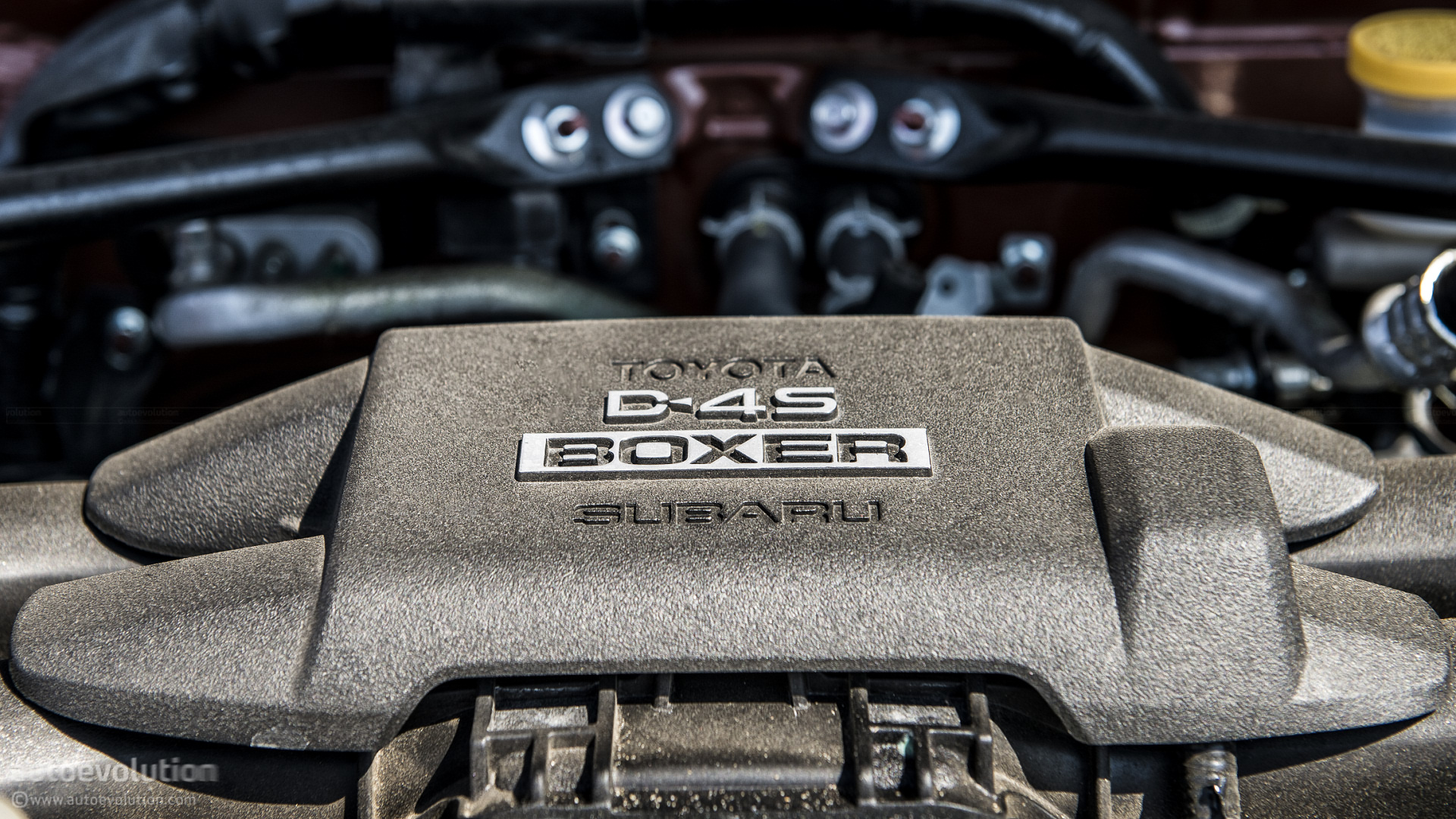
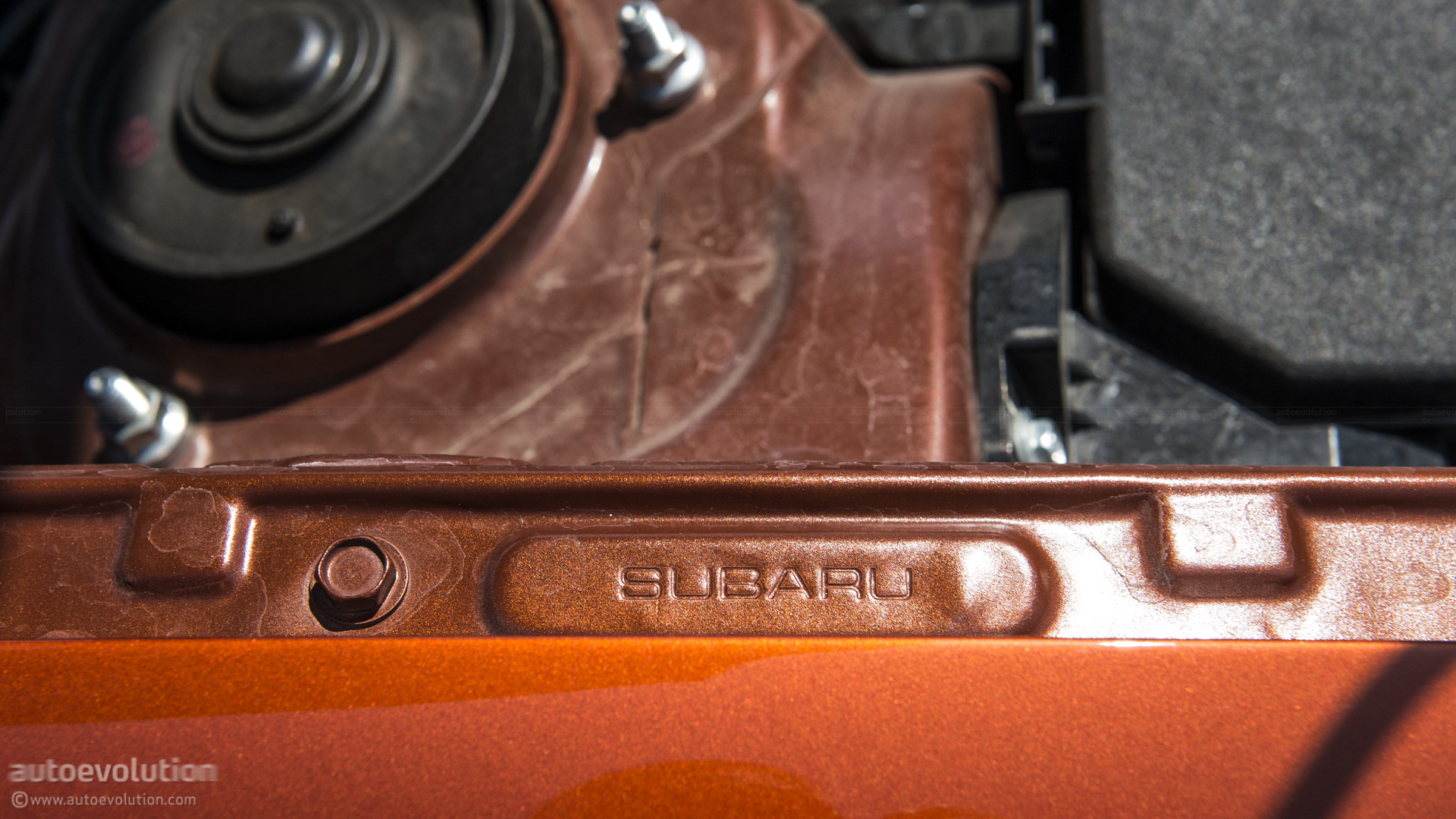
The Subaru boxer four-cylinder engine, which uses Toyota injection technology, sounds like it means business when you bring it to life in the morning, but once it reaches is normal operating temperature its voice is not so impressive anymore, at least not until you reach the higher area of the rpm range, where it offers a sporty sound that’s a tad better than what you get in hot hatches.
The engine lacks low end torque, but in never actually feels lazy. However, we can’t say that it feels extremely poky either and this is because this car’s aim is not to kill its competition on the straights. Just like the Clio RS, this is a car for the bends, one for which fun equals more than just numbers. Speaking of numbers, even these tell the same story, as the 0 to 62 mph sprint sits somewhere around 7.5 seconds, which makes it slower that virtually all the hot hatches on the market.
Despite the Prius-borrowed tires, you get a fair amount of grip for everyday driving and the electronic nannies step in pretty aggressively when the back eventually starts dancing.
Once you put the electronics to sleep, it’s just you, the chassis and the LSD. You can tell that the rear axle will step out and when it does each of its moves is predictable. The 200 hp and 205 Nm (151 lb-ft) are enough to allow you to control the slide and the car pleases through the lack of inertia in any kind of movement, so we must thanks the engineers for keeping things light.
The chassis is so well balanced that it’s really difficult to upset this in a violent way, even if, for example, you squash the brake pedal in the middle of a bend. And the braking part is nice too - at first, the brakes seemed undersized, but the low mass of the car allows them to offer proper stopping power and decent fading resistance.
The GT 86 doesn’t feel quite as fun as a Clio RS on the straights, but when you reach a corner the full potential of the chassis is revealed and it manages to push all the right buttons in a way that a hot hatch will never be able to. The fact that you have to be a part of the process, you have to work hard in order to go fast in the GT 86, is also a pretty rare and, of course, valuable asset these days.
However, you do have to pay a price for all this technicality of the mechanical setup and we’ll cover this both in the “Comfort” and “Conclusions” chapters.
Track fun
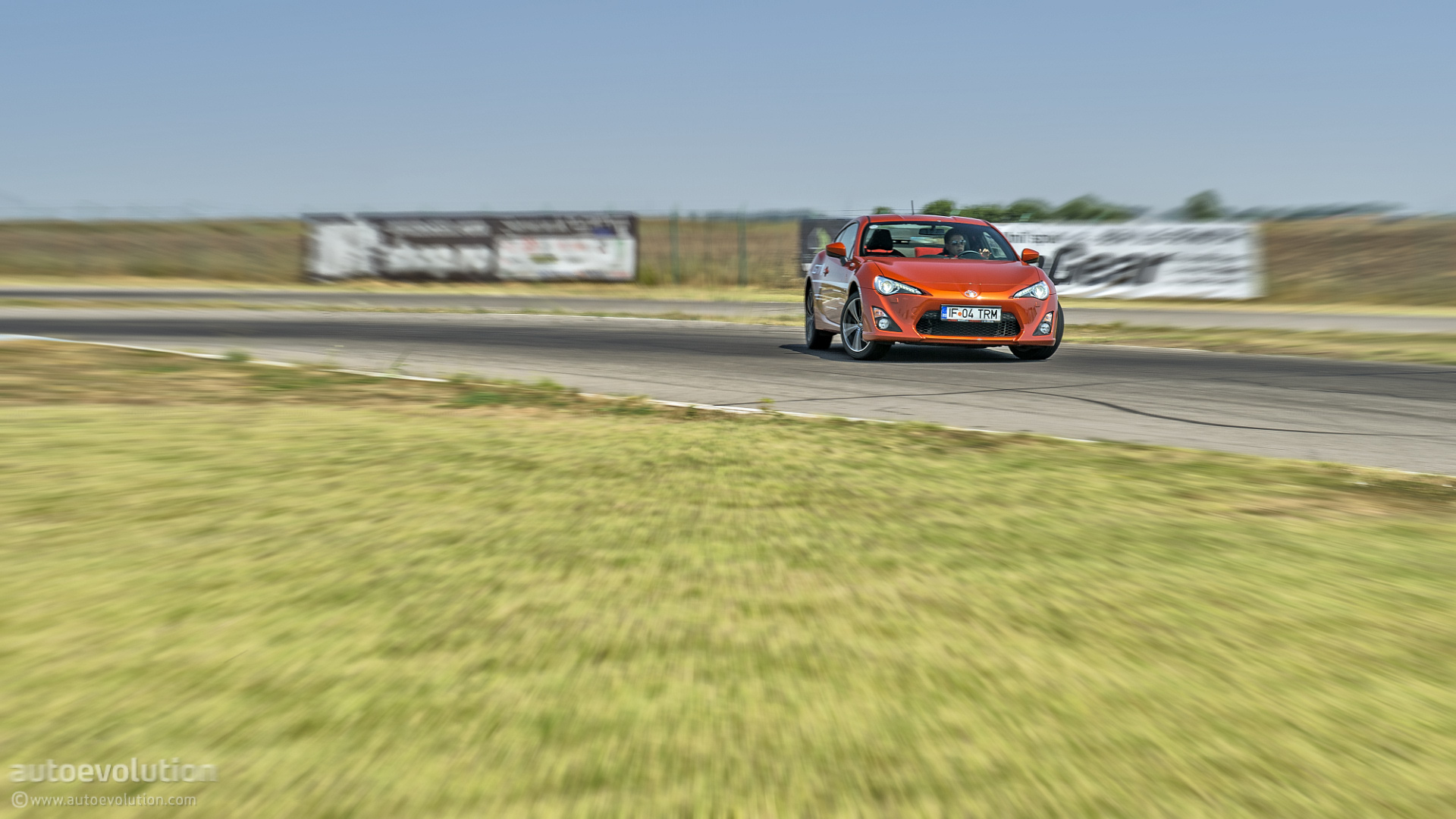
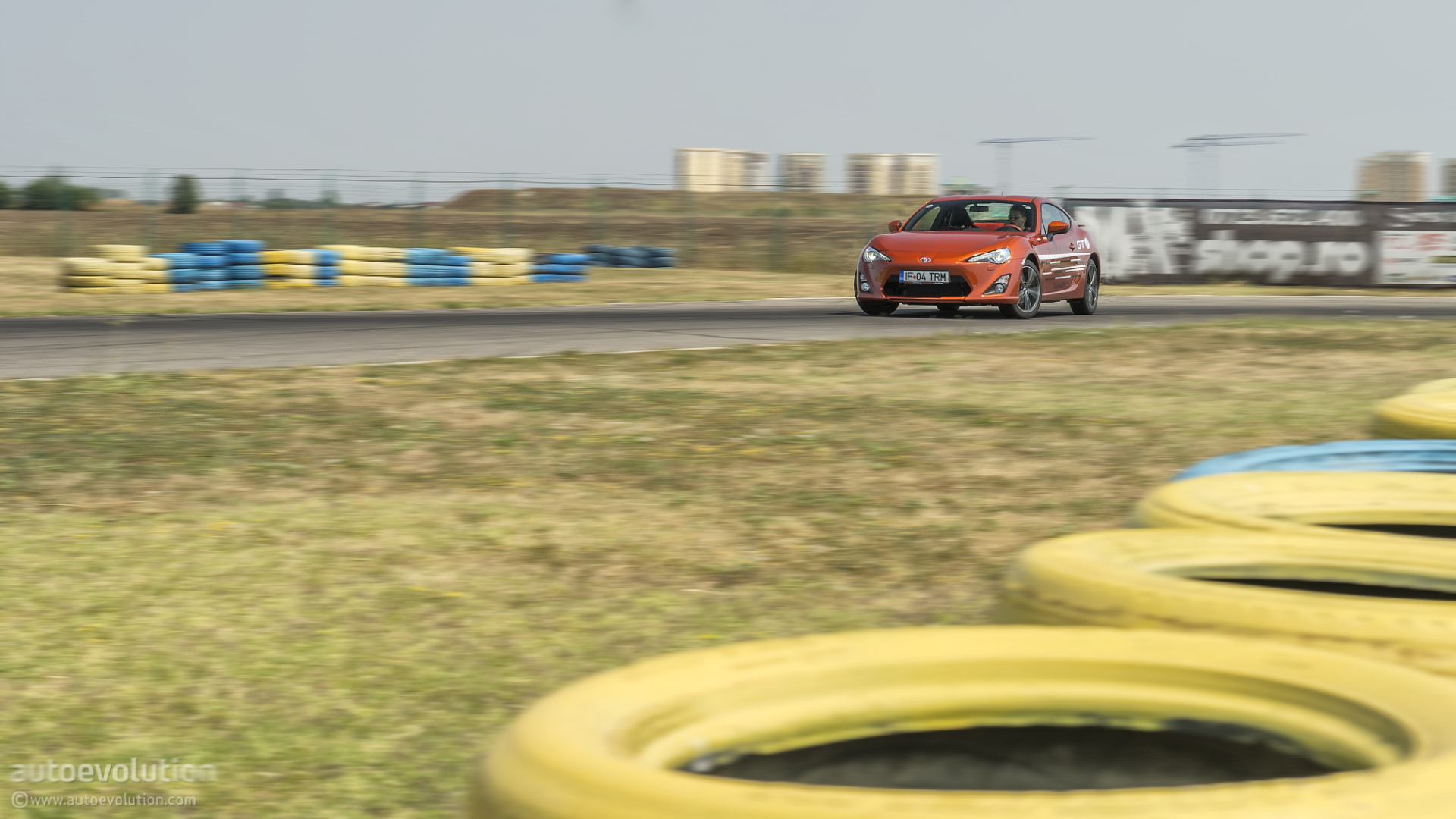
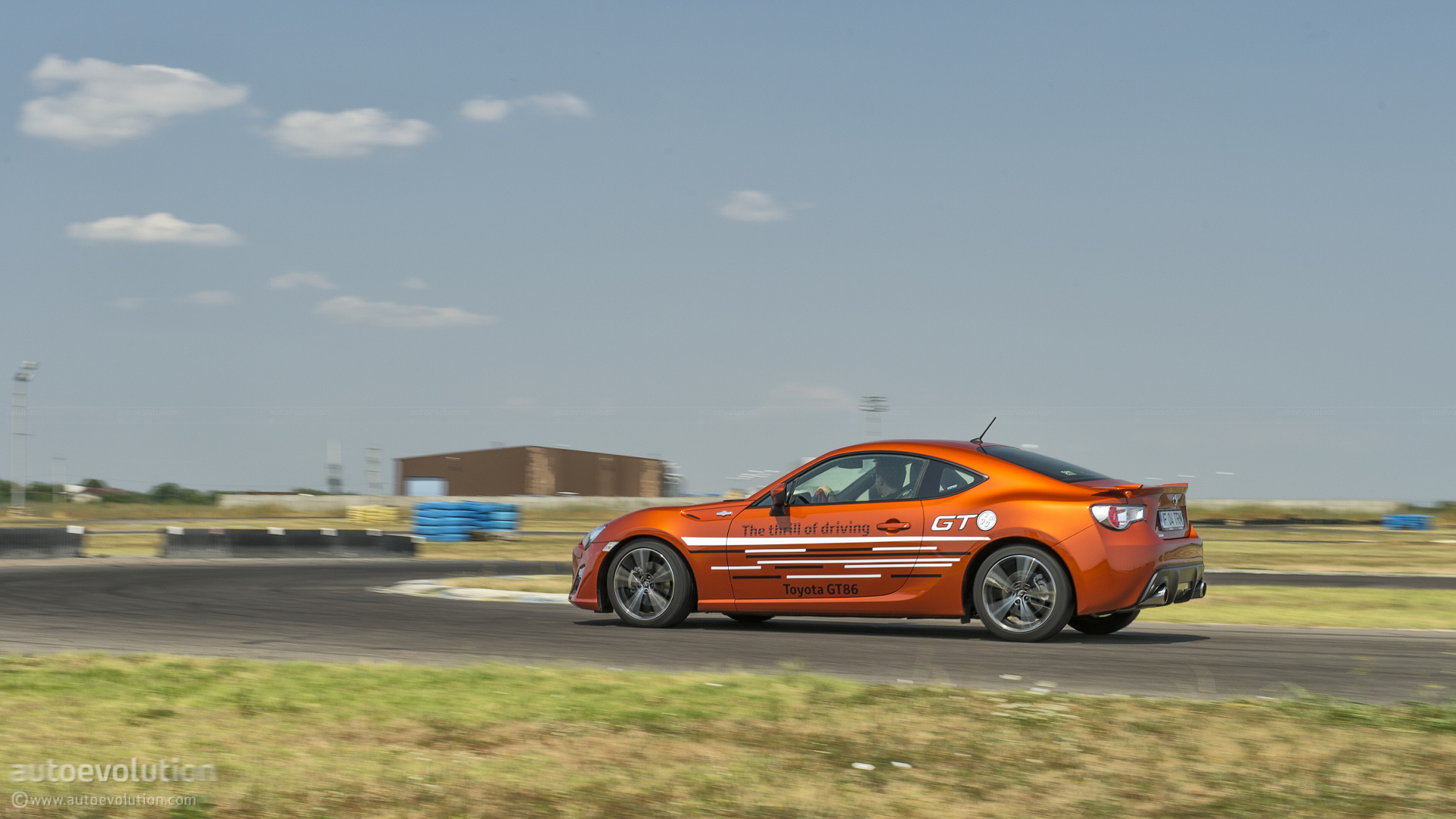
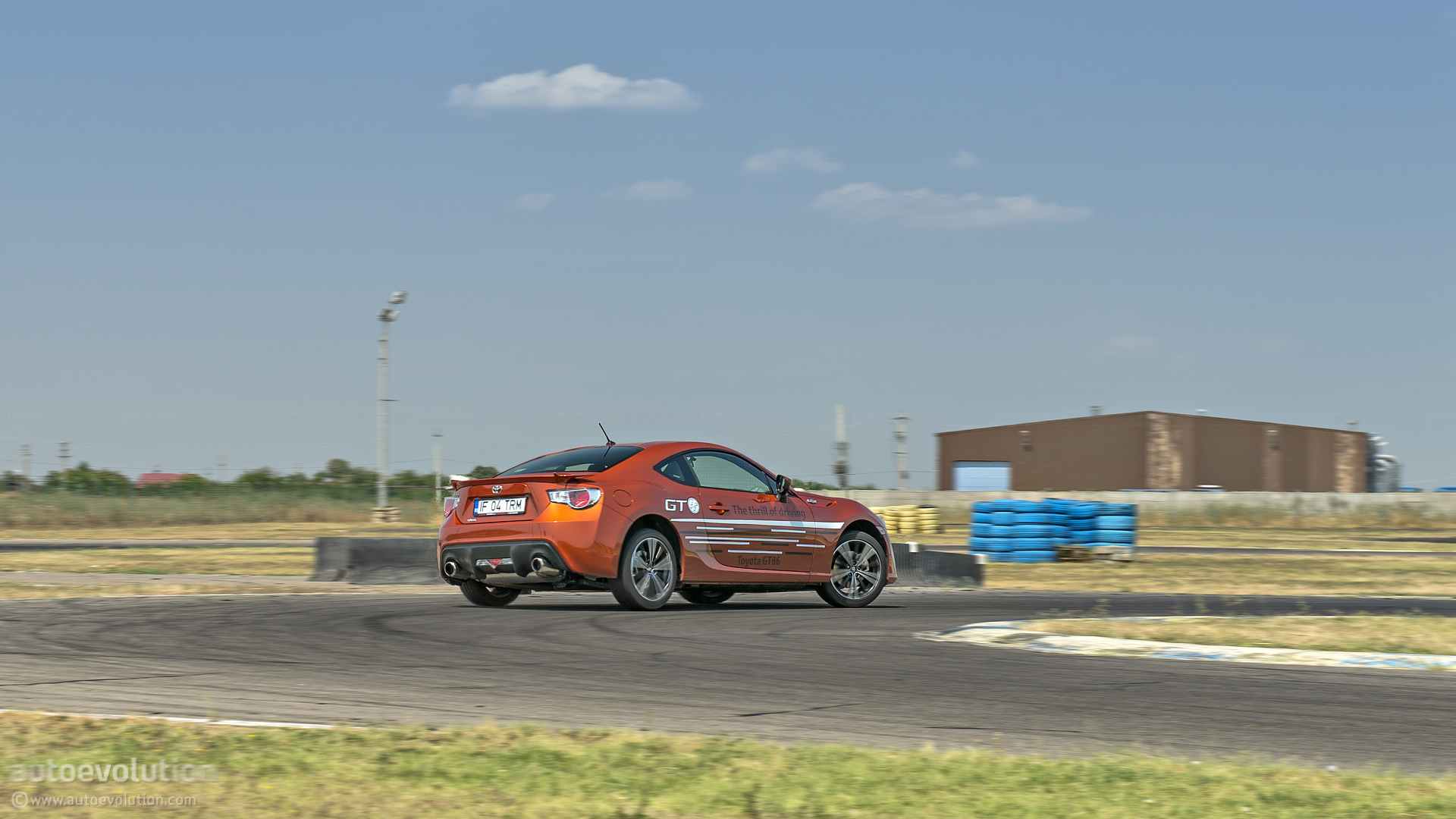
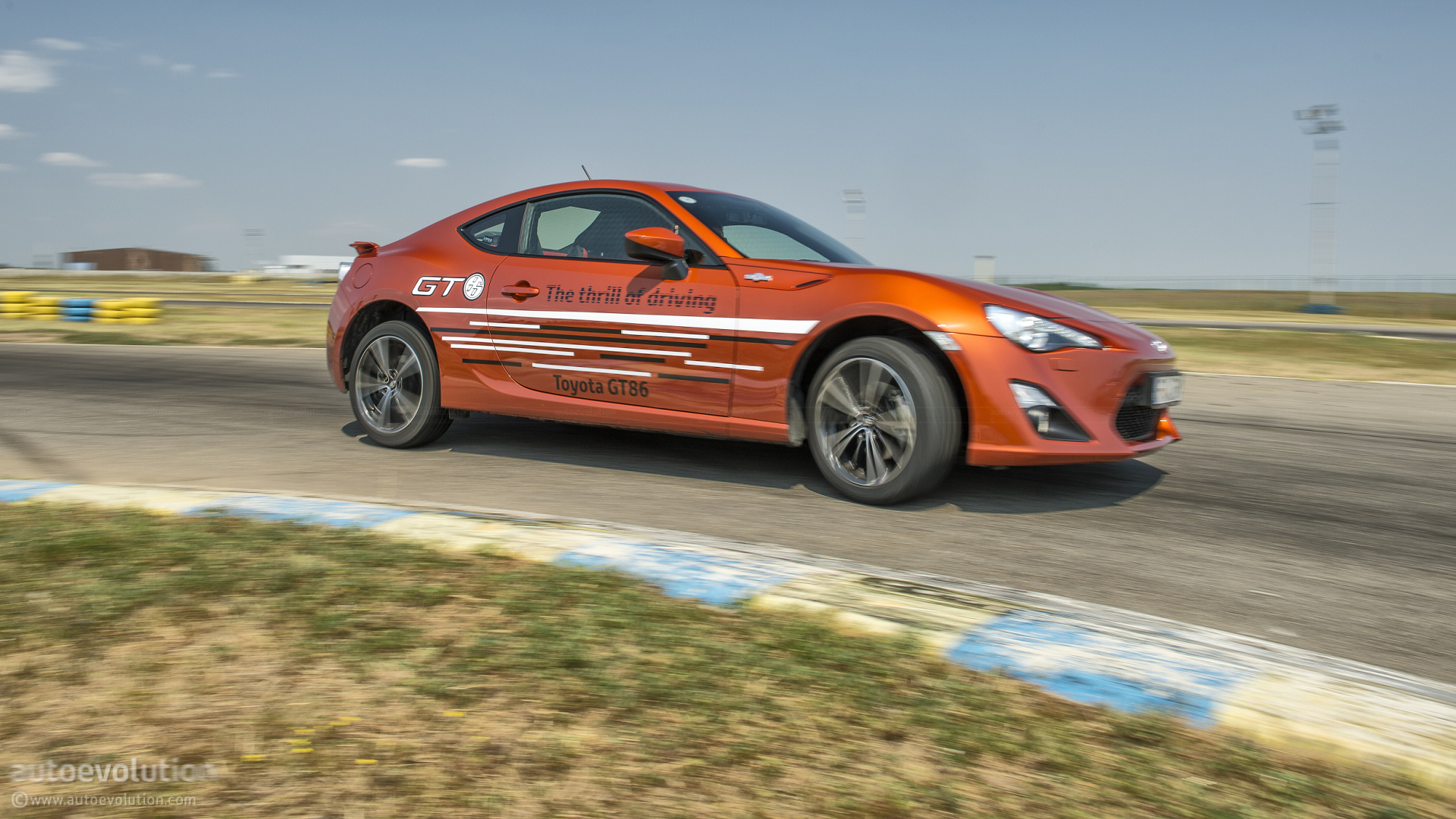
“Sharp right, sharp right, watch the cars behind you, you’ve missed the entrance to the race track!” This is what we were hearing on the walkie-talkie from our colleagues in the support car as we passed the circuit that was supposed to hold our drifting session for this test drive. We were so enthusiastic about taking the GT 86 to the track that we floored it and missed the entrance by a mile.
We got back and as we were entering the circuit, we didn’t know what to do first: get the unnecessary equipment out of the car or disable the electronics.
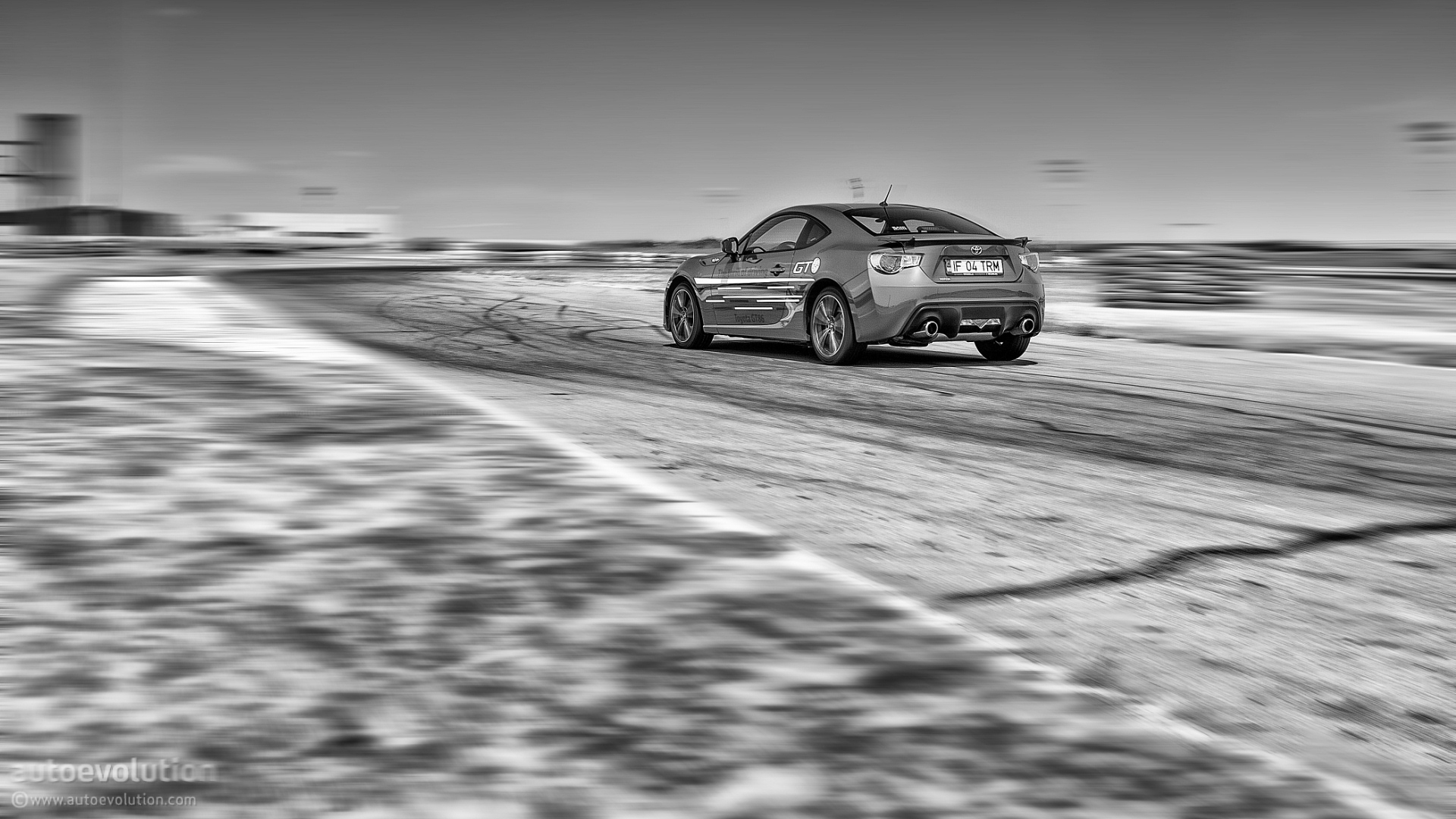
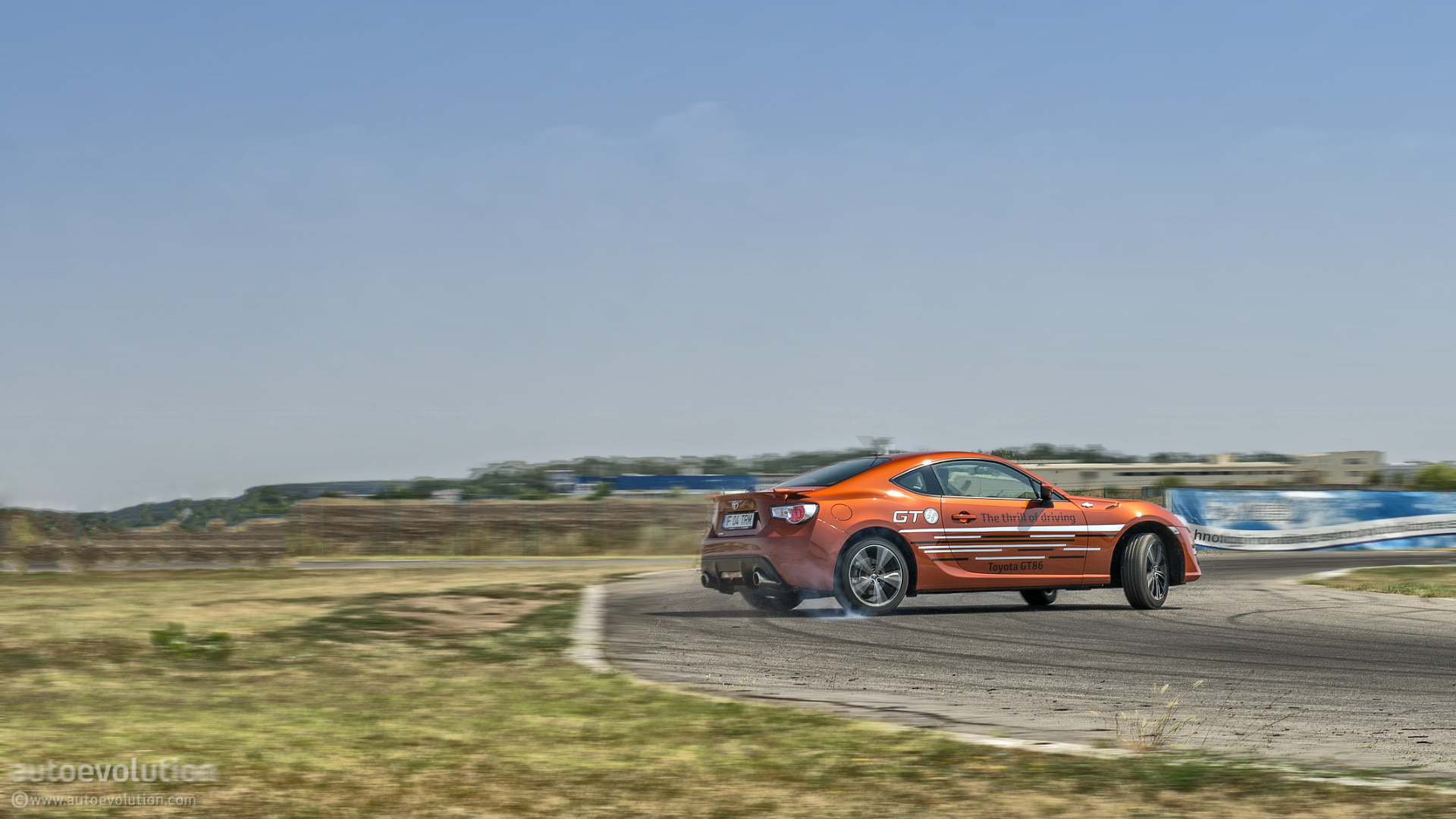
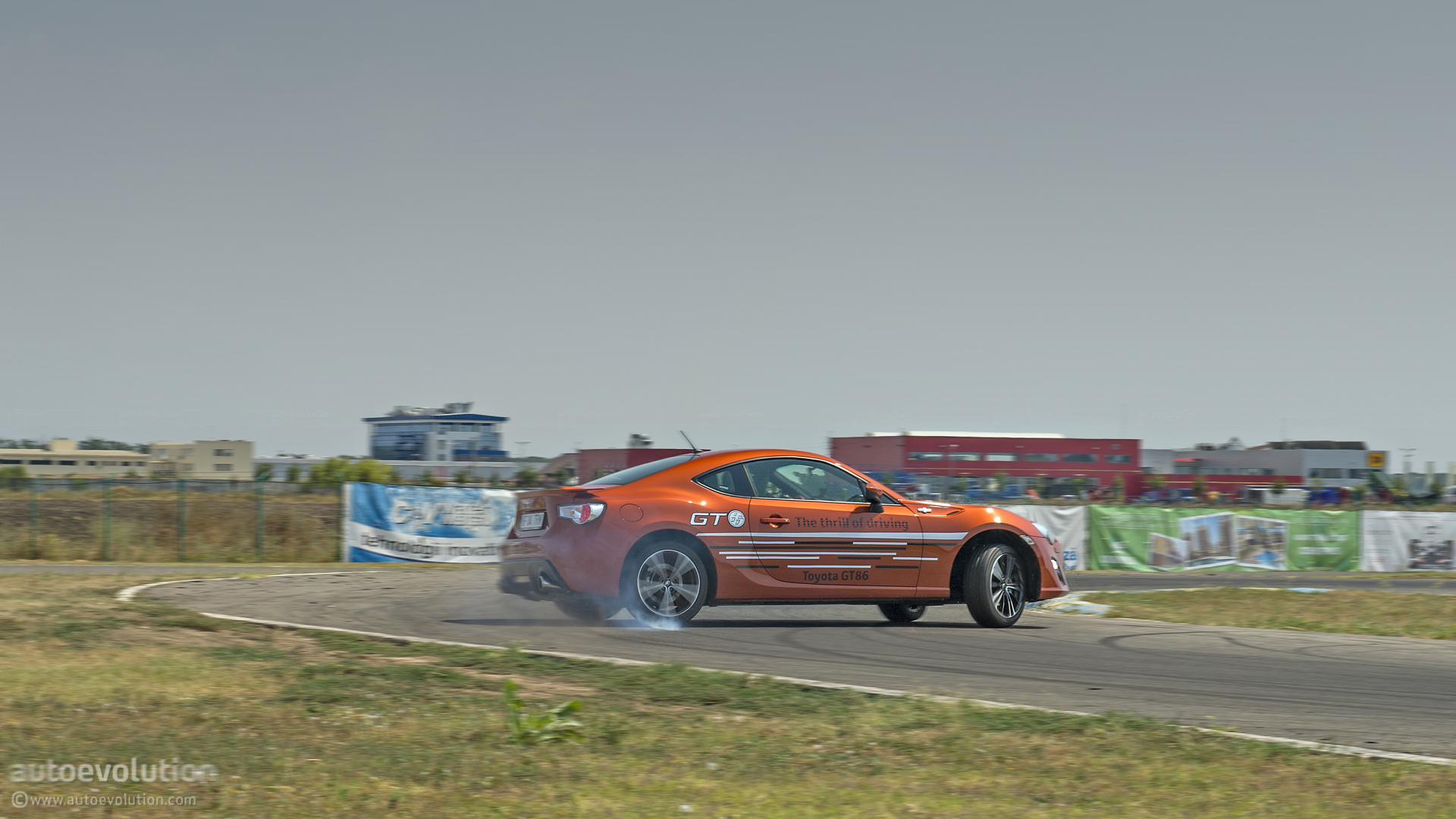
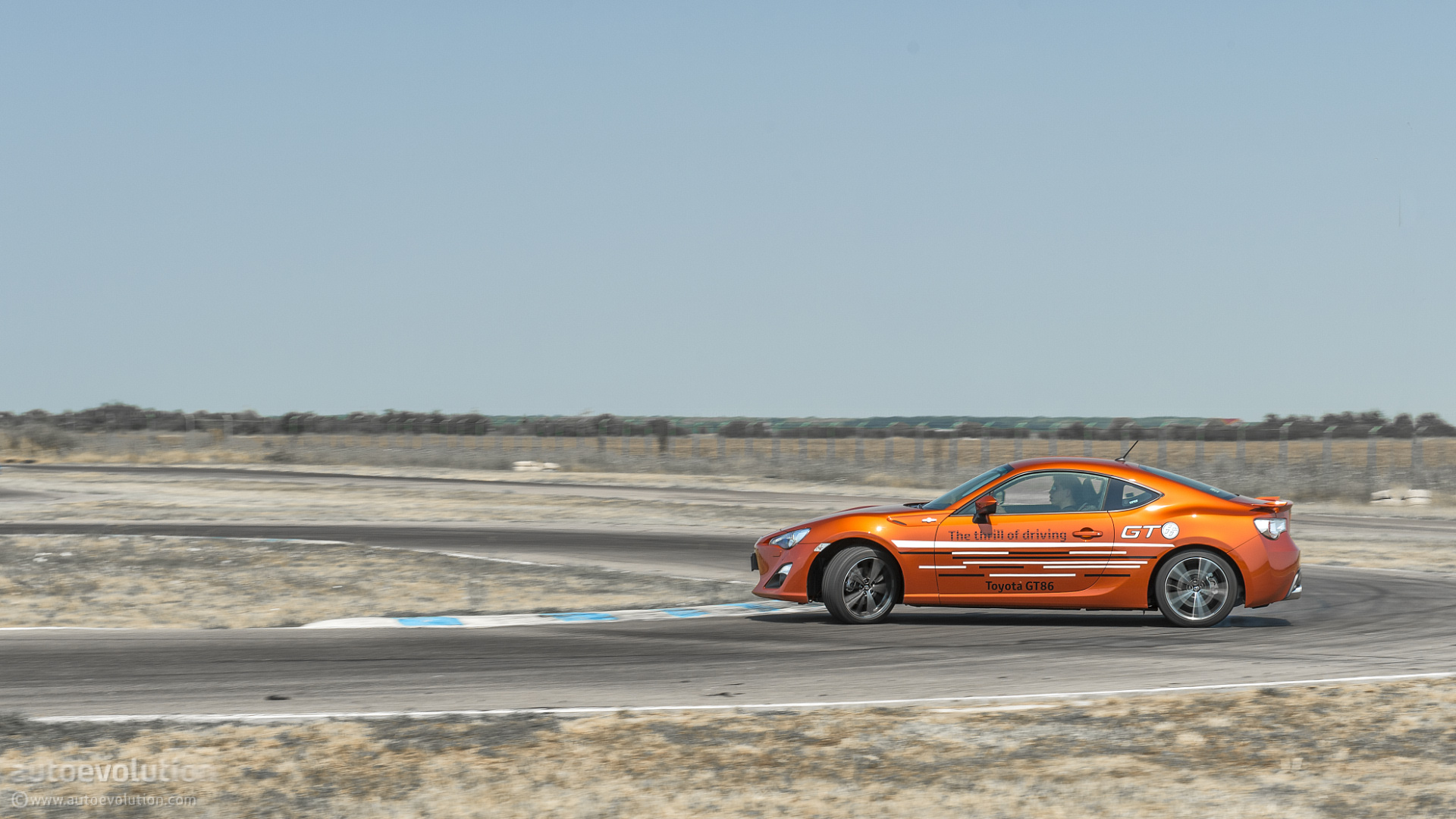
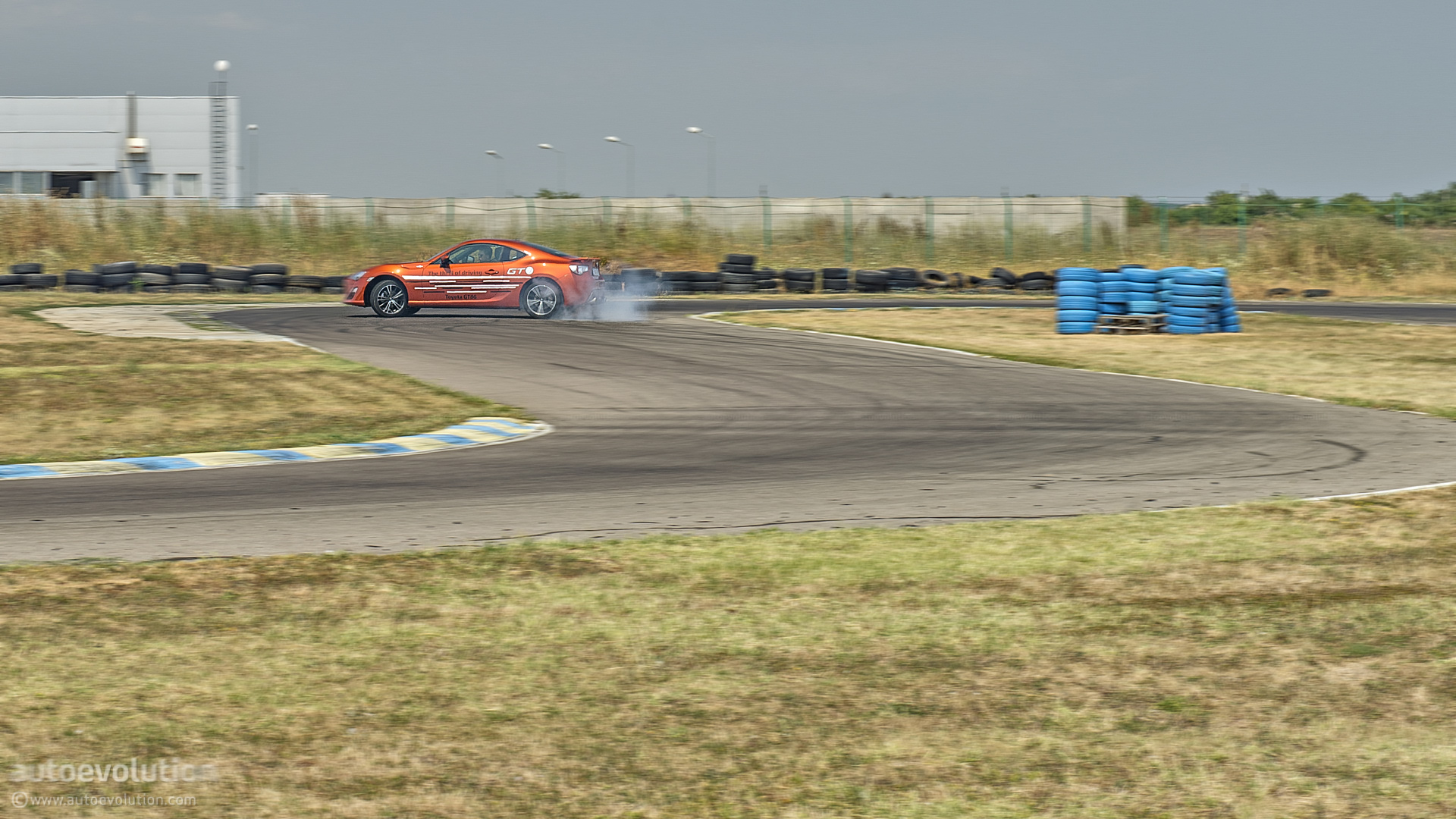
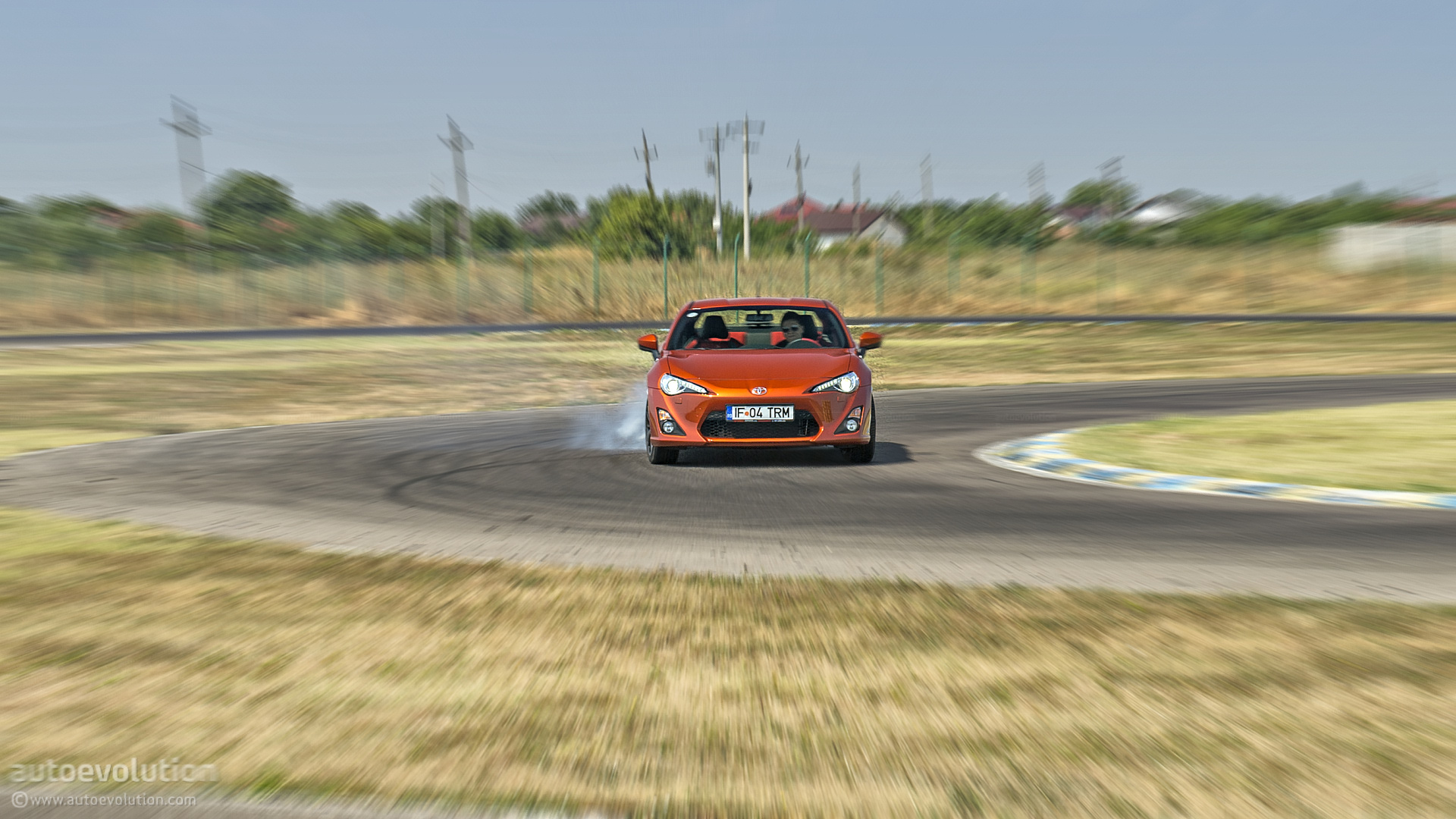
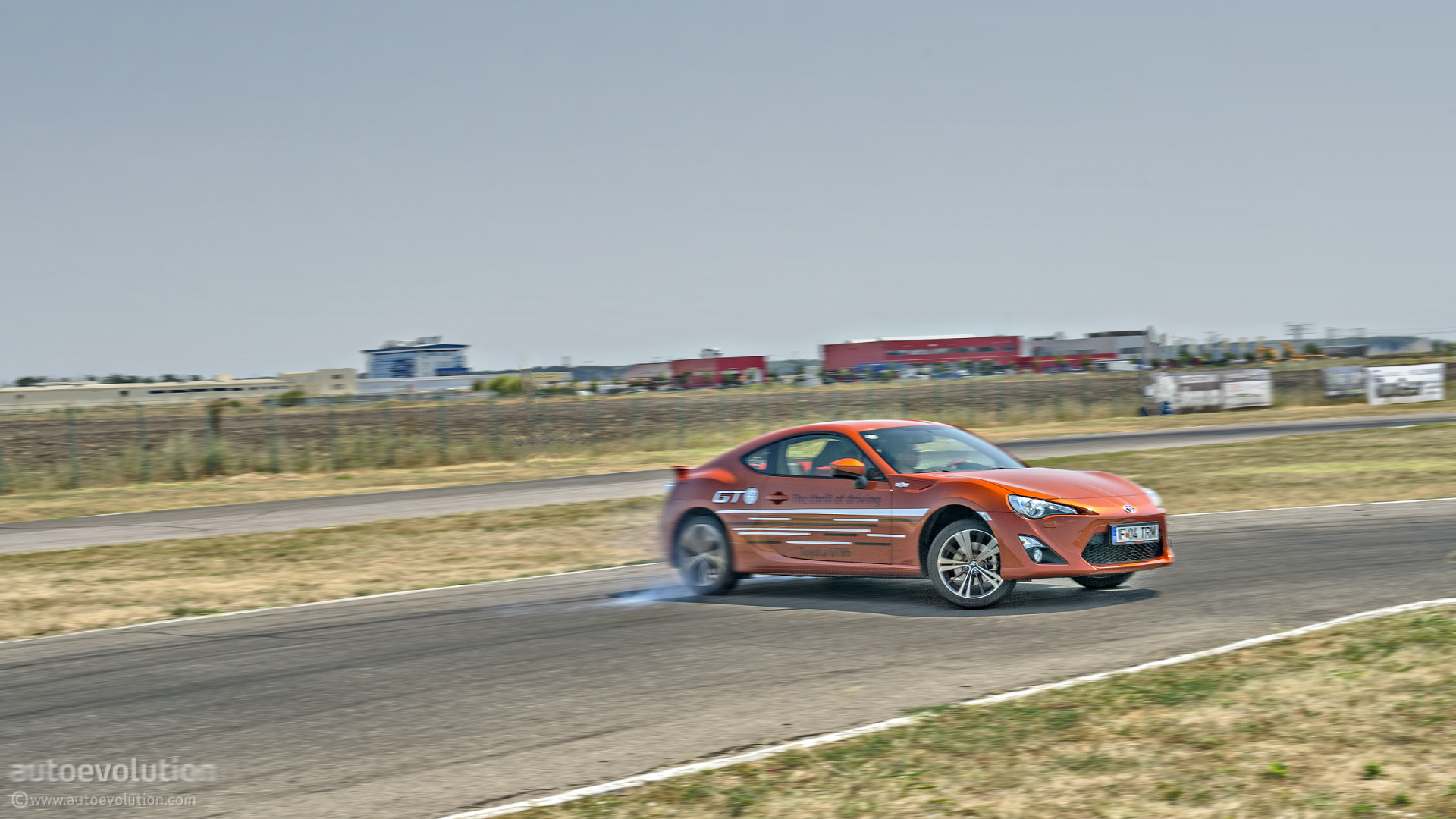
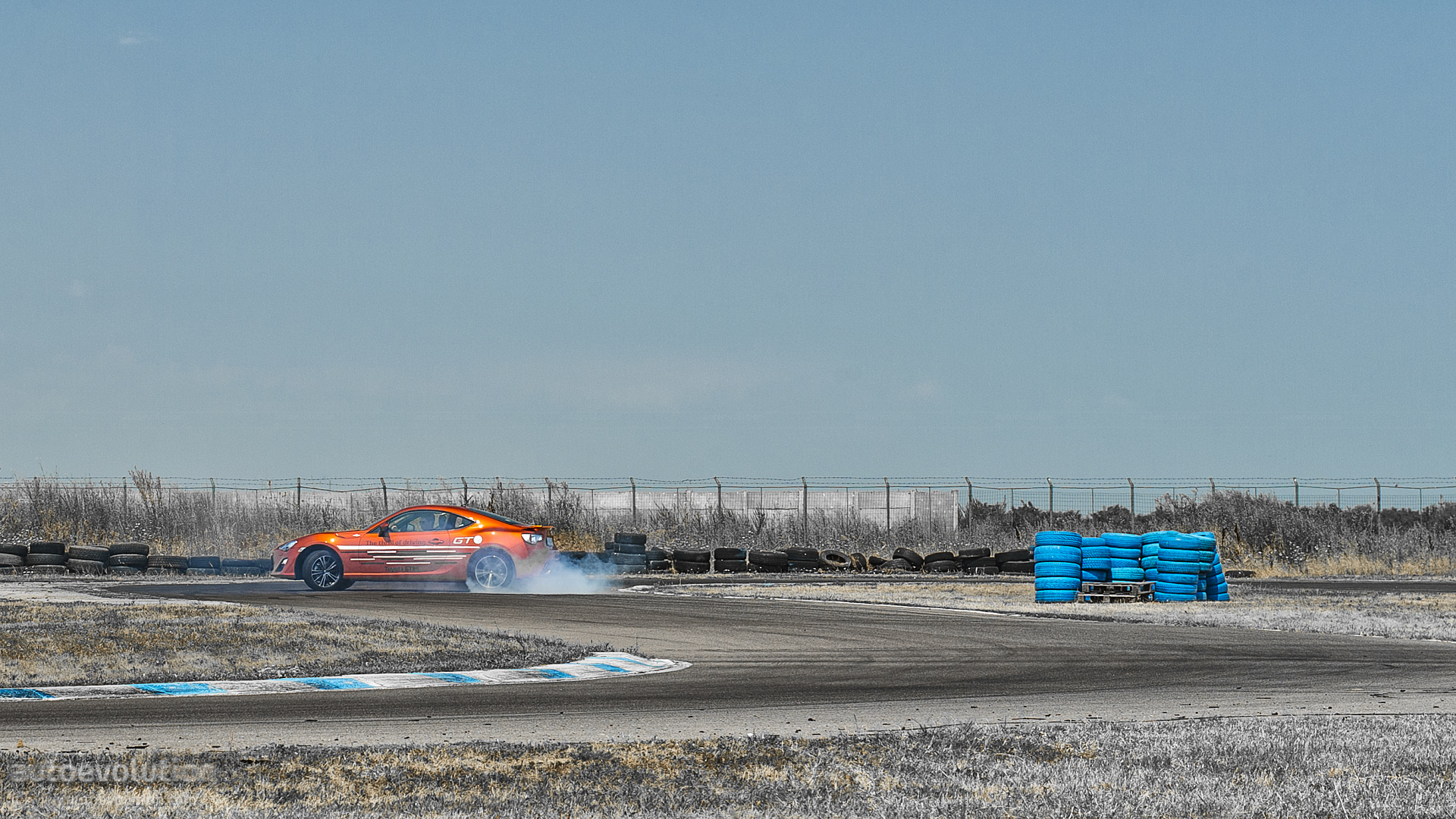
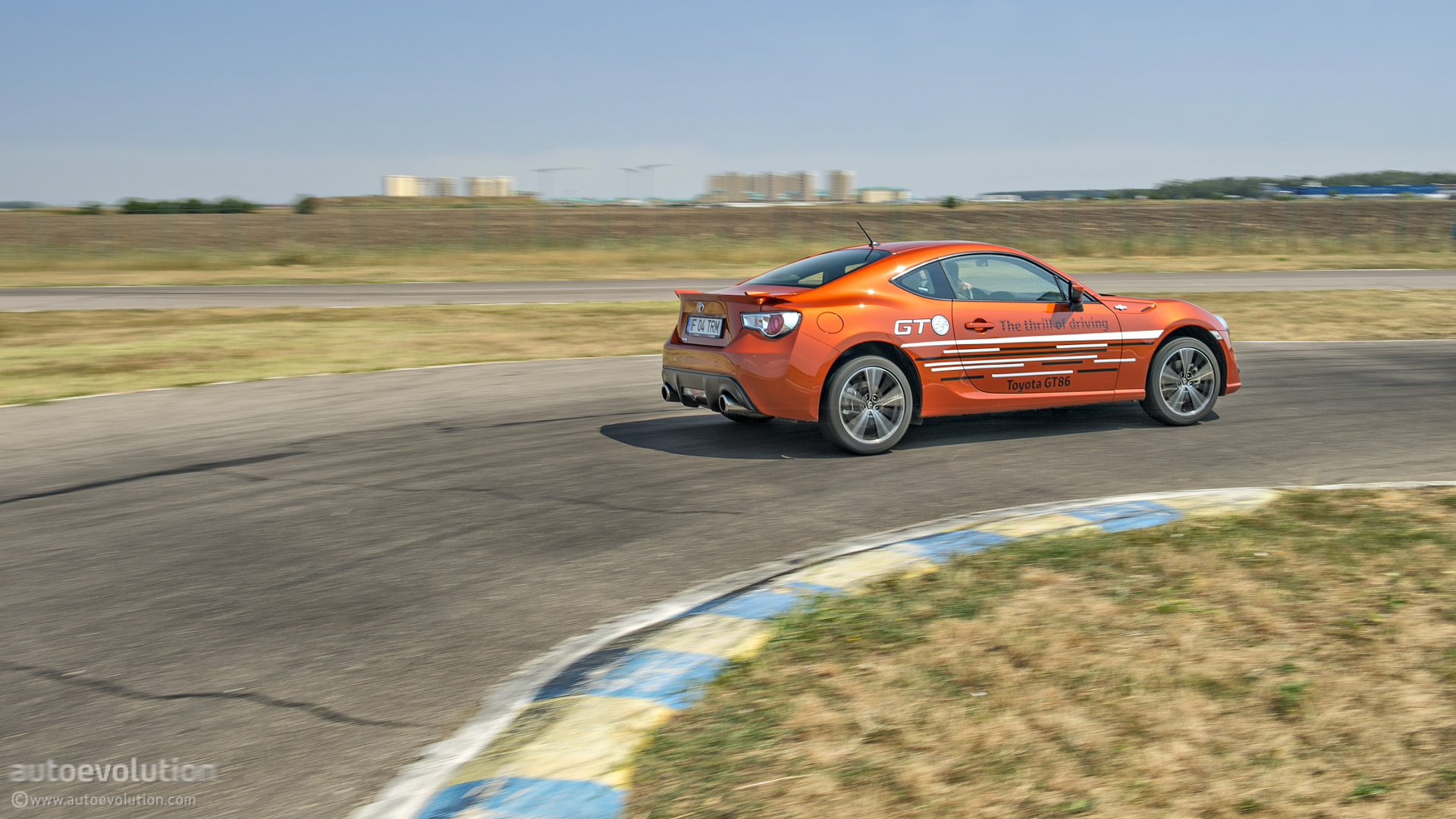
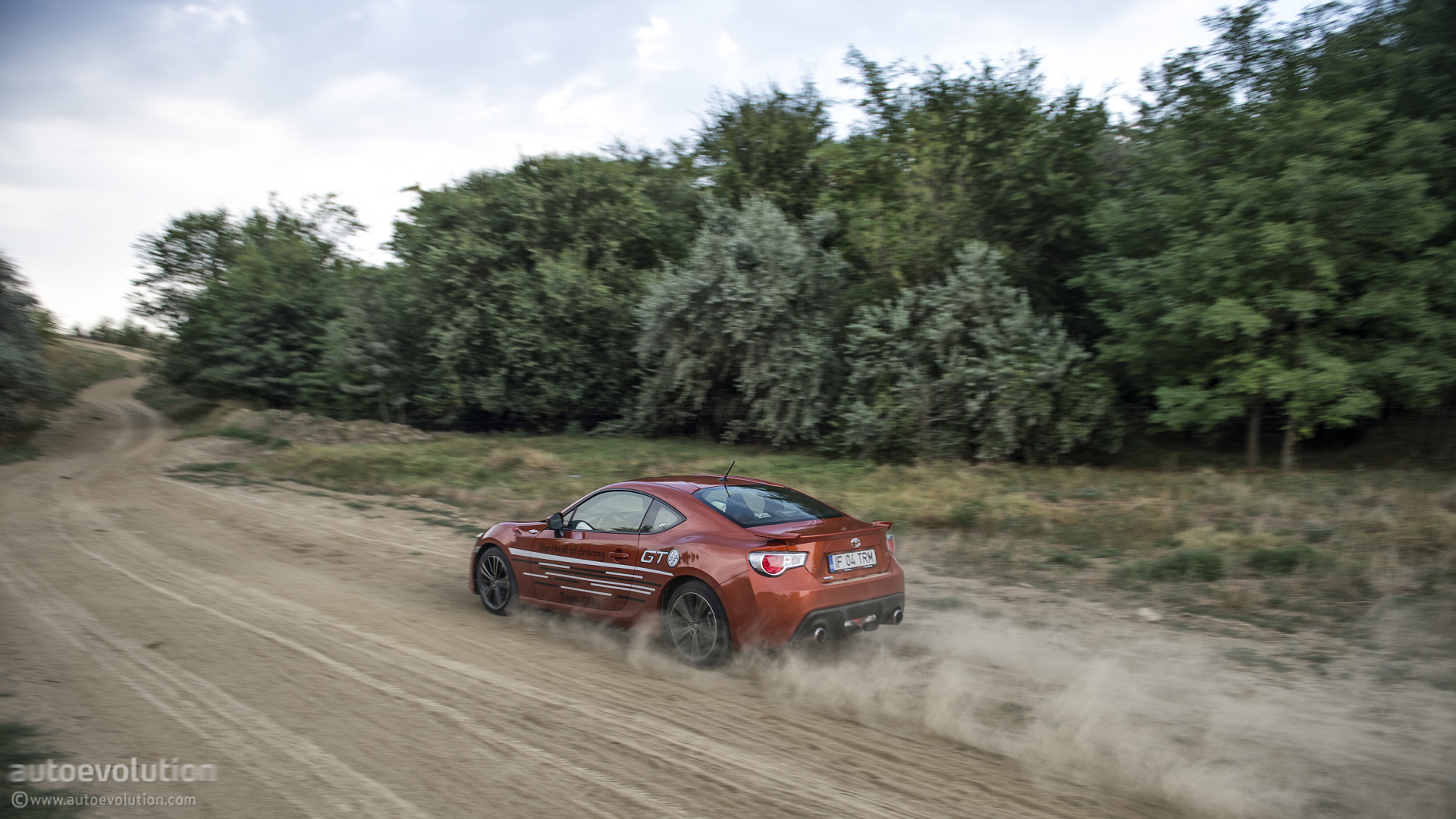
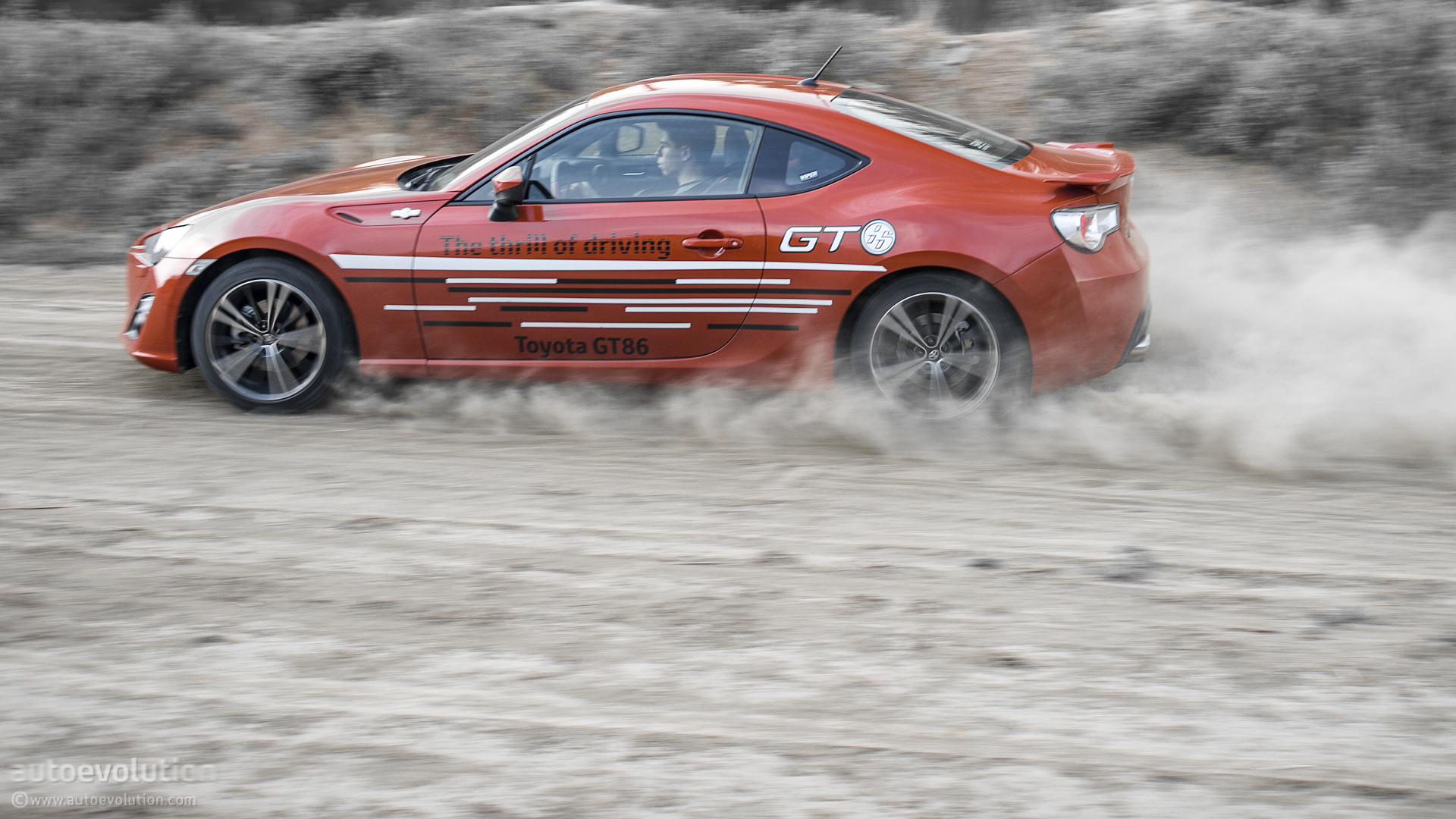
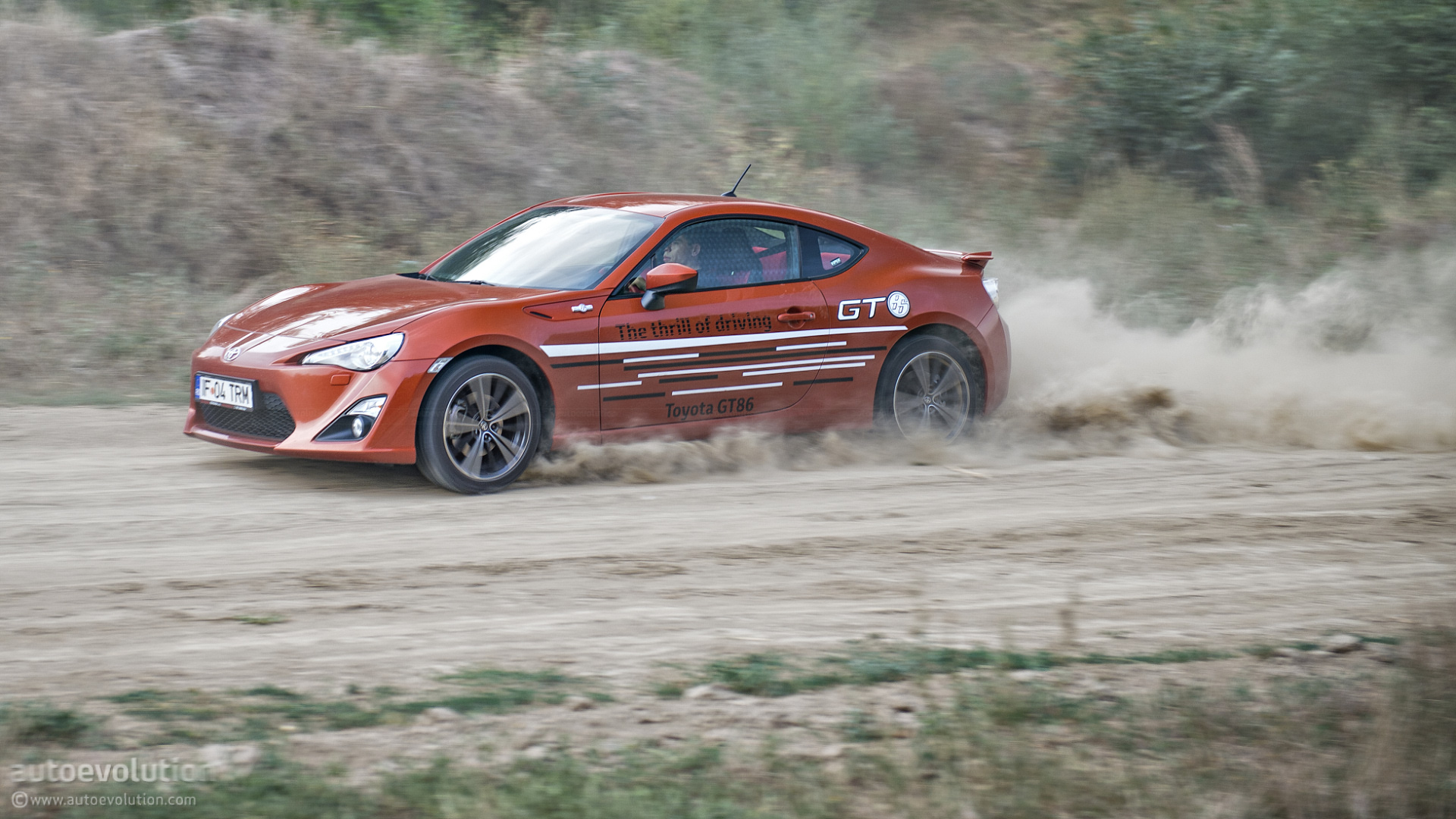
SInce the car uses normal 215/55 R17 tires, it’s fairly easy to start a drift, as well as to maintain it. The LSD does a wonderful job and you can rely on it, for example, to induce the oversteer in the tight corners. All you have to do is to perform a stronger downshift and the back will step out, then you step on the gas and use the steering, which has a short ratio and offers decent feedback, to catch the slide. We would’ve liked more power at times, but the little boxer unit proved muscular enough to allow us to play sideways for quite a while.
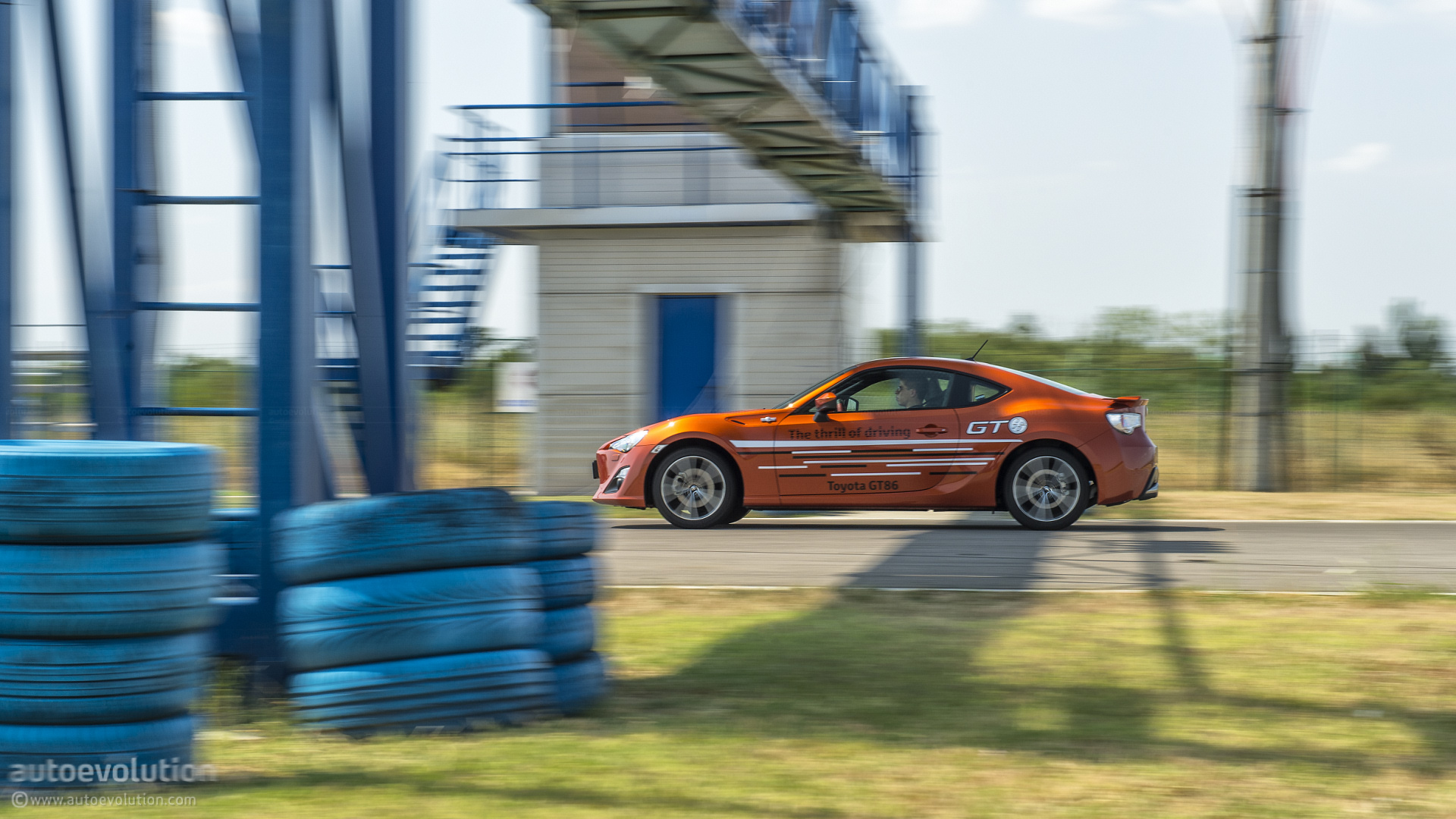
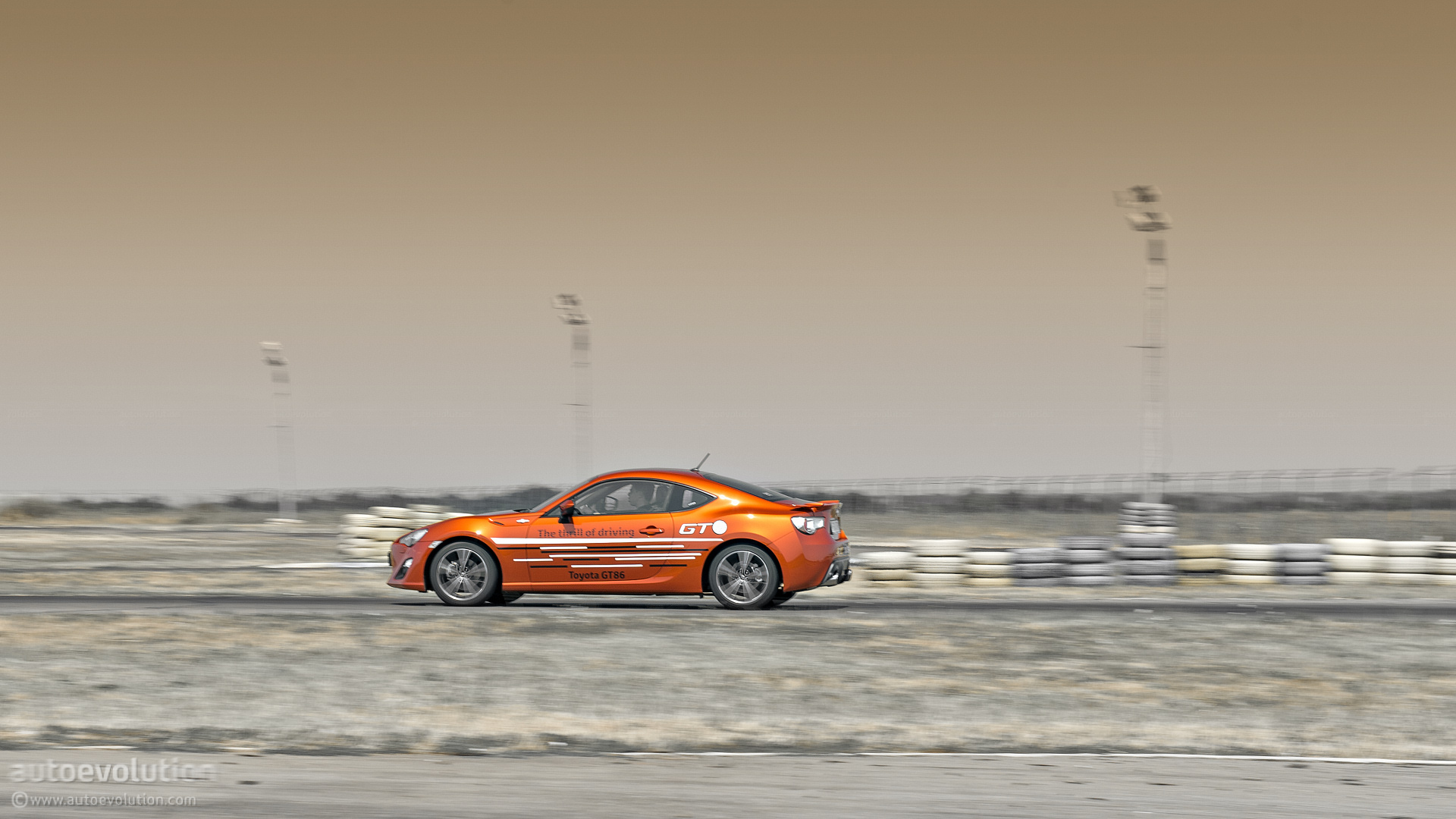
On the track, the GT 86 is so well balanced and comes with all the right mechanical ingredients: a suspension setup that favors drifting, a high-revving, naturally aspirated engine that delivers power in perfectly linear way, a manual gearbox, a LSD and tires that give up earlier than those on most sports cars.
The new Hachi-Roku makes drifting seems as easy as an arcade racing game. Even when you make a mistake and you start spinning, the car’s low weight allows you to brings things back under control fast.
12
Our TOYOTA Testdrives:
Photo gallery (86)


![TOYOTA GT 86 dynamic photo]()
![TOYOTA GT 86 driving]()
![TOYOTA GT 86 on the road]()
![TOYOTA GT 86 POV photo]()
![TOYOTA GT 86 high speed driving]()
![TOYOTA GT 86 highway driving]()
![TOYOTA GT 86 on Autobahn]()
![TOYOTA GT 86 performance driving]()
![TOYOTA GT 86 drifting on track]()
![TOYOTA GT 86 racing]()
![TOYOTA GT 86 drift]()
![TOYOTA GT 86 drift]()
![TOYOTA GT 86 on track]()
![TOYOTA GT 86 track driving]()
![TOYOTA GT 86 powerslide]()
![TOYOTA GT 86 trackday]()
![TOYOTA GT 86 on circuit]()
![TOYOTA GT 86 drift]()
![TOYOTA GT 86 drifting]()
![TOYOTA GT 86 trackday]()
![TOYOTA GT 86 tire smoke]()
![TOYOTA GT 86 drift]()
![TOYOTA GT 86 on the track]()
![TOYOTA GT 86 spin]()
![TOYOTA GT 86 vs monster truck]()
![TOYOTA GT 86 burnout]()
![TOYOTA GT 86 night time photography]()
![TOYOTA GT 86 speed]()
![TOYOTA GT 86 cornering speed]()
![TOYOTA GT 86 at night]()
![TOYOTA GT 86 dials at night]()
![TOYOTA GT 86 exterior rear view mirror]()
![TOYOTA GT 86 door]()
![TOYOTA GT 86 frameless door]()
![TOYOTA GT 86 seats]()
![TOYOTA GT 86 leather and alcantara upholstery]()
![TOYOTA GT 86 front seats]()
![TOYOTA GT 86 pedals]()
![TOYOTA GT 86 rear seat access]()
![TOYOTA GT 86 fuel filler cap button]()
![TOYOTA GT 86 rear seat bracket]()
![TOYOTA GT 86 handbrake]()
![TOYOTA GT 86 center console]()
![TOYOTA GT 86 rear seats]()
![TOYOTA GT 86 cabin]()
![TOYOTA GT 86 steering wheel]()
![TOYOTA GT 86 dashboard]()
![TOYOTA GT 86 interior]()
![TOYOTA GT 86 frameless rear wiew mirror]()
![TOYOTA GT 86 instruments]()
![TOYOTA GT 86 power windows]()
![TOYOTA GT 86 cruise control]()
![TOYOTA GT 86 speaker]()
![TOYOTA GT 86 navigation]()
![TOYOTA GT 86 roadtrip]()
![TOYOTA GT 86]()
![TOYOTA GT 86 driving]()
![TOYOTA GT 86]()
![TOYOTA GT 86]()
![TOYOTA GT 86 on country road]()
![TOYOTA GT 86 on country road]()
![TOYOTA GT 86 autocross]()
![TOYOTA GT 86 driving off the road]()
![TOYOTA GT 86 driving on sand]()
![TOYOTA GT 86 rear]()
![TOYOTA GT 86 at the beach]()
![TOYOTA GT 86 on sand]()
![TOYOTA GT 86 on sand]()
![TOYOTA GT 86 profile]()
![TOYOTA GT 86 profile]()
![TOYOTA GT 86 boxer engine]()
![TOYOTA GT 86 engine with Toyota D4S fuel injection]()
![TOYOTA GT 86: Subaru stamp]()
![TOYOTA GT 86 on the beach]()
![TOYOTA GT 86 wow factor]()
![TOYOTA GT 86 launch]()
![TOYOTA GT 86 launch]()