
The latest developments in terms of technology in the automotive industry have caught most of us by surprise. Despite financial downfall, R&D has continued within manufacturers' labs and we now find ourselves engulfed in an unprecedented battle of hybrids, plug-in hybrids and EVs.
Most of you know by now what each of them is all about. Yet, the hybrid segment of the automotive industry is still in a type of blur, as the distinction between hybrid and plug-in hybrid is not very often properly made. Think about it... What type of hybrid is the Prius? What type will the Volt be? What's the difference?
As you may expect, hybrids are a mix of two worlds: the one of the internal combustion engine and the one of electricity. In plain terms, hybrid vehicles are the ones who use both a combustion engine and one or more electric motors. Generally, a hybrid is a type of vehicle which uses more than one type of propulsion means.
Today, when you think hybrid, you think Toyota Prius or Honda Insight. The "hybrid" term though hides several possible meanings, but generally these types of vehicles split into two groups: HEVs (hybrid electric vehicles) and PHEVs (plug-in hybrid electric vehicles).
HEV
The HEV world is already a very complex one. It subdivides into several other branches, setting vehicles apart according to the type of drivetrain (parallel, series or power split hybrids) and by the nature of the power source (full, power assist or mild hybrids).
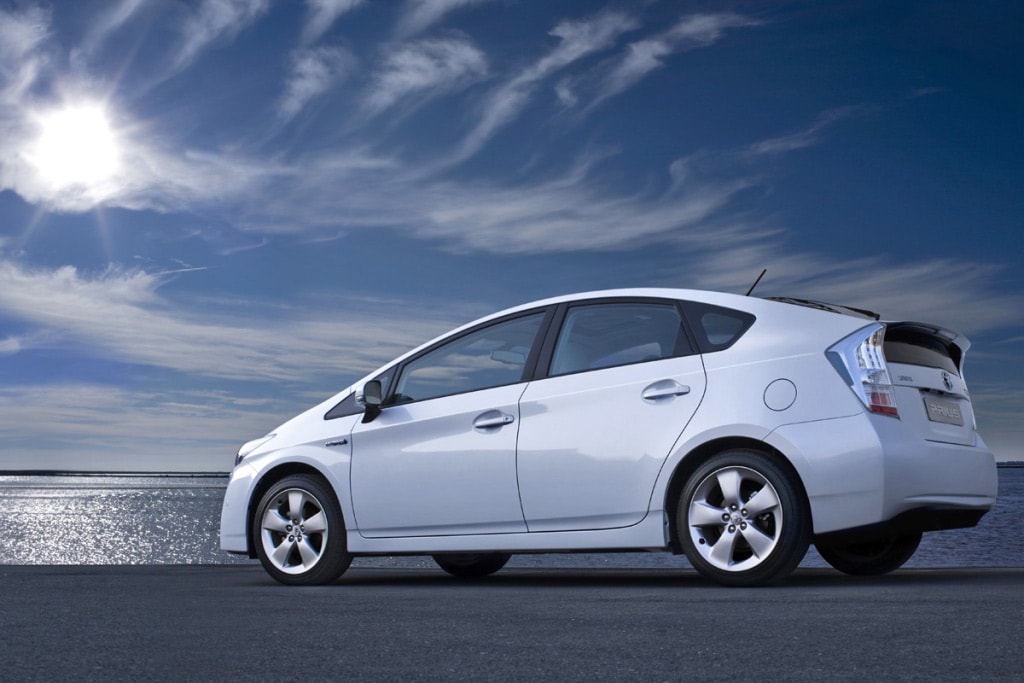 HEVs, regardless of their subdivision, get most of their power from the regular internal combustion engine. When needed, an extra boost of power can be obtained from the electric motor. The power required for the electric motor to work is generated "on the go"and stored in the battery, so it does not need to be plugged in to be functional. The electric motor also acts as a generator, converting energy from regenerative braking and storing it in the battery. Generally, hybrids can use the two propulsion means separately or at the same time.
The most advanced HEVs, the full hybrids, allow cars to move on electric power alone for low speed driving. Although still very dependent of the internal combustion engine, full-hybrids allow for better fuel consumption ratings in city driving. The electric motors found in full electric hybrids are also used to provide an extra boost of power when needed.
HEVs are mainly intended for short distance electric travel, a very useful feature when living in a city. Long distance trips however remain under the rule of the internal combustion engine.
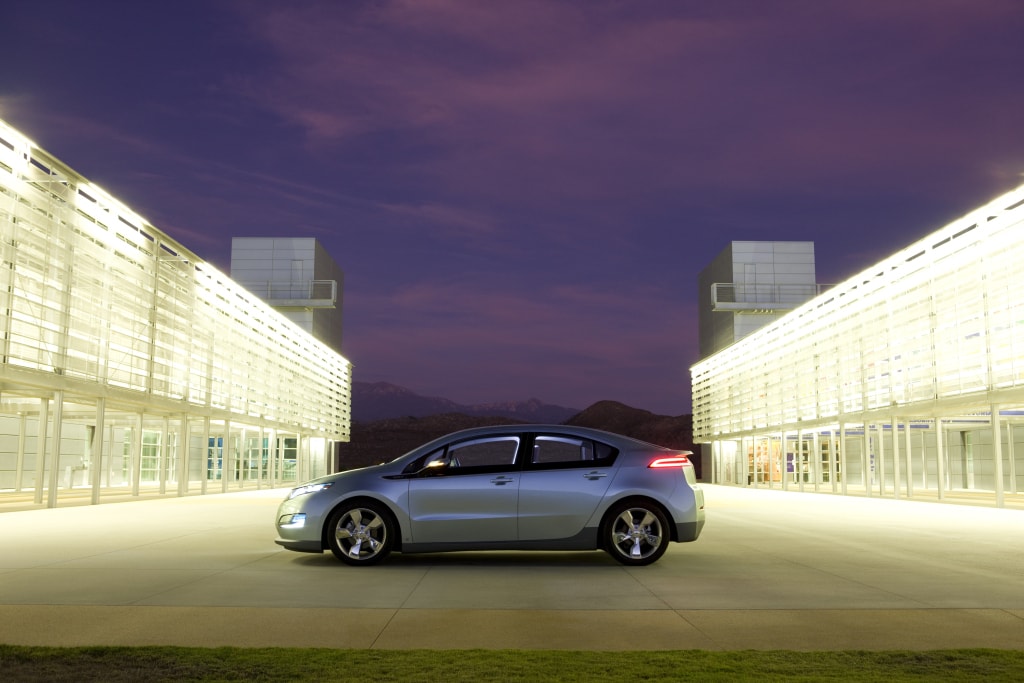 back-up. True to its name, the PHEV needs a power outlet to get the battery charged to full capacity. Still, as the battery gets low on power, the internal combustion engine kicks in and takes over, at the same time recharging the battery. When the battery is depleted, the plug-in hybrid starts acting as a regular hybrid, with the combustion engine taking the role of primary power source.
On the automotive revolutionary scale, the hybrids are the next step. At the bottom of the scale are the internal combustion engines. HEVs are the next step, together with PHEVs. At the top we find all-electric vehicles (EV). To answer the questions we asked in the beginning of this guide, we tell you that the Prius is a mild-parallel hybrid, while the Volt will be a plug-in hybrid electric vehicle.
As we told you, the main difference between the two comes from who is in charge. In HEVs, the electric motor assists the internal combustion engine, while in the PHEVs is the other way around. Needless to say, the latter is more environmentally friendly and one step closer the a full-electric vehicle. As for now a functional EV charging infrastructure is still not in sight, PHEVs are the next best thing to actually owning an EV.
The most advanced HEVs, the full hybrids, allow cars to move on electric power alone for low speed driving. Although still very dependent of the internal combustion engine, full-hybrids allow for better fuel consumption ratings in city driving. The electric motors found in full electric hybrids are also used to provide an extra boost of power when needed.
HEVs are mainly intended for short distance electric travel, a very useful feature when living in a city. Long distance trips however remain under the rule of the internal combustion engine.
PHEV
PHEVs work in a similar way to the HEV. They are also fitted with an internal combustion engine and one or more electric motors. Unlike HEVs, this type of hybrids get most of their power from the electric motor, which acts as primary, while the internal combustion one acts asOn the automotive revolutionary scale, the hybrids are the next step. At the bottom of the scale are the internal combustion engines. HEVs are the next step, together with PHEVs. At the top we find all-electric vehicles (EV). To answer the questions we asked in the beginning of this guide, we tell you that the Prius is a mild-parallel hybrid, while the Volt will be a plug-in hybrid electric vehicle.
As we told you, the main difference between the two comes from who is in charge. In HEVs, the electric motor assists the internal combustion engine, while in the PHEVs is the other way around. Needless to say, the latter is more environmentally friendly and one step closer the a full-electric vehicle. As for now a functional EV charging infrastructure is still not in sight, PHEVs are the next best thing to actually owning an EV.
 Google News