

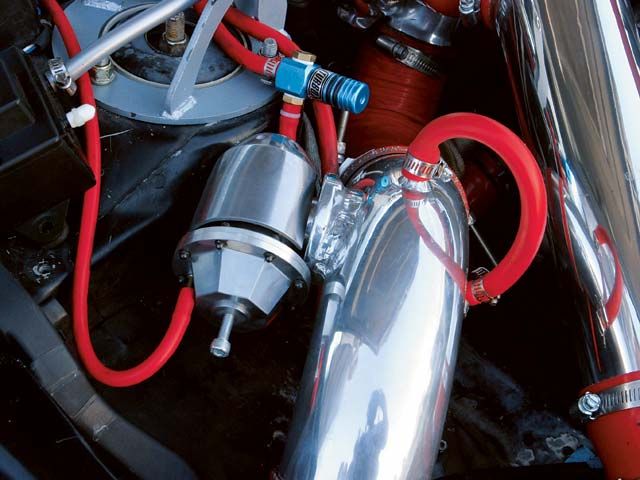
First of all, what is it? The blow-off valve is a separate part that is supposed to be mounted in the intake plumbing between the turbocharger compressor and the throttle plate. Just like its name suggests, it blows off the pressure in the intake system of a turbocharged unit.
Secondly, its role. Such a system is specifically aimed at helping the turbocharged engine in question to maintain the same rev for a longer period (less than a second) when changing shifts. This way, the driver can get instant boost, reducing the lag and giving the optimal power just when needed. Other tasks include reducing wear of the engine and, more importantly for some people interested in tuning, creating a hissing sound generated every time the driver changes gears.
That's right, some car enthusiasts are only interested in mounting a blow-off valve just for the sound it makes, with several tuning houses around the world designing several aftermarket parts that even amplify the sound.
Getting back to the way the BOV works, it does exactly what its name suggests: it blows off the pressure in the intake system. This way, it keeps the turbocharger spinning when the throttle plate is fully closed. For example, when the driver wants to change gears and releases the throttle pedal. The direct result is that the turbocharger - which is still spinning thanks to the air flow - is ready to provide the optimal power once the driver presses the throttle pedal once again.
The result of this blow-off - or the pressure release if you prefer - is exactly the sound we told you before.
Unfortunately, using a BOV has a few disadvantages too. Besides the horrifying sound that might scare the hell out of somebody walking down the street, the air that circulates between through the compressor and the blow-off valve might become heated and thus have detrimental effects on the performance of the engine.
Furthermore, an incorrectly mounted blow-off valve might reduce the final figures of the car and even increase the lag when the driver changes gears. Additionally, in case the valve doesn't handle the pressure as it should, it could lead to other engine damages.
A blow-off valve is usually priced from $100 to more than one thousand dollars, obviously depending on the manufacturer/tuning house. However, for those of you who are looking to buy one of these just for the sound, a cheaper alternative is also available: a so-called fake blow-off valve that does nothing more than to use the air pressure to generate a different sound, other than the one emitted by the engine.


What's important is to avoid confusing the BOV with anti-lag systems, such as the ones seen in motorracing. The anti-lag systems are more complex and rely on a mixture of air and fuel that reaches the exhaust tubes usually unburned. Obviously, this usually results in an explosion - due to the high temperature in the exhaust system - which keeps the turbo turning and thus, provide a boost to the driver even at engine idle speeds.
Obviously, for an anti-lag system to work properly, the car needs to be equipped with a high-performance exhaust system that can handle the explosions and is especially tweaked to direct the pressure to the turbo system and keep it spinning.
That being said, the blow-off valve might be a pretty nice upgrade for your turbocharged engine but even if it might boost performance a little bit, don't expect your car to fly like a rocket.
 Google News