
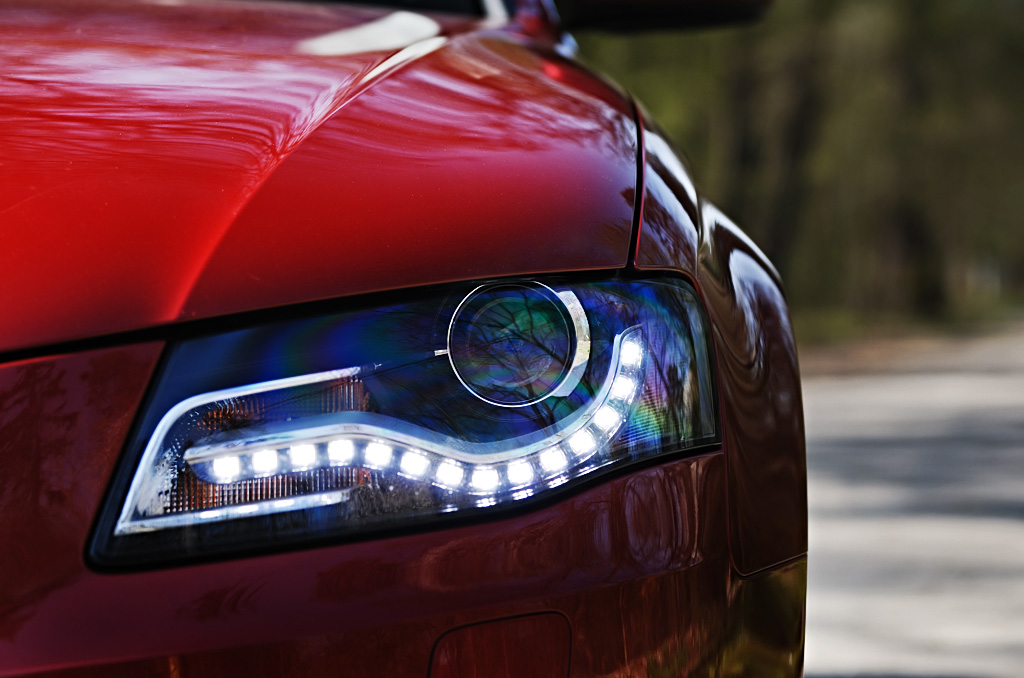
Photo: Original image created by autoevolution
What we regard now as common things were sometime major technological achievements. There were times when adding a simple bolt or altering the shape of a certain component led to significant innovations which, years later, served as basis for more advanced projects. Let's take headlamps for example.
Although the whole automotive industry uses them, only a few people actually know how they evolved from simple acetylene lamps in the 1880s to very complex LED assemblies nowadays. Furthermore, researchers are continuously working on the whole "headlamp" idea, trying to find new breakthroughs that would obviously make their products better than the rivals'. Laser headlights is an example, but before discussing them, we have to go through more common systems available for a larger use.
We won't talk about the headlamp history today because we already did that, but instead we'll try to focus on the four major headlamp configurations of today and see what they're up to. We'll thus try to discuss the advantages and disadvantages of each of them, although people generally believe, and it sometimes happens to be true, that the newest is also the best. Some of you will agree with our statements, others won't, but either way, each of the four types of headlamps has its very own pros and cons. So, let's take one at a time and see what this is all about.
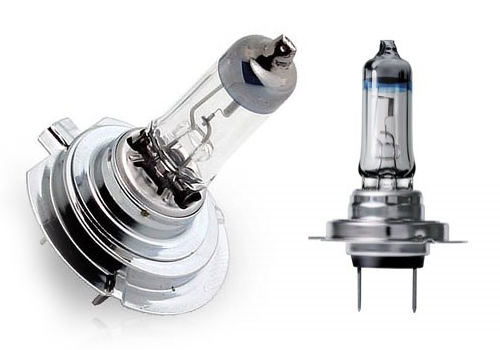 advantage: they're simple and cost effective. Basically a halogen light bulb has a lifetime of about 1,000 hours under normal conditions, while replacement costs are usually very low comparable to the other types bellow (around 30 bucks for a decent set). However, halogen bulbs are becoming the second option for more and more car companies around the world. The reason? Halogen isn't exactly synonym to efficiency and, to better understand why, we'll explain how such a light bulb works.
First of all, it is made of a glass envelope capable of resisting very high temperatures, plus a gas, usually a combination of argon and nitrogen, along with a tungsten filament. In order to create light, the tungsten filament receives electricity from the car’s battery and heats up to around 2,500 degrees Celsius thus starting to glow (incandescence process).
When the halogen light bulb comes to the end of its lifetime, it usually happens so because the tungsten in the filament evaporates and leaves the filament, getting deposited on the glass and causing the filament to rupture at some point and render itself unfunctional.
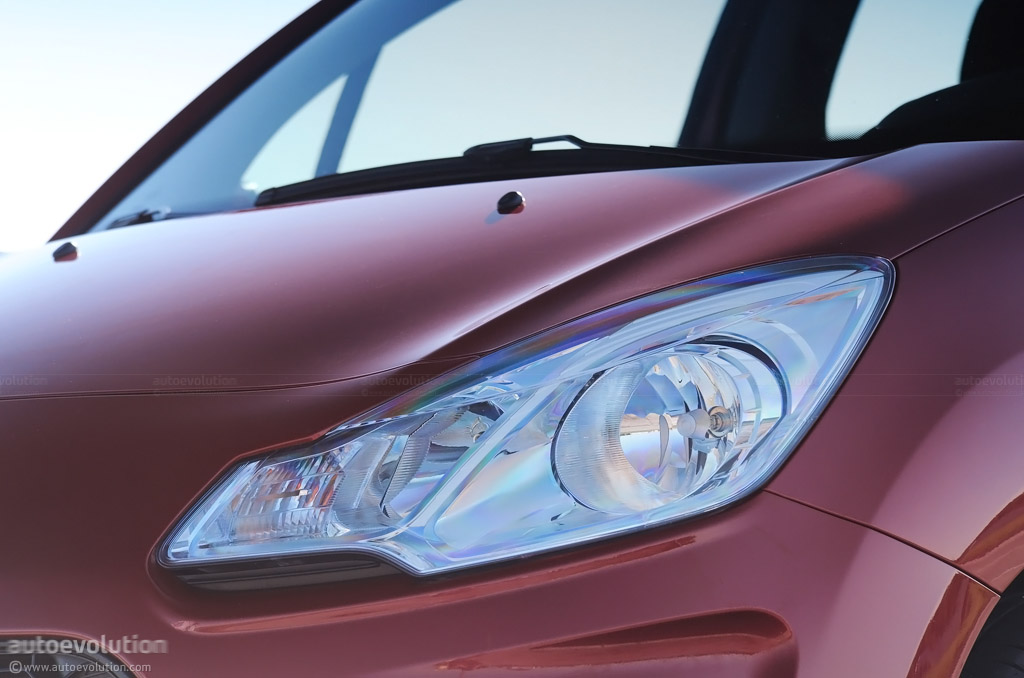
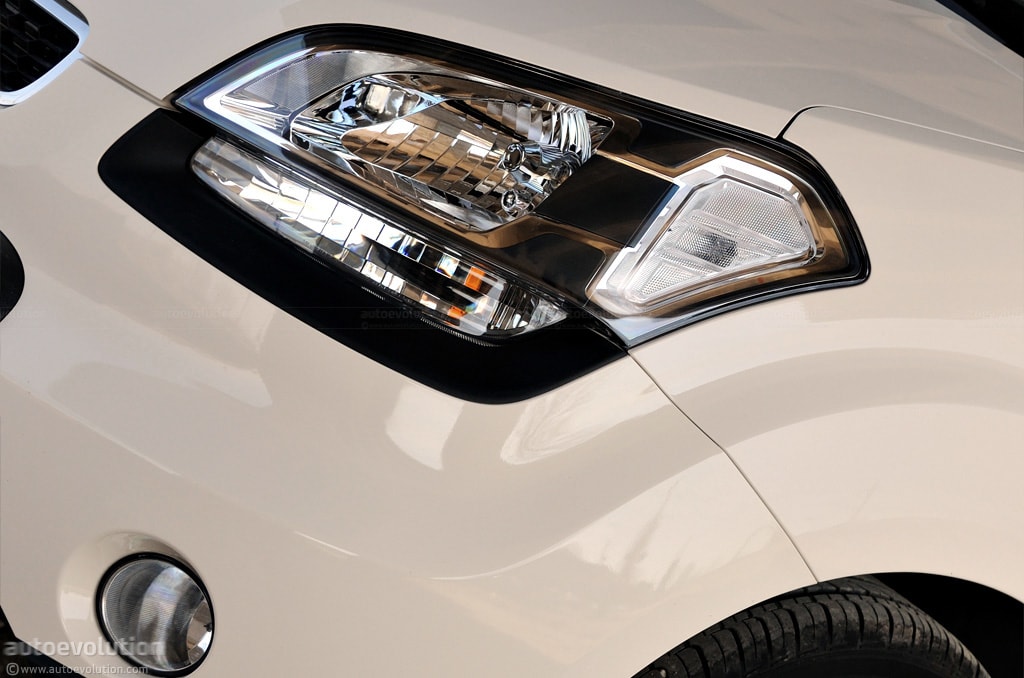
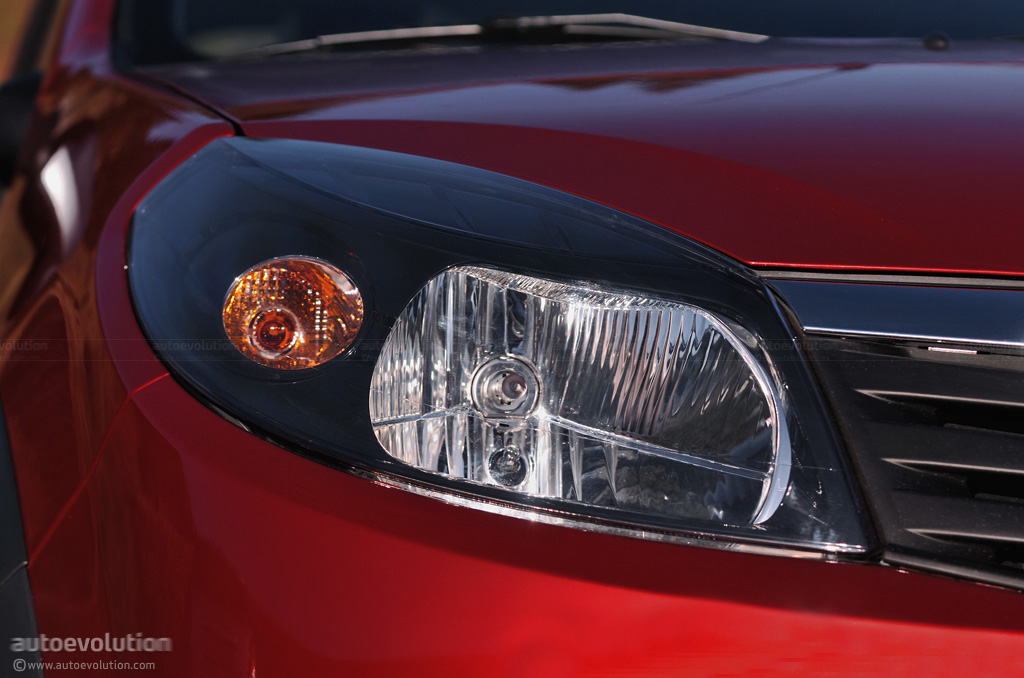 But that’s not the major issue, though. The biggest problem is that, while generating the radiating light, the bulb also creates a large amount of heat which basically represents wasted energy.
Another major problem with halogen bulbs is also the way they react to various substances. For example, when replacing a faulty bulb, it is mandatory to avoid touching the glass of the spare one! The grease on your fingers will stick to the quartz glass, causing it to heat unevenly and drastically cut the bulb’s life. It you touched it, try using a clean cloth and an alcohol-based substance to rub it off.
Still, halogen light bulbs have a number of advantages that could make it the number one option for most carmakers: they create a decent illumination for the least amount of money ; they come in a number of different sizes, which basically means that such bulbs can be installed on most car models; they are dimmable, thus allowing carmakers to build multiple versions, depending on body type and dimensions.
In just a few words, there are the pros and cons of halogen headlamps:
ADVANTAGES:
• easy to replace
• simple construction
• different dimensions
• cost effective
DISADVANTAGES:
• energy wasting
• extra care required
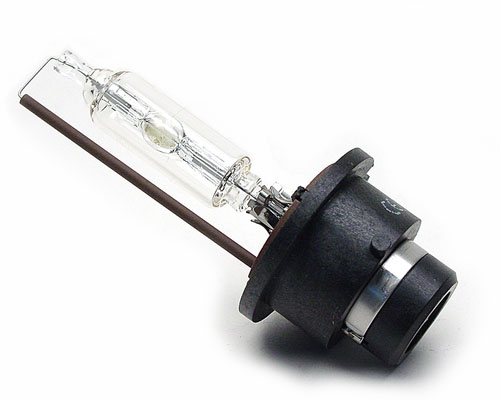 and the amount of light they generate. The first xenon headlight appeared on the BMW 7 Series in 1991 and slowly became the number one option for several car companies, which avoided however to offer it as standard equipment.
HID lights work pretty much like your neon tube in the basement. You have an enclosed tube filled with gases, an electrode at each end and an electric current passing through. In vehicle applications, HID lamps are using a transparent quartz housing, tungsten electrodes and a mix of gases that get stimulated by the high-voltage electric current passing between the two electrodes.
Despite their commonly used name, HIDs actually use a metal-halide mix and rely on xenon gas only during start-up. That’s because one of the main problems with HID lamps is the amount of time needed for the gases inside to reach their operating temperature and provide a strong light.
The process of lightning up HID lamps happens in three steps: first comes the ignition phase, when a high voltage pulse produces a spark that ionizes the xenon gas and creates a tunnel of current between electrodes, then the temperature in the bulb rises quickly vaporizing the the metallic salts which lowers the resistance between the two electrodes; ultimately, the ballast switches to continuous operation supplying the lamp a continuous amount of power so that the electric arc won’t flicker.
Pluses? First of all, a xenon headlight is much more efficient when it comes to the amount of produced light as compared to the halogen ones. Of course, this can be easily considered a major setback, especially from the point of view of incoming traffic, if the angle of illumination isn't properly configured (mostly when aftermarket kits are installed the wrong way or using headlight cases that were not designed for HIDs).
According to official stats, a xenon bulb produces 3000 lumens and 90 mcd/m2, while a halogen light generates 1400 lumens and 30 mcd/m2.
Of course, xenon lamps have slowly became available in a number of sizes and versions, especially to be used on various types of cars.
Another big plus comes because xenon lights have a pretty long lifetime, exceeding the one of halogen lamps: estimates are pointing to an operation life of around 2,000 hours in normal conditions.
Efficiency might be another advantage thought when thinking to choose HID detrimental to halogen lights. They do use more power to kickstart into action, but after they’ve reached operating temperature, they’ll actually use less power than standard bulbs. Which means there will be a slightly smaller load on the alternator which won’t require more engine torque to sustain the electricity demand. However, you’ll barely see any difference in fuel consumption (maybe like one fluid ounce per hour) but it’s nice to know if you’re a “greenhead”.
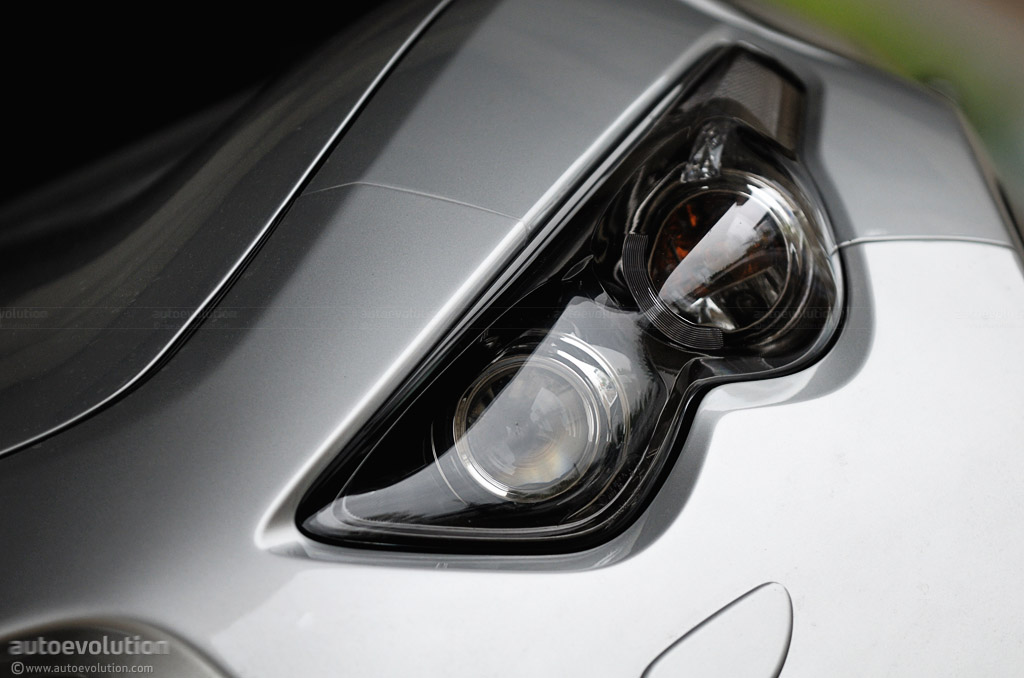
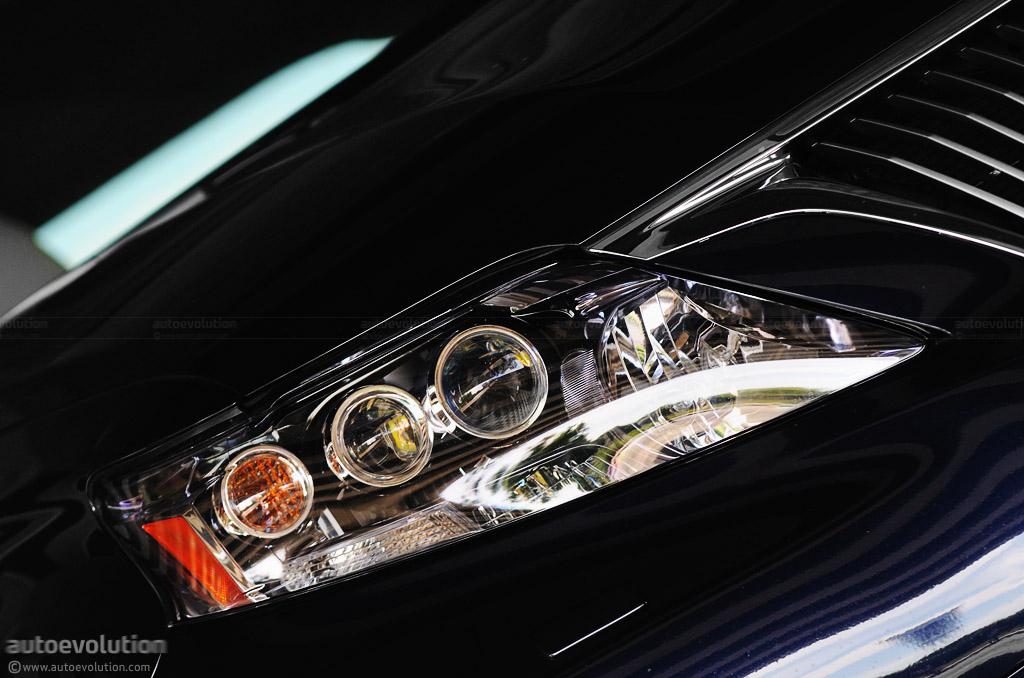
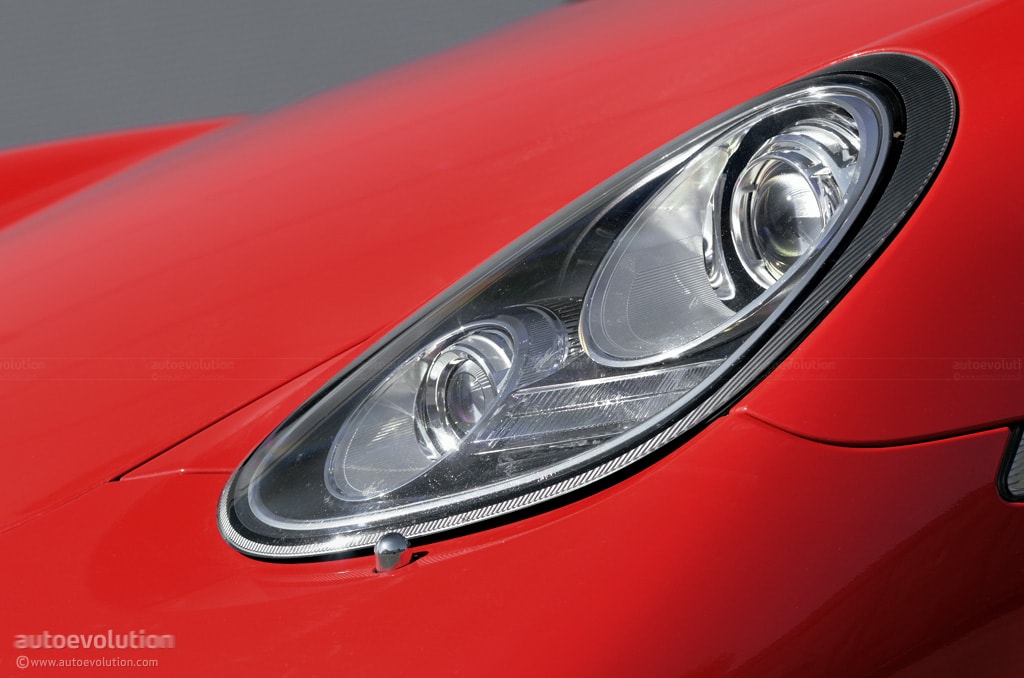 Setbacks? Well, obviously they’re going to cost more than halogen lights (including maintenance) and are more complex, since they require a device called ballast, which is basically a capacitor that creates and regulates the high voltage needed by the HIDs to operate.
Let’s not forget these lights need a few seconds to reach full brightness, reason why they are not that good as separate high beams. Some cars use HID low beams and separate standard bulbs for high beams. On higher end models, the same HID unit works both ways (wrongly named bi-xenon) by using a mechanical shade inside the reflector to change the beam’s direction accordingly.
Some xenon headlamps could also have a harmful impact on our health, as certain versions could contain toxic substances, such as metal mercury. Some countries have imposed special regulations that prohibit the use of such substances but, of course, this will only lead to higher production and repair costs.
Ultimately, the amount of glare generated by the headlamps might be extremely disturbing for the other drivers on the road, especially for incoming traffic, thus raising the number of accidents and fatalities caused by other than speed and technical problems.
So, to review the pros and cons of xenon lights:
ADVANTAGES:
• longer lifetime than halogen lights
• more efficient than halogen as they use less power and create more light
• better visibility for the driver
DISADVANTAGES:
• too much glare and thus, potential problems for the incoming traffic
• high costs
• more complex system than halogen bulbs
• possible harmful materials could be used
• they take up a few seconds to reach full brightness
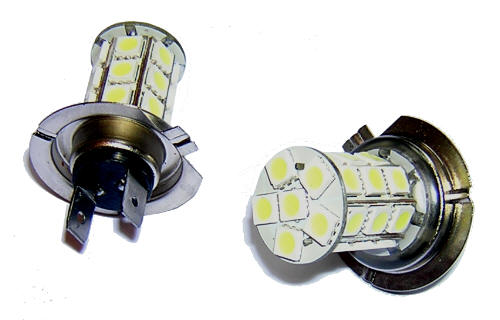 also several setbacks that could change the world's perspective over this type of technology.
The working principle of an LED is quite hard to explain, but in short words, they rely on negative electrons moving against positive “holes” across a semiconductor. When a free electron falls into a hole that sits on a lower energy level, it will loose its energy which is released as a photon (the tiniest fraction of light) in a process called electroluminescence.
Multiply this process thousand of times per second and you have a continuous bright light being emitted from something about 2 mm wide - a light emitting diode (LED).
The most important aspect when it comes to LED headlights is the fact that they need very low power to work compared to classic halogen bulbs. LEDs are for instance used on Toyota Prius models and on a couple of other hybrids on which electricity plays a key role - not necessarily for the headlights. The first production units were to be found on the 2004 Audi R8.
Generally speaking, LED headlights are stacked in between the halogen and HID lamps regarding their luminescence, but they provide much focused rays and can also be played with to create different shapes.
Also, thanks to their small size, LEDs allow for great manipulation, with manufacturers being able to create all kinds of shapes and assemblies that would perfectly match their models, so no more ugly dome reflectors.
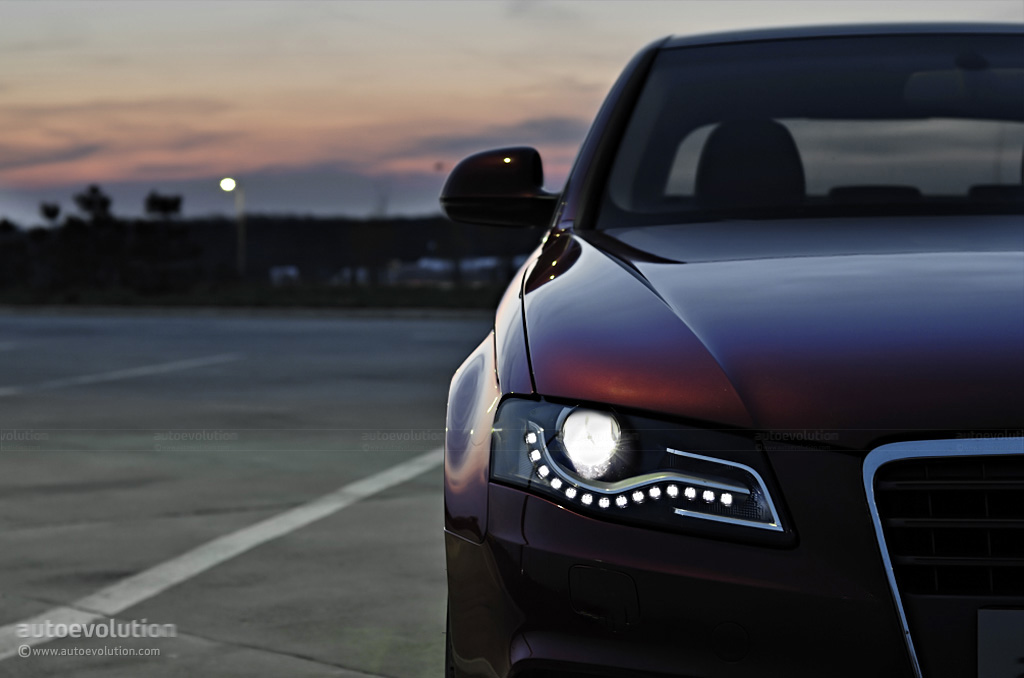
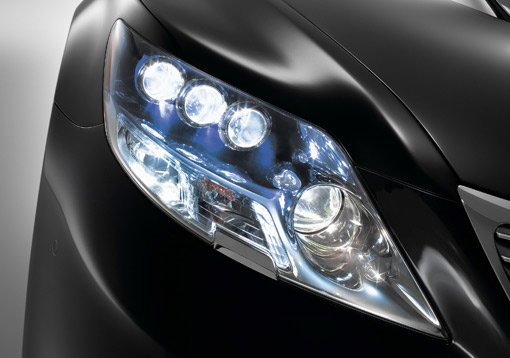
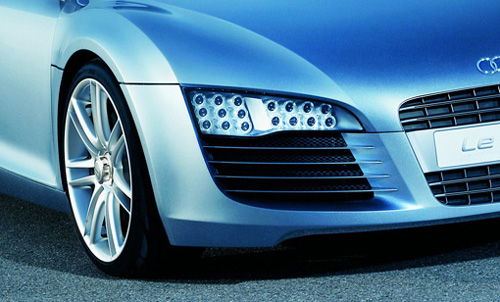 There are a number of issues to be clarified however. For example, although LEDs do not emit heat as they light up, like halogen headlights for example, they do create a certain amount of heat at the bottom of the emitter (mainly the chip) when the electricity passes through, thus creating a potential risk for adjacent assemblies and connectivity cables. Reason why LED headlamps need cooling systems, like heat sinks or fans to keep them from melting.
Oh, and let’s not forget that these cooling systems are located in the engine bay, a not-that-cool area for some other system to maintain a decent temperature. Reason why, LED headlights are also harder to design and implement to a car, thus more expensive than HIDs.
Why aren’t LED daytime running lights or LED taillamps using heat sinks? Simply because nobody relies on them to navigate in the dark. Thus they don’t need to be as powerful as headlights, meaning that the current run through the chips won’t be enough to pose that much of a heating problem.
To wrap it up with the LED headlights:
ADVANTAGES:
• small size, allow great manipulation for various shapes
• very low energy consumption
• brighter than halogen headlights while still offering a warmer light than HIDs
DISADVANTAGES:
• high production costs
• high temperature created around adjacent assemblies
• more difficult to design and cope with the already high engine bay temperatures
Just as the Xenon example from above, the new technology here uses lasers just for part of the light-creating process. You’re not going to have two sets of high-power lasers with lenses in front of them burning everything in sight when using the high-beam.
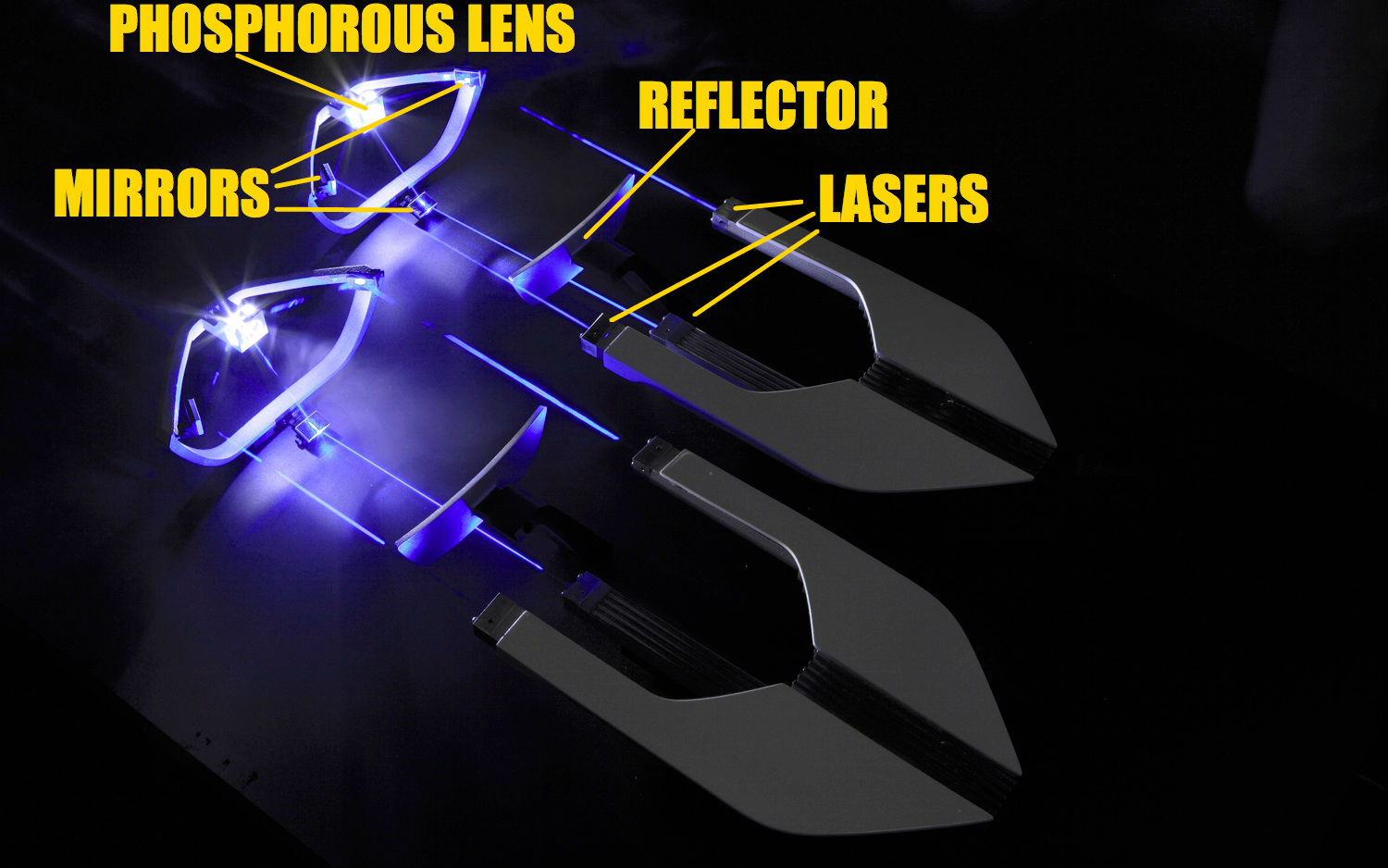
As BMW explained, their system uses three blue lasers positioned at the back of the headlight assembly, firing onto a set of tiny mirrors that focus their energy into a tiny lens containing yellow phosphorous gas.
This substance loves to create a very bright white light when coming in contact with laser beams and this resulting light is then reflected towards the front of the headlight. So basically, you’re looking at the light created by the phosphorous, not the laser itself, which makes the system road usable.
What happens if the headlight gets damaged or out of focus? BMW says it will simply shut down automatically.
The light created in this process can be as much as 1,000 times brighter than LEDs while using about two thirds (or even half) of the power. And thanks to the phosphorous, the light’s color temperature (5,500 - 6,000 K) is quite close to the one natural daylight offers (around 6,500 K).
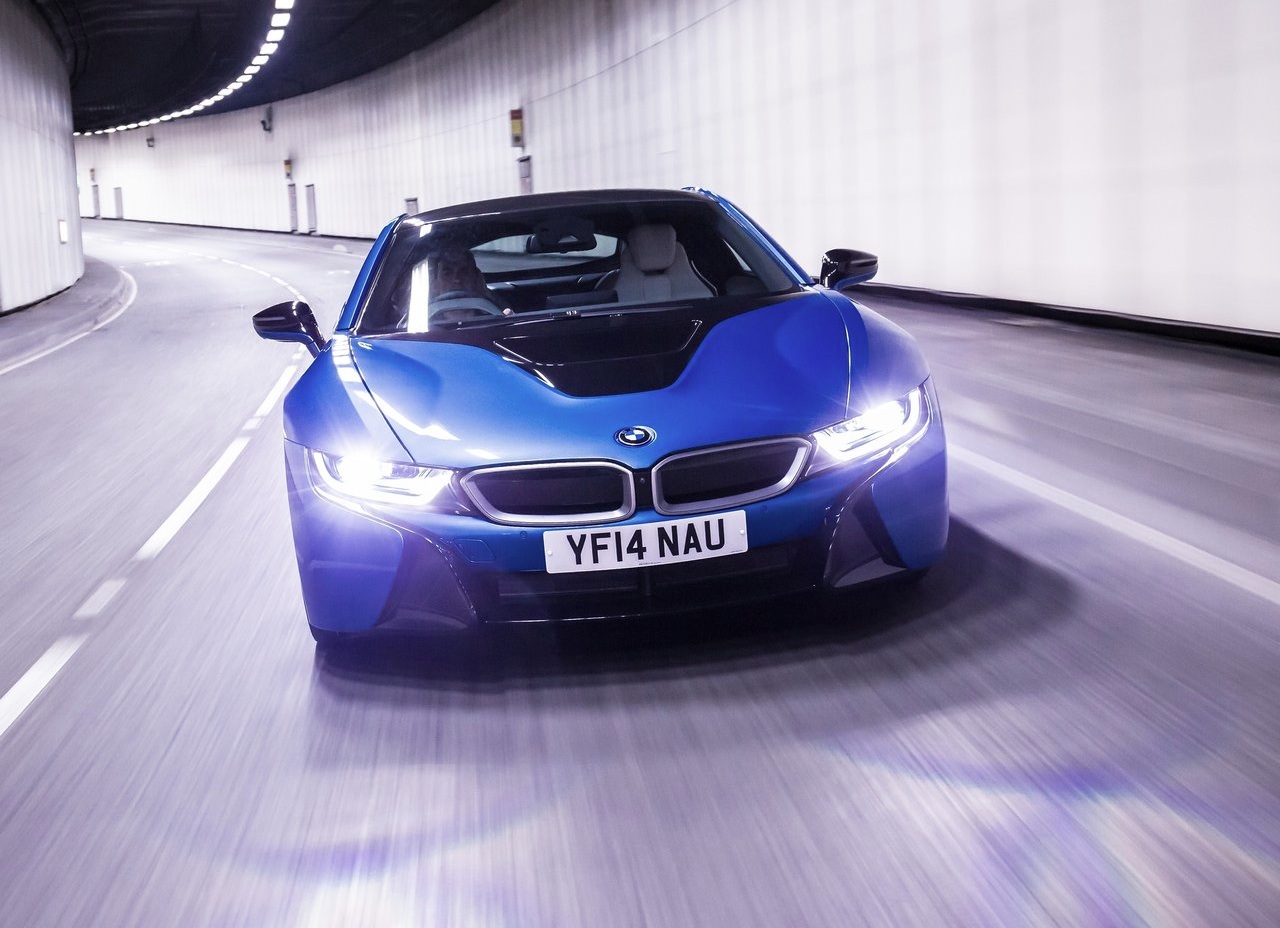
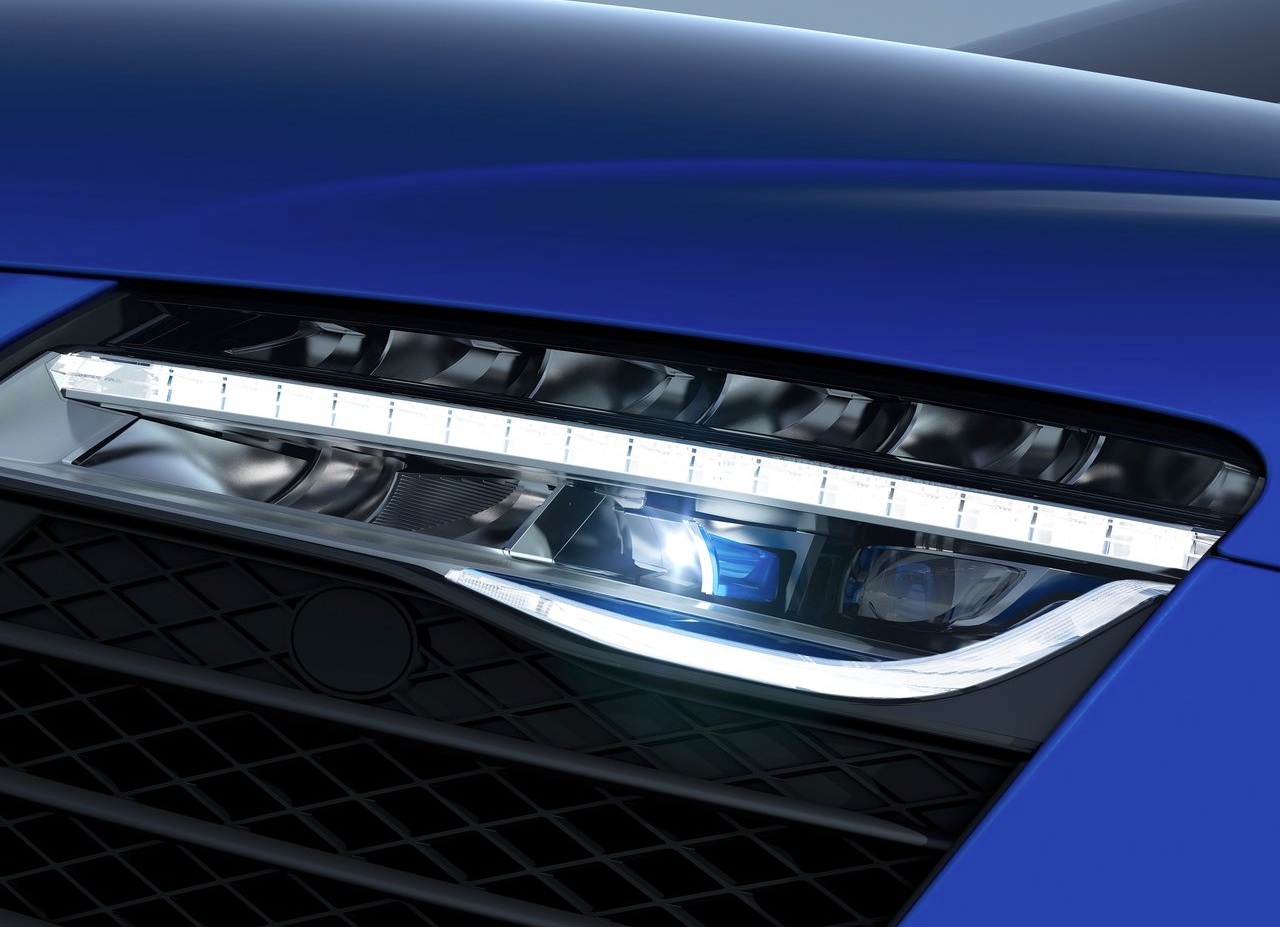 Being way more powerful than LED light, laser headlights can illuminate for twice as long a distance and they are small enough to allow more styling/packaging flexibility.
The downside is that BMW said their tech will only work on high beams at first and as you might have thought, this comes at a price. These 6 high tech lasers per headlamp (12 in total) will set you back about $10,000 (€7,800). Price which should also include auto-dimming technologies because no oncoming driver would like to get dazzled by these tiny suns from 600 m (1,968 ft) away.
Audi’s laser technology works in a very similar way, using 4 lasers per headlamp instead, so summing up what we know for now about laser headlights:
ADVANTAGES:
• very energy efficient
• small packaging
• 1,000 times brighter than LED headlights with double the range
DISADVANTAGES:
• extremely expensive
• currently they can’t be used for both low- and high-beams, requiring a regular LED or HID system to work in tandem
• they still need cooling, as they create much more heat than LED systems
Arguably, the general consensus about aftermarket headlights in the civilized world is that they are usually used by people whose only goal in life is to make life miserable for other road participants. That may be true for some, if not most, aftermarket headlights (HID/Xenon or LED), which is why they are illegal in quite a lot of states.
That doesn't mean that all of them are bad, though, and there are plenty of choices to choose from if you want to make your car safer by upgrading it to having a more efficient pair of headlights.
The most commonly found are HID/Xenon conversion kits. Keep in mind that if they don't have projectors they are not only illegal but hazardous as well – for yourself and especially other road participants – since the light they emit is not only as bright as the sun but is also as dispersed as seed.
Be very careful if you want to go this route, and only go for kits that include the actual bulbs, the ballast, harnesses, and projectors. Also, only fit them via a specialist and only if they are legal in your area – not all of them are, even if they come from a reputable manufacturer.
Some kits are simply plug-and-play, but most need extensive modifications to your headlights and it would be more than preferred that your car is already fitted with a headlight washing/cleaning system. Any impurity stuck on the headlight glass can severely disrupt how the Xenon light is being emitted, thus turning the extra safety in severe danger.
More recently, a large number of aftermarket LED lighting kits have also appeared, and these have some advantages compared to both your old halogen lights and to HID/Xenons.
First of all, they're energy saving, which going forward will probably save you a bit of fuel as well (not a lot, mind you).
Second of all, they are usually much more durable than any other type of headlights, even in aftermarket form, a fact which is surely a plus considering that quality ones also cost more.
Third of all, they don't need as much tinkering with the standard headlight assembly, but their fitment must be done by a specialist nonetheless, especially because of the extra heat that they disperse when functioning.
Nobody has so far built an aftermarket laser headlight system to be retrofitted on older cars, but at the rate that high-end technology trickles down to lower cost aftermarket suppliers, we may get a surprise in the next few years.
All of this said and done, we must reiterate that going the aftermarket route is nothing to be toyed with. If you do decide to upgrade your jalopy ride to having HID/Xenons or LEDs you should first find out if they are legal in your area. Then you should probably consult your car's owner manual and see if its electrical system allows their fitment without too much hassle. If everything is well, don't go for the cheapest kits you can find on eBay and only fit them with a specialist.
ADVANTAGES:
• they cost much less than what most carmakers are asking for them as options on new cars
• significantly improve your vision at night compared to your decrepit halogen lights
• you don't need to buy a newer car just to have better headlights
DISADVANTAGES:
• they could be illegal in some states
• if fitted incorrectly or if they are low quality or have missing parts, they become downright dangerous
We won't talk about the headlamp history today because we already did that, but instead we'll try to focus on the four major headlamp configurations of today and see what they're up to. We'll thus try to discuss the advantages and disadvantages of each of them, although people generally believe, and it sometimes happens to be true, that the newest is also the best. Some of you will agree with our statements, others won't, but either way, each of the four types of headlamps has its very own pros and cons. So, let's take one at a time and see what this is all about.
HALOGEN HEADLAMPS
Halogen headlights are currently the most popular in the automotive world and, in case you're wondering why does this happen, it's mostly because of their primaryFirst of all, it is made of a glass envelope capable of resisting very high temperatures, plus a gas, usually a combination of argon and nitrogen, along with a tungsten filament. In order to create light, the tungsten filament receives electricity from the car’s battery and heats up to around 2,500 degrees Celsius thus starting to glow (incandescence process).
When the halogen light bulb comes to the end of its lifetime, it usually happens so because the tungsten in the filament evaporates and leaves the filament, getting deposited on the glass and causing the filament to rupture at some point and render itself unfunctional.
Another major problem with halogen bulbs is also the way they react to various substances. For example, when replacing a faulty bulb, it is mandatory to avoid touching the glass of the spare one! The grease on your fingers will stick to the quartz glass, causing it to heat unevenly and drastically cut the bulb’s life. It you touched it, try using a clean cloth and an alcohol-based substance to rub it off.
Still, halogen light bulbs have a number of advantages that could make it the number one option for most carmakers: they create a decent illumination for the least amount of money ; they come in a number of different sizes, which basically means that such bulbs can be installed on most car models; they are dimmable, thus allowing carmakers to build multiple versions, depending on body type and dimensions.
In just a few words, there are the pros and cons of halogen headlamps:
ADVANTAGES:
• easy to replace
• simple construction
• different dimensions
• cost effective
DISADVANTAGES:
• energy wasting
• extra care required
HID HEADLAMPS (XENON HEADLIGHTS)
Xenon headlights, officially known as high-intensity discharge headlamps (HIDs), are usually defined as a more efficient solution, mostly because of the color temperatureHID lights work pretty much like your neon tube in the basement. You have an enclosed tube filled with gases, an electrode at each end and an electric current passing through. In vehicle applications, HID lamps are using a transparent quartz housing, tungsten electrodes and a mix of gases that get stimulated by the high-voltage electric current passing between the two electrodes.
Despite their commonly used name, HIDs actually use a metal-halide mix and rely on xenon gas only during start-up. That’s because one of the main problems with HID lamps is the amount of time needed for the gases inside to reach their operating temperature and provide a strong light.
The process of lightning up HID lamps happens in three steps: first comes the ignition phase, when a high voltage pulse produces a spark that ionizes the xenon gas and creates a tunnel of current between electrodes, then the temperature in the bulb rises quickly vaporizing the the metallic salts which lowers the resistance between the two electrodes; ultimately, the ballast switches to continuous operation supplying the lamp a continuous amount of power so that the electric arc won’t flicker.
Pluses? First of all, a xenon headlight is much more efficient when it comes to the amount of produced light as compared to the halogen ones. Of course, this can be easily considered a major setback, especially from the point of view of incoming traffic, if the angle of illumination isn't properly configured (mostly when aftermarket kits are installed the wrong way or using headlight cases that were not designed for HIDs).
According to official stats, a xenon bulb produces 3000 lumens and 90 mcd/m2, while a halogen light generates 1400 lumens and 30 mcd/m2.
Of course, xenon lamps have slowly became available in a number of sizes and versions, especially to be used on various types of cars.
Another big plus comes because xenon lights have a pretty long lifetime, exceeding the one of halogen lamps: estimates are pointing to an operation life of around 2,000 hours in normal conditions.
Efficiency might be another advantage thought when thinking to choose HID detrimental to halogen lights. They do use more power to kickstart into action, but after they’ve reached operating temperature, they’ll actually use less power than standard bulbs. Which means there will be a slightly smaller load on the alternator which won’t require more engine torque to sustain the electricity demand. However, you’ll barely see any difference in fuel consumption (maybe like one fluid ounce per hour) but it’s nice to know if you’re a “greenhead”.
Let’s not forget these lights need a few seconds to reach full brightness, reason why they are not that good as separate high beams. Some cars use HID low beams and separate standard bulbs for high beams. On higher end models, the same HID unit works both ways (wrongly named bi-xenon) by using a mechanical shade inside the reflector to change the beam’s direction accordingly.
Some xenon headlamps could also have a harmful impact on our health, as certain versions could contain toxic substances, such as metal mercury. Some countries have imposed special regulations that prohibit the use of such substances but, of course, this will only lead to higher production and repair costs.
Ultimately, the amount of glare generated by the headlamps might be extremely disturbing for the other drivers on the road, especially for incoming traffic, thus raising the number of accidents and fatalities caused by other than speed and technical problems.
So, to review the pros and cons of xenon lights:
ADVANTAGES:
• longer lifetime than halogen lights
• more efficient than halogen as they use less power and create more light
• better visibility for the driver
DISADVANTAGES:
• too much glare and thus, potential problems for the incoming traffic
• high costs
• more complex system than halogen bulbs
• possible harmful materials could be used
• they take up a few seconds to reach full brightness
LED HEADLAMPS
The automotive industry has evolved a lot, that's for sure. Along with it, headlamps have reached another level and, after carmakers closely analyzed the way halogen or HID lights influence their models, turn to another option: LEDs. At least on paper, LEDs seem to be the solution for mass-produced cars but there areThe working principle of an LED is quite hard to explain, but in short words, they rely on negative electrons moving against positive “holes” across a semiconductor. When a free electron falls into a hole that sits on a lower energy level, it will loose its energy which is released as a photon (the tiniest fraction of light) in a process called electroluminescence.
Multiply this process thousand of times per second and you have a continuous bright light being emitted from something about 2 mm wide - a light emitting diode (LED).
The most important aspect when it comes to LED headlights is the fact that they need very low power to work compared to classic halogen bulbs. LEDs are for instance used on Toyota Prius models and on a couple of other hybrids on which electricity plays a key role - not necessarily for the headlights. The first production units were to be found on the 2004 Audi R8.
Generally speaking, LED headlights are stacked in between the halogen and HID lamps regarding their luminescence, but they provide much focused rays and can also be played with to create different shapes.
Also, thanks to their small size, LEDs allow for great manipulation, with manufacturers being able to create all kinds of shapes and assemblies that would perfectly match their models, so no more ugly dome reflectors.
Oh, and let’s not forget that these cooling systems are located in the engine bay, a not-that-cool area for some other system to maintain a decent temperature. Reason why, LED headlights are also harder to design and implement to a car, thus more expensive than HIDs.
Why aren’t LED daytime running lights or LED taillamps using heat sinks? Simply because nobody relies on them to navigate in the dark. Thus they don’t need to be as powerful as headlights, meaning that the current run through the chips won’t be enough to pose that much of a heating problem.
To wrap it up with the LED headlights:
ADVANTAGES:
• small size, allow great manipulation for various shapes
• very low energy consumption
• brighter than halogen headlights while still offering a warmer light than HIDs
DISADVANTAGES:
• high production costs
• high temperature created around adjacent assemblies
• more difficult to design and cope with the already high engine bay temperatures
LASER HEADLAMPS
BMW and Audi are pulling hard to make laser headlights happen, with the new technology promising to be 1,000 times better than LED headlights, while also coming in a much more compact form. You might know that lasers are quite dangerous things to play with and they only illuminate a zone about the size of a dime. So, how do laser headlamps make for a good idea to be implemented on cars?Just as the Xenon example from above, the new technology here uses lasers just for part of the light-creating process. You’re not going to have two sets of high-power lasers with lenses in front of them burning everything in sight when using the high-beam.
As BMW explained, their system uses three blue lasers positioned at the back of the headlight assembly, firing onto a set of tiny mirrors that focus their energy into a tiny lens containing yellow phosphorous gas.
This substance loves to create a very bright white light when coming in contact with laser beams and this resulting light is then reflected towards the front of the headlight. So basically, you’re looking at the light created by the phosphorous, not the laser itself, which makes the system road usable.
What happens if the headlight gets damaged or out of focus? BMW says it will simply shut down automatically.
The light created in this process can be as much as 1,000 times brighter than LEDs while using about two thirds (or even half) of the power. And thanks to the phosphorous, the light’s color temperature (5,500 - 6,000 K) is quite close to the one natural daylight offers (around 6,500 K).
The downside is that BMW said their tech will only work on high beams at first and as you might have thought, this comes at a price. These 6 high tech lasers per headlamp (12 in total) will set you back about $10,000 (€7,800). Price which should also include auto-dimming technologies because no oncoming driver would like to get dazzled by these tiny suns from 600 m (1,968 ft) away.
Audi’s laser technology works in a very similar way, using 4 lasers per headlamp instead, so summing up what we know for now about laser headlights:
ADVANTAGES:
• very energy efficient
• small packaging
• 1,000 times brighter than LED headlights with double the range
DISADVANTAGES:
• extremely expensive
• currently they can’t be used for both low- and high-beams, requiring a regular LED or HID system to work in tandem
• they still need cooling, as they create much more heat than LED systems
AFTERMARKET CONVERSION KITS
Some of you may be driving older cars, which are obviously not fitted with the latest advancements in automotive technology, including modern headlights. Since not everyone can afford the upgrade to a newer car, the aftermarket scene was happy to oblige and provide them with conversion kits.Arguably, the general consensus about aftermarket headlights in the civilized world is that they are usually used by people whose only goal in life is to make life miserable for other road participants. That may be true for some, if not most, aftermarket headlights (HID/Xenon or LED), which is why they are illegal in quite a lot of states.
That doesn't mean that all of them are bad, though, and there are plenty of choices to choose from if you want to make your car safer by upgrading it to having a more efficient pair of headlights.
The most commonly found are HID/Xenon conversion kits. Keep in mind that if they don't have projectors they are not only illegal but hazardous as well – for yourself and especially other road participants – since the light they emit is not only as bright as the sun but is also as dispersed as seed.
Be very careful if you want to go this route, and only go for kits that include the actual bulbs, the ballast, harnesses, and projectors. Also, only fit them via a specialist and only if they are legal in your area – not all of them are, even if they come from a reputable manufacturer.
Some kits are simply plug-and-play, but most need extensive modifications to your headlights and it would be more than preferred that your car is already fitted with a headlight washing/cleaning system. Any impurity stuck on the headlight glass can severely disrupt how the Xenon light is being emitted, thus turning the extra safety in severe danger.
More recently, a large number of aftermarket LED lighting kits have also appeared, and these have some advantages compared to both your old halogen lights and to HID/Xenons.
First of all, they're energy saving, which going forward will probably save you a bit of fuel as well (not a lot, mind you).
Second of all, they are usually much more durable than any other type of headlights, even in aftermarket form, a fact which is surely a plus considering that quality ones also cost more.
Third of all, they don't need as much tinkering with the standard headlight assembly, but their fitment must be done by a specialist nonetheless, especially because of the extra heat that they disperse when functioning.
Nobody has so far built an aftermarket laser headlight system to be retrofitted on older cars, but at the rate that high-end technology trickles down to lower cost aftermarket suppliers, we may get a surprise in the next few years.
All of this said and done, we must reiterate that going the aftermarket route is nothing to be toyed with. If you do decide to upgrade your jalopy ride to having HID/Xenons or LEDs you should first find out if they are legal in your area. Then you should probably consult your car's owner manual and see if its electrical system allows their fitment without too much hassle. If everything is well, don't go for the cheapest kits you can find on eBay and only fit them with a specialist.
ADVANTAGES:
• they cost much less than what most carmakers are asking for them as options on new cars
• significantly improve your vision at night compared to your decrepit halogen lights
• you don't need to buy a newer car just to have better headlights
DISADVANTAGES:
• they could be illegal in some states
• if fitted incorrectly or if they are low quality or have missing parts, they become downright dangerous
 Google News